Why Marramarra National Park stands out
Marramarra National Park is best known for its extraordinary environmental diversity compressed into a relatively accessible location near Sydney. The park protects a rare combination of mangrove-lined waterways along Marramarra Creek and Berowra Creek, transitioning to drier eucalyptus-dominated ridges and sclerophyll vegetation on the higher ground. Its significance as a cultural heritage site for the Darug people, featuring visible rock art and archaeological sites, distinguishes it from many other protected areas in the Sydney region. The park also offers a particularly wild bushwalking experience compared to more developed national parks, as access is primarily via fire trails and service roads rather than formal walking tracks.
Marramarra National Park history and protected-area timeline
Marramarra National Park was officially established on December 28, 1979, as part of the expansion of protected areas in the Sydney region during the late 1970s and 1980s. The establishment of the park reflected growing recognition of the need to preserve the remaining natural landscapes in the Hawkesbury basin as urban development pressures increased in northwestern Sydney. The park was placed under the administration of Ku-ring-gai Chase National Park, which manages several adjacent protected areas in the region. Prior to formal protection, the area had been used for various purposes including timber getting and grazing, and the remnants of some historical structures can still be found along the northern ridges. The park's establishment also acknowledged the significant Aboriginal cultural heritage of the area, which had been a traditional territory of the Darug people for thousands of years.
Marramarra National Park landscape and geographic character
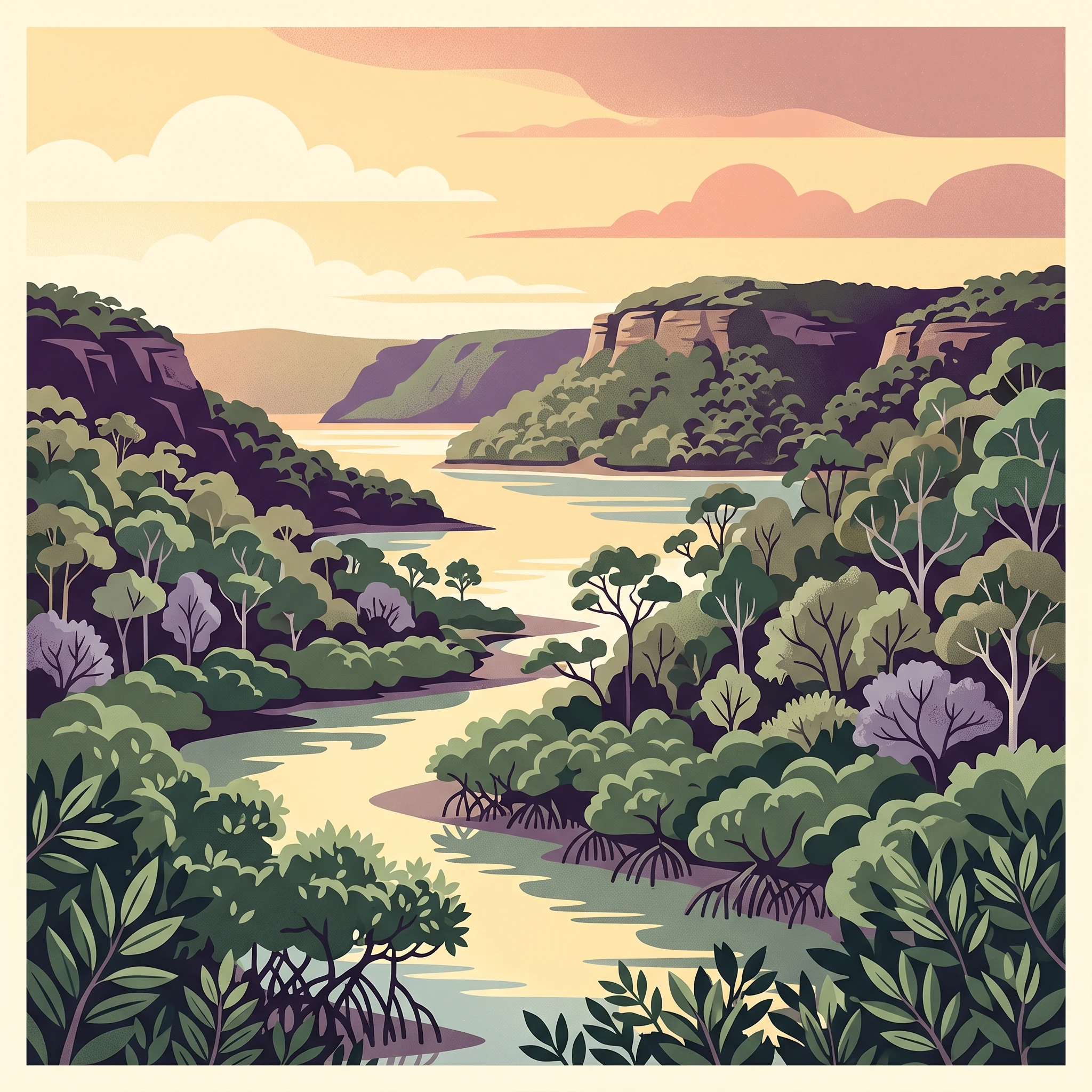
The landscape of Marramarra National Park is characterised by a sequence of parallel ridges and valleys running roughly north-south, with the major watercourses occupying the valleys between them. The Hawkesbury River, a major tidal river system, forms a prominent boundary feature on the northern side of the park, and views from the northern ridges offer sweeping perspectives across the river corridor. The creek systems, including Marramarra Creek, Berowra Creek, and Mangrove Creek, have carved relatively deep valleys through the terrain, creating a complex topography of slopes, cliff faces, and creek flats. The geology supports a variety of landforms, from the rocky platforms and cliff lines on the ridges to the soft sediments and tidal mudflats along the waterway margins. Vegetation patterns follow this topography, with taller woodland and open forest on the slopes and ridgelines giving way to dense mangrove stands in the tidal reaches of the creeks. The visual character ranges from the moody, water-lined environments of the creek systems to the more exposed and sunlit ridge tops.
Marramarra National Park ecosystems, habitats, and plant life
The ecological character of Marramarra National Park is defined by the juxtaposition of two quite different habitat types within a relatively compact area. The waterway corridors, particularly along Marramarra Creek and the tidal reaches of other streams, support extensive mangrove communities that represent some of the most southerly mangrove forests in the world. These mangrove systems provide important habitat for fish, crustaceans, and bird species adapted to estuarine conditions. Moving up from the waterways, the valley slopes and ridge systems support eucalypt-dominated sclerophyll forest, which varies in composition and density depending on aspect, soil depth, and moisture availability. The understory contains a mix of native grasses, shrubs, and small trees, with ferns more common in the moister gullies. This habitat supports a range of bird species, mammals, and reptiles typical of the Sydney region. The park's relatively undeveloped status means these ecological communities have remained in relatively intact condition, providing a functioning ecosystem despite proximity to urban areas.
Marramarra National Park wildlife and species highlights
The wildlife of Marramarra National Park reflects its diverse habitats, with different species associated with the waterway environments and the forest and woodland areas. The mangrove communities along the tidal creeks support fish species that use these sheltered nursery areas, while waterbirds including pelicans, cormorants, and various duck species can be found along the waterways. The forest and woodland habitats on the ridges support a range of birdlife including honeyeaters, parrots, and cockatoos, with the eucalypt canopy providing foraging resources and nesting sites. Mammals likely present include common species such as possums and flying foxes, with the denser vegetation providing shelter and feeding opportunities. Reptiles including various skinks and dragons are present in the forest habitats, particularly in sunny positions along trails and firebreaks. The combination of intact forest, waterway corridors, and relatively limited public access supports a reasonable diversity of native wildlife.
Marramarra National Park conservation status and protection priorities
Marramarra National Park contributes to the conservation of several significant values within the Sydney metropolitan region. The park protects a substantial area of intact sclerophyll forest that would otherwise have been cleared for rural or urban development as Sydney expanded northward. The mangrove communities along the waterways represent important coastal wetlands that provide ecosystem services including water filtration, carbon storage, and habitat for commercially and ecologically important species. The park also protects significant Aboriginal cultural heritage sites, including rock engravings and other archaeological features, linking the conservation of natural and cultural values. The management of the park under the NSW National Parks and Wildlife Service ensures ongoing protection of these values, though challenges include managing the interface with surrounding private land, maintaining water quality in the creek systems, and addressing the impacts of fire and invasive species.
Marramarra National Park cultural meaning and human context
Marramarra National Park holds deep significance as a traditional area for the Aboriginal people of the Darug nation, who have inhabited this region for many thousands of years. The park contains numerous places that testify to this long history of traditional occupation and use. Rock engravings, some of which are visible along the ridge tops, represent the artistic and spiritual expression of previous generations. Cave art in shelters throughout the park provides evidence of ceremonial and daily activities. Grinding grooves carved into rock surfaces indicate where stone tools were manufactured and sharpened. Scarred trees, where bark was removed for specific purposes such as canoes or shelter, mark the use of particular trees by Aboriginal people. Stone arrangements, though less common than in some other Sydney region parks, also exist within the park. These cultural values are an integral part of the park's identity and are managed alongside the natural values under the protection of the NSW National Parks and Wildlife Service.
Top sights and standout views in Marramarra National Park
Marramarra National Park offers several standout features that distinguish it from other protected areas in the Sydney region. The transition from mangrove-lined tidal creeks to dry sclerophyll ridges provides an unusual diversity of environments within a single park. Views from the northern ridges across the Hawkesbury River offer impressive panoramas of the waterway and surrounding landscape. The relatively unmodified character of the forest and the limited development compared to other nearby parks creates a more authentic wilderness experience. The visible Aboriginal cultural heritage, including rock engravings and other archaeological sites, provides a tangible connection to the long human history of this landscape. The park's location, within reasonable reach of Sydney but feeling quite remote, makes it a valuable escape for those seeking a more rugged outdoor experience.
Best time to visit Marramarra National Park
The best time to visit Marramarra National Park depends on the type of experience sought, but generally the cooler months from autumn through to late spring offer the most comfortable conditions for exploring the park. Summer can be very hot, particularly on the exposed ridge tops and during bushwalks along the fire trails, which are generally unshaded. Winter provides cooler temperatures but shorter days and the possibility of wet and muddy conditions on trails. Spring brings wildflower displays in the forest and woodland areas and is generally a pleasant time to visit. The mangrove environments are accessible year-round, though the tidal conditions will affect the extent of the mangrove exposure along the waterways. Visitors should be aware that the park has limited facilities and should come prepared with appropriate supplies, navigation equipment, and awareness of the relatively remote character of the experience.