Why Mungo National Park stands out
Mungo National Park is best known for its profound archaeological significance as the site of the oldest human remains ever found in Australia. The discovery of Mungo Man, dating to approximately 40,000 years ago, and Mungo Lady, the earliest known human to have undergone ritual cremation, both occurred along the Walls of China lunette on the eastern shore of ancient Lake Mungo. These discoveries have reshaped understanding of the depth of human history on the Australian continent. The park also preserves one of the most complete and longest continuous records of Indigenous occupation and environmental change in the world, with the Willandra Lakes Region containing evidence of human activity spanning at least 100,000 years.
Mungo National Park history and protected-area timeline
The land now comprising Mungo National Park has been the traditional Country of the Barkindji, Ngiyampaa, and Mutthi Mutthi Aboriginal peoples for tens of thousands of years. These Indigenous communities maintained continuous connection to the land until the mid-nineteenth century, when European squatters arrived to establish sheep grazing stations, displacing the traditional owners from their ancestral lands. A remnant of this period is the 45-metre woodshed constructed from Murray pine in 1869 by Chinese labourers, which still stands near the old Mungo woolshed. Following World War I, the Mungo sheep station, comprising approximately 15,700 hectares, was subdivided for returned soldiers as part of post-war soldier settlement schemes. The Cameron Brothers, who acquired the property, named it after St Mungo's Parish Church in Scotland. In 1979, the Foundation for National Parks and Wildlife successfully raised $101,000 to purchase the property for inclusion in the National Reserve System, preserving its irreplaceable heritage values. The Foundation subsequently funded a resident archaeologist at the site from 1979 to 1983 and established the Mungo Visitors Centre and Laboratory in 1983 with funding from entrepreneur Dick Smith.
Mungo National Park landscape and geographic character
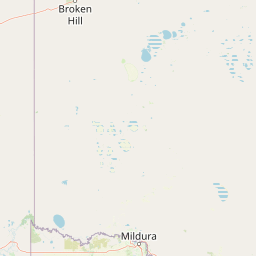
The landscape of Mungo National Park is defined by the ancient and now-dry Lake Mungo, the second largest of the seventeen lakes that comprised the Willandra Lakes system during the Pleistocene epoch. The lake basin is flanked by the dramatic Walls of China lunette, a series of crescent-shaped dunes rising sharply from the former lake floor on its southeastern edge. These parabolic dunes were formed by prevailing westerly winds that shaped sand accumulated behind vegetation once growing along the ancient shoreline. The broader park encompasses a matrix of ancient sand dunes, semi-arid plains, and the remnants of the creek systems that once fed the lake. The terrain is largely flat to gently undulating, with the dune formations providing the most prominent topographic variation. The sparse vegetation reflects the semi-arid climate, dominated by saltbush and bluebush shrubland with occasional clumps of mallee and cypress pine.
Mungo National Park ecosystems, habitats, and plant life
The semi-arid environment of Mungo National Park supports a distinctive ecosystem adapted to the region's low rainfall and extreme temperature variations. The park lies within the Murray-Darling Basin bioregion, characterized by its ancient, weathered landscapes and soils. Vegetation communities include samphire shrubland on the lake bed margins, mallee and belah woodland on the deeper sands, and bladder saltbush communities on the more fertile plains. The park provides habitat for a range of adapted species including emus, various parrot and cockatoo species, and kangaroos that move through the dunelands. Despite the harsh appearance, the area supports a surprising diversity of reptiles including goannas, dragons, and snakes adapted to the extreme temperature ranges. The park's ecological significance extends beyond its boundaries as part of the interconnected Willandra Lakes system, which historically provided crucial habitat for waterbirds and supported diverse plant communities during the wet periods when lakes held water.
Mungo National Park wildlife and species highlights
Mungo National Park supports a range of wildlife species adapted to the semi-arid outback environment. Native mammals in the park include grey and red kangaroos, common wallaroos, and various small marsupials such as dunnarts and bandicoots. The dune systems and woodland areas provide habitat for diverse birdlife, with emus being among the most iconic species regularly encountered across the landscape. Parrots and cockatoos, including the elegant parrot and little corella, are commonly observed, as are various honeyeaters, raptors, and ground-dwelling birds such as the pipit and quail. The reptile population includes numerous goanna and dragon species, a variety of snakes, and the distinctive thorny devil in some areas. The sparse vegetation and ancient dune systems create a challenging environment for wildlife, yet the park's protected status ensures the survival of species that have persisted in this landscape through thousands of years of climatic changes.
Mungo National Park conservation status and protection priorities
Mungo National Park forms the core conservation area of the Willandra Lakes Region World Heritage property, recognized for both its cultural and natural values. The World Heritage listing acknowledges the site's exceptional record of human occupation spanning at least 100,000 years, as well as the unique geological and ecological features of the ancient lake system. Conservation efforts focus on protecting the archaeological sites, managing visitor access to prevent disturbance to sensitive areas, and maintaining the ecological processes that sustain the semi-arid ecosystem. The park's management recognizes the deep connection between Indigenous cultural values and the landscape, with the traditional owner communities actively involved in preservation efforts. The strict visitor access requirements, including mandatory accredited tour guides for dune access, reflect the park's approach to balancing public appreciation of its values with the need to protect irreplaceable archaeological and cultural heritage.
Mungo National Park cultural meaning and human context
Mungo National Park holds profound significance for the Muthi Muthi, Nyiampaar, and Barkinji Aboriginal peoples, whose traditional lands encompass the park and the broader Willandra Lakes Region. For thousands of years, these communities lived, gathered, and conducted ceremonies around the permanent water bodies of the ancient lake system. The area was a major meeting place for Aboriginal peoples from across the region, with the lakes providing crucial resources in an otherwise arid landscape. Following European colonisation, the traditional owners were dispossessed of their land in the mid-nineteenth century as squatters established sheep stations. Many Indigenous people who survived the violence, disease, and dispossession were relocated to a mission at Balranald. Despite this disruption, the Muthi Muthi, Nyiampaar, and Barkinji peoples maintain ongoing connection to Country, and the park preserves areas of deep cultural and spiritual significance, including the creek that once flowed into Mungo Lake, preserved as a sacred site.
Top sights and standout views in Mungo National Park
The Walls of China lunette stands as the park's most iconic feature, the location where archaeologists discovered the remains of Mungo Man and Mungo Lady. The visitor centre near the historic Mungo woolshed provides orientation and interpretive displays about the park's natural and cultural values. A 70-kilometre signposted circular vehicle track allows visitors to explore the park's key features, including the lunette formations and ancient lake bed. The preserved woodshed constructed by Chinese labourers in 1869 offers a tangible connection to the pastoral era. Visitors can stay at the Shearers' Quarters bunkhouse accommodation, experiencing the remote outback character of the park.
Best time to visit Mungo National Park
The cooler months from April to October generally offer the most comfortable conditions for exploring Mungo National Park, with mild daytime temperatures and lower ultraviolet exposure. Summer temperatures in the outback can be extreme, often exceeding 40 degrees Celsius, making outdoor activities challenging and potentially dangerous. Winter nights can be very cold, with temperatures occasionally dropping below freezing, though daytime temperatures are typically pleasant. The park can be accessed year-round, though unsealed roads may be closed during periods of wet weather. The semi-arid landscape has a stark beauty in all seasons, with different character evident as temperatures shift across the year.