Why Murlen National Park stands out
Murlen National Park is best known for its extraordinarily dense tropical forests that create one of the darkest forest understories in the world, with some areas earning the local name of losing area of seven fellow-men or land of no return due to the complete absence of sunlight penetration. The park protects critical habitat in the Indo-Burma biodiversity hotspot and supports significant populations of large mammals including tigers, leopards, and Himalayan black bears, as well as important primate species such as the hoolock gibbon. The botanical diversity is equally remarkable, with the discovery of two endemic Ceropegia species (Ceropegia mizoramensis and Ceropegia murlensis) highlighting the park's scientific significance. The ancient forest, with trees up to 350 years old, represents a rare example of relatively intact montane forest ecosystem in mainland India.
Murlen National Park history and protected-area timeline
Murlen National Park takes its name from Murlen Village, which itself is historically significant as the ancestral home of Saithuama Sailo, the Chief of Hnahlan. The park was formally established in 1991 as a protected national park, designated under Indian law to preserve the exceptional biodiversity and forest resources of this region. The area has been part of the traditional territory of the Mizo people, whose cultural practices and land management shaped the landscape over centuries before formal protection was established. Since its designation, the park has faced challenges from hunting and poaching activities, prompting ongoing enforcement efforts by the state government to protect wildlife populations. Conservation work at the park has involved local communities, with 36 people actively engaged in conservation activities as documented in 2012.
Murlen National Park landscape and geographic character
The landscape of Murlen National Park is dominated by dense tropical and semi-evergreen forests growing in the rolling hills of the Mizoram-Chin hill region. The terrain is characterized by steep-sided valleys and ridges typical of the sub-montane zone, with elevation changes creating diverse microhabitats throughout the protected area. The forest reaches extraordinary density, with the canopy blocking nearly all sunlight from reaching the forest floor in many areas. The age of the forest is remarkable, with individual trees documented at up to 350 years old, representing ancient-growth forest that has never been significantly disturbed by human activity. The park lies in a region of high rainfall, supporting the lush vegetation and maintaining the evergreen character of the forest even during seasonal dry periods.
Murlen National Park ecosystems, habitats, and plant life
The ecological character of Murlen National Park is defined by its tropical, semi-evergreen and sub-montane forest ecosystems that represent a critical component of the Indo-Burma biodiversity hotspot. The forest composition includes a rich mixture of tree species such as Quercus (oak), Schima wallichii, Betula (birch), Michelia champaca, Pinus kesiya, Prunus species, Myrica, and Rhododendron, creating a diverse and layered vegetation structure. The understory includes bamboos such as Chimonobambusa callosa, various cane species, and an exceptional diversity of orchids and lichens. Two endemic plant species, Ceropegia mizoramensis and Ceropegia murlensis, have been discovered in the park, named respectively after the state and the locality. The park also supports approximately 35 species of medicinal plants, adding to its ecological and scientific value.
Murlen National Park wildlife and species highlights
Murlen National Park supports a diverse mammalian fauna that includes significant predator populations such as tigers and leopards, along with large herbivores like sambar deer and barking deer. The park provides crucial habitat for the hoolock gibbon, one of India's lesser-known primate species, as well as other arboreal mammals including the Malayan giant squirrel. The Himalayan black bear and serow represent the park's montane mammal fauna, while smaller mammals include the rhesus macaque. The avian community is equally diverse, with over 150 bird species recorded including Hume's pheasant, kalij pheasant, grey partridge, hill myna, and dark-rumped swift. However, the park has faced challenges from illegal hunting and poaching, prompting continued conservation vigilance.
Murlen National Park conservation status and protection priorities
Murlen National Park represents an important conservation priority within India due to its location in one of the world's most significant biodiversity hotspots. The Indo-Burma region is recognized globally for its species richness and endemism, and protected areas like Murlen serve as critical refuges for many species that face habitat loss throughout their ranges. The park's old-growth forest, with trees up to 350 years old, provides ecosystem services including watershed protection, carbon storage, and habitat for species that cannot survive in disturbed or secondary forest. Conservation challenges include addressing poaching and hunting pressures, with the state government implementing measures to strengthen protection. The involvement of local communities in conservation work demonstrates a collaborative approach to park management.
Murlen National Park cultural meaning and human context
Murlen National Park is situated within the traditional territory of the Mizo people, an indigenous community with deep historical roots in the mountainous landscape of Mizoram. The park takes its name from Murlen Village, which is the birthplace of Saithuama Sailo, the traditional Chief of Hnahlan, connecting the protected area to the cultural heritage of the region. The park exists within what was historically Hnahlan Village area, reflecting the long-standing human presence in this landscape. The Mizo people have historically practiced shifting agriculture and forest-based livelihoods, creating a complex relationship between human communities and the natural environment that predates formal protected area establishment.
Top sights and standout views in Murlen National Park
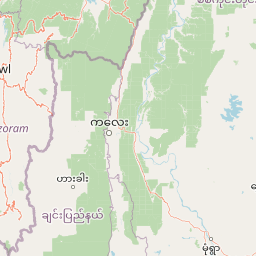
The park's most distinctive feature is its extraordinarily dense forest environment, where less than one percent of sunlight penetrates the canopy, creating conditions that have earned certain areas the evocative local name of land of no return. Ancient trees reaching 350 years old represent a rare window into pre-industrial forest ecology. The discovery of two endemic Ceropegia species demonstrates the park's botanical significance and the continued potential for new scientific discoveries. The presence of both tiger and leopard indicates a healthy predator-prey ecosystem, while the hoolock gibbon population represents one of India's more elusive primate species. The park's position near the Myanmar border places it at a biogeographic crossroads that contributes to its exceptional species diversity.
Best time to visit Murlen National Park
The park can be visited throughout the year, though the most favorable conditions typically occur during the cooler months from October to March when temperatures are more moderate and rainfall is reduced. The monsoon season from June to September brings heavy precipitation to Mizoram, which can make some trails difficult and reduce visibility for wildlife viewing. The post-monsoon period often features lush, green landscapes as the forest reaches its peak of vegetative growth. Visitors interested in birdwatching may find the dry season months particularly productive as bird activity concentrates around water sources.