
Why Niah National Park stands out
Niah National Park is best known for its extraordinary archaeological significance, particularly the discoveries of human remains dating back 37,000 to 40,000 years. The 'Deep Skull' found in 1958 represents one of the oldest known human fossils in Southeast Asia. The caves also contain ancient rock paintings in Painted Cave, dating to approximately 1,200 years old, along with wooden coffin 'death ships'. Beyond archaeology, the park is famous for its productive swiftlet population that supports the traditional bird's nest soup industry, with nest collection occurring twice yearly.
Niah National Park history and protected-area timeline
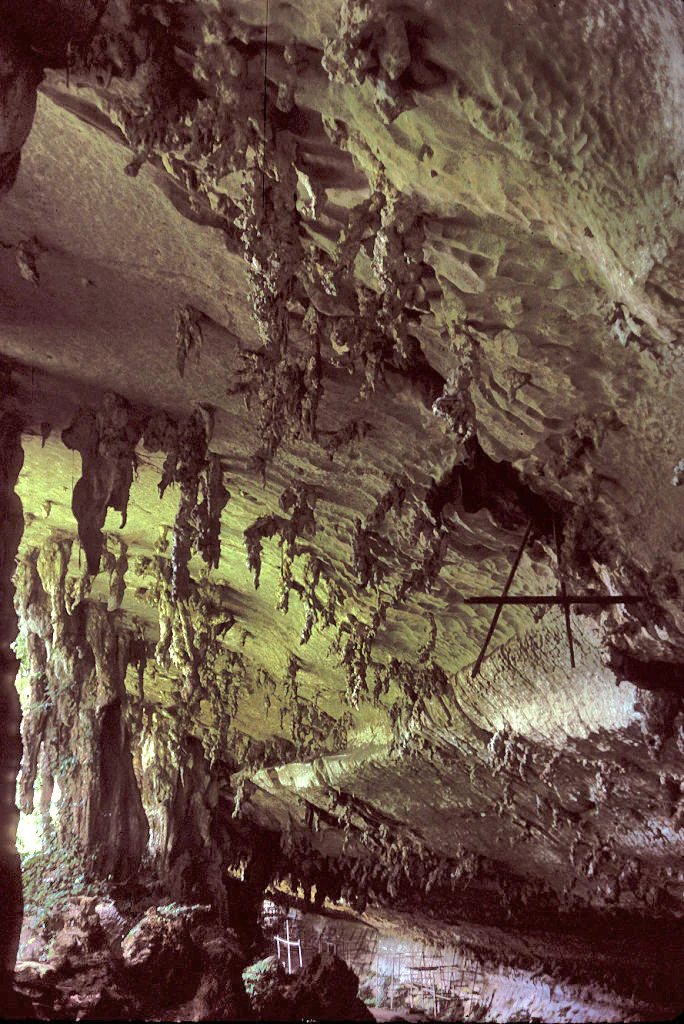
The modern exploration of Niah Caves began in the 1950s when Tom Harrisson, curator of the Sarawak State Museum, sought evidence of ancient human activity in the region. Following initial investigation in October 1954, a major expedition in 1957 funded by Brunei Shell Petroleum uncovered extensive archaeological materials including earthenware, shell ornaments, bone tools, and food remains. Radiocarbon dating of charcoal layers placed the site at approximately 40,000 years old, establishing its great age. The landmark discovery came in February 1958 when Barbara Harrisson led the team that found the Deep Skull in the Hell Trench at 101 to 110 inches below the surface. This fragile but complete skull belonged to a young female in her late teens to mid-twenties. Subsequent expeditions in 1959, 1965, and 1972 expanded knowledge of the site, while more recent research from 2000 to 2003, conducted by the University of Leicester in collaboration with international partners, refined the site's chronology. Uranium-thorium dating in 2013-2014 confirmed the age of the Deep Skull at 37,000 years. The area was designated a National Historic Monument in 1958 and formally gazetted as a national park on 23 November 1974, opening to the public on 1 January 1975. After decades of efforts including nominations in 2010 and 2021, the park achieved UNESCO World Heritage status in July 2024.
Niah National Park landscape and geographic character
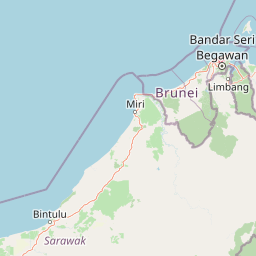
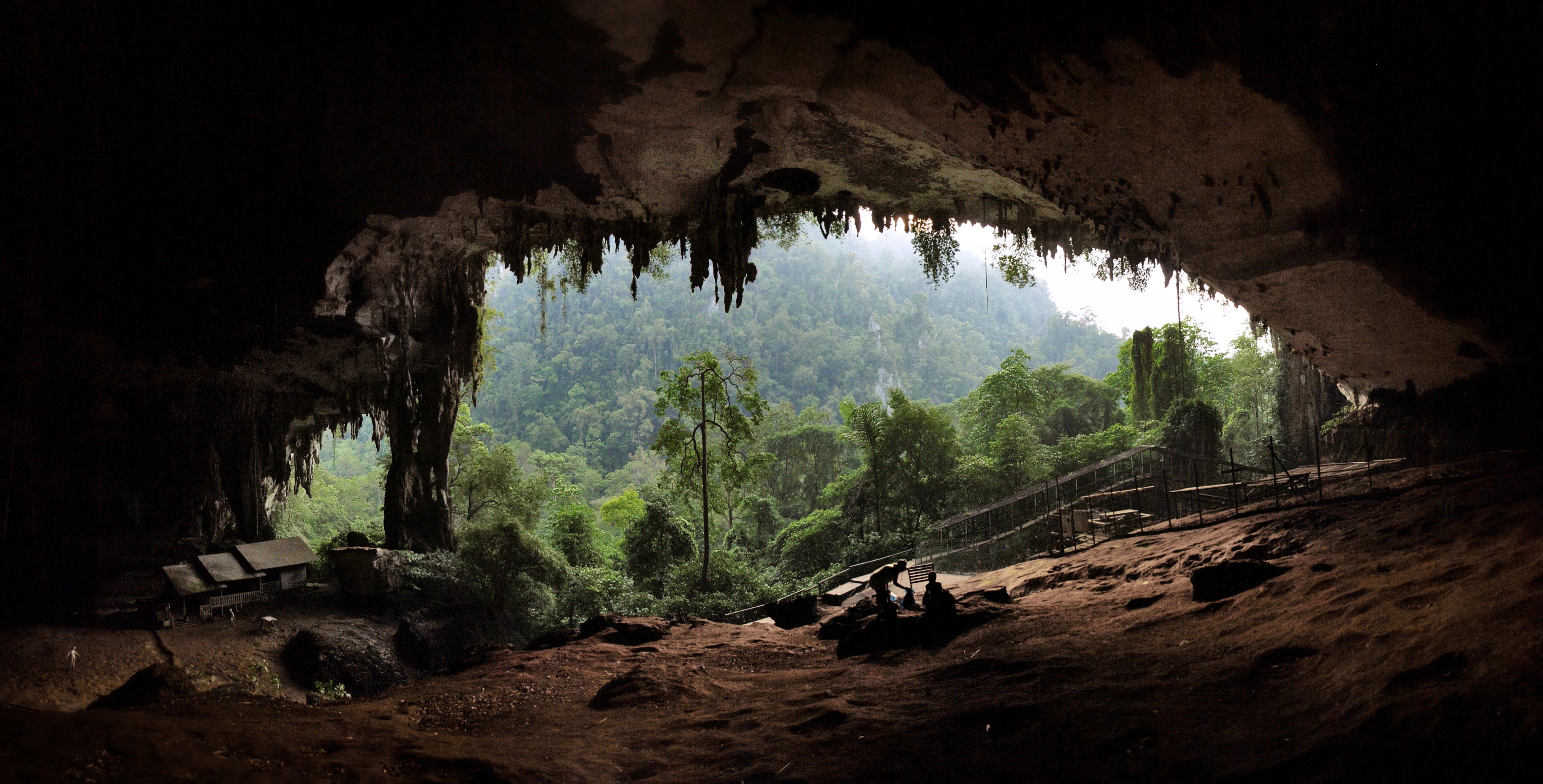
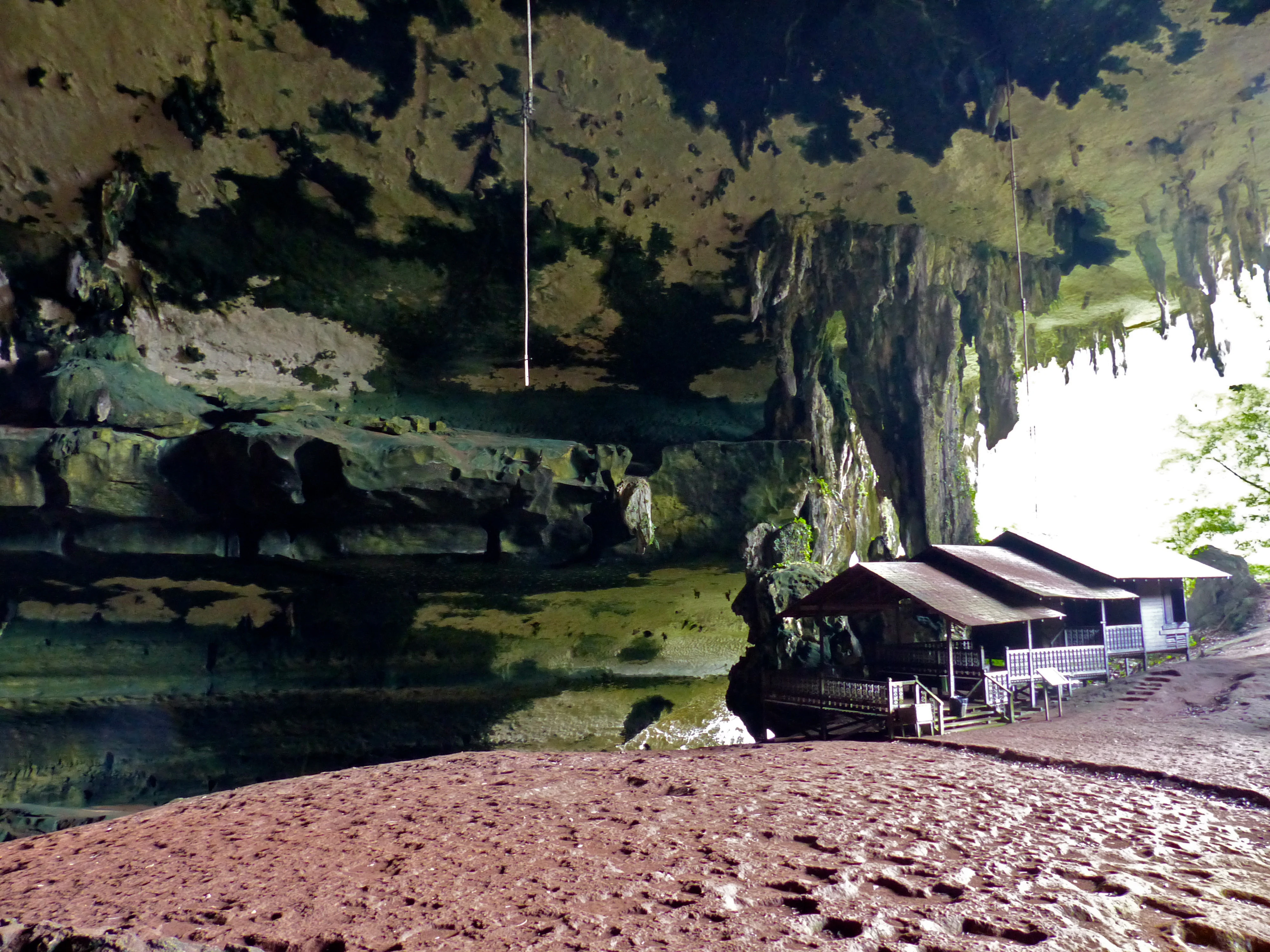
The park is centered on Gunung Subis, an imposing limestone mountain that rises dramatically from the coastal lowlands of northern Sarawak. The Niah Caves are situated on the northern edge of this limestone outcrop, with the main entrance positioned at the west mouth of the cave system at approximately 50 meters above sea level. The Great Cave's west mouth measures approximately 150 meters wide and 75 meters high, creating a cavernous entrance that has attracted human habitation for tens of thousands of years. The surrounding landscape features characteristic karst topography with steep limestone cliffs, rocky pinnacles, and forested slopes. The terrain transitions from the cave-rich mountain toward the South China Sea coastline approximately 15 kilometers to the east. Six distinct vegetation types have been documented within the park boundaries, including limestone vegetation adapted to the karst terrain, mixed dipterocarp forest covering the lower slopes, seasonal swamp forests on both clayey marl and peat soils, riparian forest along watercourses, and areas of regenerating forest.
Niah National Park ecosystems, habitats, and plant life
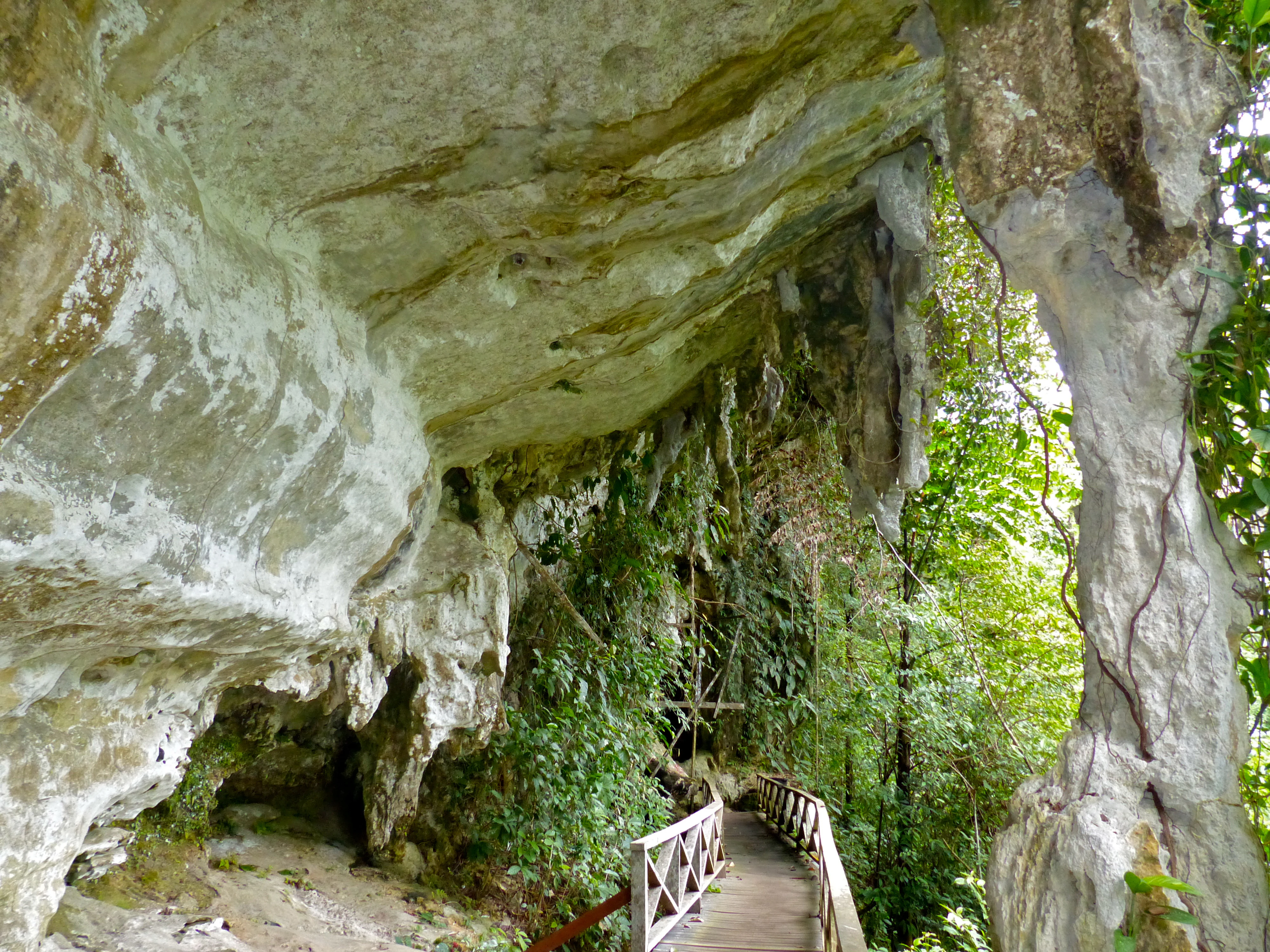
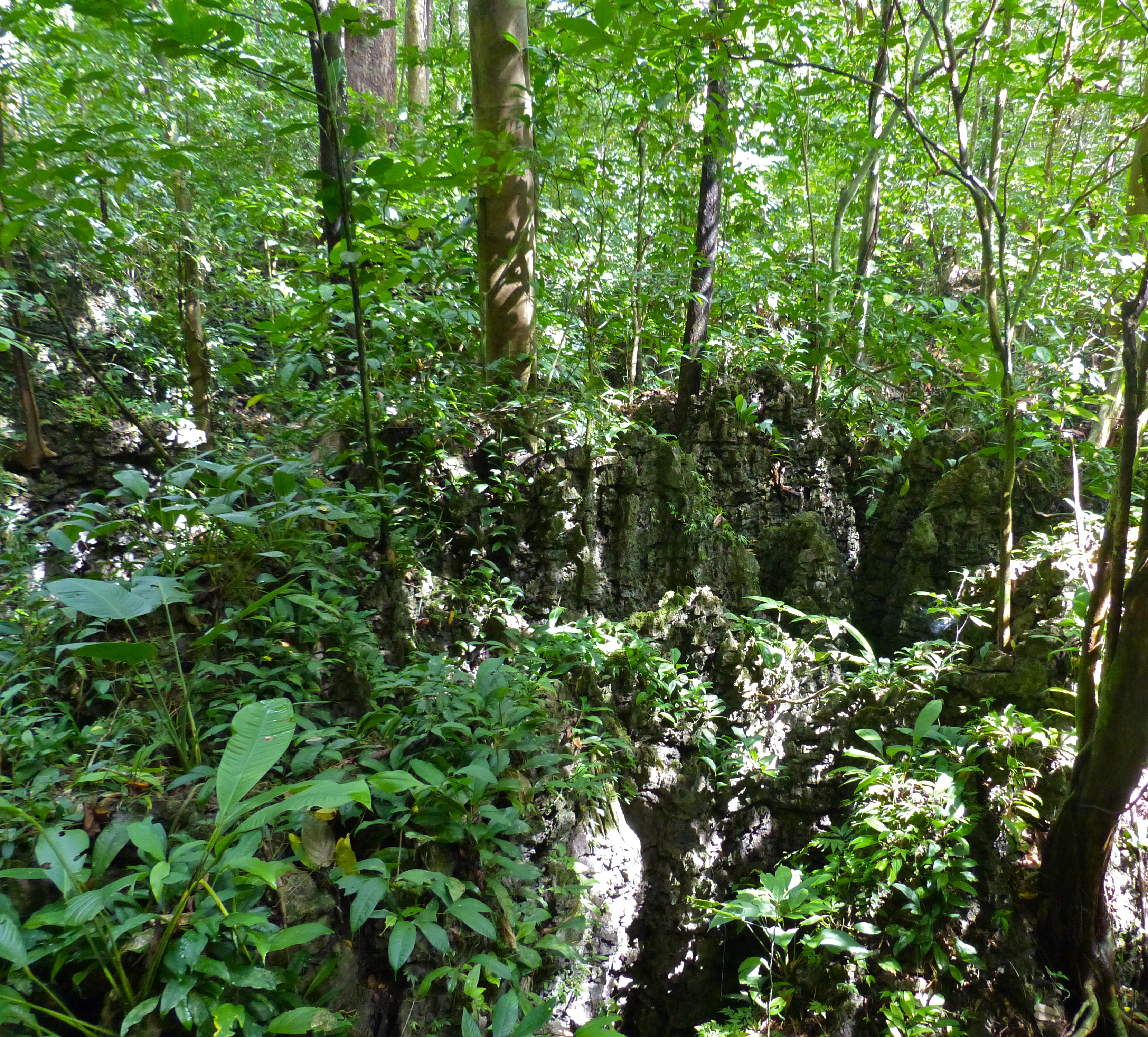
Niah National Park supports remarkable ecological diversity across its six documented vegetation types. The limestone karst formations support specialized plant communities adapted to the alkaline conditions and rocky substrate of the mountain. Mixed dipterocarp forest covers the lower slopes, representing the dominant forest type of lowland Borneo. Seasonal swamp forests occur in lower-lying areas with Poor drainage, while riparian forests follow the watercourses that traverse the park. The cave system itself creates unique ecological conditions, with the Great Cave supporting specialized invertebrate communities including three species of guano-feeding cockroaches, one of which (Symploce strinatii) is endemic to the cave. The park as a whole is home to 25 species of phasmids, 25 species of cockroach, and 11 species of praying mantids, indicating significant invertebrate biodiversity. The dark, humid cave environment supports distinct communities adapted to life in the twilight and dark zones, while the cave entrances and surrounding areas host large populations of swiftlets that roost in the cavern ceilings.
Niah National Park wildlife and species highlights
While Niah National Park is primarily celebrated for its archaeological significance, it also supports notable wildlife populations, particularly within the cave system and surrounding forest. The Great Cave houses specialized invertebrate species that have evolved to exploit the unique cave environment, most notably the guano-feeding cockroaches that form a distinct ecological community dependent on the nutrients provided by the massive bat and swiftlet populations that roost in the cave. The surrounding tropical forest supports the expected diversity of Bornean lowland wildlife, though detailed species lists are limited in the available source material. Archaeological excavations have revealed animal remains including a metacarpal bone from a young Bornean tiger among the approximately 750,000 fragments of animal bones excavated between 1954 and 1966, indicating the presence of larger predators in the ancient ecosystem. The swiftlet populations are perhaps the most economically and culturally significant wildlife element, as their nests form the basis of the lucrative bird's nest soup industry that has operated in the caves for generations.
Niah National Park conservation status and protection priorities
Niah National Park holds significant conservation value both for its archaeological heritage and its ecological systems. The designation as a National Historic Monument in 1958 and later as a national park in 1974 provided formal protection for the cave complex and surrounding landscape. The park's inscription as a UNESCO World Heritage Site in 2024 represents the highest level of international recognition and protection, specifically acknowledging the outstanding universal value of the archaeological heritage preserved within the caves. The diverse vegetation types, from limestone karst communities to seasonal swamp forests, represent important habitats within the Bornean landscape. The cave ecosystem with its endemic cockroach species and specialized invertebrate communities requires ongoing protection to maintain ecological integrity. The traditional management of swiftlet nesting sites, where private owners collect nests twice yearly under a system of allocated rights, represents a sustainable use model that has maintained the resource for generations.
Niah National Park cultural meaning and human context
Niah Caves hold profound cultural significance as a site of continuous human occupation spanning approximately 40,000 years. The archaeological discoveries reveal not just ancient human remains but a complete sequence of cultural development from the Paleolithic through the Neolithic and into the Iron Age. The Painted Cave contains rock art dating to around 1,200 years ago, representing the spiritual and cultural expressions of more recent inhabitants. The discovery of wooden coffin 'death ships' indicates complex burial traditions. The site's location between Sarawak and Brunei historically positioned it at a crossroads of regional cultures. The swiftlet nest collection tradition represents a living cultural practice that has shaped human relationship with the caves for centuries. The park's UNESCO designation acknowledges this living cultural heritage alongside the ancient archaeological significance.
Top sights and standout views in Niah National Park
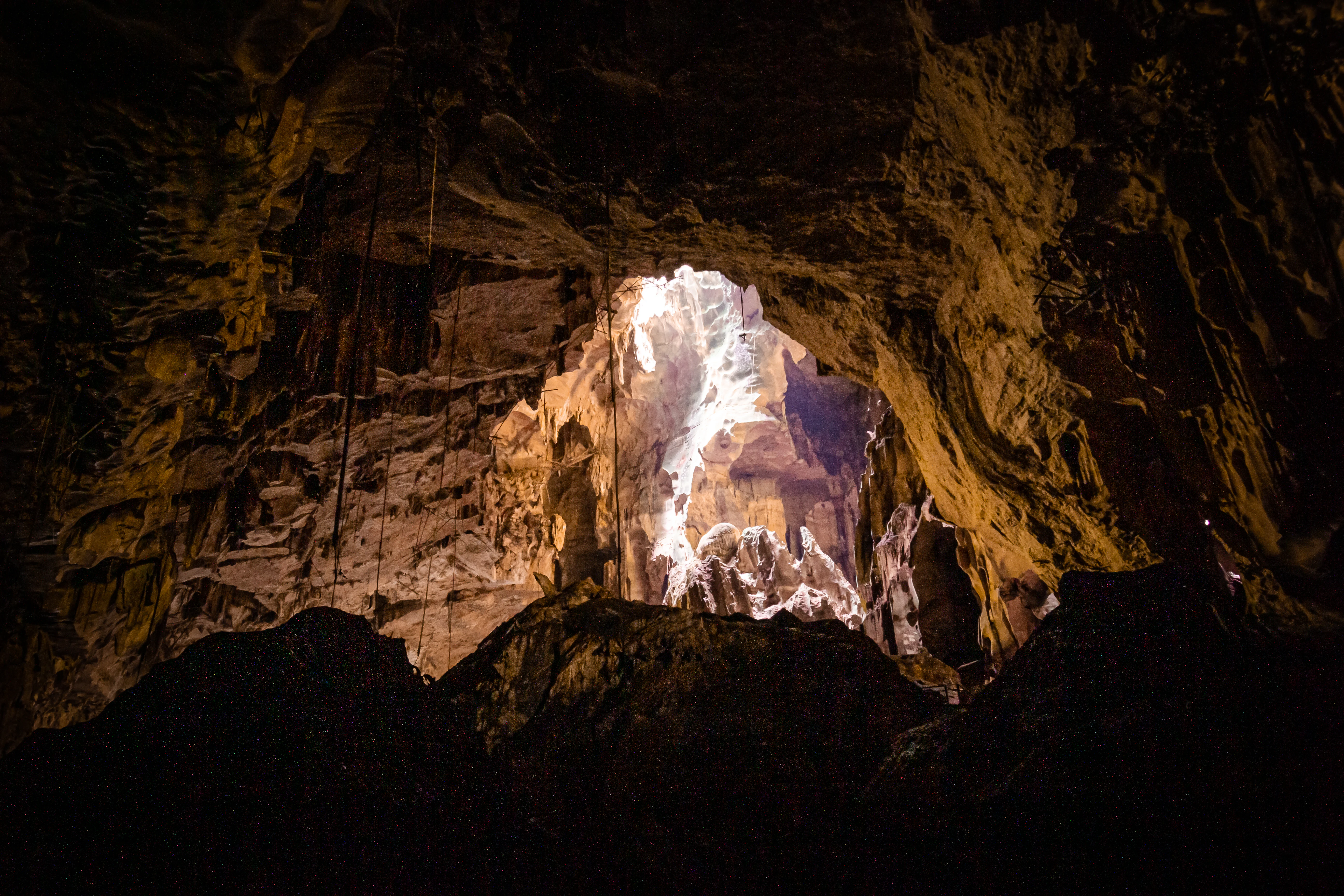
The Niah Caves represent a unique convergence of prehistoric archaeology and living cultural traditions. The 37,000-year-old Deep Skull is among the oldest human fossils discovered in Southeast Asia, providing crucial insights into the region's ancient human history. The continuous sequence of human occupation spanning 40,000 years makes this an exceptional archaeological site. The Painted Cave's ancient rock art and burial practices offer tangible connections to the spiritual world of past inhabitants. The traditional bird's nest soup industry operating within the caves represents a remarkable example of sustainable human use of a natural resource that has continued for generations. The diverse vegetation growing on the limestone karst formations showcases ecological adaptation to unusual substrates.
Best time to visit Niah National Park
Niah National Park can be visited throughout the year given its location in the tropical climate of Sarawak. The dry season typically falls between March and October, offering more comfortable conditions for exploring the cave system and forest trails. The wet season from November to February brings higher rainfall but also fewer visitors. Temperature and humidity remain relatively consistent year-round, with the cave interior providing a cooler refuge from the tropical heat. Those interested in the bird's nest industry may wish to time their visit to coincide with the January or June collection periods, though this is not typically a tourist activity. The cave interior maintains a fairly constant environment regardless of season.