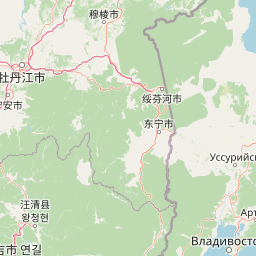
Why Northeast China Tiger and Leopard National Park stands out
Northeast China Tiger and Leopard National Park is most renowned as the primary protected habitat for China's remaining populations of Siberian tigers and Amur leopards, two of the world's most endangered large carnivores. The park encompasses the core remaining territory in China for these apex predators, functioning as a vital conservation corridor connecting forest habitats across the China-Russia border. Beyond its flagship species, the park protects one of the last significant tracts of old-growth mixed forest in northeastern Asia, home to diverse fauna including brown bears, Asiatic black bears, Eurasian lynx, sable, sika deer, red deer, red-crowned cranes, and golden eagles. The park represents the realization of a major national conservation strategy to reverse the fortunes of these tigers and leopards through habitat protection, anti-poaching efforts, and international cooperation with neighboring Russian protected areas.
Northeast China Tiger and Leopard National Park history and protected-area timeline
The establishment of Northeast China Tiger and Leopard National Park emerged from decades of conservation concern for these critically endangered large predators in China. Historically, the forests of northeastern China supported abundant tiger and leopard populations that were described in historical records as being present throughout the mountain ranges. However, rapid deforestation, habitat fragmentation, and intense hunting pressure throughout the 20th century caused dramatic population declines. By the late 1990s, surveys conducted jointly by Chinese, Russian, and American experts found only 12-16 tigers and 7-12 leopards remaining in China, representing a critically low population that faced immediate extinction risk without intervention. The turning point came with the implementation of the Natural Forest Protection Project and provincial hunting bans in the mid-1990s, which began to allow habitat recovery. Concurrently, a research team from Beijing Normal University conducted decade-long field studies using camera traps to monitor wildlife populations, establishing China's first systematic tiger and leopard monitoring network. Their research demonstrated that populations were slowly recovering, with 27 tigers and 42 leopards documented between 2012-2014. In 2015, a proposal based on this research to establish a national-scale conservation initiative was submitted to central authorities and received presidential endorsement. The pilot phase launched in 2017 with the establishment of the park administration in Changchun, followed by formal designation as China's tenth national park in October 2021. International cooperation with Russian park counterparts began in 2019 through agreements with the Leopard Paradise National Park and Cedar Valley protected areas.
Northeast China Tiger and Leopard National Park landscape and geographic character
The terrain of Northeast China Tiger and Leopard National Park is characterized by mountainous forest landscapes in the southern reaches of the Changbai Mountains, a major mountain range forming part of the volcanic border region between China, Russia, and North Korea. The park encompasses a complex topography of mountain ridges, steep valleys, and forested slopes that descend from higher elevations in the west toward lower foothills approaching the eastern borderlands. The region's geology includes ancient crystalline basement rocks overlain by sedimentary formations, with soils typical of temperate forest ecosystems supporting the dense vegetation cover. The forest composition transitions with elevation, with mixed coniferous and broadleaf forest dominating the middle elevations while pure coniferous forest characterizes higher terrain. The landscape includes numerous streams and smaller rivers that flow through the valleys, feeding the broader Amur River watershed that defines much of the China-Russia border region. This water system provides important aquatic habitat and movement corridors for wildlife. The park's elevation range creates diverse microclimates and habitat conditions that support the ecological diversity found within its boundaries.
Northeast China Tiger and Leopard National Park ecosystems, habitats, and plant life
The ecological character of Northeast China Tiger and Leopard National Park is defined by extensive temperate forest ecosystems that represent some of the most intact remaining forest in northeastern Asia. The nearly 9,500 square kilometers of coniferous and mixed broadleaf forest create a complex habitat matrix supporting the park's diverse vertebrate community of 355 species. The forest vegetation is dominated by Korean pine, which forms the canopy in many areas, along with species of spruce and fir in higher elevations. Mixed within this coniferous framework are deciduous species including birch, aspen, and oak that add structural diversity to the forest. This forest type supports a rich understory of shrubs and herbaceous plants that provide forage for the park's herbivore populations. The ecosystem represents a boundary between boreal and temperate forest provinces, giving it a mixed species composition with both northern and southern elements. Beyond the forests, the park includes riparian zones along streams and rivers, rocky outcrops on mountain ridges, and other habitat variations that contribute to overall biodiversity. The forest ecosystem functions as a critical ecological corridor connecting isolated patches of suitable habitat and allowing genetic exchange between tiger and leopard populations on both sides of the China-Russia border.
Northeast China Tiger and Leopard National Park wildlife and species highlights
The wildlife community of Northeast China Tiger and Leopard National Park is distinguished by the presence of two of Asia's most endangered large predators: the Siberian tiger and the Amur leopard. These apex predators require large home ranges and intact forest ecosystems, and their presence indicates the overall health of the broader ecological community. The park also supports other members of the carnivore guild including brown bears, Asiatic black bears, and Eurasian lynx, representing a complete predator community characteristic of intact temperate forest ecosystems. Herbivore species in the park include sika deer and red deer, which serve as prey for the large predators and also support the ecological dynamics of the forest community. The park's avifauna includes the red-crowned crane, a species of significant conservation attention, as well as golden eagles that occupy the raptor ecological niche. The sable, a marten species valued for its fur historically, represents another forest-dwelling mammal present in the park. The documented presence of 355 vertebrate species indicates a relatively intact ecological community, though thepark's management continues to focus on expanding populations of the endangered flagship species and ensuring sufficient prey base to support predator recovery.
Northeast China Tiger and Leopard National Park conservation status and protection priorities
Northeast China Tiger and Leopard National Park represents one of China's most ambitious conservation initiatives, specifically designed to recover and protect viable populations of endangered large carnivores within a national park framework. The park was created through a top-down policy process that elevated tiger and leopard conservation to national strategic priority, reflecting the political commitment to species recovery. Management during the pilot phase focused on removing anthropogenic threats including closing industrial and mining operations, removing fences and infrastructure that fragmented habitat, eliminating hunting equipment, and rescuing and releasing captive wildlife. The establishment of wildlife feeding stations and habitat restoration programs addressed immediate resource needs for recovering populations. The transboundary nature of the park's conservation mandate is significant, as tigers and leopards naturally move across the China-Russia border, requiring international coordination to be effective. The 2019 cooperation agreements with Russian protected areas establish frameworks for joint monitoring, information sharing, and coordinated protection efforts. The park's success is measured not only in population metrics for tigers and leopards but also in the broader recovery of the forest ecosystem and restoration of ecological processes that support diverse wildlife communities.
Northeast China Tiger and Leopard National Park cultural meaning and human context
The forest landscapes of northeastern China have historically been inhabited by peoples including the Manchu and other ethnic groups whose relationship with these forests extended over centuries. The region adjacent to the park includes the Yanbian Korean Autonomous Prefecture, home to Korean ethnic communities who have maintained traditional connections to the landscape. While the park itself is managed as a strictly protected conservation area, the broader region has a history of forest resource use including timber extraction and traditional land management practices. The establishment of the national park has involved considerations of local community livelihoods and the transition from resource extraction economies toward conservation-based sustainable development. The park's name in Chinese explicitly references the two flagship species that define its conservation identity, and the park has become a symbol of China's commitment to environmental stewardship and international conservation leadership.
Top sights and standout views in Northeast China Tiger and Leopard National Park
Northeast China Tiger and Leopard National Park stands as the primary stronghold for the Amur tiger and Amur leopard within China, representing the best hope for recovering viable populations of these critically endangered cats. The park's 14,600 square kilometers of protected forest create the largest intact forest ecosystem in northeastern China, serving as a critical transboundary corridor connecting with Russian Far East reserves. Camera trap monitoring has documented steady population recovery since the 1990s low point, demonstrating the effectiveness of protection measures. The park protects a complete temperate forest ecosystem with 355 vertebrate species, including brown bears, black bears, lynx, deer, and cranes. The establishment of this national park in 2021 marked a new approach to large-carnivore conservation in China, combining strict protection with habitat restoration and international cooperation. The park's designation as a national park elevated conservation of these species to the highest level of institutional protection within China's rapidly expanding national park system.
Best time to visit Northeast China Tiger and Leopard National Park
The park's location in northeastern China results in pronounced seasonal variation that influences the character of visits throughout the year. The summer months of July and August bring warm conditions and lush forest vegetation, offering good opportunities for wildlife observation although the dense foliage can make spotting tigers and leopards more challenging. Winter visits from December through February offer the advantage of easier wildlife viewing as deciduous trees are bare and snow tracks reveal animal movements, though temperatures are extremely cold and access may be limited. The shoulder seasons of spring and autumn provide moderate temperatures and changing forest colors, with autumn particularly notable for the display of autumn foliage across the mixed forest. The park's interior regions experience cold continental winters with heavy snow, affecting both visitor accessibility and the behavior of wildlife that may become more concentrated in lower elevations during the coldest months. Visitors interested in tiger and leopard photography should consider the winter months when track surveys and camera trap data suggest higher detection rates, though the harsh conditions require appropriate preparation.