Why Ras Hafun National Park stands out
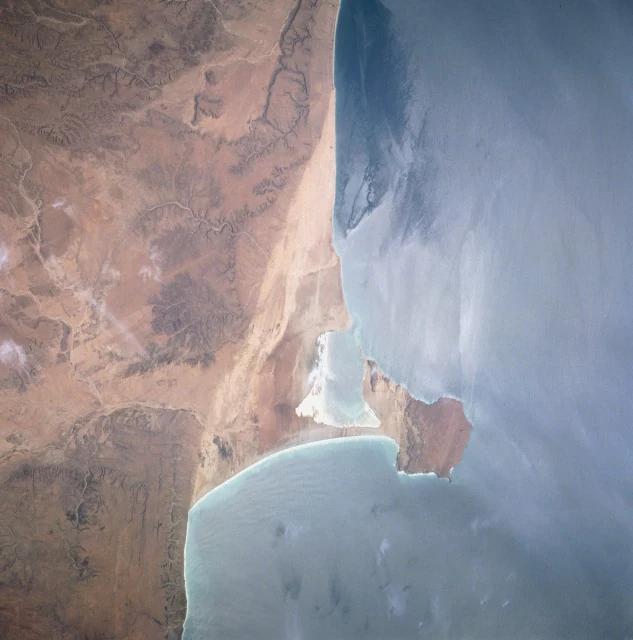
Ras Hafun National Park is best known for its dual distinction as the easternmost point of mainland Africa and the site of the ancient trade emporium of Opone, one of history's most significant coastal trading cities. The park's dramatic peninsula setting, where the Guardafui Channel meets the Somali Sea, creates a striking geographic landmark visible even from satellite imagery. Its recognition as an Important Bird Area highlights the ecological significance of its coastal and savanna habitats, supporting bird species found nowhere else in the world. The combination of exceptional geographic significance, rich archaeological heritage, and unique biodiversity makes this park one of Somalia's most remarkable protected areas.
Ras Hafun National Park history and protected-area timeline
The history of Ras Hafun stretches back millennia and reflects its strategic position along ancient maritime trade routes. The peninsula is widely identified as the location of Opone, a famous ancient trade emporium mentioned in the Periplus of the Erythraean Sea, a Greek navigational guide written in the first century CE. This document describes Opone as a bustling port city strategically positioned on trade routes spanning the Indian Ocean's rim, where merchants from as far as Indonesia and Malaysia passed through. By 50 CE, the area had already become well established as a center for cinnamon trade, alongside the barter of cloves, other spices, ivory, exotic animal skins, and incense. Archaeological expeditions conducted since the 1970s have uncovered extensive remains including ancient coins, Roman pottery, drystone buildings, cairns, masjids, walled enclosures, standing stones, and platform monuments, with many finds pre-dating the Islamic period. In the pre-independence era, Hafun was governed by the Majeerteen Sultanate and served as the seat of the polity's capital at Alula. The area later formed part of Italian Somaliland. In December 2004, Hafun was struck by the tsunami generated by the Indian Ocean earthquake, representing the most affected area on the African continent. More recently, Cyclone Gati struck directly in November 2020 as the strongest cyclone to hit the Horn of Africa since reliable records began.
Ras Hafun National Park landscape and geographic character
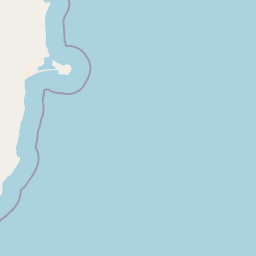
The landscape of Ras Hafun National Park is defined by its dramatic coastal promontory setting where the Guardafui Channel meets the Somali Sea. The peninsula extends from a sand spit that connects to the mainland at the town of Foar, a narrow landform stretching about 20 kilometers long and varying between 1 and 3 kilometers in width. The promontory itself rises to approximately 5 meters above sea level and projects into the ocean, creating a distinctive headland visible from considerable distances. The coastline alternates between rocky sections and sandy beaches, with mangrove stands occurring in sheltered areas where conditions allow. Inland from the coast, the terrain flattens into lowland plains supporting an arid savanna environment characterized by low, woody vegetation adapted to the semi-desert conditions of the Horn of Africa. The combination of the promontory's dramatic geometry, the transition from marine to terrestrial environments, and the stark coastal-to-inland ecological gradient creates a visually striking landscape that has served as a navigational landmark for maritime travelers across centuries.
Ras Hafun National Park ecosystems, habitats, and plant life
The nature of Ras Hafun reflects the meeting point of marine and arid terrestrial ecosystems along Somalia's northeastern coast. The park's coastal zone encompasses rocky shoreline habitats, sandy beach environments, and mangrove stands that provide critical ecological functions despite their relatively limited extent. These coastal ecosystems support marine biodiversity and serve as important feeding and resting areas for various species. Moving inland, the landscape transitions into arid savanna plains characterized by sparse, low woody vegetation adapted to the region's limited rainfall and semi-desert conditions. The park has been designated as an Important Bird Area by BirdLife International due to its significance for bird populations, particularly species with restricted ranges in the Horn of Africa. The unique combination of coastal, mangrove, and arid savanna habitats creates an ecological interface that supports species adapted to both marine-influenced and semi-arid conditions, making the area significant for regional biodiversity despite its harsh climate.
Ras Hafun National Park wildlife and species highlights
Ras Hafun National Park supports notable wildlife populations, with particular significance attributed to its avifauna. The park has been designated as an Important Bird Area by BirdLife International because it supports significant populations of several bird species, including the Somali pigeon, Forbes-Watson's swift, eastern chanting goshawk, Somali fiscal, lesser hoopoe-lark, Somali lark, Somali starling, Somali wheatear, and Somali sparrow. Many of these species are associated with the Horn of Africa region and represent either endemic or near-endemic populations. The arid savanna inland from the coast supports wildlife adapted to semi-desert conditions, while the coastal zone and mangroves provide habitat for marine-influenced species. While specific large mammal information is limited in the source material, the broader Somali ecosystem context suggests the presence of typical arid-land species adapted to the region's climate.
Ras Hafun National Park conservation status and protection priorities
Ras Hafun National Park represents an important conservation designation for Somalia's northeastern coast, protecting both significant natural habitats and extraordinary archaeological heritage. The park's designation as an Important Bird Area by BirdLife International highlights its international conservation significance for supporting populations of regionally endemic bird species. The protection of the coastal-marine interface, including rocky coastlines, sandy beaches, and mangrove ecosystems, preserves critical habitats in a region where such coastal environments face multiple pressures. The park also conserves archaeological sites associated with ancient Opone, one of the most significant trade emporiums in ancient maritime history, representing a cultural heritage dimension that complements its ecological values. The combination of natural and cultural conservation priorities makes this park particularly significant within Somalia's protected area network.
Ras Hafun National Park cultural meaning and human context
Ras Hafun carries profound cultural significance rooted in its role as the ancient port of Opone, one of the most important trading settlements in the Indian Ocean's western basin during classical antiquity. Mentioned in the Periplus of the Erythraean Sea, Opone served as a crucial node in the network of coastal trade emporia that connected the Roman Empire, the Persian Gulf, the Arabian Peninsula, and the Indian subcontinent to Southeast Asian ports. Archaeological evidence reveals centuries of continuous occupation and trade, with materials from ancient Egypt, the Nile Valley, Persia, Mesopotamia, and potentially the Indian subcontinent found at the site. The area also bears the imprint of more recent historical periods, including the era of the Majeerteen Sultanate, with surviving fort structures reflecting the region's political history. Traditional fishing communities continue to inhabit the area, maintaining connections to the sea that have defined local livelihoods for generations. The 17th-century masjids in Hafun represent the Islamic architectural heritage that overlay earlier historical layers.
Top sights and standout views in Ras Hafun National Park
Ras Hafun National Park stands as a unique destination where extraordinary geographic position meets deep historical significance. The park protects mainland Africa's easternmost point, a dramatic peninsula visible from space that has guided sailors for millennia. Visitors and researchers are drawn to the area not only for its geographic distinction but also for its archaeological heritage, as the site of ancient Opone, a legendary trading city where cinnamon, cloves, and other valuable commodities moved between civilizations. The Important Bird Area designation recognizes the park's ecological significance for endemic bird species in a region of global biodiversity importance. The combination of coastal landscapes, archaeological sites, and endemic wildlife creates a compelling conservation narrative for this remote but remarkable corner of Africa.
Best time to visit Ras Hafun National Park
Visiting Ras Hafun National Park would be guided by Somalia's climatic patterns, with the region experiencing arid to semi-arid conditions typical of the Horn of Africa. The coastal position moderates temperatures somewhat compared to inland areas, but conditions remain hot and dry for much of the year. The timing of any visit would need to account for the broader security and accessibility considerations that affect travel to this region of Somalia. The park's significance as a conservation area and archaeological site ensures that visits would be most meaningful during cooler, more comfortable periods, though specific seasonal visitor guidance would depend on current operational conditions and local circumstances.