Why Sheikh Badin National Park stands out
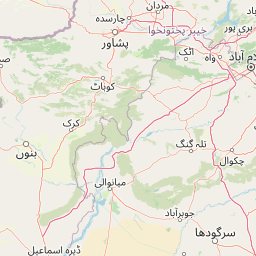
Sheikh Badin National Park is best known for its position at the eastern edge of the Sulaiman Mountains, where rugged hills and valleys create a distinctive mountainous landscape within central Pakistan. The park is notable for its diverse birdlife, particularly the presence of 18 migratory species among the 41 documented avifauna species, making it significant for seasonal bird observation. The reptile diversity is equally remarkable, with 21 documented reptile species including monitor lizards, pythons, and venomous snakes representing one of the more comprehensive herpetofauna assemblages in the region.
Sheikh Badin National Park history and protected-area timeline
Sheikh Badin National Park was established in 2003 as part of Pakistan's expanding network of protected areas. The creation of the park responded to growing environmental concerns about the ecological sensitivity of the Sulaiman Mountain foothills and the need to conserve biodiversity in a region experiencing increasing developmental pressures. Prior to formal protection status, the Sheikh Badin Hills had long served as a traditional grazing area for local communities and contained religious sites of significance to the resident populations.
The park's establishment marked an important milestone in regional conservation efforts, providing formal legal protection to an area that had previously lacked dedicated conservation status. The selection of 2003 as the establishment year reflected contemporary priorities in Pakistan's environmental policy, which emphasized the creation of representative protected areas covering diverse ecological zones. The park's location at the eastern edge of the Sulaiman Mountains positions it within a region of significant biogeographic importance, connecting mountain and plain ecosystems.
Sheikh Badin National Park landscape and geographic character
The landscape of Sheikh Badin National Park is defined by the Sheikh Badin Hills, a series of rocky ridges, steep valleys, and undulating terrain that forms the easternmost extension of the Sulaiman Mountains. The topography creates a dramatic contrast with the flat alluvial plains that characterize much of the surrounding Dera Ismail Khan and Lakki Marwat districts. Elevation changes across the park create varied sun exposures and moisture conditions, supporting diverse vegetation communities.
The hills exhibit classic semi-arid mountain characteristics, with exposed rocky outcrops, scrub-covered slopes, and seasonal drainage channels that carry water during monsoon periods. The geological composition reflects the broader Sulaiman Mountains, which represent ancient uplift zones containing sedimentary formations. The park's position at this mountain-plain interface creates scenic viewpoints and diverse terrain attractive for exploration.
Sheikh Badin National Park ecosystems, habitats, and plant life
The ecological character of Sheikh Badin National Park reflects its position at a biogeographic crossroads between the Sulaiman Mountains and the Indus plains. The park supports 107 documented plant species, representing diverse vegetation types adapted to the semi-arid mountain environment. The vegetation includes scrubland species, thorny shrubs, and scattered trees along drainage channels and higher-elevation areas.
The park's ecological zones include rocky hill slopes with sparse vegetation, valley bottoms with more productive soils, and areas where traditional grazing has shaped vegetation structure. This mosaic of habitats supports the park's notable wildlife diversity, particularly the bird and reptile communities. The transitional nature of the landscape, where mountain ecosystems meet plain environments, contributes to species diversity as elements from both biogeographic regions occur here.
Sheikh Badin National Park wildlife and species highlights
Sheikh Badin National Park supports a remarkable diversity of wildlife, with 41 documented bird species representing both resident and migratory populations. The bird community includes 18 migratory species that visit the park seasonally, contributing to its importance as a seasonal birdwatching destination. Notable bird species include the Shikra, Common buzzard, Alpine swift, and various dove and pigeon species.
The reptile population is particularly notable, with 21 reptile species documented including monitor lizards such as the Bengal monitor and Yellow monitor, several snake species including the Indian rat snake, Common Krait, Russell's viper, and Saw-scaled viper, and the impressive Indian spiny-tailed lizard. Two amphibian species, the Indus valley toad and Skittering frog, also occur in the park. The mammal community, while not detailed in available surveys, likely includes species adapted to the mountainous terrain and semi-arid conditions.
Sheikh Badin National Park conservation status and protection priorities
Sheikh Badin National Park represents an important conservation priority within Pakistan's protected area system due to its location at the eastern edge of the Sulaiman Mountains, a region of significant biogeographic importance. The park protects representative examples of mountain foothill ecosystems that face increasing pressure from development and land-use changes in the surrounding plains. Formal protection status established in 2003 provides a legal framework for managing threats and conserving biodiversity.
The bird surveys documenting 41 species, including substantial migratory populations, demonstrate the park's value for avian conservation. Similarly, the herpetofauna diversity, with 23 species recorded, indicates healthy reptile and amphibian populations. The plant survey documenting 107 species reflects reasonable vegetation cover and ecosystem integrity. The presence of resident communities with traditional land-use practices adds a cultural dimension to the conservation context.
Sheikh Badin National Park cultural meaning and human context
Sheikh Badin National Park contains resident communities whose presence predates the formal establishment of the protected area. The Mughal population traces its origins to families who arrived in the region following the 1857 war of independence against British rule, settling in the hills and establishing communities that maintain distinct cultural identity. The Syed community claims lineage to Sheikh Abdul Qadir Jelaani, a revered religious figure, lending spiritual significance to the landscape.
These communities practice traditional land-use activities including grazing and seasonal movement through the hills. The interrelationship between human communities and the natural environment has shaped both the landscape and the cultural character of the area. The religious heritage associated with Sheikh Abdul Qadir Jelaani adds a pilgrimage dimension to the broader cultural context of the region.
Top sights and standout views in Sheikh Badin National Park
The primary highlight of Sheikh Badin National Park is its dramatic mountainous landscape at the eastern edge of the Sulaiman Mountains, creating scenic terrain quite different from the surrounding plains. The park's bird diversity, with 41 species including 18 migratory species, makes it particularly significant for seasonal wildlife observation. The herpetofauna assemblage of 23 species represents one of the more comprehensive reptile and amphibian populations documented in the region. The cultural dimension, with Mughal and Syed communities maintaining traditional presence in the hills, adds historical depth to the natural experience.
Best time to visit Sheikh Badin National Park
The optimal time to visit Sheikh Badin National Park corresponds to the cooler months from October through March, when temperatures in this semi-arid mountainous region are more comfortable for outdoor exploration. Winter months offer pleasant daytime temperatures and clear visibility across the hill landscapes. The monsoon season from July through September brings rainfall that can affect access to some trail areas and create seasonal streams, though the resulting vegetation green-up enhances the landscape's visual appeal. Summer months from April through June bring high temperatures that make extended outdoor activities challenging.