Why Sierra de Perijá National Park stands out
Sierra de Perijá National Park is best known for its extraordinary ecological diversity spanning multiple life zones within a single protected area. The park protects one of the few remaining habitats of the spectacled bear, the only bear species native to South America, along with populations of puma, ocelot, and jaguar. The mountains harbor significant endemic bird species including the endangered Perijá metaltail hummingbird and the Perijá tapaculo, a bird species only formally described in 2015. The park's altitudinal range supports a complex mosaic of tropical rainforests, cloud forests, highland moorlands, and alpine tundra ecosystems, making it a living laboratory of Neotropical ecology.
Sierra de Perijá National Park history and protected-area timeline
Sierra de Perijá National Park was established in 1978 through Venezuelan national legislation aimed at protecting the biodiversity and scenic values of the Serranía de Perijá mountain range. The creation of the park reflected a broader movement in Venezuela during the 1970s to expand the country's protected area network and preserve representative samples of major ecological systems. The Instituto Nacional de Parques (INPARQUES) was designated as the governing body responsible for managing the park and enforcing its protected status. The park's establishment came at a time when scientific understanding of the region's remarkable biodiversity was growing, with researchers increasingly recognizing the mountains of the Serranía de Perijá as a distinct biogeographic region with numerous endemic species. Over the decades since its creation, the park has remained an important conservation priority, though management challenges related to enforcement and sustainable development in the surrounding region have persisted.
Sierra de Perijá National Park landscape and geographic character
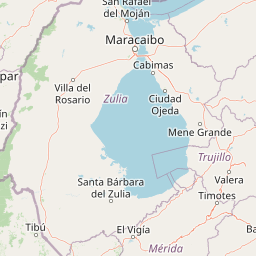
The landscape of Sierra de Perijá National Park is dominated by the rugged terrain of the Serranía de Perijá, a mountain range that rises sharply from the southwestern margin of Lake Maracaibo. The terrain is characterized by steep slopes, deep valleys, and prominent ridges that reflect the geological complexity of this border region. Pico Tétar, the highest point within the park, reaches an elevation of 3,500 meters and is typically shrouded in mist and cloud for much of the year. The mountain range acts as a barrier separating the humid lowlands around Lake Maracaibo from the more seasonal environments of Colombia to the west. Rivers cascading down the slopes have carved V-shaped valleys and waterfalls that add to the scenic diversity of the park. The transition from the lake's shoreline up through foothills and into the high mountains creates a visually dramatic landscape that changes dramatically with elevation.
Sierra de Perijá National Park ecosystems, habitats, and plant life
The ecological complexity of Sierra de Perijá National Park stems from its extraordinary altitudinal range, which encompasses multiple distinct life zones within a relatively compact area. At lower elevations, the park protects extensive tropical rainforests dominated by towering trees such as Anacardium excelsum, Cecropia species, and various Tabebuia varieties. As elevation increases, the forest transitions into cloud forest, where persistent mist and high humidity support epiphytic plants including aroids, bromeliads, ferns, and mosses. The wax palms of the genus Ceroxylon are characteristic of these cloud forest zones. At the highest elevations, the vegetation gives way to highland moors and alpine tundra, where shorter vegetation and specialized plant species adapted to cooler, windier conditions prevail. The park also supports aquatic environments in its rivers and streams, with species such as Echinodorus present in wetland areas.
Sierra de Perijá National Park wildlife and species highlights
The wildlife community of Sierra de Perijá National Park is remarkably diverse, reflecting the park's multiple habitats and its position as a biogeographic crossroads. The park is one of the few places in Venezuela where the spectacled bear, South America's only native bear species, can be found, though populations are small and encounters are rare. Large felids including puma, ocelot, and potentially jaguar roam the forested slopes, preying on deer species such as the Amazonian brown brocket, common red brocket, and little red brocket. Collared peccaries and various primate species including Colombian red howler monkeys, grey-handed night monkeys, varied capuchins, and brown spider monkeys add to the mammalian diversity. The bird fauna is particularly noteworthy, with the endangered military macaw among the parrot species present, and the Perijá metaltail representing a hummingbird endemic to the region. The discovery and formal description of the Perijá tapaculo in 2015 highlights the continued potential for new species discoveries in this biogeographically complex area.
Sierra de Perijá National Park conservation status and protection priorities
Sierra de Perijá National Park was created specifically to protect the exceptional biodiversity of the Serranía de Perijá, recognizing the region's significance as a center of endemism and a critical habitat for rare species. The park's designation as an IUCN Category II protected area reflects its primary purpose of preserving natural ecosystems while allowing for sustainable visitor use where appropriate. The protection of the spectacled bear, an endangered species with limited distribution in Venezuela, represents a particular conservation priority given the species' vulnerability and the relatively small extent of suitable habitat in the country. Similarly, the presence of endemic bird species such as the Perijá metaltail and Perijá tapaculo underscores the park's importance for preserving populations that occur nowhere else. However, the park faces significant conservation challenges from deforestation and uncontrolled fires that continue to degrade forest ecosystems and fragment wildlife habitats.
Sierra de Perijá National Park cultural meaning and human context
The Sierra de Perijá region has historical significance as a borderland between Venezuelan and Colombian territories, though the park itself does not contain major cultural heritage sites or extensive indigenous communities. The mountain range has long served as a natural boundary, and the surrounding municipalities have mixed populations influenced by both Venezuelan and Colombian cultural traditions. The park's establishment in 1978 reflected modern conservation priorities rather than traditional land management practices, and the protected area encompasses territory that was previously used for agriculture and ranching.
Top sights and standout views in Sierra de Perijá National Park
Sierra de Perijá National Park offers visitors access to one of Venezuela's most biologically diverse mountain environments, with ecosystems ranging from tropical rainforest to alpine tundra within a single protected area. The chance to observe the spectacled bear, South America's only bear species, represents a unique wildlife viewing opportunity that draws conservation-focused visitors to the region. The park's birdlife is exceptional, with endemic species like the Perijá metaltail and the recently described Perijá tapaculo offering exceptional birdwatching potential. The dramatic scenery of the Serranía de Perijá, with its cloud-shrouded peaks and steep forested slopes rising above Lake Maracaibo, provides a striking backdrop for trekking and nature photography.
Best time to visit Sierra de Perijá National Park
The best time to visit Sierra de Perijá National Park typically falls during the dry season, which generally runs from December through April, when precipitation is lower and trail conditions are more favorable for hiking and wildlife observation. During this period, clearer skies and reduced cloud cover in the lower elevations can improve visibility of the mountain landscapes. The wet season from May through November brings higher rainfall, particularly to the lower elevations and cloud forest zones, though this period also sees more frequent mist and fog in the higher areas. The park's higher elevations can be cool year-round due to the tropical alpine environment, and visitors should be prepared for variable weather conditions regardless of the season.