Why Sturt National Park stands out
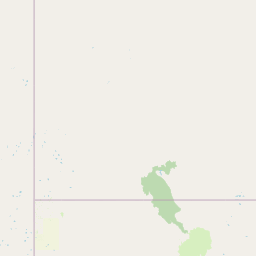
Sturt National Park is best known for its quintessential Australian outback landscapes, featuring the striking mesa formations of the Olive Downs, the vast gibber plains, and the sandhills of the Strzelecki Desert. The park's significance is amplified by the Wild Deserts conservation program, which is reintroducing seven locally extinct mammal species including the greater bilby, crest-tailed mulgara, and western quoll. Cameron Corner, where New South Wales meets South Australia and Queensland, is a iconic destination within the park. The park's biodiversity in such an arid environment is remarkable, with 197 bird species, 67 reptile species, and 31 mammal species recorded.
Sturt National Park history and protected-area timeline
Sturt National Park was established on 25 February 1972, created from the resumed lands of five pastoral properties. The park was named in honor of Charles Sturt, the colonial explorer whose expeditions through the Australian interior during the 1840s included extended periods in this region. During his inland sea expedition, Sturt's party established Fort Grey near present-day Lake Pinaroo, building a stockade to protect supplies and contain their sheep. The Mount Wood Station, a former cattle station within the park's boundaries, has been heritage-listed as a surviving example of early pastoral infrastructure. The Dingo Fence, one of Australia's most significant man-made structures, was constructed along the park's northern boundary. The park gained international recognition when it was featured in the BBC documentary series Planet Earth, showcasing its stark beauty and wildlife.
Sturt National Park landscape and geographic character
The landscape of Sturt National Park exemplifies the Australian outback with its vast, flat, reddish-brown terrain. The park encompasses several distinct landform types that create a diverse visual environment. In the eastern sections, flood plains with scattered trees lead to small rocky gorges and creek beds, with Mount Wood and Gorge Lookout providing elevated viewpoints. The central portion of the park features the distinctive Olive Downs or Jump Up country, where flat-topped mesas rise dramatically up to 150 meters above the surrounding plains, interspersed with granite outcrops and flat valleys. These mesas represent the eroded remnants of an ancient mountain range. The terrain transitions to gibber stony plains in the west, which then give way to the sandhills of the Strzelecki Desert in the far west. The park's most famous geographic marker, Cameron Corner, marks the precise point where the borders of New South Wales, South Australia, and Queensland meet.
Sturt National Park ecosystems, habitats, and plant life
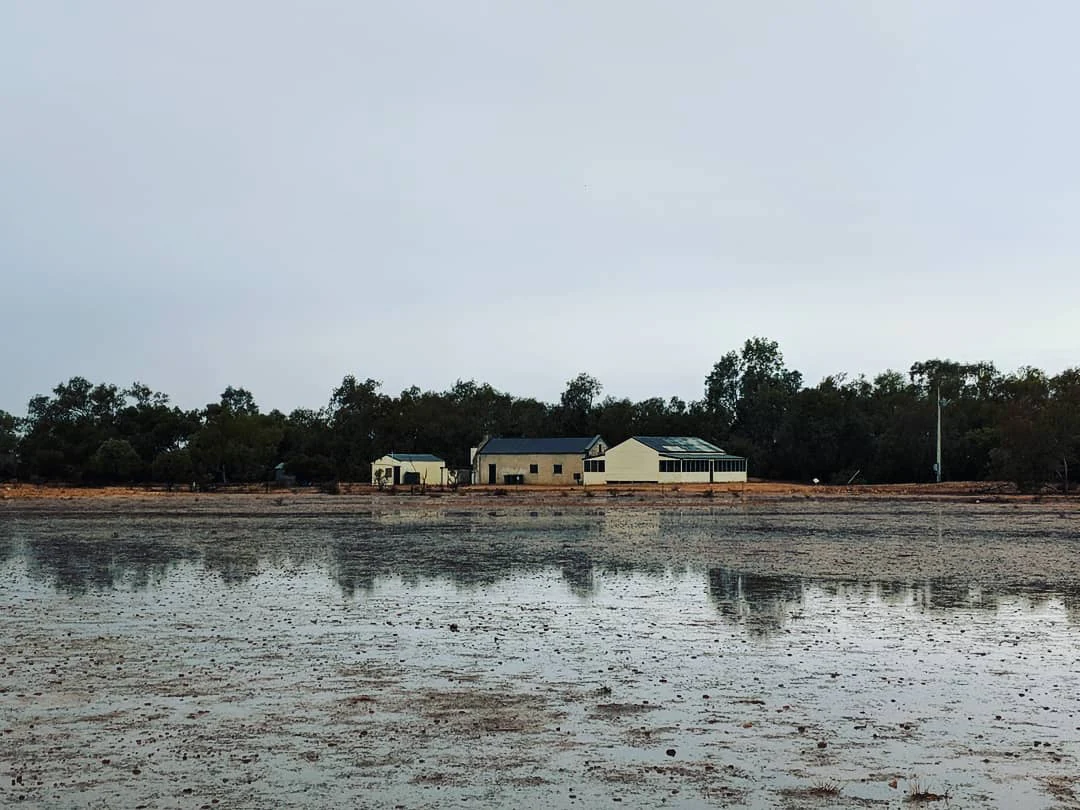
The vegetation of Sturt National Park consists primarily of mulga bushland and arid shrubland, with saltbush being particularly prevalent across the stony plains. After adequate rainfall, the normally harsh landscape undergoes a remarkable transformation as wildflowers bloom, most famously Sturt's desert pea with its striking red flowers. The park protects several distinct habitat types including gibber plains, sandhill country, rocky outcrops, and the ephemeral wetlands surrounding Lake Pinaroo. The park's biodiversity is exceptional for an arid environment, with the Ramsar-listed Lake Pinaroo providing critical aquatic habitat when filled with water. The park's location in the semi-arid zone of Australia positions it as an important corridor for mobile wildlife species and as a refuge during drought conditions.
Sturt National Park wildlife and species highlights
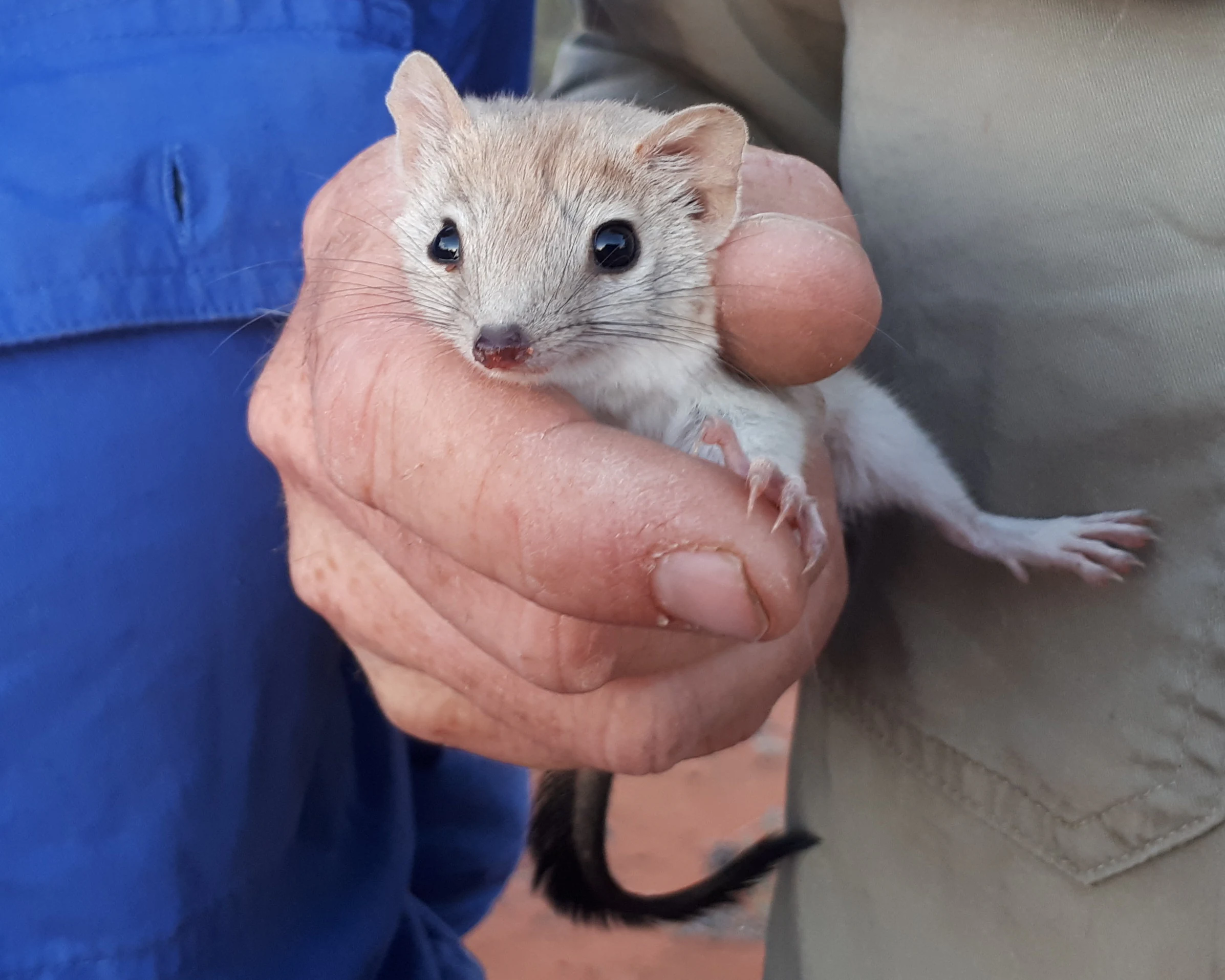
Sturt National Park supports an impressive array of wildlife despite its arid setting. At least 31 mammal species have been recorded, with red kangaroos, western and eastern grey kangaroos, and euros commonly observed. The dingo is present across the park, and the Dingo Fence along the northern boundary reflects the long-standing management of canid populations in the region. Nine bat species including the eastern long-eared bat and little broad-nosed bat have been recorded. The park is the focus of significant conservation attention through the Wild Deserts program, which is reintroducing seven locally extinct mammal species: the crest-tailed mulgara, greater bilby, western barred bandicoot, burrowing bettong, greater stick-nest rat, golden bandicoot, and western quoll. At least 67 reptile species inhabit the park, including the central bearded dragon, shingleback, and tree dtella. The bird list is particularly impressive with 197 species recorded, the most conspicuous being the emu. Lake Pinaroo supports at least 40 waterbird species when it holds water, including the Australian painted-snipe and freckled duck.
Sturt National Park conservation status and protection priorities
Sturt National Park plays a crucial role in protecting Australia's arid-zone biodiversity. The park's most significant conservation initiative is the Wild Deserts program, a partnership between the University of New South Wales, Ecological Horizons, the NSW Office of Environment and Heritage, and the Taronga Conservation Society. This ambitious program uses large fenced exclosures to reintroduce seven mammal species that have become locally extinct in the region. Lake Pinaroo within the park holds Ramsar Convention designation, recognizing its international importance as a breeding and drought refuge for waterbirds. The park's location in the Strzelecki Desert region makes it important for understanding climate change impacts on arid ecosystems and for maintaining genetic connectivity for desert-adapted species.
Sturt National Park cultural meaning and human context
The park contains evidence of Aboriginal occupation including middens and stone relics, reflecting the long history of Indigenous peoples in this harsh desert environment. The pastoral history of the region is preserved through the heritage-listed Mount Wood Station, a former cattle station that demonstrates early European settlement patterns. Fort Grey, built by Charles Sturt's expedition, represents the historical exploration period and serves as a heritage site within the park. The holding yards at Fort Grey are surviving remnants from Sturt's time, constructed to prevent sheep from wandering during the explorer's year-long stay while searching for the mythical inland sea. The park's three-state border point at Cameron Corner reflects the colonial surveying and boundary-making that shaped Australian territorial organization.
Top sights and standout views in Sturt National Park
The iconic Cameron Corner where three Australian states meet is the park's most famous landmark, drawing visitors to this remote location. The Jump Up country with its dramatic mesa formations provides striking outback scenery unlike anywhere else in New South Wales. The Wild Deserts program represents cutting-edge conservation work, with the reintroduction of species like the greater bilby and crest-tailed mulgara. Lake Pinaroo, when filled with water, creates a vital oasis attracting numerous waterbird species and is one of only a handful of Ramsar sites in the arid interior of Australia. The extensive network of walking trails and access roads allows visitors to experience the park's diverse landscapes, from floodplains to sand deserts.
Best time to visit Sturt National Park
The cooler months from April to October are generally the most comfortable times to visit Sturt National Park, with mild daytime temperatures and cooler nights. Summer temperatures can be extreme, often exceeding 40 degrees Celsius, making outdoor activity dangerous. The park's landscape transforms dramatically after rainfall, with wildflowers appearing and wildlife becoming more active and visible. The ephemeral Lake Pinaroo fills only periodically, so wildlife viewing is best during or shortly after wet periods when water attracts birds and other animals. The park can be accessed with conventional vehicles on most roads, though a four-wheel-drive vehicle is required after heavy rains when some roads become impassable.