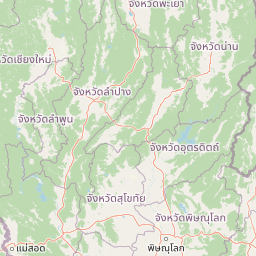
Why Taksin Maharat National Park stands out
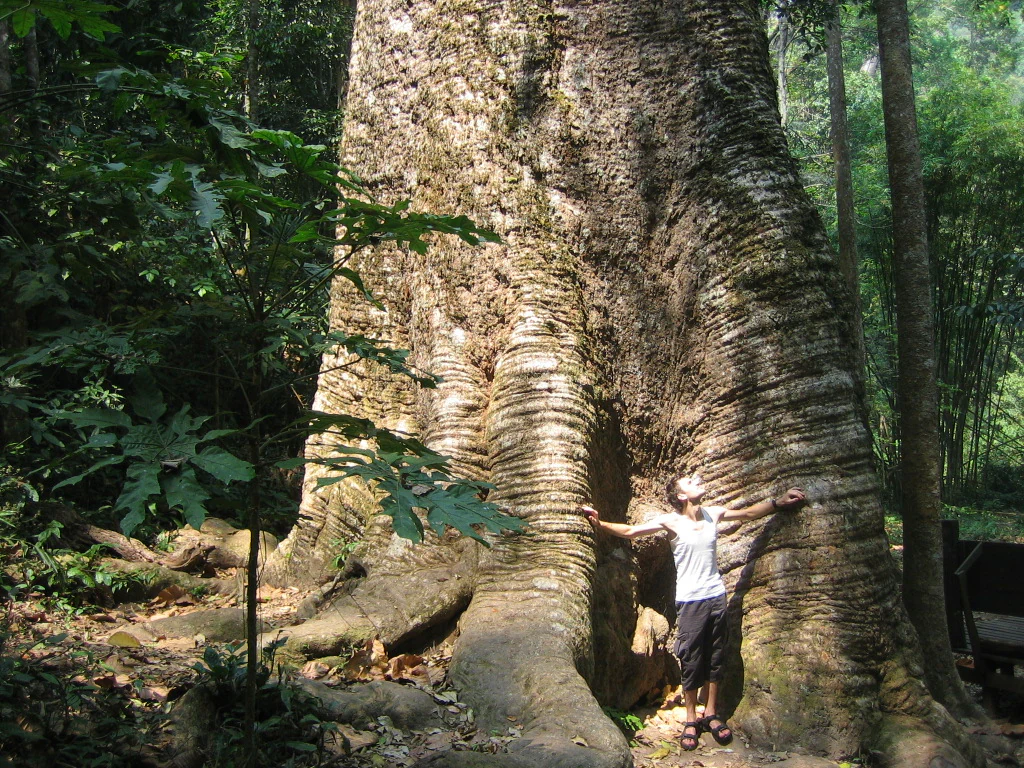
Taksin Maharat National Park is best known for Ton Krabak Yai, a monumental Krabak tree (Anisoptera costata) that stands as one of the largest and oldest of its kind in Thailand. The park's natural stone bridge, Saphan Hin, is a rare geological formation that has become an iconic feature. The combination of old-growth forest, multi-tiered waterfalls including Namtok Pang A Noi and Namtok Mae Ya Pa, and accessible cave systems makes this park a distinctive ecotourism destination in western Thailand.
Taksin Maharat National Park history and protected-area timeline
The area that now forms Taksin Maharat National Park has been known to local communities for centuries, particularly for two remarkable natural features: the enormous Krabak tree known as Ton Krabak Yai and the prominent natural rock bridge called Saphan Hin. The park was officially established on 23 December 1981 as Ton Krabak Yai National Park, becoming Thailand's 38th national park. The renaming to Taksin Maharat National Park acknowledged the historical and cultural significance of King Taksin the Great of Thonburi, who is believed to have had connections to the Tak region during the late 18th century. Some historical accounts note that the surrounding region was once traversed by Burmese armies during pre-modern conflicts, though such references remain largely anecdotal.
Taksin Maharat National Park landscape and geographic character
The park's topography is dominated by the Thanon Thongchai mountain range, a rugged highland system that creates steep ridges, narrow valleys, and isolated plateaus throughout the protected area. Elevations reach over 1,000 meters at several peaks, with the highest points offering panoramic views of the surrounding countryside and maintaining cool upland forest conditions distinct from the hotter lowlands below. The landscape is punctuated by several perennial waterfalls, including Namtok Sam Muen Thung, Namtok Mae Ya Pa, and Namtok Pang A Noi, which cascade down rocky cliffs and provide perennial water sources throughout the park. Cave systems containing impressive stalactite and stalagmite formations add geological interest, while the natural stone bridge known as Saphan Hin represents a rare and striking geological formation where a natural rock span crosses a stream. The forest cover forms a mosaic of mixed deciduous and evergreen vegetation, with the Krabak tree serving as a landmark species of the dipterocarp family.
Taksin Maharat National Park ecosystems, habitats, and plant life
The forests of Taksin Maharat National Park represent a complex blend of evergreen and mixed deciduous forest types, shaped by the park's mountainous terrain and tropical monsoon climate. Dominant tree species include Dipterocarpus alatus, Shorea siamensis, Hopea odorata, and Anisoptera costata, the latter being the famous Krabak tree that defines the park's identity. Bamboo groves and ferns dominate lower elevations, while mosses and orchids thrive in the humid conditions found near waterfalls and mountain streams at higher elevations. The seasonal monsoon brings dramatic changes in vegetation appearance, with wildflowers and shrubs flourishing during the rainy season and the forest taking on a distinctly lush character. The park's watercourses and varied microhabitats support this botanical diversity, creating conditions favorable for numerous species across multiple taxonomic groups.
Taksin Maharat National Park wildlife and species highlights
Taksin Maharat National Park supports a diverse mammalian community adapted to its mountainous forested environment. Asian elephants and serows represent the larger mammals found within the park's boundaries, while wild boar and barking deer are more commonly encountered. Smaller mammals including civets, porcupines, squirrels, and gibbons inhabit the forest canopy and understory. The park's avian population is particularly diverse, with species such as hornbills, great barbets, green pigeons, and various sunbirds and white-eyes recorded throughout the area. The collared scops owl and greater coucal represent the park's owl and ground-dwelling bird diversity. Reptile surveys have identified forest-dwelling lizards, geckos, and snakes distributed across distinct habitat types, while amphibians including tree frogs, toads, and skinks are commonly found near streams and waterfalls. The park's position within the Western Forest Complex underscores its importance as part of one of Thailand's largest continuous forest corridors, supporting migratory bird populations seasonally.
Taksin Maharat National Park conservation status and protection priorities
As a designated national park under IUCN Category II, Taksin Maharat plays an important role in protecting the ecological integrity of the Thanon Thongchai mountain region. The park contributes to the Western Forest Complex, which represents one of Thailand's most significant conservation landscapes and biodiversity corridors. Protection of the old-growth forest areas, particularly the ancient Krabak tree and its surrounding ecosystem, preserves both ecological heritage and genetic diversity. Ongoing research, including herpetological and entomological surveys, continues to expand knowledge of the park's biodiversity while highlighting management challenges such as invasive species in human-use zones.
Taksin Maharat National Park cultural meaning and human context
The park's renaming from Ton Krabak Yai to Taksin Maharat reflects meaningful cultural connections to King Taksin the Great, who established the Thonburi Kingdom in the late 18th century and is historically associated with the Tak region. The area holds significance beyond its ecological value as a place where local communities have maintained relationships with the landscape for generations. The natural rock bridge and ancient tree have likely served as landmarks and gathering points for local populations well before formal protection was established.
Top sights and standout views in Taksin Maharat National Park
The giant Krabak tree Ton Krabak Yai stands as the park's most iconic landmark, estimated at over 700 years old and considered the largest of its kind in Thailand. The natural stone bridge Saphan Hin offers a striking geological feature that attracts visitors seeking unique natural formations. Multiple waterfalls including Pang A Noi, Mae Ya Pa, and Sam Muen Thung provide scenic destinations along maintained trails. The park offers accessible nature trails suitable for day visitors and overnight campers, with birdwatching and nature study opportunities throughout the year.
Best time to visit Taksin Maharat National Park
The cool season from November to February offers the most comfortable conditions for exploring the park, with clearer skies and temperatures ranging from 10 to 25 degrees Celsius in the highlands. This period coincides with the dry season, making it the most popular time for visitors and providing optimal conditions for viewing waterfalls and wildlife. The hot season from March to May brings higher temperatures, particularly at lower elevations, though higher elevations remain relatively comfortable. The rainy season from May to October produces lush vegetation and fuller waterfalls, though some trails may be more challenging and flash flooding possible.