
Why Tandooreh National Park stands out
Tandooreh National Park is best known for its extensive juniper woodlands that clothe the mountain slopes of the Kopet Dag foothills in northeastern Iran. These ancient juniper forests represent one of the most significant and well-preserved juniper woodland ecosystems in the region, creating a distinctive landscape of aromatic, silver-green foliage against rugged cliff faces and deep valley corridors. The park's position at the edge of Iran's borderlands with Turkmenistan also gives it regional significance as a protected area preserving transitional Eurasian steppe and mountain forest habitats.
Tandooreh National Park history and protected-area timeline
Tandooreh National Park was established in 1982 as part of Iran's expanding network of protected areas during a period of increased environmental conservation efforts in the country. The park was designated under the management authority of Iran's Department of the Environment, which oversees the nation's protected area system. The creation of the park reflected growing recognition of the ecological significance of the juniper woodlands and mountain steppe habitats found in the Kopet Dag region. Prior to formal protection, the area had long served as a traditional landscape where local communities interacted with the mountain environment, though the establishment of national park status brought formal conservation frameworks to regulate land use and protect the region's natural values.
Tandooreh National Park landscape and geographic character
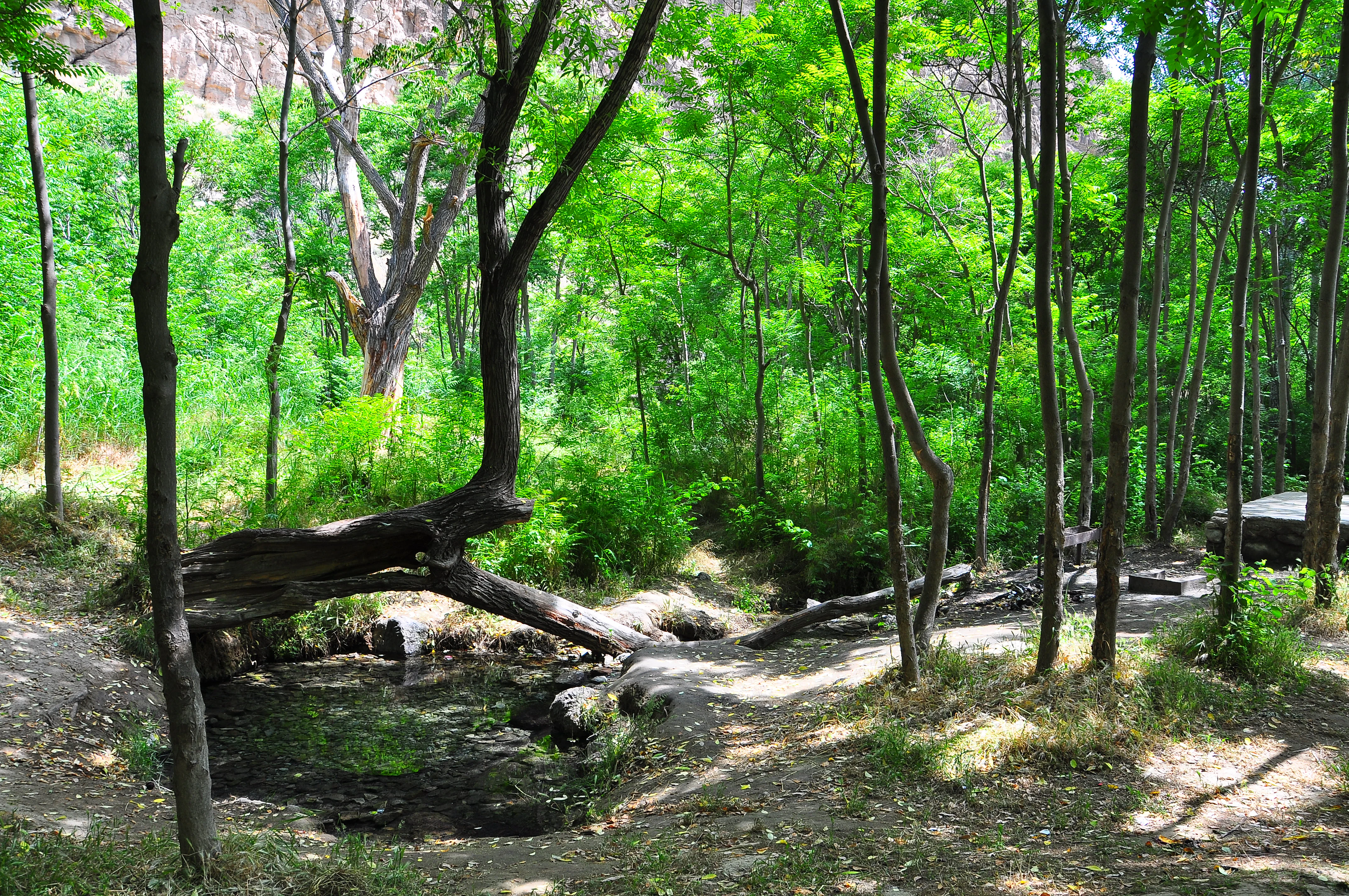
The landscape of Tandooreh National Park is defined by its mountainous character and the dramatic topography of the Kopet Dag foothills. The terrain features deep, V-shaped valleys carved by seasonal watercourses, with steep cliff faces and rocky outcrops creating a rugged and visually distinctive environment. Elevation ranges from approximately 980 meters in the valley floors to around 2,600 meters at the higher points of the park, creating a vertical zonation of habitats and vegetation communities. The mountain slopes are primarily covered in juniper woodlands, while the valley bottoms support riparian vegetation and thicker shrub communities along the watercourses. Open areas between the woodland patches feature the characteristic Artemisia steppe that dominates much of the non-forested land in this region of Iran.
Tandooreh National Park ecosystems, habitats, and plant life
The ecological character of Tandooreh National Park centers on its juniper woodland ecosystems, which represent some of the most extensive and well-preserved examples of this habitat type in Iran. Juniper trees dominate the mountain slopes, forming open woodlands that create a characteristic landscape of gnarled trunks and aromatic foliage adapted to the semi-arid mountain conditions. The riparian corridors along valley streams support denser thicket vegetation, providing habitat diversity and serving as wildlife movement corridors. The Artemisia steppe that covers the more open areas represents the broader grassland and shrubland ecology of the northeastern Iranian plateau. This combination of woodland, thicket, and steppe habitats creates a mosaic of ecological communities that supports the park's biodiversity.
Tandooreh National Park wildlife and species highlights
The juniper woodlands and mountain steppe habitats of Tandooreh National Park support a range of wildlife adapted to the semi-arid conditions of northeastern Iran. The park's position at the edge of the Kopet Dag range places it within a zone where species from both the Eurasian steppe and the mountainous regions of western Asia may overlap. The juniper forest provides important habitat for bird species and small mammals, while the cliff and rocky terrain offers nesting sites and shelter for various species. While detailed species records are limited in the available source material, the protected status of the area has allowed the wildlife communities to persist in relatively intact condition.
Tandooreh National Park conservation status and protection priorities
Tandooreh National Park holds IUCN Category II status, reflecting its designation as a national park with primary conservation objectives focused on ecosystem protection and preservation. The park's protected status, established in 1982, has provided legal framework for safeguarding the juniper woodlands and mountain ecosystems within its boundaries. The conservation significance of the area stems from the relative rarity of well-preserved juniper woodland in the region, as much of the original forest cover in northeastern Iran has been altered by human activity over centuries. The park serves as a reservoir of biological diversity and ecological integrity within the broader landscape of the Iran-Turkmenistan border region.
Tandooreh National Park cultural meaning and human context
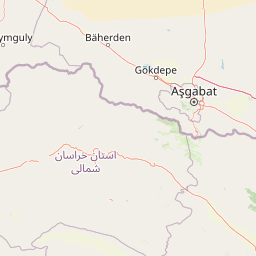
Tandooreh National Park is situated in a region with deep historical ties to the ancient routes linking Central Asia to Persia. The park's location near Dargaz and the Turkmenistan border places it at the intersection of Iranian and Turanian cultural spheres. The local communities in this part of northeastern Iran have maintained traditional relationships with the mountain landscape, though the formal protected area designation has influenced land use patterns since 1982. The park's borderland position gives it additional significance as part of a broader transboundary landscape that extends into Turkmenistan.
Top sights and standout views in Tandooreh National Park
The standout features of Tandooreh National Park include its extensive juniper woodlands covering mountain slopes, the dramatic valley and cliff terrain of the Kopet Dag foothills, and the blend of woodland and steppe habitats creating ecological diversity. The park represents one of the most significant protected juniper woodland areas in Iran, with trees adapted to the semi-arid mountain conditions forming a distinctive silvery-green landscape. The elevation gradient from 980 to 2,600 meters creates visible changes in vegetation as one moves from valley floors to higher slopes.
Best time to visit Tandooreh National Park
The best time to visit Tandooreh National Park would typically be during the spring and early summer months when temperatures are moderate and the juniper woodlands display their fresh foliage against the mountain landscape. Autumn also offers pleasant conditions for exploration of the park's terrain. The high-elevation location means that summers can be warm while winters bring cold conditions and potentially snow at higher elevations, so visitors should plan accordingly for the seasonal characteristics of this mountainous protected area.