Mori Atlas logo
National parkTriunia National Park

Navigate the mapped boundaries and regional context of this Australian national park.

Triunia National Park: A Protected Landscape within Queensland's Diverse Geography

Triunia National Park represents a significant protected natural landscape within the vast and varied geography of Queensland, Australia. As a designated national park, it offers a unique point for atlas-driven discovery, allowing exploration of its specific mapped boundaries and its place within the broader regional context of northeastern Australia. Understanding Triunia National Park provides insight into Queensland's diverse terrain and conservation areas, ideal for users seeking detailed geographic information and mapped landscape data.

National ParkQueenslandCoastal EnvironmentSouth East QueenslandProtected AreaIUCN Category II

Triunia National Park

National park

Park overview

Structured park overview, official facts, and landscape profile for Triunia National Park

Triunia National Park park facts, protected area profile, and essential visitor context
Review the core facts for Triunia National Park, including designation, size, terrain, visitor scale, habitats, and operating context in one park-focused overview.

About Triunia National Park

Triunia National Park represents a small but significant protected area along the coastal corridor of South East Queensland. While its physical footprint is modest at just 0.18 square kilometers, the park serves as a conservation enclave in a region characterized by extensive urban sprawl and agricultural land use. The area was formally protected in 1994, recognizing the ecological value of preserving remaining natural habitats in this heavily populated portion of eastern Australia. Managed by the Queensland Parks and Wildlife Service, the park contributes to the broader network of protected areas that maintain biodiversity connectivity throughout South East Queensland. The establishment of Triunia as a national park reflected a commitment to retaining natural landscapes even in areas where development pressures are intense, providing residents and visitors with access to preserved coastal ecosystems.

Quick facts and research context for Triunia National Park

Triunia National Park is located in Queensland, Australia, roughly 92 kilometers north of Brisbane. The park covers 0.18 square kilometers (0.069 square miles), making it one of Queensland's smaller national parks. It was formally established in 1994 and is managed by the Queensland Parks and Wildlife Service. The park is classified as an IUCN Category II protected area, the designation for national parks that protect ecosystems and provide opportunities for environmental education and recreation.

Park context

Deeper park guide and search-rich context for Triunia National Park

Triunia National Park history, landscape, wildlife, and travel context
Explore Triunia National Park through its history, landscape character, ecosystems, wildlife, conservation priorities, cultural context, and seasonal travel timing in a structured park guide built for atlas discovery and search intent.

Triunia National Park history and protected-area timeline

Triunia National Park was established in 1994, entering Queensland's protected area system during a period when the state was expanding its national park network. The formal designation as a national park reflected recognition that even small remnants of intact ecosystem warranted protection. The park was created under Queensland's national park legislation and placed under the management authority of the Queensland Parks and Wildlife Service. This establishment period coincided with broader conservation movements in Australia during the 1990s that emphasized preserving biodiversity in peri-urban landscapes.
Park location guide

Geography guide, regional context, and park location map for Triunia National Park

Triunia National Park park geography, regions, and map view in Australia
Understand where Triunia National Park sits in Australia through a broader geographic reading of the surrounding landscape, nearby location context, and its mapped position within the national park landscape.

How Triunia National Park fits into Australia

Australia is a constitutional monarchy and federal parliamentary democracy comprising six states and ten territories. With a population of nearly 28 million, it is one of the world's most urbanised countries, with most people concentrated on the eastern seaboard. The country has a high Human Development Index and is known for its cultural diversity, ancient Aboriginal heritage, and unique wildlife.

Wider geography shaping Triunia National Park in Australia

Australia occupies the entire Australian continent, the island of Tasmania, and numerous smaller islands. It is the world's flattest and driest inhabited continent, featuring vast deserts in the interior (the Outback), tropical rainforests along the eastern coast, and a coastline bordering the Indian and Pacific Oceans.

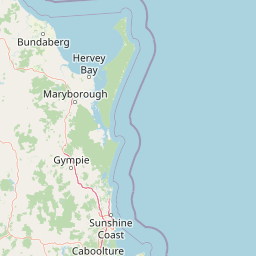
Map view of Triunia National Park

Use this park location map to pinpoint Triunia National Park in Australia, understand its exact geographic position, and read its mapped placement within the surrounding landscape more clearly.

Pigeon | © OpenStreetMap contributors

Common questions about visiting, size, designation, and location context for Triunia National Park

Triunia National Park FAQs for park facts, access, geography, and protected area context
Find quick answers about Triunia National Park, including protected-area facts, park geography, trail and visitor context, and how the park fits into its surrounding country and regional landscape.
MoriAtlas Explorer

Continue Your Protected Areas Search Across the Global Atlas

Deepen your exploration by continuing the structured search for national parks and protected areas worldwide. Utilize the comprehensive filtering capabilities to compare different conservation landscapes and refine your understanding of global park geography. Discover more about the distribution and characteristics of protected natural areas.

Global natural geography