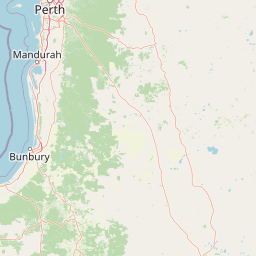
Why Tuart Forest National Park stands out
Tuart Forest National Park is best known for protecting the world's largest remaining pure tuart forest, an ecosystem that exists only on the coastal limestone soils of south-western Australia. The park contains the tallest and most impressive specimens of Eucalyptus gomphocephala remaining anywhere, with individual trees reaching over 33 metres in height. It is also renowned as the stronghold population for the Western Ringtail Possum, an endangered marsupial that depends on the dense canopy and hollows of mature tuart trees. The Possum Spotlighting Trail offers one of the few opportunities in Australia to observe these nocturnal marsupials in the wild.
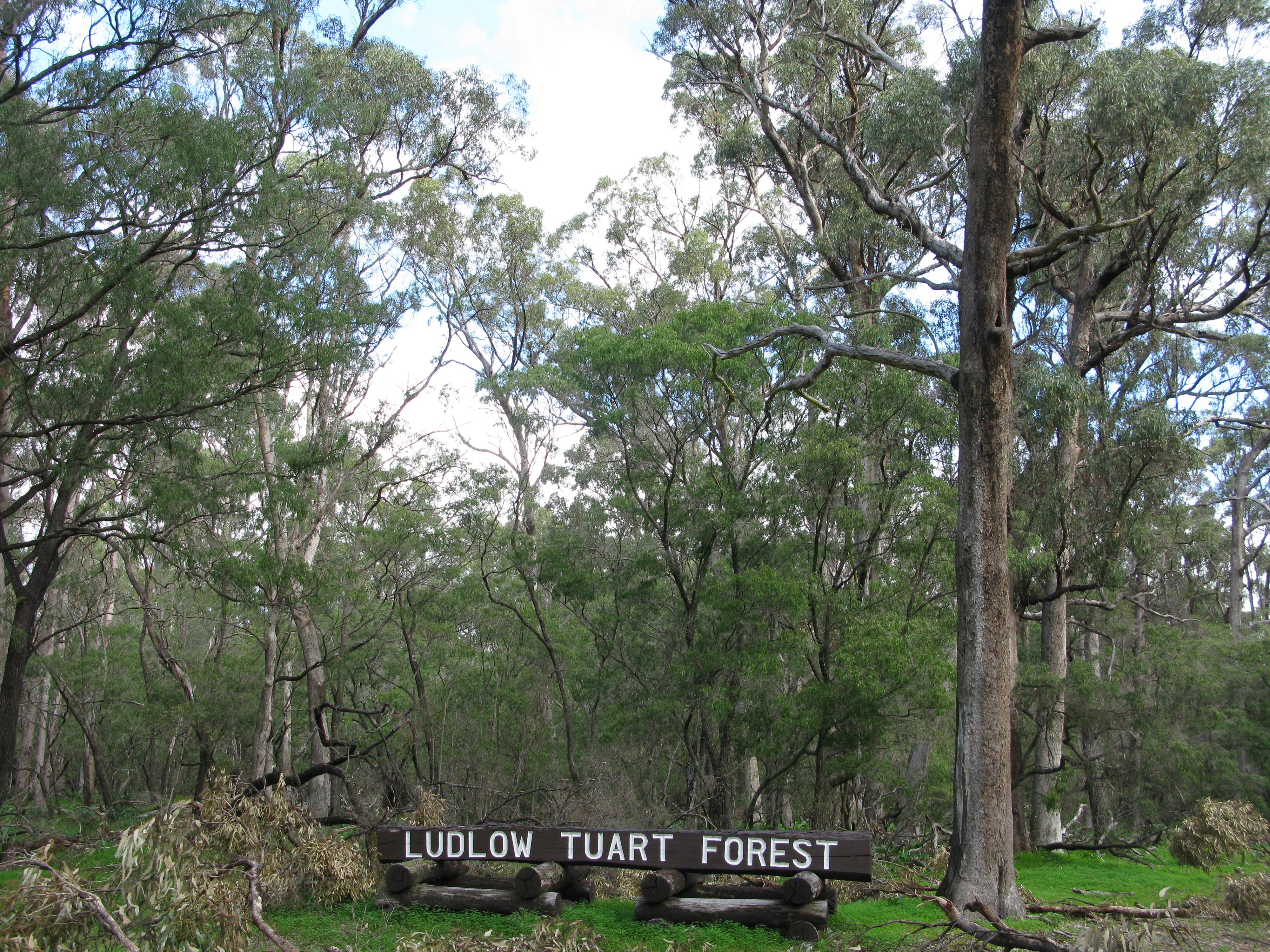
Tuart Forest National Park history and protected-area timeline
Tuart Forest National Park was officially established in 1987, formalizing protection for an area of forest that had long been recognized for its botanical significance. The tuart woodland in this area was historically part of the Ludlow State Forest, a name derived from the nearby settlement and honoring Frederick Ludlow, an early settler in the region. For decades before formal national park status, the area served as a state forest where timber harvesting and other extractive uses were permitted, though the unique nature of the pure tuart stand was increasingly understood by foresters and botanists. The transition to national park status reflected a growing recognition that this forest represented an irreplaceable natural asset that warranted protection rather than exploitation. The road known as Tuart Drive, approximately 15 kilometres in length, was originally part of the Bussell Highway but was diverted around the park in 1995, reducing traffic impacts on the forest ecosystem. The creation of the Possum Spotlighting Trail represents a more recent visitor management initiative, designed to allow nocturnal wildlife observation while minimizing disturbance to the sensitive possum populations.
Tuart Forest National Park landscape and geographic character
The landscape of Tuart Forest National Park is defined by a narrow belt of coastal limestone that underlies the southern Swan Coastal Plain. The terrain is gently undulating, with the limestone bedrock lying close to the surface and influencing both soil chemistry and drainage patterns. The tuart trees dominate the canopy, forming a relatively open woodland with a scattered understory of shrubs and grasses adapted to the alkaline soils. The forest creates a distinctive visual character, with the massive, gnarled trunks and spreading canopies of the mature tuart trees creating a park-like environment. The limestone influence extends to the substrate, with many areas showing exposed limestone outcrops or shallow soils over the bedrock. The park occupies a transitional position between the more arid interior of the coastal plain and the higher rainfall zones closer to the coast, giving it intermediate environmental characteristics that support the tuart ecosystem.
Tuart Forest National Park ecosystems, habitats, and plant life
The tuart forest represents a highly restricted ecological community with remarkable botanical significance. Eucalyptus gomphocephala is endemic to the coastal limestone soils of south-western Australia, and the Tuart Forest National Park contains the largest and most genetically diverse remaining population of this species. The forest structure features tall, mature trees with a relatively open canopy that allows sunlight to reach the forest floor, supporting a diverse ground layer of shrubs and grasses. The limestone-derived soils are alkaline and relatively nutrient-poor, selecting for plant species adapted to these specific conditions. The ecological significance of the forest extends beyond the trees themselves, with the complex structure of mature tuart providing critical habitat for hollow-dependent wildlife. The forest exists at the western edge of the tuart's range and represents a transition between the more extensive woodlands of the interior and the specific coastal limestone environment that this species requires.
Tuart Forest National Park wildlife and species highlights
Tuart Forest National Park is home to a remarkable concentration of wildlife, particularly marsupials that depend on the mature forest for survival. The park supports the largest remaining wild population of the Western Ringtail Possum (Pseudocheirus occidentalis), an endangered species that has suffered significant range contraction across its former distribution on the Swan Coastal Plain. These possums rely on tree hollows in mature tuart trees for shelter during daylight hours and emerge at night to feed on leaves, flowers, and nectar. The Western Ringtail Possum is specifically adapted to the tuart woodland ecosystem and is rarely found in other forest types. The park also supports populations of the more widespread Brushtail Possum, which can be observed along the same nighttime viewing areas. Birdlife includes various parrots, honeyeaters, and woodland species that utilize the forest canopy and understory. The combination of hollow-bearing trees, dense canopy cover, and the presence of flowering plants throughout the year makes this forest particularly valuable for wildlife conservation.
Tuart Forest National Park conservation status and protection priorities
Tuart Forest National Park serves as a critical refuge for one of Western Australia's most restricted and threatened forest ecosystems. The tuart woodland represents a community that has been reduced to remnant patches across much of its former range, with agricultural conversion, urban development, and historical logging eliminating the vast majority of the original forest cover. The establishment of the park formalized protection for the largest and most intact remaining example of pure tuart forest, preserving both the forest ecosystem and the wildlife populations it supports. The Western Ringtail Possum population in the park is of particular conservation significance, representing a stronghold for this endangered species that has declined dramatically outside protected areas. Management of the park focuses on maintaining forest health, protecting wildlife populations from disturbance, and providing visitor experiences that are compatible with conservation objectives. The park contributes to regional biodiversity conservation by preserving a functioning example of an ecosystem type that has largely disappeared from the surrounding landscape.
Tuart Forest National Park cultural meaning and human context
The tuart forest area has been part of the cultural landscape of the Noongar people, the Traditional Custodians of the south-west of Western Australia, though detailed historical documentation of indigenous use of this specific area is limited in available sources. The forest would have provided resources including food, materials, and shelter for local Aboriginal groups. The post-colonial history of the area is tied to European settlement, with the Ludlow area named after Frederick Ludlow, an early settler in the region. The forest was subsequently managed as State Forest before its protection as a national park. The tension between conservation values and historical land use practices, including the partial loss of the forest to logging and agricultural conversion, reflects broader patterns across the Swan Coastal Plain.
Top sights and standout views in Tuart Forest National Park
The towering tuart trees, some exceeding 33 metres in height and 10 metres in girth, represent the tallest and largest surviving specimens of this species anywhere in the world. The Possum Spotlighting Trail offers a rare opportunity to observe Western Ringtail Possums and Brushtail Possums in their natural nocturnal habitat. The forest exists on a unique coastal limestone substrate that determines the distribution of this restricted ecosystem. The park preserves the largest wild population of an endangered marsupial that depends entirely on mature tuart woodland. The combination of botanical significance, wildlife importance, and accessibility makes this park a unique conservation asset in the Western Australian landscape.
Best time to visit Tuart Forest National Park
The park can be visited year-round, though autumn and spring offer particularly comfortable conditions for walking and wildlife observation. The cooler months from April to September provide ideal temperatures for exploring the forest trails, including the Possum Spotlighting Trail which is specifically designed for evening visits when possums are active. Summer months can be warm but early morning walks offer the chance to observe birds and other diurnal wildlife. The nighttime possum viewing is most productive on moonless nights when the animals are more likely to venture into the open. The park is accessible from Busselton, making it a convenient destination for visitors exploring the South West region of Western Australia.