

Why Forty Mile Scrub National Park stands out
Forty Mile Scrub is best known for its ancient volcanic stream systems that have carved distinctive drainage patterns through the landscape, and for protecting a rare isolated pocket of semi-evergreen vine thicket vegetation that survives as a relict community from different climatic conditions. The park is also notable for being home to the largest cockroach species in the world, a remarkable distinction that reflects the park's ecological uniqueness and the evolutionary significance of its isolated habitats. The combination of volcanic geology, spring-fed streams, and preserved ancient vegetation communities makes this park a significant site for understanding long-term ecological processes in semi-arid northern Australia.
Forty Mile Scrub National Park history and protected-area timeline
Forty Mile Scrub National Park was established in 1970, representing an important expansion of Queensland's protected area network into the semi-arid interior of the state. The park's formal protection came at a time when there was growing recognition of the need to preserve unique vegetation communities and geological features that might otherwise be lost to agricultural expansion or resource development. Management of the park was assigned to Queensland Parks and Wildlife Service, which continues to oversee conservation activities and visitor management within the protected area. The creation of the park specifically recognized the scientific and ecological significance of the semi-evergreen vine thicket community and the ancient volcanic landscape features that distinguish this area from surrounding lands.
Forty Mile Scrub National Park landscape and geographic character
The landscape of Forty Mile Scrub National Park is fundamentally shaped by its ancient volcanic origins, which have produced a terrain of rolling hills and ridgelines with volcanic bedrock dominating the underlying geology. Ancient stream systems have cut through this terrain, creating well-defined drainage channels that carry water from springs throughout the year. These permanent water sources are a defining feature of the park, providing moisture that supports the more lush vegetation communities found along watercourses and in areas where groundwater surfaces. The combination of volcanic substrates, permanent water availability, and protection from the more extreme fire regimes that affect surrounding lands has allowed distinctive vegetation to establish and persist. The park sits within the broader context of the Mulga Lands, a region characterized by Acacia woodlands and tussel grasslands, making the park's more complex vegetation stand out as a significant ecological contrast to the surrounding landscape.
Forty Mile Scrub National Park ecosystems, habitats, and plant life
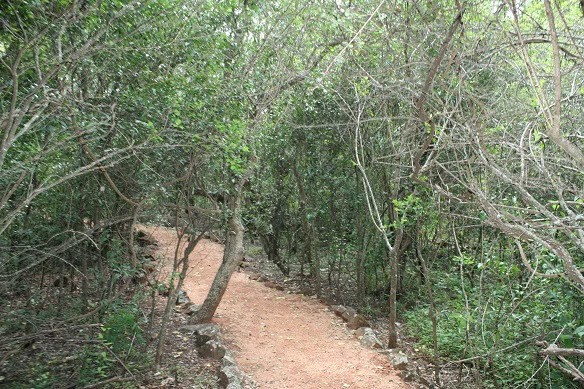
The nature of Forty Mile Scrub is defined by the interaction between ancient volcanic geology, permanent water sources, and the survival of relict vegetation communities that represent different climatic periods. The semi-evergreen vine thicket is the most significant vegetation feature, containing species that form a dense, multi-layered canopy unlike the more open woodlands that dominate surrounding areas. This vegetation community survives in an isolated pocket within the park, maintained by the moisture from springs and streams and protected from the fire regime that maintains the surrounding grassland and woodland vegetation. The grass forests that occur in other parts of the park represent another distinctive vegetation type, with dense stands of grass trees and other understory species creating habitat complexity. These diverse vegetation communities support a range of ecological interactions and provide the foundation for the park's biodiversity.
Forty Mile Scrub National Park wildlife and species highlights
Forty Mile Scrub National Park provides habitat for many animal species, both as permanent residents and as occasional visitors. The permanent water sources within the park support species that require reliable water availability throughout the year, while the diverse vegetation communities provide shelter and food resources for a variety of fauna. The park is particularly notable for being home to the largest cockroach species in the world, a remarkable distinction that reflects the unique environmental conditions found here. Koalas are among the species that visit the park, using the vegetation communities as part of their range through the broader landscape. The combination of permanent water, protected shelter, and diverse food resources makes the park an important refuge for wildlife in a region where suitable habitat is often limited.
Forty Mile Scrub National Park conservation status and protection priorities
Forty Mile Scrub National Park is significant from a conservation perspective because it protects one of the last remaining examples of semi-evergreen vine thicket in northern Australia, a vegetation community that represents a relict from past climatic conditions. The preservation of this community within a protected area ensures that scientific understanding of these ecosystems can continue and that the species within them have secure habitat into the future. The park's volcanic stream systems also represent important aquatic habitats in a semi-arid landscape where permanent water is scarce. Management efforts focus on maintaining the ecological integrity of these unique communities while providing appropriate visitor access to appreciate the park's natural values. The park demonstrates how isolated protected areas can serve as critical refuges for species and communities that cannot survive in the surrounding modified landscape.
Forty Mile Scrub National Park cultural meaning and human context
Forty Mile Scrub National Park sits within the broader landscape of north Queensland's semi-arid interior, an area with historical associations with pastoral development and more recent recognition of its natural values. The park's name reflects its location relative to early road distances in the region, a naming convention common in remote Australian landscapes. The land has been part of the broader regional context in which Indigenous peoples and later European pastoralists have interacted with the landscape over different time periods. While the park itself is managed primarily for conservation values, it exists within a regional context of mixed land uses including grazing and mining activities.
Top sights and standout views in Forty Mile Scrub National Park
The defining highlights of Forty Mile Scrub include its ancient volcanic stream systems that provide permanent water through the landscape, the rare and scientifically significant semi-evergreen vine thicket that survives as an isolated relict community, and the presence of the world's largest cockroach species. The park offers a contrasting landscape to the surrounding semi-arid woodlands, with more lush vegetation along watercourses and a distinctive visual character shaped by volcanic geology. These features make the park both ecologically significant and visually distinctive within the Mulga Lands bioregion.
Best time to visit Forty Mile Scrub National Park
The best time to visit Forty Mile Scrub National Park is during the cooler months of the year when daytime temperatures are more comfortable for outdoor exploration. The semi-arid climate means that summer conditions can be hot and dry, while winter brings milder temperatures and lower fire risk. Visiting during the dry season generally provides more reliable access and more comfortable conditions for walking the park's trails and observing its natural features. The permanent water sources in the park maintain their character throughout the year, but the surrounding vegetation and landscape appearance can vary with seasonal conditions.
