

Mori Atlas logo
Protected areaMount Wilhelm

Discover the mapped geography and protected landscape of Oceania's dramatic granite peak.

Mount Wilhelm Protected Area: Papua New Guinea's Highest Peak and Alpine Landscape

Mount Wilhelm stands as Papua New Guinea's highest mountain and a significant protected area, rising dramatically in the Bismarck Range. This granite peak, reaching 4,509 meters, offers a unique high-altitude environment from tropical rainforest to alpine grasslands. Its dramatic summit, twin glacial lakes, and role as a prominent geographic landmark provide essential context for understanding the nation's diverse protected landscapes and regional geography.

Mountain peaksBismarck RangeHighlandsAlpine environmentsSeven SummitsClimbing destinations

Mount Wilhelm

Protected area

Park overview

Structured park overview, official facts, and landscape profile for Mount Wilhelm

Mount Wilhelm park facts, protected area profile, and essential visitor context
Review the core facts for Mount Wilhelm, including designation, size, terrain, visitor scale, habitats, and operating context in one park-focused overview.

About Mount Wilhelm

Mount Wilhelm dominates the central highlands of Papua New Guinea as the nation's tallest peak, standing 4,509 metres above sea level within the Bismarck Range. The mountain's location at the meeting point of three provinces Chimbu, Jiwaka and Madang reflects its importance as a geographic landmark that transcends administrative boundaries. The indigenous Kuman-speaking people refer to the peak as Enduwa Kombuglu or Kombugl'o Dimbin, names that carry cultural weight and connect the landscape to local heritage. Unlike many of the world's highest peaks, Mount Wilhelm is relatively accessible to climbers without technical mountaineering skills, though the terrain remains challenging, particularly in wet weather conditions. The mountain's ecological diversity is striking, transitioning from tropical montane forest at lower elevations through cloud forest zones to alpine grasslands and rocky summit terrain. Climbers who reach the peak at dawn are often rewarded with clear views across the highlands and a visual sense of the mountain's prominence in the regional landscape.

Quick facts and research context for Mount Wilhelm

Mount Wilhelm rises 2,969 metres above the surrounding terrain, making it one of the most prominent peaks in Papua New Guinea and ranking 97th in the world by topographic prominence. The mountain was first successfully ascended in August 1938 by government patrol officer Leigh Vial, who noted the surprising presence of snow near the summit despite the equatorial location. The peak can be reached via two primary routes, with the more accessible path beginning from the village of Keglsugl in Simbu Province and ascending through montane rainforest to the twin lakes of Piunde and Aunde before reaching the summit.

Park context

Deeper park guide and search-rich context for Mount Wilhelm

Mount Wilhelm history, landscape, wildlife, and travel context
Explore Mount Wilhelm through its history, landscape character, ecosystems, wildlife, conservation priorities, cultural context, and seasonal travel timing in a structured park guide built for atlas discovery and search intent.

Why Mount Wilhelm stands out

Mount Wilhelm is best known as the highest mountain in Papua New Guinea and one of the highest peaks in Oceania, making it a premier climbing destination in the region. The mountain is celebrated for its dramatic summit views, the twin lakes of Piunde and Aunde located near the alpine zone, and the challenge of ascending a high-latitude tropical peak. Its status as part of the Seven Summits list attracts international mountaineers seeking to climb the highest point in each continental region. The mountain also holds historical significance from a World War II aircraft crash and has been the site of several climbing fatalities that have become part of its layered history.
Mount Wilhelm
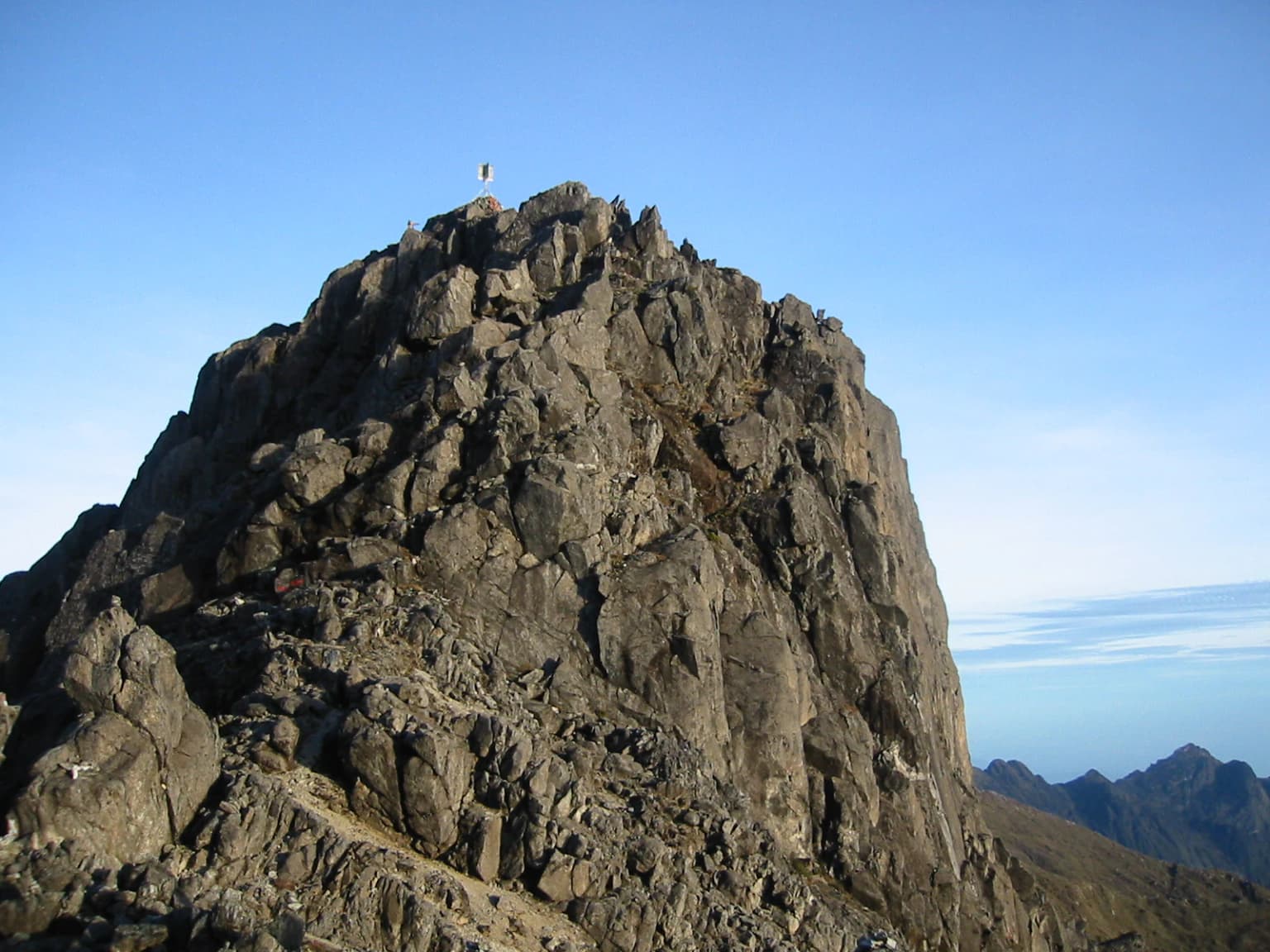
Mount Wilhelm, the highest mountain in Papua New Guinea.

Mount Wilhelm history and protected-area timeline

The naming of Mount Wilhelm dates to 1888 when German newspaper correspondent Hugo Zöller climbed the Finisterre Range and named the Bismarck Range after Chancellor Otto von Bismarck, assigning the highest peaks names from his family including Ottoberg, Herbertberg, Marienberg and Wilhelmberg. Zöller initially believed Ottoberg to be the highest peak at 3,540 metres, but later exploration revealed the distant Wilhelmberg to be far taller. The first recorded successful ascent was achieved on August 15, 1938 by Leigh Vial, a government patrol officer, accompanied by two local guides. Vial documented that despite the mountain's proximity to the equator, snow was present near the summit during his ascent. During World War II, an American F-7A Liberator aircraft crashed into the mountain on May 22, 1944, while on a reconnaissance mission, with wreckage remaining visible in the highest lake. The mountain has unfortunately been the site of several climbing fatalities over the decades, including an Australian Army Sergeant in 1971, an Israeli backpacker in 1995, an Air Niugini marketing manager in 2005, and local residents in subsequent years.

Mount Wilhelm landscape and geographic character

Mount Wilhelm rises as a dramatic granite peak within the Bismarck Range, a mountain system that forms a significant spine through the highlands of Papua New Guinea. The mountain's topography features steep forested slopes that give way to alpine zones as elevation increases. Near the summit, the landscape includes the twin lakes of Piunde and Aunde, which sit in glacial valleys carved into the mountain's upper reaches. These lakes represent unique high-altitude aquatic features in a region where such bodies of water are rare. The terrain along climbing routes includes dense mountain rainforest, open alpine grasslands, and rocky sections that require careful navigation. The mountain's prominence of 2,969 metres creates a distinctive profile visible from considerable distances across the highlands, establishing it as a landmark feature of the Papua New Guinean landscape.

Mount Wilhelm ecosystems, habitats, and plant life

The ecological character of Mount Wilhelm is defined by its dramatic elevation gradient, which supports multiple distinct habitat zones within a relatively short vertical distance. The lower slopes are cloaked in tropical montane rainforest characterized by dense vegetation, high humidity, and rich biodiversity. As elevation increases, the forest transitions into cloud forest where persistent mist and reduced temperature create specialized conditions for unique plant species. The alpine grassland zone near the summit supports vegetation adapted to cooler temperatures and higher UV exposure. The presence of snow at the summit despite the equatorial location reflects the phenomenon that temperatures at high elevations in the tropics can drop significantly below those at sea level, creating conditions more typical of much higher latitudes.

Mount Wilhelm wildlife and species highlights

While the Wikipedia source does not provide detailed information on wildlife at Mount Wilhelm, the various ecological zones from tropical rainforest to alpine grassland suggest the presence of diverse fauna adapted to each habitat type. The montane and cloud forest zones would typically support populations of birds, including species of parrots, honeyeaters, and birds of paradise that characterize Papua New Guinea's rich avifauna. Small mammals, reptiles, and invertebrates would occupy the diverse microhabitats created by the mountain's complex terrain. The alpine zones would support fewer species but would host specialized organisms adapted to high-altitude conditions. Papua New Guinea generally is recognized as one of the world's biodiversity hotspots, and Mount Wilhelm's multiple elevation zones create conditions that support this remarkable diversity.

Mount Wilhelm conservation status and protection priorities

Mount Wilhelm's status as the nation's highest peak and a significant natural landmark has elevated its importance in Papua New Guinea's conservation framework. The mountain's ecosystems represent unique high-altitude environments within the island of New Guinea, one of the world's most biologically diverse landmasses. While the source does not specify formal protected area designations, the mountain's ecological significance and cultural value to local communities provide informal protection. The twin lakes of Piunde and Aunde represent sensitive aquatic environments that would benefit from conservation attention. The challenge of balancing mountaineering access with environmental protection remains relevant as the mountain attracts increasing numbers of climbers seeking to experience this significant natural landmark.

Mount Wilhelm cultural meaning and human context

Mount Wilhelm holds deep cultural significance for the Kuman-speaking people of the region, who have lived in the mountain's vicinity for generations. The peak is known locally as Enduwa Kombuglu or Kombugl'o Dimbin, names that reflect this indigenous connection to the landscape. The mountain's intersection of three provinces Chimbu, Jiwaka and Madang reflects its importance as a geographic landmark that unifies rather than divides the regional community. Local guides have played essential roles in expeditions to the mountain since the first recorded ascent in 1938, and their knowledge of the terrain, weather patterns, and routes has been crucial to climbing success. The plaques commemorating those who have died on the mountain, including local residents, represent the human dimension of the mountain's history and its ongoing significance to the community.

Top sights and standout views in Mount Wilhelm

The summit of Papua New Guinea's highest mountain offers climbers spectacular panoramic views across the highlands and a profound sense of standing at the top of the nation. The twin lakes of Piunde and Aunde, located in glacial valleys near the alpine zone, provide scenic rest points during the climb and represent rare high-altitude lakes in Papua New Guinea. The transition through multiple ecological zones from tropical rainforest to alpine grassland offers a condensed demonstration of tropical mountain ecology. The historical layers of the mountain, from its indigenous significance to its colonial naming and World War II history, create a rich contextual experience beyond the physical challenge of the ascent.

Best time to visit Mount Wilhelm

Mount Wilhelm can be climbed throughout the year, though conditions vary with Papua New Guinea's wet and dry seasons. The dry season typically offers more stable weather and clearer summit views, reducing the risks associated with wet and slippery trail conditions. Climbers often begin their ascent during the night to reach the summit at dawn, when weather conditions are most likely to be clear and the mountain's full prominence is visible across the highlands. The mountain's equatorial location means that temperature differences between base and summit are significant, requiring appropriate layered clothing and equipment. Weather on the mountain can change rapidly regardless of season, and climbers should be prepared for both clear conditions and the possibility of fog, rain, or even snow near the summit.

Park location guide

Geography guide, regional context, and park location map for Mount Wilhelm

Mount Wilhelm park geography, regions, and map view in Papua New Guinea
Understand where Mount Wilhelm sits in Papua New Guinea through a broader geographic reading of the surrounding landscape, nearby location context, and its mapped position within the national park landscape.

Map view of Mount Wilhelm

Use this park location map to pinpoint Mount Wilhelm in Papua New Guinea, understand its exact geographic position, and read its mapped placement within the surrounding landscape more clearly.

Pigeon | © OpenStreetMap contributors

Uncover the unique mountain environments, from dense tropical rainforests to high-altitude glacial lakes, through captivating imagery.

Mount Wilhelm Photos: Visualizing Papua New Guinea's Alpine Peaks and Protected Landscapes
Browse a curated collection of Mount Wilhelm images, showcasing its dramatic granite peak, alpine grasslands, and unique high-altitude lakes. These visual insights reveal the mountain's transition through diverse ecological zones, offering a clearer understanding of its protected landscapes and challenging terrain.

Mount Wilhelm

Mount Wilhelm

Park atlas

Explore the surrounding Bismarck Range and Papua New Guinea highlands, comparing diverse protected landscapes.

Discover Nearby National Parks and Protected Areas Beyond Mount Wilhelm in Papua New Guinea
Continue your exploration from Mount Wilhelm by browsing other national parks and protected areas located across the Papua New Guinea highlands, tracing the regional spread of conservation landscapes. Compare varied park geography and alpine environments adjacent to the Bismarck Range, gaining deeper insights into Oceania's unique protected natural areas.
National parkQueensland

Saunders Islands National Park: National Park Geography and Mapped Protected Landscape in Queensland

Explore the mapped terrain and protected area context.

Saunders Islands National Park represents a significant protected area within the geography of Queensland, Australia. This entry provides detailed atlas-level insights into its specific geographic boundaries and the nature of its protected landscape. Users can understand the park's regional placement and its mapped natural terrain, offering a concrete point for exploring Queensland's diverse protected lands and their unique environmental characteristics.

Area
0.19 km²
Established
1989
IUCN
II
Climate
Tropical
National parkQueensland

Sir Charles Hardy Group National Park: Queensland National Park Atlas and Geography

Explore its mapped protected landscape and regional context.

Sir Charles Hardy Group National Park serves as a vital protected area within Queensland, Australia. This entry offers an atlas-centric view, detailing the park's mapped boundaries and its contribution to the regional geography. Examine its significance as a national park and understand the natural terrain it encompasses within northeastern Australia.

Area
1.29 km²
Established
1989
IUCN
II
Scope
Terrestrial
National parkQueensland

Piper Islands National Park: Queensland National Park with Critical Seabird Colonies

Explore mapped boundaries and landscape context for this Great Barrier Reef island sanctuary.

Piper Islands National Park in Queensland is a protected area comprising four coral cays vital for significant seabird nesting populations. Recognized as an Important Bird Area, these islands showcase distinct mangrove and Pisonia forest ecosystems against the backdrop of the inner northern Great Barrier Reef. The park's protected landscape offers a unique glimpse into the ecological importance of these small, dynamic coastal landforms within a world-heritage marine setting.

Area
0.07 km²
Established
1989
IUCN
II
Relief
Lowland
National parkQueensland

Wuthara Island National Park: Protected Island Geography in Queensland's Coral Sea

Explore mapped coastal landscape and protected area context.

Wuthara Island National Park is a significant protected area located in the Coral Sea, contributing to Queensland's network of national parks. Its island geography and position within the Great Barrier Reef Marine Park region offer a unique perspective on coastal landscape conservation. This page provides detailed information to help users understand the park's role as a protected national park and its specific contribution to the mapped geography of tropical Australia.

Area
1.09 km²
Established
1990
IUCN
II
Relief
Lowland
National parkQueensland

Mitirinchi Island National Park: A Queensland National Park with Defined Protected Boundaries

Explore its unique Queensland geography and natural landscape.

Mitirinchi Island National Park is a designated national park located within Queensland, Australia, offering a specific point of focus for geographic and atlas exploration. This entity contributes to the understanding of protected land distribution across the northeastern Australian region. Examining Mitirinchi Island National Park allows for detailed appreciation of its mapped terrain and its role as a conservation landscape within the broader Queensland geography.

Area
0.012 km²
Established
1989
IUCN
II
Relief
Lowland
National parkQueensland

Kutini-Payamu National Park: Queensland National Park Protected Landscape Explorer

Mapped natural terrain and geographic context within Queensland Australia.

Kutini-Payamu National Park is a significant protected area represented on the MoriAtlas platform as a distinct national park. This entry provides detailed insights into its geographic location within Queensland, Australia, detailing the park's protected landscape characteristics and its mapped natural features. Delve into the regional geography and understand the specific atlas context of this important conservation area, offering a clear view of its place within the broader natural terrain of northeastern Australia.

Area
346 km²
Established
1977
IUCN
II
Relief
Mixed relief
National parkCentral Papua

Lorentz National Park National Park: Mapped Protected Landscape in Central Papua

Explore its regional geography and protected area boundaries.

Lorentz National Park offers a deep dive into protected landscape discovery within Central Papua. This national park serves as a key entity for understanding regional geography and mapped terrain. Explore its significance as a protected area and its unique geographic context, providing rich detail for atlas-based exploration and landscape analysis.

Area
25,056 km²
Established
1997
IUCN
II
Relief
Mountain
National parkQueensland

Sandbanks National Park: National Park Protected Area Discovery in Queensland

Explore its mapped boundaries and regional geography.

Sandbanks National Park is a key protected area within Queensland, Australia, offering distinct opportunities for geographic and atlas-based exploration. This entry focuses on understanding its specific mapped boundaries, its role as a designated National Park, and its contribution to the regional landscape context of northeastern Australia. Users can discover the park's protected status and its geographical orientation through structured data and map-centric views, providing a foundation for detailed analysis.

Area
0.11 km²
Established
1989
IUCN
II
Relief
Lowland

Common questions about visiting, size, designation, and location context for Mount Wilhelm

Mount Wilhelm FAQs for park facts, access, geography, and protected area context
Find quick answers about Mount Wilhelm, including protected-area facts, park geography, trail and visitor context, and how the park fits into its surrounding country and regional landscape.
MoriAtlas Explorer

Continue Your Protected Areas Search Across the Global Atlas

Deepen your exploration by continuing the structured search for national parks and protected areas worldwide. Utilize the comprehensive filtering capabilities to compare different conservation landscapes and refine your understanding of global park geography. Discover more about the distribution and characteristics of protected natural areas.

Global natural geography