
Why Bundjalung National Park stands out
Bundjalung National Park is best known for its distinctive coffee rock formations that appear on the beaches at the northern end of the park, a rare geological feature created by cemented sand deposits that resemble dark coffee grounds. The park is also renowned for its cultural significance to the Bundjalung people, with dual-language signage at park entrances marking the continued connection between the Traditional Owners and the land. The southern Iluka peninsula features a dramatic sequence of closely spaced headlands creating crescent-shaped white sand beaches, each with wave-cut rock platforms containing vibrant marine rock pools. The park's extensive coastal heathland, while less spectacular than the subtropical rainforests found in nearby reserves, represents a increasingly rare and threatened ecosystem type in the region.
Bundjalung National Park history and protected-area timeline
Bundjalung National Park was established in 1980, formalising protection for the coastal environments that had been part of the Bundjalung people's country for millennia. The park was named to recognise and honour the Bundjalung Nation as the Traditional Owners of the land, acknowledging a connection that extends back thousands of years before European colonisation of the region. The park's creation reflected a growing recognition in the late 1970s and early 1980s of the need to preserve representative coastal ecosystems along the NSW coast. A notable feature of the park's history is the presence of the RAAF bombing range in its north-eastern portion, which predates the park's gazettal and has remained active since World War II as a training facility. While such military use might seem incompatible with conservation, the range has had the unintended consequence of preserving a large area from development and human disturbance, creating an exclusion zone that has functioned as a de facto wildlife sanctuary. The park continues to work with Bundjalung Traditional Owners on joint management arrangements and cultural interpretation.
Bundjalung National Park landscape and geographic character
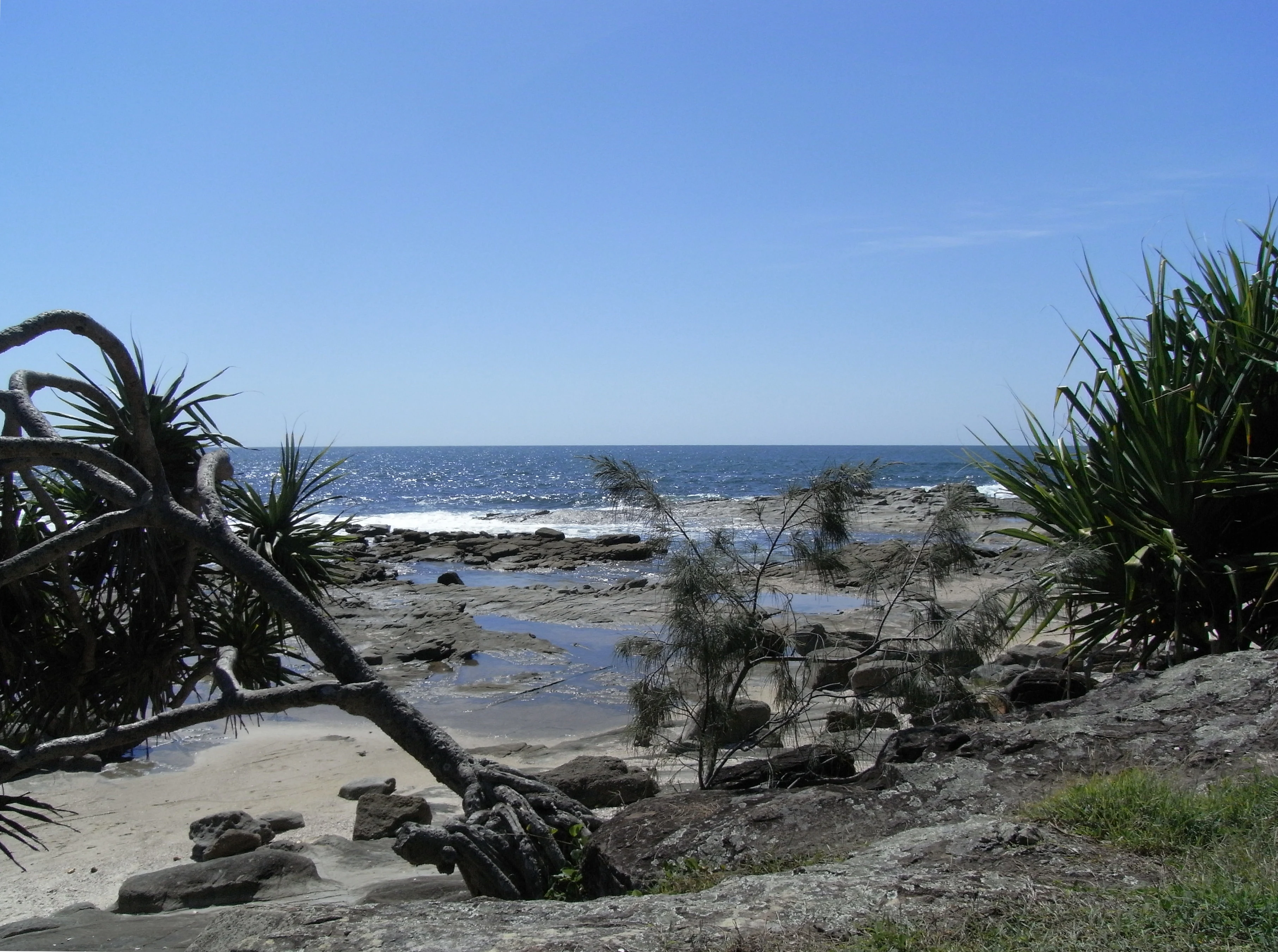
The physical landscape of Bundjalung National Park presents a classic NSW north coast character, with a generally low and gently undulating terrain dominated by coastal plain and dune systems. The park's beaches range from the long continuous sweep of Ten Mile Beach along the northern section to the smaller, more secluded crescent beaches tucked between headlands along the Iluka peninsula. The coffee rock formations represent one of the park's most distinctive geological features, consisting of darkly cemented sand that has been compacted into resistant layers that protrude from the beach profile. These formations are particularly evident at the northern beaches near the Black Rocks camping area. The southern portion of the park features a more dramatic topography where the Iluka peninsula presents a succession of headlands separated by small pocket beaches. Each headland terminates in wave-cut rock platforms that extend offshore, having been sculpted by the persistent action of the Tasman Sea. These platforms are interspersed with deep crevices and channels that trap water at low tide, creating the characteristic rock pool environment. The inland areas of the park are characterised by heathland vegetation that dominates the sandy soils, with occasional paperbark swamps and woodland patches in the more sheltered depressions.
Bundjalung National Park ecosystems, habitats, and plant life
The ecological character of Bundjalung National Park is defined by its coastal heathland ecosystems, a vegetation type that has become increasingly restricted across the NSW coast. The heathland is characterised by dense, low-growing shrubs including banksias, wattles, and tea-trees that are adapted to the nutrient-poor, sandy soils and the fire-prone nature of the coastal environment. This heathland supports a diverse community of bird species, including honeyeaters, fairy-wrens, and raptors that forage in the vegetation or hunt over the open heath. The park's freshwater environments include paperbark swamps and ephemeral drainage lines that provide habitat for frogs, reptiles, and aquatic birds. The marine environment along the park's coastline is equally significant, with the rock platforms at the southern headlands supporting rich communities of marine invertebrates, algae, and fish that inhabit the rock pools. The RAAF bombing range exclusion zone has inadvertently provided additional protection for terrestrial wildlife in the north-eastern portion of the park, creating an area where human disturbance has been minimal for decades.
Bundjalung National Park wildlife and species highlights
Bundjalung National Park supports a variety of wildlife adapted to its coastal heathland and beach environments. The heathland provides important habitat for numerous bird species, with honeyeaters attracted to the Banksia and Grevillea flowers, and ground-dwelling birds such as fairy-wrens and scrubfowl moving through the undergrowth. Birds of prey including wedgetail eagles and whistling kites can be seen soaring over the heathland and coastal areas, hunting for small mammals and reptiles. The park's beaches and rock platforms support marine bird species including oystercatchers and terns that feed in the intertidal zones. The rock pools along the Iluka peninsula provide habitat for a range of marine species including various fish, crabs, sea stars, and gastropod molluscs that are adapted to the constantly changing conditions of the intertidal zone. Kangaroos and wallabies are commonly observed in the more open heathland areas, particularly in the cooler parts of the day.
Bundjalung National Park conservation status and protection priorities
Bundjalung National Park contributes to the conservation of increasingly rare coastal heathland ecosystems along the NSW north coast. The protection of this coastal strip ensures the preservation of habitats for numerous plant and animal species that depend on the heathland environment, including several species of birds that are endemic to or particularly associated with this vegetation type. The park's marine environments, including the rock platforms and beach systems, are protected as part of the national park estate, preserving important coastal processes and intertidal communities. The management approach recognises the Bundjalung people's connection to the land and incorporates their cultural knowledge into conservation planning. The presence of the RAAF bombing range has created an unusual conservation outcome, with the restricted access zone having effectively protected a significant area from the development and disturbance that has affected much of the surrounding coastline.
Bundjalung National Park cultural meaning and human context
Bundjalung National Park is profoundly connected to the Bundjalung Nation, whose Traditional Owners have maintained a continuous connection to this coastal country for thousands of years. The park's name itself acknowledges this deep cultural heritage, and the park contains places and sites of significance to Bundjalung people that are protected and managed in partnership with Traditional Owners. Dual-language signage at park entrances, displaying both English and Bundjalung language, represents a visible recognition of this ongoing connection and serves as an educational tool for visitors. The cultural landscape encompasses not only ceremonial and sacred sites but also the broader patterns of use and management that the Bundjalung people have applied to this country over generations. Contemporary park management seeks to incorporate Bundjalung knowledge and perspectives, recognising that cultural heritage and natural values are interconnected in the landscape.
Top sights and standout views in Bundjalung National Park
The coffee rock formations at Ten Mile Beach represent a unique geological feature rarely found elsewhere on the Australian coast, with dark cemented sand layers creating an otherworldly appearance on the shoreline. The Iluka peninsula offers a spectacular succession of headlands and crescent beaches, with the rocky platforms providing excellent opportunities for exploring marine life in the rock pools. Woody Head camping area provides a comfortable base with cabins and facilities while maintaining a nature-focused experience close to the beach. The park's cultural significance is embodied in its Bundjalung heritage, with the dual-language signage and ongoing Traditional Owner involvement providing a meaningful connection to Aboriginal history and contemporary culture. The relative remoteness and lack of heavy visitation compared to more famous NSW national parks offers a more tranquil coastal experience.
Best time to visit Bundjalung National Park
The park can be visited year-round, though autumn and spring typically offer the most comfortable conditions for outdoor activities with mild temperatures and lower humidity than the summer months. Summer in the region can bring hot and humid weather with occasional heavy rainfall, while winter generally experiences milder temperatures but may include stronger winds and more frequent wet days. The beach and rock pool environments are most pleasant during the warmer months from late spring through early autumn, when water temperatures are suitable for swimming and the rock pools are easily accessible. Wildlife viewing in the heathland is often most productive during the early morning or late afternoon when birds are most active, regardless of the season. Those interested in cultural interpretation should check for any guided programs or events that may be scheduled through the NSW National Parks visitor centre.