Why Chaelundi National Park stands out
Chaelundi National Park is best known for its extensive old-growth forest ecosystems and the legal history surrounding its protection. The park contains approximately 7,500 hectares of old-growth forest characterized by large hollow-bearing trees that provide critical habitat for numerous species. The legal cases brought by the North East Forest Alliance in the early 1990s, particularly the landmark Corkill v Forestry Commission ruling, drew national attention to the area's ecological significance. Justice Paul Stein famously described the old-growth forest as a "veritable forest dependent zoo" due to its exceptional habitat values, and the court established that the term "take" in environmental legislation could encompass indirect harm through habitat modification.
Chaelundi National Park history and protected-area timeline
Chaelundi National Park was formally proclaimed in January 1997, representing the culmination of nearly a decade of conservation advocacy and legal action. The land had previously been managed as a State-owned production forest, and the transition to national park status came after significant conflict over logging activities in the area. Between 1989 and 1991, members of the North East Forest Alliance brought a series of cases to the NSW Land and Environment Court seeking to protect the forest near Dorrigo from continued logging. The key litigation centered on the interpretation of section 99 of the National Parks and Wildlife Act 1974, which prohibited taking or killing endangered fauna. In the case of Corkill v Forestry Commission, Justice Paul Stein delivered a significant ruling recognizing the forest's exceptional habitat values and establishing that indirect harm through habitat destruction constituted a prohibited "take" under the legislation. This decision was upheld on appeal to the Court of Appeal. The legal victories were complemented by on-site protest activities including blockades and demonstrations that drew widespread public attention to the campaign.
Chaelundi National Park landscape and geographic character
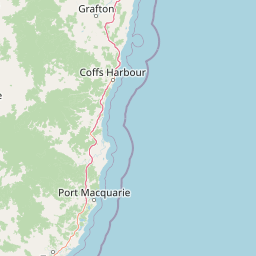
Chaelundi National Park is located in the Northern Tablelands of New South Wales, a region characterized by elevated, undulating terrain with elevations typically ranging above 1,000 metres above sea level. The park encompasses a landscape dominated by forested ridges and valleys, with the old-growth forest communities representing some of the most visually and ecologically significant features. The declared wilderness area within the park covers approximately 11,000 hectares, providing a remote and largely unmodified landscape character typical of high-conservation-value forest areas in this part of eastern Australia.
Chaelundi National Park ecosystems, habitats, and plant life
The park's ecological significance is centered on its old-growth forest communities, which represent mature forest ecosystems with complex structure, large hollow-bearing trees, and diverse flora assemblages. These forests provide critical habitat for numerous species and function as important components of the broader forest ecosystem network in the Northern Tablelands region. The habitat complexity of the old-growth areas supports a range of ecological relationships and provides resources for species that depend on attributes found only in mature forest environments.
Chaelundi National Park wildlife and species highlights
According to records from the Atlas of NSW Wildlife, Chaelundi National Park supports 187 species of fauna, encompassing both indigenous and non-indigenous species. The old-growth forest habitats with their large hollow-bearing trees provide essential resources for wildlife including various bird species, arboreal mammals, and other forest-dwelling animals. The park's designation as wilderness across a substantial portion of its area helps maintain the natural conditions that support this wildlife population.
Chaelundi National Park conservation status and protection priorities
The establishment of Chaelundi National Park represents an important conservation outcome for forest protection in New South Wales. The park protects old-growth forest ecosystems that had been under threat from logging activities prior to its declaration. The legal precedent established through the Corkill v Forestry Commission case contributed significantly to forest conservation policy in Australia by clarifying the scope of habitat protection legislation. The combination of old-growth forest protection and wilderness designation provides durable conservation security for the park's natural values.
Top sights and standout views in Chaelundi National Park
Chaelundi National Park's significance stems from its combination of old-growth forest protection and wilderness preservation on the Northern Tablelands. The park was created following landmark legal cases that helped establish important precedents for forest habitat protection in Australian environmental law. The old-growth forest areas, described by the courts as a "veritable forest dependent zoo," represent some of the most significant forest conservation values in the region.