
Mori Atlas logo
National parkNew England National Park

Discover the dramatic escarpment terrain and ancient ecosystems of this key national park.

New England National Park: Protected Landscape, Map, and Geographic Context in New South Wales

New England National Park, a significant protected area within New South Wales, Australia, offers a profound exploration of its dramatic escarpment, rugged ridges, and deep valleys. This national park is renowned for its exceptional biodiversity and preservation of ancient Gondwanan rainforest ecosystems, set against a backdrop of spectacular cliffs and undulating tablelands. Discover the mapped boundaries and unique geographic context of one of Australia's most botanically diverse natural landscapes.

Wilderness AreaRainforestWorld Heritage SiteNational ParkBirdwatchingTemperate Forests

New England National Park

National park

Park overview

Structured park overview, official facts, and landscape profile for New England National Park

New England National Park park facts, protected area profile, and essential visitor context
Review the core facts for New England National Park, including designation, size, terrain, visitor scale, habitats, and operating context in one park-focused overview.

About New England National Park

New England National Park occupies a dramatic position along the eastern escarpment of the Northern Tablelands, where the plateau descends sharply into the Bellinger River valley to the east. This precipitous terrain creates a landscape of impressive cliffs, rugged ridges, spurs, and flowing streams that characterise the wilderness area. The park lies within the Eastern Australian temperate forests ecoregion and forms part of the New England Group of the Gondwana Rainforests of Australia, a World Heritage property that preserves ancient ecological communities with origins dating back to the ancient supercontinent Gondwana. The diverse topography supports an exceptional range of vegetation types, from subtropical rainforests in the sheltered valleys through warm and cool temperate rainforests at higher elevations to sub-alpine woodland, heathland, and swampland. This ecological complexity, combined with the park's wilderness protection status, makes it one of the most significant conservation areas in eastern Australia. The park is managed by the NSW National Parks and Wildlife Service and offers visitors an extensive network of walking tracks that traverse the higher areas, with accommodation available at Banksia Point.

Quick facts and research context for New England National Park

New England National Park covers 67,303 hectares along the eastern escarpment of the Northern Tablelands in New South Wales. The park forms part of the Gondwana Rainforests of Australia World Heritage Site, inscribed in 1986 and added to the Australian National Heritage List in 2007. Point Lookout, at 1,563 metres above sea level, is the second tallest mountain in the region and offers sweeping views to the Tasman Sea on clear days. The park contains over 1,000 plant species and supports at least 100 bird species, including populations of rufous scrub-birds, making it recognized as an Important Bird Area by BirdLife International.

Park context

Deeper park guide and search-rich context for New England National Park

New England National Park history, landscape, wildlife, and travel context
Explore New England National Park through its history, landscape character, ecosystems, wildlife, conservation priorities, cultural context, and seasonal travel timing in a structured park guide built for atlas discovery and search intent.

Why New England National Park stands out

New England National Park is best known for its extraordinary biodiversity and dramatic wilderness landscapes. The park preserves one of the most diverse plant communities in Australia, with over 1,000 species including Antarctic beech, snow gums, tree ferns, and red cedars spanning sub-tropical, warm temperate, cool temperate, and sub-alpine environments. The area is recognized as an Important Bird Area supporting one of only five remaining populations of rufous scrub-birds, along with numerous other significant species including superb lyrebirds, paradise riflebirds, and regent bowerbirds. The spectacular escarpment country with its towering cliffs and network of deep valleys represents some of the most pristine wilderness remaining in northern New South Wales.

New England National Park history and protected-area timeline

The establishment of New England National Park traces back to the 1920s, when Phillip Wright of Wollomombi led local efforts to have this exceptional landscape declared a protected area. Most of the region was declared a reserve in 1931, and in 1935 the land was dedicated for public recreation. During the period between 1934 and 1956, mining leases for antimony were granted within what would become the national park. The park was officially opened by Governor-General Lord Gowrie in 1937, formalising protection for an area that had been recognised for its outstanding natural beauty since the 1920s. In 1986, New England National Park achieved World Heritage listing as part of the Gondwana Rainforests of Australia, previously known as the Central Eastern Rainforest Reserves of Australia. The Mount Killekrankie area, which had been the site of anti-logging blockade efforts earlier in the decade, was added to the park in 1999. The Gondwana Rainforests of Australia was further recognized when added to the Australian National Heritage List in 2007.

New England National Park landscape and geographic character

The landscape of New England National Park is defined by its dramatic position along the eastern escarpment of the Northern Tablelands plateau. The terrain features impressive cliffs, rugged ridges, spurs, and numerous streams that cascade down the steep terrain into the valleys below. To the west, the Nymboida, Guy Fawkes, and Styx Rivers drain across the undulating tablelands, while to the east, the thickly forested Bellinger River valley creates a striking contrast between the exposed escarpment and the vegetated slopes below. Point Lookout, standing at 1,563 metres above sea level, represents the second tallest mountain in the region and one of the highest points north of the Snowy Mountains. From this elevated position, visitors can often see the Tasman Sea on clear days, a remarkable vista that underscores the park's significance as a highpoint along the Great Dividing Range. The park is bordered by Cunnawarra National Park to the north-west and Bellinger River National Park to the north-eastern corner, forming a contiguous block of protected wilderness.

New England National Park ecosystems, habitats, and plant life

New England National Park supports an extraordinary diversity of ecological communities that reflect its position at the intersection of multiple climate zones and its complex topography. The park lies within the Eastern Australian temperate forests ecoregion and contains vegetation ranging from subtropical rainforest in the lower valleys through warm and cool temperate rainforest at higher altitudes to sub-alpine woodland, heathland, and swampland. Over 1,000 plant species have been recorded within the park, including snow gums, Antarctic beech, tree ferns, and red cedars. The eucalypt forests feature dominant species such as brush box, Sydney blue gum, and tallow-wood, while heathland communities are found at Wrights Lookout and other exposed locations. This ecological complexity creates a mosaic of habitats that supports exceptional biodiversity and makes the park one of the most botanically significant areas in Australia.

New England National Park wildlife and species highlights

The wildlife of New England National Park is exceptionally diverse, with the park supporting at least 100 recorded bird species and numerous mammal species. Mammals found within the park include dingos, koalas, tiger quolls, common bentwing bats, brown antechinuses, and northern brown bandicoots. The avian community is particularly noteworthy, with larger species such as wedge-tailed eagles, greater sooty owls, sulphur-crested cockatoos, and superb lyrebirds inhabiting the area. Smaller birds including eastern whipbirds, eastern bristlebirds, crimson rosellas, Australian king parrots, and various honeyeaters are also present. The park has been identified by BirdLife International as an Important Bird Area because it supports one of only five remaining populations of rufous scrub-birds, along with significant populations of flame robins, pale-yellow robins, paradise riflebirds, green catbirds, regent bowerbirds, and Australian logrunners.

New England National Park conservation status and protection priorities

New England National Park holds significant conservation importance as a protected wilderness area classified under IUCN Category Ib. The park forms a core component of the Gondwana Rainforests of Australia World Heritage Site, inscribed in 1986, which preserves ancient ecological communities representing remnants of the prehistoric supercontinent Gondwana. This World Heritage status was reinforced when the property was added to the Australian National Heritage List in 2007. The park's exceptional biodiversity, with over 1,000 plant species and at least 100 bird species, including the significant rufous scrub-bird population, has earned it recognition as an Important Bird Area by BirdLife International. The protected status ensures the preservation of the diverse vegetation communities ranging from subtropical to sub-alpine ecosystems, as well as the wildlife habitats within this largely unmodified wilderness landscape.

New England National Park cultural meaning and human context

The New England National Park region has historical significance extending beyond its ecological value. The area was first identified for protection in the 1920s through the efforts of Phillip Wright of Wollomombi, demonstrating early recognition of the landscape's exceptional natural qualities. Prior to national park establishment, the land supported antimony mining activity between 1934 and 1956, with several mining leases granted within the area. The park sits within the broader New England region of New South Wales, an area with pastoral and agricultural heritage. The nearby village of Ebor, located 20 kilometres from the park, provides context for the human settlement history of this elevated tableland region.

Top sights and standout views in New England National Park

The standout features of New England National Park include its spectacular escarpment landscapes with dramatic cliffs and panoramic lookouts, particularly Point Lookout at 1,563 metres elevation where visitors can view the Tasman Sea. The park's exceptional botanical diversity with over 1,000 plant species spanning subtropical to sub-alpine environments represents a major highlight, along with the ancient Gondwanan rainforests preserved within the World Heritage area. The birdlife is exceptional, with the park supporting one of only five remaining populations of rufous scrub-birds and numerous other significant species. The extensive walking track system allows visitors to experience the diverse landscapes and ecosystems, while the wilderness area designation ensures the protection of one of Australia's most pristine natural environments.

Best time to visit New England National Park

The best time to visit New England National Park depends on the experience sought, though the park is accessible year-round. Summer months offer warmer conditions for walking and exploring the extensive track system, while winter brings cold temperatures and occasional snowfalls given the high altitude of the park, particularly around Point Lookout. Visitors planning to explore the park in winter should bring warm clothing as the region experiences frequent snow and cold conditions at these elevations. The spring and autumn seasons often provide comfortable temperatures and good visibility for enjoying the panoramic views from the lookouts. Regardless of season, visitors should be prepared for changeable mountain weather and the remote nature of the wilderness area.

Park location guide

Geography guide, regional context, and park location map for New England National Park

New England National Park park geography, regions, and map view in Australia
Understand where New England National Park sits in Australia through a broader geographic reading of the surrounding landscape, nearby location context, and its mapped position within the national park landscape.

How New England National Park fits into Australia

Australia is a constitutional monarchy and federal parliamentary democracy comprising six states and ten territories. With a population of nearly 28 million, it is one of the world's most urbanised countries, with most people concentrated on the eastern seaboard. The country has a high Human Development Index and is known for its cultural diversity, ancient Aboriginal heritage, and unique wildlife.

Wider geography shaping New England National Park in Australia

Australia occupies the entire Australian continent, the island of Tasmania, and numerous smaller islands. It is the world's flattest and driest inhabited continent, featuring vast deserts in the interior (the Outback), tropical rainforests along the eastern coast, and a coastline bordering the Indian and Pacific Oceans.

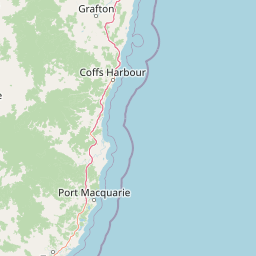
Map view of New England National Park

Use this park location map to pinpoint New England National Park in Australia, understand its exact geographic position, and read its mapped placement within the surrounding landscape more clearly.

Pigeon | © OpenStreetMap contributors

Location context for New England National Park

New South WalesNorthern Tablelands
Park atlas

Compare protected areas and trace the rich regional geography across Australia's Northern Tablelands escarpment.

Discover Nearby National Parks and Protected Areas Surrounding New England National Park, Australia
Continue your exploration from New England National Park by browsing other national parks and protected areas across the Northern Tablelands region of New South Wales, Australia. Compare diverse conservation landscapes, map their geographic spread, and understand the ecological connections within Australia's significant escarpment environments.
National parkNew South Wales

Dunggir National Park: Protected Subtropical Rainforest and Biodiversity Hub in New South Wales

Mapped national park landscape and Gumbaynggirr cultural context.

Dunggir National Park offers a detailed view into Australia's protected natural areas, specifically highlighting the unique subtropical rainforest environments of New South Wales. With a focus on conservation, this national park preserves a dense mosaic of three distinct rainforest types and is a sanctuary for significant biodiversity, including multiple endangered species. Its geographic placement and designation as a national park make it a key location for understanding regional ecosystems and the indigenous Gumbaynggirr heritage, with the park's name honouring the culturally significant koala.

Area
25 km²
Established
1997
IUCN
II
National parkNew South Wales

Bellinger River National Park: Protected River Landscape and Forested Terrain in New South Wales

Explore mapped boundaries and geographic context.

Bellinger River National Park is a protected national park situated in New South Wales, Australia, renowned for its untouched upper river catchment and dense old-growth forests. The park offers valuable insights into the region's natural geography, featuring steep valleys, numerous waterfalls, and a significant river corridor. This page provides detailed information on its protected landscape, mapped boundaries, and geographic setting, essential for atlas-style discovery and understanding its ecological significance.

Area
28.3 km²
Established
1997
IUCN
II
National parkNew South Wales

Junuy Juluum National Park: New South Wales Protected Forest Remnant Exploration

Discover rare warm temperate rainforest and unique Australian birdlife.

Junuy Juluum National Park offers a vital glimpse into a rare warm temperate rainforest habitat within New South Wales. Situated on Campion Mountain, this protected area showcases a distinct forest ecosystem, contrasting sharply with the surrounding eucalypt woodlands and cleared agricultural lands. Its mapped geography and status as a protected forest remnant make it significant for understanding regional conservation landscapes and unique Australian birdlife.

Area
9 km²
Established
1999
IUCN
II
National parkNew South Wales

Kumbatine National Park: Protected Landscape and Geographic Context in New South Wales

Explore its mapped terrain and subtropical forest ecosystems.

Kumbatine National Park represents a vital tract of protected subtropical forest and eucalypt bushland within New South Wales' Northern Rivers region. This detail page provides an atlas perspective on the park's geography, featuring the prominent Mount Kippara and the watershed of Glencoe Creek. Understand its unique landscape context and its significance as a preserved natural area in a region marked by extensive land clearing, offering rich details for geographic exploration.

Area
130 km²
Established
1999
IUCN
II
Relief
Mixed relief
National parkNew South Wales

Willi Willi National Park: A Protected Mountain Landscape in New South Wales

Explore ancient rainforests and dramatic terrain.

Willi Willi National Park represents a critical protected wilderness area on Australia's North Coast of New South Wales. Its landscape is defined by steep ridges, prominent peaks such as Mount Banda Banda, and ancient temperate rainforests, forming part of the internationally significant Gondwana Rainforests World Heritage Site. This park offers rich geographic context for understanding the diverse terrain and protected natural heritage of the region, making it a key destination for atlas-based discovery.

Area
298.7 km²
Established
1996
IUCN
Ib
Relief
Mountain
National parkNew South Wales

Arakoon National Park: Explore New South Wales' Coastal Protected Landscape and Heritage

Mapped boundaries and natural terrain of a key Australian national park.

Arakoon National Park represents a vital protected area in New South Wales, Australia, characterized by its dramatic coastal geography. This park offers an in-depth look at its mapped terrain, including headlands, beaches, and forests, providing essential context for understanding Australia's protected lands. Its importance extends to its dual identity as a significant Aboriginal cultural landscape and a site of colonial historical interest, making it a multifaceted destination for geographic and protected-area discovery.

Area
115 km²
Established
2013
IUCN
II
National parkNew South Wales

Ulidarra National Park: New South Wales Strict Nature Reserve and Wildlife Sanctuary

Explore its elevation range, mapped forest ecosystems, and protected habitats.

Ulidarra National Park represents a small yet ecologically vital protected area within New South Wales, Australia. Classified as a strict nature reserve, it preserves significant old-growth eucalyptus forests and intact rainforests across a notable elevation gradient. The park is recognized for providing critical habitat for species like koalas and various native birds, making it a key site for understanding regional wildlife diversity and protected landscape conservation through detailed mapping and geographic context.

Area
6.8 km²
Established
1999
IUCN
Ia
National parkNorthern Tablelands

Chaelundi National Park: Landmark Old-Growth Forest Protection in the Northern Tablelands

Mapped protected area landscape and regional geography.

Chaelundi National Park stands as a vital component of protected natural landscapes on Australia's Northern Tablelands. This national park is celebrated for its extensive old-growth forest, a direct result of significant environmental legal battles that highlighted its ecological importance. With declared wilderness areas covering thousands of hectares, the park offers a substantial glimpse into the region's conservation values and the complex interplay between landscape, law, and protected land status, providing rich context for geographic exploration.

Area
191.74 km²
Established
1997
IUCN
II

Common questions about visiting, size, designation, and location context for New England National Park

New England National Park FAQs for park facts, access, geography, and protected area context
Find quick answers about New England National Park, including protected-area facts, park geography, trail and visitor context, and how the park fits into its surrounding country and regional landscape.
MoriAtlas Explorer

Continue Your Protected Areas Search Across the Global Atlas

Deepen your exploration by continuing the structured search for national parks and protected areas worldwide. Utilize the comprehensive filtering capabilities to compare different conservation landscapes and refine your understanding of global park geography. Discover more about the distribution and characteristics of protected natural areas.

Global natural geography