

Mori Atlas logo
National parkWilli Willi National Park

Discover ancient rainforests and dramatic mountain geography within this World Heritage wilderness area.

Willi Willi National Park: Protected Landscape and Geographic Atlas in New South Wales

Willi Willi National Park, a significant protected area within New South Wales, Australia, offers a deep dive into a unique geographic landscape. This park is recognized for its dramatic mountain escarpments, ancient rainforest ecosystems, and its crucial role as part of the Gondwana Rainforests of Australia World Heritage Site. Explore the mapped boundaries, regional terrain, and distinctive natural context of Willi Willi National Park, providing a rich atlas-view of this significant Australian natural heritage.

wilderness areaGondwana RainforestsNew South Walesmountain landscaperainforest protectionWorld Heritage Site

Willi Willi National Park

National park

Park overview

Structured park overview, official facts, and landscape profile for Willi Willi National Park

Willi Willi National Park park facts, protected area profile, and essential visitor context
Review the core facts for Willi Willi National Park, including designation, size, terrain, visitor scale, habitats, and operating context in one park-focused overview.

About Willi Willi National Park

Willi Willi National Park occupies a striking position in the landscape of northern New South Wales, where its steep escarpments and forested ridges rise dramatically from the coastal plain near Port Macquarie. The park spans the headwaters and upper catchments of both the Macleay River and Hastings River systems, creating a critical watershed role in the region. The terrain is characterised by rugged sandstone and granite substrates that have been carved by millions of years of erosion, producing the park's distinctive ridgelines, cliff faces, and boulder-strewn valleys. The park's elevation gradient from valley floors to mountain summits creates remarkable habitat diversity within a relatively small area, supporting ecosystems that range from moist subtropical vine thickets to subalpine heath communities on exposed ridgelines. This ecological variety, combined with the park's wilderness protection status and World Heritage listing, makes Willi Willi one of the most significant protected areas in coastal New South Wales.

Quick facts and research context for Willi Willi National Park

Willi Willi National Park covers 298.7 square kilometres in the North Coast region of New South Wales, Australia. The park was gazetted in 1996 and is managed by the NSW National Parks and Wildlife Service. It forms part of the Gondwana Rainforests of Australia World Heritage Site, which was inscribed in 1986 and added to the Australian National Heritage List in 2007. The park's dramatic escarpments and mountain peaks are visible from Port Macquarie to the southeast, making it a prominent landscape feature in the region.

Park context

Deeper park guide and search-rich context for Willi Willi National Park

Willi Willi National Park history, landscape, wildlife, and travel context
Explore Willi Willi National Park through its history, landscape character, ecosystems, wildlife, conservation priorities, cultural context, and seasonal travel timing in a structured park guide built for atlas discovery and search intent.

Why Willi Willi National Park stands out

Willi Willi National Park is best known for its inclusion in the Gondwana Rainforests of Australia World Heritage Site, one of Australia's most significant conservation designations. The park protects some of the oldest continuously surviving rainforest ecosystems in the world, representing the ancient flora of the supercontinent Gondwana. Its dramatic mountain scenery, particularly Mount Banda Banda rising above the surrounding valleys, provides spectacular wilderness character. The combination of elevation range, moisture gradients, and geological diversity supports exceptional biodiversity within a relatively compact area.
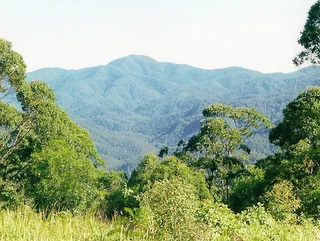
Mount Banda Banda from Number 1 fire tower
Mount Banda Banda photographed from the Number 1 fire tower

Willi Willi National Park history and protected-area timeline

Willi Willi National Park was formally gazetted on 4 April 1996, establishing it as a protected area under the National Parks and Wildlife Act. The park's establishment represented recognition of the outstanding natural values of the Macleay-Hastings region, particularly its ancient rainforests and montane ecosystems. Prior to gazettal, the land had been managed as state forest, and its transition to national park status reflected growing understanding of the area's ecological significance. The park's inclusion in the Gondwana Rainforests of Australia World Heritage Site, originally inscribed in 1986, preceded formal park establishment but was confirmed by the park's creation, strengthening the legal framework for protecting its globally significant ecosystems.

Willi Willi National Park landscape and geographic character

The landscape of Willi Willi National Park is dominated by steep, timbered ridges and prominent peaks that form part of the northern tablelands boundary in New South Wales. Mount Banda Banda rises to approximately 1,200 metres above sea level, while Kemps Pinnacle reaches similar elevations, both offering panoramic views across the surrounding countryside. The park sits at the junction of the Macleay River and Hastings River catchments, with numerous streams and drainage lines descending from the highlands into both river systems. The escarpment country features dramatic cliffs, boulder fields, and forest-covered slopes that create a dramatic backdrop visible from the coastal plain around Port Macquarie. The underlying geology of sandstone and granite produces characteristic nutrient-poor soils that support distinctive plant communities adapted to these conditions.

Willi Willi National Park ecosystems, habitats, and plant life

The nature of Willi Willi National Park centres on its remarkable Gondwanan heritage, representing some of the most ancient forest ecosystems on Earth. The park protects extensive warm temperate and cool temperate rainforest communities that have persisted here since the breakup of the supercontinent Gondwana over 100 million years ago. These ancient forests contain species that represent lineages dating back to the Cretaceous period, providing living evidence of Australia's botanical history. The elevation range within the park creates multiple distinct vegetation zones, from tall wet sclerophyll forests on the lower slopes through to cool temperate rainforests in the sheltered gullies and subalpine heath communities on the highest exposed ridges. The moisture-laden air from the Pacific Ocean creates the high humidity conditions that sustain these rainforests despite their relatively low latitude.

Willi Willi National Park wildlife and species highlights

Willi Willi National Park supports significant populations of native wildlife within its diverse forest and mountainous habitats. The combination of old-growth forest, rainforest patches, and rocky terrain provides shelter and feeding grounds for numerous bird species, mammals, and reptiles. The park's position in the North Coast region places it within a recognised biodiversity hotspot, where species from tropical, temperate, and arid zones meet and overlap. The protected status of the area ensures that habitat remains intact for species that require large, undisturbed territories. The variety of elevation zones and forest types within the park supports different wildlife assemblages from the valley floors to the ridgetops.

Willi Willi National Park conservation status and protection priorities

The conservation significance of Willi Willi National Park is recognised through its dual designations as an IUCN Category Ib wilderness area and its inclusion in the Gondwana Rainforests of Australia World Heritage Site. This World Heritage listing acknowledges the park's role in protecting some of the last remaining examples of Australia's ancient forest ecosystems, which represent the ancestral flora of the continent that existed when Australia was part of the supercontinent Gondwana. The World Heritage Site was inscribed in 1986 and added to the Australian National Heritage List in 2007, providing international recognition of the outstanding universal values that the park protects. The park's wilderness designation ensures that development is minimised and the area retains its natural character, providing refuge for species that cannot survive in modified landscapes.

Willi Willi National Park cultural meaning and human context

Willi Willi National Park sits within the traditional lands of Aboriginal peoples, though the available source material does not provide specific details about indigenous connections to this landscape. The broader North Coast region of New South Wales contains numerous sites of Aboriginal cultural significance, and the park's mountainous terrain and water sources would have provided resources for traditional custodians over many thousands of years.

Top sights and standout views in Willi Willi National Park

Willi Willi National Park offers exceptional wilderness character with its dramatic mountain scenery, ancient rainforest communities, and minimal development. The park's inclusion in the Gondwana Rainforests of Australia World Heritage Site places it among the most important protected areas in the country. The panoramic views from Mount Banda Banda and Kemps Pinnacle showcase the park's dramatic position above the coastal plain, while the valleys below contain some of the oldest forest ecosystems on the planet. The park's location between two major river systems and its accessibility from Port Macquarie make it a distinctive wilderness experience in coastal Australia.

Best time to visit Willi Willi National Park

The park can be visited throughout the year, with different seasons offering varied experiences. The wetter months from late autumn through winter bring regular rainfall that sustains the rainforest ecosystems and creates misty conditions in the mountain areas. Summer and early autumn typically offer more stable weather conditions for exploring the park's trails and viewpoints, though visitors should be prepared for hot conditions in the valley areas.
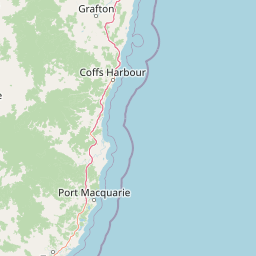
Park location guide

Geography guide, regional context, and park location map for Willi Willi National Park

Willi Willi National Park park geography, regions, and map view in Australia
Understand where Willi Willi National Park sits in Australia through a broader geographic reading of the surrounding landscape, nearby location context, and its mapped position within the national park landscape.

How Willi Willi National Park fits into Australia

Australia is a constitutional monarchy and federal parliamentary democracy comprising six states and ten territories. With a population of nearly 28 million, it is one of the world's most urbanised countries, with most people concentrated on the eastern seaboard. The country has a high Human Development Index and is known for its cultural diversity, ancient Aboriginal heritage, and unique wildlife.

Wider geography shaping Willi Willi National Park in Australia

Australia occupies the entire Australian continent, the island of Tasmania, and numerous smaller islands. It is the world's flattest and driest inhabited continent, featuring vast deserts in the interior (the Outback), tropical rainforests along the eastern coast, and a coastline bordering the Indian and Pacific Oceans.

Map view of Willi Willi National Park

Use this park location map to pinpoint Willi Willi National Park in Australia, understand its exact geographic position, and read its mapped placement within the surrounding landscape more clearly.

Pigeon | © OpenStreetMap contributors

Location context for Willi Willi National Park

New South Wales

Explore the dramatic mountain scenery, ancient rainforest habitats, and diverse protected landscapes of this Australian wilderness area.

Willi Willi National Park Photos, Scenery, and Landscape Imagery: Explore Protected Area Views
Browse a curated collection of photos showcasing the unique landscapes and diverse ecosystems within Willi Willi National Park, from its dramatic mountain peaks like Mount Banda Banda to its ancient Gondwana rainforests. These images provide an essential visual reference, helping you understand the park's terrain, habitat diversity, and overall protected wilderness character, crucial for atlas-style park discovery.

Mount Banda Banda from Number 1 fire tower

Park atlas

Explore similar wilderness areas and diverse protected landscapes across New South Wales, comparing their unique geographic features.

Discover Nearby National Parks and Protected Areas Beyond Willi Willi National Park
Continue your exploration beyond Willi Willi National Park to browse a curated selection of adjacent protected areas and unique wilderness landscapes across the North Coast of New South Wales. Comparing these national parks and reserves provides valuable insights into regional conservation efforts and the varied geographic terrain surrounding this World Heritage Site.
National parkNew South Wales

Kumbatine National Park: Protected Landscape and Geographic Context in New South Wales

Explore its mapped terrain and subtropical forest ecosystems.

Kumbatine National Park represents a vital tract of protected subtropical forest and eucalypt bushland within New South Wales' Northern Rivers region. This detail page provides an atlas perspective on the park's geography, featuring the prominent Mount Kippara and the watershed of Glencoe Creek. Understand its unique landscape context and its significance as a preserved natural area in a region marked by extensive land clearing, offering rich details for geographic exploration.

Area
130 km²
Established
1999
IUCN
II
Relief
Mixed relief
National parkNew South Wales

Bago Bluff National Park: New South Wales National Park with Panoramic Views

Explore its mapped geography and protected forest landscapes.

Bago Bluff National Park in New South Wales presents a remarkable protected landscape characterized by its prominent bluff formation, offering breathtaking panoramic views over the Hastings Valley. This national park preserves extensive wet sclerophyll forests and eucalypt woodlands, contributing to a rich mosaic of natural habitats and supporting a vibrant bird population. The park's geography is deeply tied to its geological history, with local quarries revealing significant fossil specimens. As a key protected area, it provides valuable context for understanding the regional landscape and mapped natural terrain of eastern Australia.

Area
40.23 km²
Established
1999
IUCN
II
National parkNew South Wales

Dunggir National Park: Protected Subtropical Rainforest and Biodiversity Hub in New South Wales

Mapped national park landscape and Gumbaynggirr cultural context.

Dunggir National Park offers a detailed view into Australia's protected natural areas, specifically highlighting the unique subtropical rainforest environments of New South Wales. With a focus on conservation, this national park preserves a dense mosaic of three distinct rainforest types and is a sanctuary for significant biodiversity, including multiple endangered species. Its geographic placement and designation as a national park make it a key location for understanding regional ecosystems and the indigenous Gumbaynggirr heritage, with the park's name honouring the culturally significant koala.

Area
25 km²
Established
1997
IUCN
II
National parkNew South Wales

Coorabakh National Park: A Protected Volcanic Landscape in New South Wales

Discover unique terrain, mapped protected boundaries, and regional geography.

Coorabakh National Park in New South Wales, Australia, is characterized by its striking volcanic trio: Big Nellie, Flat Nellie, and Little Nellie. These peaks dominate the rugged escarpment terrain, offering a unique geographic vista. The park protects a rich mosaic of tall eucalypt forests and sheltered subtropical rainforest gullies, highlighting its ecological diversity. For those interested in atlas-style exploration, Coorabakh National Park provides a clear example of a protected landscape with significant geological and ecological features within the broader regional context of New South Wales.

Area
18 km²
Established
1999
IUCN
II
National parkNew South Wales

Dooragan National Park: Coastal Mountain Protected Landscape and Old-Growth Forest Atlas

Explore the geography and mapped boundaries of this New South Wales national park.

Dooragan National Park is a significant protected area in New South Wales, renowned for the dramatic North Brother Mountain and its exceptional old-growth blackbutt forests. This park offers a rich exploration of coastal mountain geography, providing valuable mapped landscape context for the Mid North Coast region. Discover the park's unique ecological environment and its role as a protected natural asset.

Area
11 km²
Established
1997
IUCN
II
National parkNew South Wales

Mummel Gulf National Park: New South Wales Protected Area & Mapped Gorge Landscape

Rugged escarpment terrain with diverse forest ecosystems.

Mummel Gulf National Park is a protected area in New South Wales, Australia, renowned for its dramatic V-shaped gorge carved by the Mummel River, reaching depths over 400 metres. This rugged escarpment landscape hosts a variety of vegetation communities, including tall open eucalypt, wet sclerophyll, snow gum forests, and subtropical rainforest patches. The park's geography is central to its ecological significance, providing habitat for numerous species and showcasing a distinct natural terrain within the New England region, ideal for geographic exploration.

Area
122 km²
Established
1999
IUCN
II
National parkNew South Wales

Arakoon National Park: Explore New South Wales' Coastal Protected Landscape and Heritage

Mapped boundaries and natural terrain of a key Australian national park.

Arakoon National Park represents a vital protected area in New South Wales, Australia, characterized by its dramatic coastal geography. This park offers an in-depth look at its mapped terrain, including headlands, beaches, and forests, providing essential context for understanding Australia's protected lands. Its importance extends to its dual identity as a significant Aboriginal cultural landscape and a site of colonial historical interest, making it a multifaceted destination for geographic and protected-area discovery.

Area
115 km²
Established
2013
IUCN
II
National parkNew South Wales

New England National Park: Escarpment Landscape and Protected Area Discovery in New South Wales

Explore dramatic cliffs, ancient rainforests, and diverse ecosystems.

New England National Park represents a critical protected landscape on the eastern edge of New South Wales' Northern Tablelands. This area is characterized by its spectacular escarpment country, featuring impressive cliffs, rugged ridges, and deep valleys that cradle some of Australia's most botanically rich environments. As a designated national park, it preserves ancient ecosystems and offers unique opportunities for atlas-based geographic discovery of its mapped terrain and wilderness character.

Area
673 km²
Established
1937
IUCN
Ib

Common questions about visiting, size, designation, and location context for Willi Willi National Park

Willi Willi National Park FAQs for park facts, access, geography, and protected area context
Find quick answers about Willi Willi National Park, including protected-area facts, park geography, trail and visitor context, and how the park fits into its surrounding country and regional landscape.
MoriAtlas Explorer

Continue Your Protected Areas Search Across the Global Atlas

Deepen your exploration by continuing the structured search for national parks and protected areas worldwide. Utilize the comprehensive filtering capabilities to compare different conservation landscapes and refine your understanding of global park geography. Discover more about the distribution and characteristics of protected natural areas.

Global natural geography