Mori Atlas logo
National parkBago Bluff National Park

Discover panoramic views and eucalypt forest ecosystems within this mapped national park.

Bago Bluff National Park: New South Wales Protected Landscape and Geography

Bago Bluff National Park, situated in New South Wales, Australia, stands as a significant protected natural area renowned for its dramatic geological bluff and sweeping vistas across the Hastings Valley. This national park encompasses approximately 40 square kilometers of diverse habitats, including wet sclerophyll forests and eucalypt woodlands, offering a rich landscape for exploration. Its geological history is further highlighted by fossil discoveries, providing context to its ancient environmental conditions. The park serves as a key destination for understanding regional geography and mapped protected lands within eastern Australia.

National ParkNew South WalesWet Sclerophyll ForestEucalypt ForestBirdwatchingHastings Valley

Bago Bluff National Park

National park

Park overview

Structured park overview, official facts, and landscape profile for Bago Bluff National Park

Bago Bluff National Park park facts, protected area profile, and essential visitor context
Review the core facts for Bago Bluff National Park, including designation, size, terrain, visitor scale, habitats, and operating context in one park-focused overview.

About Bago Bluff National Park

Bago Bluff National Park occupies a distinctive position in the protected area network of New South Wales, representing a transition zone between the coastal plains and the elevated hinterland of the Northern Tablelands. The park's establishment in 1999 consolidated several formerly separate land units, including portions of the Broken Bago State Forest, Lorne State Forest, and the historical Bago Bluff Flora Reserve, into a unified conservation framework. The landscape is dominated by forested ridges that rise from the surrounding terrain, with the Bago Bluff itself serving as a prominent landmark visible from the Oxley Highway that marks the park's northern boundary. The park's terrain presents challenges for visitors, with the northern access points via the Oxley Highway featuring rough 4WD tracks that have experienced erosion damage. The southern approach via forest roads, including Bago Road, provides more accessible routes to the bluff's summit area. Beyond its conservation value, the park holds scientific interest due to paleontological discoveries in local quarries, where fossilized plant material and marine shell remains have been recovered, revealing glimpses of the region's geological past.

Quick facts and research context for Bago Bluff National Park

Bago Bluff National Park spans approximately 40.23 square kilometers in the Mid North Coast region of New South Wales, Australia. The park was formally established in January 1999 under the management of the National Parks and Wildlife Service of New South Wales. It encompasses former state forest lands and historical flora reserves, with the prominent Bago Bluff as its central geographic feature. The area is characterized by forested ridges and valleys, with the bluff providing commanding views over the Hastings Valley landscape.

Park context

Deeper park guide and search-rich context for Bago Bluff National Park

Bago Bluff National Park history, landscape, wildlife, and travel context
Explore Bago Bluff National Park through its history, landscape character, ecosystems, wildlife, conservation priorities, cultural context, and seasonal travel timing in a structured park guide built for atlas discovery and search intent.

Why Bago Bluff National Park stands out

Bago Bluff National Park is best known for its spectacular panoramic views from the top of Bago Bluff, which overlooks the Hastings Valley and provides visitors with a striking vantage point across the surrounding countryside. The park protects significant tracts of wet sclerophyll forest and eucalypt woodland that support diverse birdlife, including numerous species of honeyeaters, fantails, scrubwrens, and parrots. The geological significance of the area is evidenced by fossil discoveries from local quarries, which have produced both leaf and shell fossils documenting the region's ancient environmental conditions.

Bago Bluff National Park history and protected-area timeline

The lands now comprising Bago Bluff National Park have undergone significant administrative changes over recent decades. Prior to national park designation, the area existed as state forest and flora reserves, reflecting a history of timber harvesting and resource management that preceded the shift toward conservation-oriented protection. The formal proclamation of Bago Bluff National Park in January 1999 marked a transition in management priorities, moving from production forestry to biodiversity conservation and public recreation. The incorporation of the former Bago Bluff Flora Reserve and Six B Flora Reserve into the national park framework represented an expansion of protected area coverage in the region, acknowledging the ecological values and species habitats present in these forested landscapes.

Bago Bluff National Park landscape and geographic character

The physical character of Bago Bluff National Park is defined by its elevated terrain and forested slopes. The park encompasses a prominent bluff formation that rises above the surrounding landscape, creating dramatic relief across the relatively undulating terrain of the Mid North Coast region. The underlying geology supports a landscape of ridges and valleys, with the forested slopes characterized by tall eucalypts and a dense understory typical of wet sclerophyll communities. From the summit of Bago Bluff, visitors gain extensive vistas across the Hastings Valley, a productive agricultural and pastoral district that extends toward the coast. The park's terrain features numerous forest tracks that traverse the landscape, though some northern routes have suffered deterioration from erosion and heavy vehicle use.

Bago Bluff National Park ecosystems, habitats, and plant life

The ecological character of Bago Bluff National Park reflects the moist, temperate forest environments of northeastern New South Wales. The park supports extensive wet sclerophyll forest dominated by various eucalypt species, creating a tall canopy structure with a diverse understory layer. These forests transition through subtle gradients across the park's elevation range, supporting different community compositions on ridge crests versus valley floors. The dense groundcover and shrub layers provide habitat structure for numerous bird species and small mammals. The park's position within a broader forested landscape connects it to adjacent conservation areas and working forests, creating corridors for wildlife movement through the regional landscape.

Bago Bluff National Park wildlife and species highlights

Bivo Bluff National Park supports a notable diversity of bird species that thrive in the forested environments. The avifauna includes Australian magpies, known for their distinctive caroling calls across the forest canopy, and golden whistlers whose bright plumage and melodious songs add color and sound to the woodland environment. Visitors may encounter grey fantails darting through the understory in pursuit of flying insects, while the more secretive large-billed scrubwrens and white-browed scrubwrens remain closer to dense ground cover. Spotted pardalotes, among the smallest of Australian birds, forage in the canopy canopy canopy, and pied currawongs sweep through the forest on broad wings. The striking white-browed scrubwrens and striated thornbills represent additional species in the diverse bird communities that inhabit the park's eucalypt forests and woodland edges.

Bago Bluff National Park conservation status and protection priorities

Bago Bluff National Park contributes to the protected area network of northeastern New South Wales, preserving representative examples of wet sclerophyll forest communities that occur across this region. The park's establishment formalized protection for habitats supporting numerous woodland bird species and other native fauna. Management challenges include controlling the spread of lantana, an invasive weed that has become problematic in some areas and threatens to overwhelm tracks and native understory communities. The park also preserves access to paleontological sites where fossil discoveries contribute to understanding the region's ancient environments and geological history.

Bago Bluff National Park cultural meaning and human context

The Bago Bluff area exists within the traditional Country of Aboriginal peoples, though the source material provides limited detail on specific cultural associations or heritage values. The landscape has been subject to European settlement and forest management activities prior to national park establishment, with state forestry operations shaping the land use history of the broader region.

Top sights and standout views in Bago Bluff National Park

The premier highlight of Bago Bluff National Park is the views from the top of Bago Bluff itself, where the Hastings Valley unfolds below in a sweeping panorama. The park provides opportunities for bushwalking through tall eucalypt forests, with several forest roads and tracks offering access to different sections of the park. Birdwatching represents a significant draw, with the diverse forest bird communities providing consistent sightings throughout the year. The park's relative proximity to Wauchope and the Oxley Highway makes it accessible for day trips from the Mid North Coast population centers.

Best time to visit Bago Bluff National Park

The park can be visited throughout the year, though autumn and spring typically offer comfortable conditions for walking and wildlife observation. Summer months can be warm and humid in this part of New South Wales, while winter may bring cooler temperatures and occasional fog in the valleys. The forest environment is greenest following summer rainfall, though track conditions may deteriorate during wet periods.
Park location guide

Geography guide, regional context, and park location map for Bago Bluff National Park

Bago Bluff National Park park geography, regions, and map view in Australia
Understand where Bago Bluff National Park sits in Australia through a broader geographic reading of the surrounding landscape, nearby location context, and its mapped position within the national park landscape.

How Bago Bluff National Park fits into Australia

Australia is a constitutional monarchy and federal parliamentary democracy comprising six states and ten territories. With a population of nearly 28 million, it is one of the world's most urbanised countries, with most people concentrated on the eastern seaboard. The country has a high Human Development Index and is known for its cultural diversity, ancient Aboriginal heritage, and unique wildlife.

Wider geography shaping Bago Bluff National Park in Australia

Australia occupies the entire Australian continent, the island of Tasmania, and numerous smaller islands. It is the world's flattest and driest inhabited continent, featuring vast deserts in the interior (the Outback), tropical rainforests along the eastern coast, and a coastline bordering the Indian and Pacific Oceans.

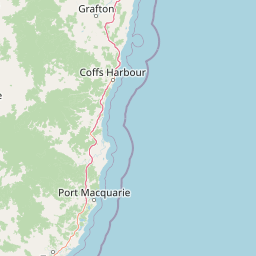
Map view of Bago Bluff National Park

Use this park location map to pinpoint Bago Bluff National Park in Australia, understand its exact geographic position, and read its mapped placement within the surrounding landscape more clearly.

Pigeon | © OpenStreetMap contributors

Location context for Bago Bluff National Park

New South Wales
Park atlas

Trace the Mapped Geography and Connected Protected Areas Across the Bago Bluff Region

Discover Nearby National Parks and Protected Areas Beyond Bago Bluff National Park, New South Wales
Broaden your protected area discovery by exploring other national parks and reserves across the New South Wales coastal hinterland. Trace their mapped geography, compare ecological features, and understand their contribution to the regional spread of conserved landscapes near Bago Bluff National Park.
National parkNew South Wales

Dooragan National Park: Coastal Mountain Protected Landscape and Old-Growth Forest Atlas

Explore the geography and mapped boundaries of this New South Wales national park.

Dooragan National Park is a significant protected area in New South Wales, renowned for the dramatic North Brother Mountain and its exceptional old-growth blackbutt forests. This park offers a rich exploration of coastal mountain geography, providing valuable mapped landscape context for the Mid North Coast region. Discover the park's unique ecological environment and its role as a protected natural asset.

Area
11 km²
Established
1997
IUCN
II
National parkNew South Wales

Coorabakh National Park: A Protected Volcanic Landscape in New South Wales

Discover unique terrain, mapped protected boundaries, and regional geography.

Coorabakh National Park in New South Wales, Australia, is characterized by its striking volcanic trio: Big Nellie, Flat Nellie, and Little Nellie. These peaks dominate the rugged escarpment terrain, offering a unique geographic vista. The park protects a rich mosaic of tall eucalypt forests and sheltered subtropical rainforest gullies, highlighting its ecological diversity. For those interested in atlas-style exploration, Coorabakh National Park provides a clear example of a protected landscape with significant geological and ecological features within the broader regional context of New South Wales.

Area
18 km²
Established
1999
IUCN
II
National parkNew South Wales

Crowdy Bay National Park: New South Wales Protected Coastal Landscape and Terrain Map

Explore mapped boundaries and diverse natural geography within this national park.

Crowdy Bay National Park offers a compelling example of coastal protected landscape in New South Wales, Australia. This page facilitates a detailed atlas exploration of its natural geography, focusing on the interaction between ocean beaches, headlands, and inland forested terrain. Understand the park's specific location and its characteristic ecosystems, providing a structured view of this significant national park for geographic discovery.

Area
102 km²
Established
1972
IUCN
II
Relief
Lowland
National parkNew South Wales

Willi Willi National Park: A Protected Mountain Landscape in New South Wales

Explore ancient rainforests and dramatic terrain.

Willi Willi National Park represents a critical protected wilderness area on Australia's North Coast of New South Wales. Its landscape is defined by steep ridges, prominent peaks such as Mount Banda Banda, and ancient temperate rainforests, forming part of the internationally significant Gondwana Rainforests World Heritage Site. This park offers rich geographic context for understanding the diverse terrain and protected natural heritage of the region, making it a key destination for atlas-based discovery.

Area
298.7 km²
Established
1996
IUCN
Ib
Relief
Mountain
National parkNew South Wales

Kumbatine National Park: Protected Landscape and Geographic Context in New South Wales

Explore its mapped terrain and subtropical forest ecosystems.

Kumbatine National Park represents a vital tract of protected subtropical forest and eucalypt bushland within New South Wales' Northern Rivers region. This detail page provides an atlas perspective on the park's geography, featuring the prominent Mount Kippara and the watershed of Glencoe Creek. Understand its unique landscape context and its significance as a preserved natural area in a region marked by extensive land clearing, offering rich details for geographic exploration.

Area
130 km²
Established
1999
IUCN
II
Relief
Mixed relief
National parkNew South Wales

Mummel Gulf National Park: New South Wales Protected Area & Mapped Gorge Landscape

Rugged escarpment terrain with diverse forest ecosystems.

Mummel Gulf National Park is a protected area in New South Wales, Australia, renowned for its dramatic V-shaped gorge carved by the Mummel River, reaching depths over 400 metres. This rugged escarpment landscape hosts a variety of vegetation communities, including tall open eucalypt, wet sclerophyll, snow gum forests, and subtropical rainforest patches. The park's geography is central to its ecological significance, providing habitat for numerous species and showcasing a distinct natural terrain within the New England region, ideal for geographic exploration.

Area
122 km²
Established
1999
IUCN
II
National parkNew South Wales

Arakoon National Park: Explore New South Wales' Coastal Protected Landscape and Heritage

Mapped boundaries and natural terrain of a key Australian national park.

Arakoon National Park represents a vital protected area in New South Wales, Australia, characterized by its dramatic coastal geography. This park offers an in-depth look at its mapped terrain, including headlands, beaches, and forests, providing essential context for understanding Australia's protected lands. Its importance extends to its dual identity as a significant Aboriginal cultural landscape and a site of colonial historical interest, making it a multifaceted destination for geographic and protected-area discovery.

Area
115 km²
Established
2013
IUCN
II
National parkNew South Wales

Dunggir National Park: Protected Subtropical Rainforest and Biodiversity Hub in New South Wales

Mapped national park landscape and Gumbaynggirr cultural context.

Dunggir National Park offers a detailed view into Australia's protected natural areas, specifically highlighting the unique subtropical rainforest environments of New South Wales. With a focus on conservation, this national park preserves a dense mosaic of three distinct rainforest types and is a sanctuary for significant biodiversity, including multiple endangered species. Its geographic placement and designation as a national park make it a key location for understanding regional ecosystems and the indigenous Gumbaynggirr heritage, with the park's name honouring the culturally significant koala.

Area
25 km²
Established
1997
IUCN
II

Common questions about visiting, size, designation, and location context for Bago Bluff National Park

Bago Bluff National Park FAQs for park facts, access, geography, and protected area context
Find quick answers about Bago Bluff National Park, including protected-area facts, park geography, trail and visitor context, and how the park fits into its surrounding country and regional landscape.
MoriAtlas Explorer

Continue Your Protected Areas Search Across the Global Atlas

Deepen your exploration by continuing the structured search for national parks and protected areas worldwide. Utilize the comprehensive filtering capabilities to compare different conservation landscapes and refine your understanding of global park geography. Discover more about the distribution and characteristics of protected natural areas.

Global natural geography