Mori Atlas logo
National parkCrowdy Bay National Park

Discover the mapped boundaries and diverse natural terrain of this national park in northeastern New South Wales.

Crowdy Bay National Park: New South Wales Coastal Protected Landscape & Map Exploration

Crowdy Bay National Park represents a significant protected coastal area within New South Wales, Australia. This page serves as your gateway to understanding its unique geographic identity, from sweeping ocean beaches to dense forested interiors and subtropical rainforest pockets. Explore the mapped landscape and discover the protected area's rich natural features, offering a detailed view for atlas-based exploration of Australia's eastern coastline.

coastal national parkNew South Wales parksAustralian beachesrainforest conservationwildlife habitathiking trails

Crowdy Bay National Park

National park

Park overview

Structured park overview, official facts, and landscape profile for Crowdy Bay National Park

Crowdy Bay National Park park facts, protected area profile, and essential visitor context
Review the core facts for Crowdy Bay National Park, including designation, size, terrain, visitor scale, habitats, and operating context in one park-focused overview.

About Crowdy Bay National Park

Crowdy Bay National Park occupies a significant stretch of the New South Wales coastline northeast of Sydney, positioned as a natural backdrop to the regional center of Port Macquarie. The park's establishment in 1972 reflected a growing recognition of the need to preserve coastal environments that faced increasing development pressure along this part of the Australian east coast. The reserve encompasses a range of topographic features from the sandy beach environments along its ocean frontage to more elevated terrain inland, with vegetation communities that respond to the varying conditions of exposure, soil moisture, and elevation.

The park serves multiple purposes within the broader NSW protected area network. Ecologically, it conserves coastal ecosystems that provide habitat for both common and specialized species. Recreation-wise, it offers visitors opportunities to experience relatively unmodified coastal landscapes through a network of walking tracks and beach access points. The proximity to Port Macquarie also means the park functions as a green space for local residents and regional tourists seeking outdoor experiences without traveling to more distant wilderness areas.

The 2019-20 bushfire season had a profound impact on Crowdy Bay National Park, with extensive areas of vegetation burned including significant pockets of coastal rainforest that represent some of the more moisture-dependent plant communities in the park. The destruction of Kylie Tennant's hut, a literary retreat associated with the celebrated Australian author, marked a particular cultural loss within the park's landscape. Recovery from this fire event continues to shape the park's ecology and management priorities.

Quick facts and research context for Crowdy Bay National Park

Crowdy Bay National Park covers approximately 102 square kilometers along the coast of New South Wales, Australia, about 271 kilometers northeast of Sydney near Port Macquarie. The park was established in 1972 and is classified as an IUCN Category II protected area, managed by the NSW National Parks and Wildlife Service. The landscape features coastal beaches, headlands, forested areas, and remnants of subtropical rainforest. The park suffered significant damage during the 2019-20 Australian bushfire season, with roughly 12,000 hectares of vegetation including coastal rainforest affected.

Park context

Deeper park guide and search-rich context for Crowdy Bay National Park

Crowdy Bay National Park history, landscape, wildlife, and travel context
Explore Crowdy Bay National Park through its history, landscape character, ecosystems, wildlife, conservation priorities, cultural context, and seasonal travel timing in a structured park guide built for atlas discovery and search intent.

Why Crowdy Bay National Park stands out

Crowdy Bay National Park is best known for its accessible coastal wilderness character and the contrast between its ocean beaches and forested interior. The park offers relatively straightforward recreation opportunities including beach walking, coastal picnicking, and fishing, making it a popular seaside retreat for visitors to the Port Macquarie region. Its biodiversity includes several notable species such as White-bellied sea eagles soaring along the coastline, lace monitors in the forest understory, and distinctive Black sheoak and Grass tree vegetation. The presence of Kylie Tennant's historic hut, though now destroyed, added a literary and cultural dimension to the park's identity.
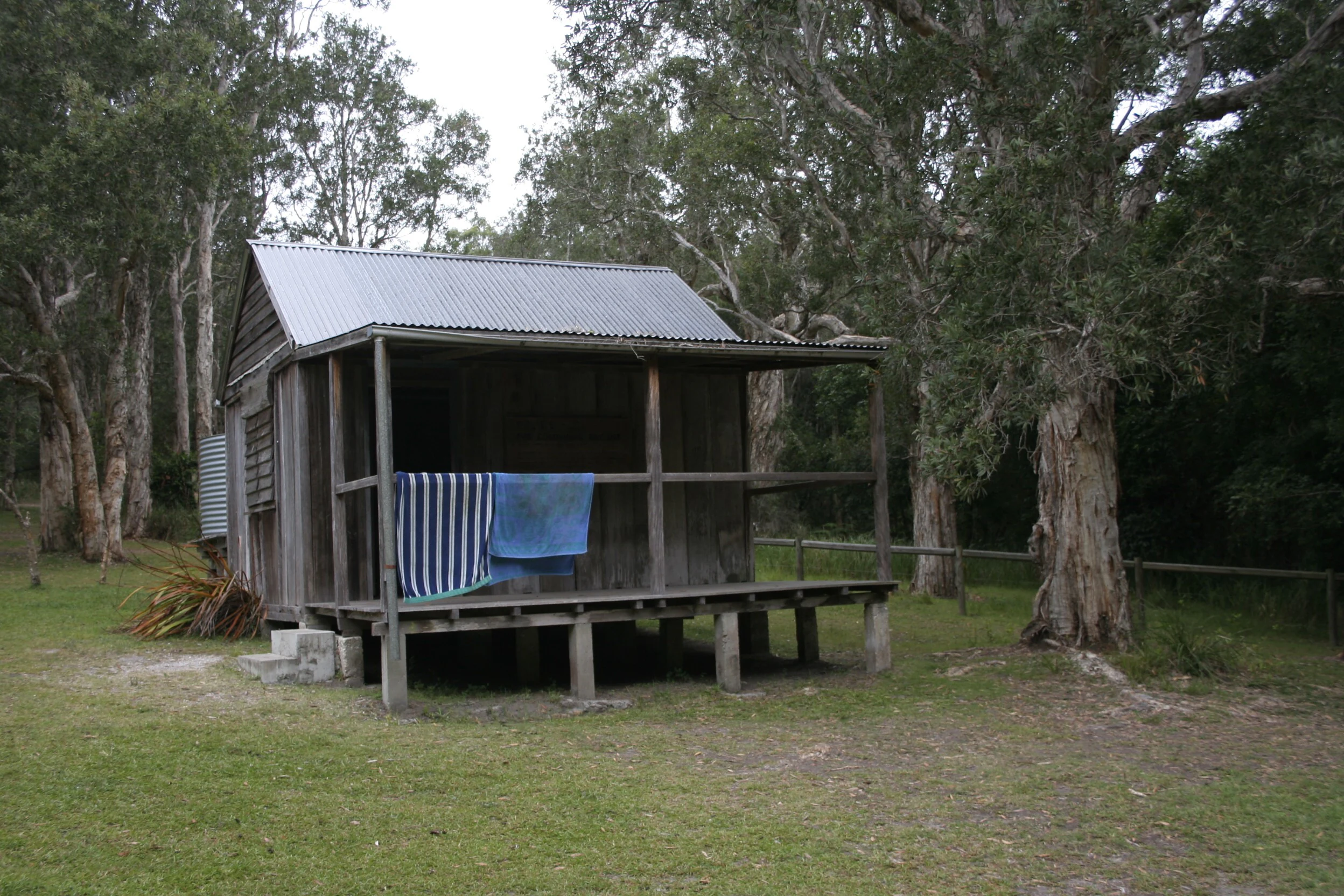
Kylie's hut
Kylie's hut in Crowdy Bay National Park

Crowdy Bay National Park history and protected-area timeline

Crowdy Bay National Park was established in 1972 as part of the expansion of New South Wales' national park system during a period when protected area designation was accelerating across Australia. The formal creation of the park reflected contemporary conservation priorities that sought to preserve representative coastal environments and the biodiversity they supported. Management responsibility was assigned to the NSW National Parks and Wildlife Service, which continues to oversee the reserve's protection and visitor facilities.

The park's cultural history extends beyond its establishment as a protected area. Australian author Kylie Tennant maintained a personal retreat within the Crowdy Bay area known as Kylie's Hut, where she worked on her literary productions. This structure became a symbol of the relationship between Australian writers and the natural landscape, representing a tradition of creative retreat to coastal wilderness settings. The hut's destruction during the November 2019 bushfires ended this particular cultural landmark, though the site retains significance in the park's narrative.

The impacts of the 2019-20 bushfire season represent the most significant recent event in the park's history, fundamentally altering large areas of the reserve's vegetation and requiring ongoing recovery management. This event highlighted the vulnerability of Australian coastal environments to extreme fire conditions and has influenced approaches to fire management and ecological restoration within the park.

Crowdy Bay National Park landscape and geographic character

The landscape of Crowdy Bay National Park reflects the dynamic interaction between marine and terrestrial processes along this section of the New South Wales coast. The park's oceanfront features sandy beaches that are typical of the region's coastline, with beach profiles shaped by wave action and longshore sediment movement. Behind the beach zones, coastal headlands and cliffs provide topographic variety and viewpoints over the Tasman Sea.

Moving inland from the coast, the terrain rises into ridgelines and valleys that support more densely vegetated areas. The park contains patches of subtropical rainforest in sheltered gullies and protected aspects, representing some of the more moisture-retentive environments within the reserve. These rainforest areas exist in contrast to the surrounding woodlands and heathlands that occupy more exposed positions. The park's soils and underlying geology contribute to the distribution of vegetation types, with different plant communities corresponding to variations in moisture availability, nutrient status, and exposure to salt-laden winds.

The overall visual character of the park combines the horizontal emphasis of the ocean coastline with the vertical elements of forest-covered slopes and ridges. This coastal forest landscape provides a backdrop that frames beach scenes and contributes to the sense of natural enclosure that distinguishes the park as a destination for visitors seeking coastal wilderness experiences.

Crowdy Bay National Park ecosystems, habitats, and plant life

Crowdy Bay National Park supports a range of vegetation communities that reflect the transitional nature of its coastal location between more temperate southern Australian flora and the subtropical influences that extend along this part of the east coast. The park's forested areas feature species adapted to periodic fire and variable moisture conditions, with Black sheoak and various eucalyptus species forming prominent components of the woodland canopy. Grass trees represent another characteristic element of the park's vegetation, with their distinctive flowering spikes providing seasonal visual interest.

In the more protected gullies and lower-lying areas, the vegetation transitions toward rainforest character with increased species diversity and more dense canopy structure. These pockets of coastal rainforest represent significant vegetation remnants that support specialized ecological relationships and provide habitat for species that depend on more shaded, moisture-consistent environments. The presence of these rainforest areas adds biological significance to the park's overall conservation value.

The biodiversity of Crowdy Bay extends across taxonomic groups, with the park supporting populations of birds, reptiles, amphibians, and invertebrates. The coastal position of the reserve means that marine influences affect the terrestrial environment, with salt exposure, humidity patterns, and the availability of beach and reef habitats all shaping which species can maintain populations in the area.

Crowdy Bay National Park wildlife and species highlights

The wildlife of Crowdy Bay National Park reflects its coastal forest environment and includes species adapted to both marine and terrestrial habitats. White-bellied sea eagles are notable inhabitants, with these large raptors frequently observed soaring along the coastline and hunting over the near-shore waters. These birds nest in the park's taller trees and use the coastal cliffs and headlands as vantage points for detecting prey.

Reptile populations in the park include the lace monitor, a variable-sized goanna species that forages through the forest understory and may be encountered by visitors walking the park's tracks. The park also supports amphibian species such as the Brown striped frog, which breeds in the wetter areas and contributes to the nocturnal soundscape of the reserve, particularly during the warmer months. Various smaller mammals, marsupials, and invertebrates complete the vertebrate fauna, though detailed species inventories are limited in the available source material.

The beach and coastal waters adjacent to the park provide additional wildlife habitat, with shorebirds and seabirds using the sandy areas for feeding and resting. The marine environment supports fish species of interest to recreational fishers, with the park's beach and headland fishing spots attracting visitors throughout the year.

Crowdy Bay National Park conservation status and protection priorities

Crowdy Bay National Park contributes to the conservation of coastal biodiversity in northeastern New South Wales, representing a protected area that preserves representative examples of the region's coastal ecosystems. The park's vegetation communities, including the significant patches of coastal rainforest, provide habitat for species that depend on these environments for their survival. Conservation management within the park focuses on maintaining ecological processes and protecting species populations from threats that could reduce biodiversity.

The 2019-20 bushfire season demonstrated the vulnerability of the park's ecosystems to catastrophic fire events, with approximately 12,000 hectares burned including coastal rainforest areas. This event has shaped recent conservation priorities, with post-fire recovery and fire management strategies receiving increased attention. The experience of fire impacts at Crowdy Bay reflects broader challenges facing Australian protected areas as climate change increases the frequency and intensity of fire events in many regions.

The park's classification as an IUCN Category II protected area reflects its designation as a national park with conservation as a primary objective, while also allowing for sustainable visitor use and recreation. This management framework balances protection of natural values with opportunities for public enjoyment, positioning the park as a site where conservation and compatible recreation coexist.

Crowdy Bay National Park cultural meaning and human context

The cultural context of Crowdy Bay National Park includes connections to Australian literary history through the association with author Kylie Tennant. Tennant maintained a personal retreat in the Crowdy Bay area known as Kylie's Hut, where she spent time writing and engaging with the landscape. This structure became a recognized cultural landmark within the park, representing a tradition of Australian writers seeking creative inspiration in natural coastal settings.

The destruction of Kylie Tennant's hut during the 2019-20 bushfire season marked a significant loss of this cultural heritage within the park. While the physical structure no longer exists, the association with Tennant and her literary legacy continues to inform the park's cultural narrative. Visitors to Crowdy Bay may be aware of this connection, adding a literary dimension to the park's natural landscape.

Beyond the Tennant association, the broader cultural history of the area reflects European settlement patterns along the New South Wales coast and the subsequent establishment of protected areas to preserve natural environments. The park's proximity to Port Macquarie also connects it to the regional identity of that coastal city, with Crowdy Bay functioning as a natural complement to the urban and tourism development of the surrounding area.

Top sights and standout views in Crowdy Bay National Park

Crowdy Bay National Park stands out for its accessible combination of coastal wilderness and forest environments within a relatively compact protected area. The beach areas provide direct access to the Tasman Sea for swimming, beach walking, and fishing, while the interior tracks wind through forested terrain with opportunities for birdwatching and wildlife observation. The presence of White-bellied sea eagles along the coastline and lace monitors in the forest understory offers wildlife viewing opportunities that attract nature-focused visitors.

The park's proximity to Port Macquarie makes it a convenient outdoor destination for visitors to that regional center, with the combination of beach recreation and forest walking providing a varied experience within a single protected area. The historical association with Kylie Tennant adds cultural depth to the park visit, even though the physical hut no longer exists. The park's role in conserving coastal rainforest remnants represents ecological significance beyond the more common heathland and woodland communities.

Best time to visit Crowdy Bay National Park

The best time to visit Crowdy Bay National Park depends on the experiences visitors seek, with the warmer months typically preferred for beach activities and swimming. The summer period from December through February offers the warmest conditions for coastal recreation, though this coincides with higher visitor numbers and school holiday periods. Autumn and spring provide more moderate temperatures and often pleasant conditions for walking and wildlife observation, with these shoulder seasons potentially offering a quieter park experience.

Wildlife viewing opportunities exist throughout the year, though bird activity may be more observable during the breeding season in spring and early summer. The park's coastal position means that weather can change relatively quickly, with visitors benefiting from flexibility in their plans. Those interested in fishing should note that seasonal regulations may affect what is permitted at different times of year, and checking current conditions before visiting provides the most reliable guidance.
Park location guide

Geography guide, regional context, and park location map for Crowdy Bay National Park

Crowdy Bay National Park park geography, regions, and map view in Australia
Understand where Crowdy Bay National Park sits in Australia through a broader geographic reading of the surrounding landscape, nearby location context, and its mapped position within the national park landscape.

How Crowdy Bay National Park fits into Australia

Australia is a constitutional monarchy and federal parliamentary democracy comprising six states and ten territories. With a population of nearly 28 million, it is one of the world's most urbanised countries, with most people concentrated on the eastern seaboard. The country has a high Human Development Index and is known for its cultural diversity, ancient Aboriginal heritage, and unique wildlife.

Wider geography shaping Crowdy Bay National Park in Australia

Australia occupies the entire Australian continent, the island of Tasmania, and numerous smaller islands. It is the world's flattest and driest inhabited continent, featuring vast deserts in the interior (the Outback), tropical rainforests along the eastern coast, and a coastline bordering the Indian and Pacific Oceans.

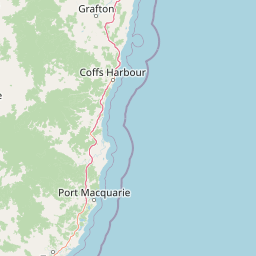
Map view of Crowdy Bay National Park

Use this park location map to pinpoint Crowdy Bay National Park in Australia, understand its exact geographic position, and read its mapped placement within the surrounding landscape more clearly.

Pigeon | © OpenStreetMap contributors

Location context for Crowdy Bay National Park

New South Wales

Browse photography showcasing its unique blend of ocean beaches, forested interior, and diverse protected environments.

Explore the Coastal Landscapes and Diverse Scenery of Crowdy Bay National Park Through Detailed Imagery
Visually explore the distinctive landscapes of Crowdy Bay National Park, from its sweeping ocean beaches and dramatic coastal headlands to the dense subtropical rainforests and diverse heathlands found inland. These curated images offer essential insights into the park's varied terrain, ecological communities, and its overall identity as a premier coastal protected area in New South Wales.

Kylie's hut

Park atlas

Map adjacent protected landscapes and trace the geographic spread of coastal wilderness reserves across New South Wales for deeper comparison.

Explore National Parks and Coastal Protected Areas Near Crowdy Bay National Park in New South Wales
Continue your exploration from Crowdy Bay National Park by browsing nearby national parks and protected areas, encompassing diverse coastal and forested landscapes across the New South Wales region. Compare ecological communities, terrain features, and conservation efforts within the broader regional context to understand the interconnectedness of these vital protected landscapes.
National parkNew South Wales

Dooragan National Park: Coastal Mountain Protected Landscape and Old-Growth Forest Atlas

Explore the geography and mapped boundaries of this New South Wales national park.

Dooragan National Park is a significant protected area in New South Wales, renowned for the dramatic North Brother Mountain and its exceptional old-growth blackbutt forests. This park offers a rich exploration of coastal mountain geography, providing valuable mapped landscape context for the Mid North Coast region. Discover the park's unique ecological environment and its role as a protected natural asset.

Area
11 km²
Established
1997
IUCN
II
National parkNew South Wales

Coorabakh National Park: A Protected Volcanic Landscape in New South Wales

Discover unique terrain, mapped protected boundaries, and regional geography.

Coorabakh National Park in New South Wales, Australia, is characterized by its striking volcanic trio: Big Nellie, Flat Nellie, and Little Nellie. These peaks dominate the rugged escarpment terrain, offering a unique geographic vista. The park protects a rich mosaic of tall eucalypt forests and sheltered subtropical rainforest gullies, highlighting its ecological diversity. For those interested in atlas-style exploration, Coorabakh National Park provides a clear example of a protected landscape with significant geological and ecological features within the broader regional context of New South Wales.

Area
18 km²
Established
1999
IUCN
II
National parkNew South Wales

Bago Bluff National Park: New South Wales National Park with Panoramic Views

Explore its mapped geography and protected forest landscapes.

Bago Bluff National Park in New South Wales presents a remarkable protected landscape characterized by its prominent bluff formation, offering breathtaking panoramic views over the Hastings Valley. This national park preserves extensive wet sclerophyll forests and eucalypt woodlands, contributing to a rich mosaic of natural habitats and supporting a vibrant bird population. The park's geography is deeply tied to its geological history, with local quarries revealing significant fossil specimens. As a key protected area, it provides valuable context for understanding the regional landscape and mapped natural terrain of eastern Australia.

Area
40.23 km²
Established
1999
IUCN
II
National parkNew South Wales

Willi Willi National Park: A Protected Mountain Landscape in New South Wales

Explore ancient rainforests and dramatic terrain.

Willi Willi National Park represents a critical protected wilderness area on Australia's North Coast of New South Wales. Its landscape is defined by steep ridges, prominent peaks such as Mount Banda Banda, and ancient temperate rainforests, forming part of the internationally significant Gondwana Rainforests World Heritage Site. This park offers rich geographic context for understanding the diverse terrain and protected natural heritage of the region, making it a key destination for atlas-based discovery.

Area
298.7 km²
Established
1996
IUCN
Ib
Relief
Mountain
National parkNew South Wales

Kumbatine National Park: Protected Landscape and Geographic Context in New South Wales

Explore its mapped terrain and subtropical forest ecosystems.

Kumbatine National Park represents a vital tract of protected subtropical forest and eucalypt bushland within New South Wales' Northern Rivers region. This detail page provides an atlas perspective on the park's geography, featuring the prominent Mount Kippara and the watershed of Glencoe Creek. Understand its unique landscape context and its significance as a preserved natural area in a region marked by extensive land clearing, offering rich details for geographic exploration.

Area
130 km²
Established
1999
IUCN
II
Relief
Mixed relief
National parkNew South Wales

Mummel Gulf National Park: New South Wales Protected Area & Mapped Gorge Landscape

Rugged escarpment terrain with diverse forest ecosystems.

Mummel Gulf National Park is a protected area in New South Wales, Australia, renowned for its dramatic V-shaped gorge carved by the Mummel River, reaching depths over 400 metres. This rugged escarpment landscape hosts a variety of vegetation communities, including tall open eucalypt, wet sclerophyll, snow gum forests, and subtropical rainforest patches. The park's geography is central to its ecological significance, providing habitat for numerous species and showcasing a distinct natural terrain within the New England region, ideal for geographic exploration.

Area
122 km²
Established
1999
IUCN
II
National parkNew South Wales

Arakoon National Park: Explore New South Wales' Coastal Protected Landscape and Heritage

Mapped boundaries and natural terrain of a key Australian national park.

Arakoon National Park represents a vital protected area in New South Wales, Australia, characterized by its dramatic coastal geography. This park offers an in-depth look at its mapped terrain, including headlands, beaches, and forests, providing essential context for understanding Australia's protected lands. Its importance extends to its dual identity as a significant Aboriginal cultural landscape and a site of colonial historical interest, making it a multifaceted destination for geographic and protected-area discovery.

Area
115 km²
Established
2013
IUCN
II
National parkNew South Wales

Barrington Tops National Park: A Protected National Park in New South Wales

Explore ancient Gondwana rainforests and dramatic volcanic terrain.

Barrington Tops National Park represents a significant protected landscape in New South Wales, Australia, offering a deep dive into diverse ecosystems. Its unique altitudinal vegetation gradient supports the southernmost subtropical rainforests in Australia and showcases geological formations dating back millions of years. This park is crucial for understanding Australia's natural heritage, providing a rich context for landscape exploration and the study of ancient flora within a mapped geographic setting.

Area
765.12 km²
Established
1969
IUCN
Ib

Common questions about visiting, size, designation, and location context for Crowdy Bay National Park

Crowdy Bay National Park FAQs for park facts, access, geography, and protected area context
Find quick answers about Crowdy Bay National Park, including protected-area facts, park geography, trail and visitor context, and how the park fits into its surrounding country and regional landscape.
MoriAtlas Explorer

Continue Your Protected Areas Search Across the Global Atlas

Deepen your exploration by continuing the structured search for national parks and protected areas worldwide. Utilize the comprehensive filtering capabilities to compare different conservation landscapes and refine your understanding of global park geography. Discover more about the distribution and characteristics of protected natural areas.

Global natural geography