Why Singalila National Park stands out
Singalila National Park is best known for the legendary trek along its ridgeline to Sandakphu and Phalut, the highest peaks in West Bengal, which offers unparalleled views of the Kangchenjunga and Everest mountain ranges. The park is internationally recognized as a premier birding destination in the Eastern Himalayas, with over 120 species recorded including rare species like the Himalayan Vulture, blood pheasant, and satyr tragopan. The park is also famous for its significant red panda population and serves as the site of a pioneering red panda reintroduction program. The spring rhododendron blooms and post-monsoon wildflower displays create spectacular seasonal transformations across the alpine meadows and forests.
Singalila National Park history and protected-area timeline
The Singalila region has a rich exploratory heritage dating to the mid-19th century. The area was formally purchased by the British Government from the Sikkim Durbar in 1882 and subsequently notified as a Reserve Forest under the Indian Forest Act of 1878. One of the most distinguished figures in botanical exploration, Joseph Dalton Hooker, visited the Singalila Ridge in 1849 during his extensive Himalayan expeditions. Hooker was based in Darjeeling and worked with naturalist Brian Houghton Hodgson, eventually gaining permission to explore Sikkim through negotiations led by Archibald Campbell of the British East India Company. During his expedition, Hooker traveled along the Rangeet River to its junction with the Teesta River and explored Tonglu mountain on the Singalila Ridge near the Nepal border. The region also served as an approach route for an early attempt to climb Kangchenjunga in 1905, led by Jules Jacot-Guillarmod with the notable involvement of Aleister Crowley. The park was formally declared a wildlife sanctuary in 1986 and achieved national park status in 1992, reflecting the growing recognition of its ecological and scenic importance.
Singalila National Park landscape and geographic character
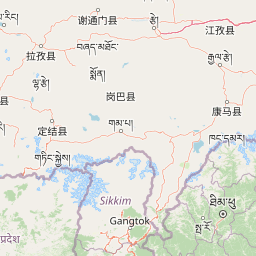
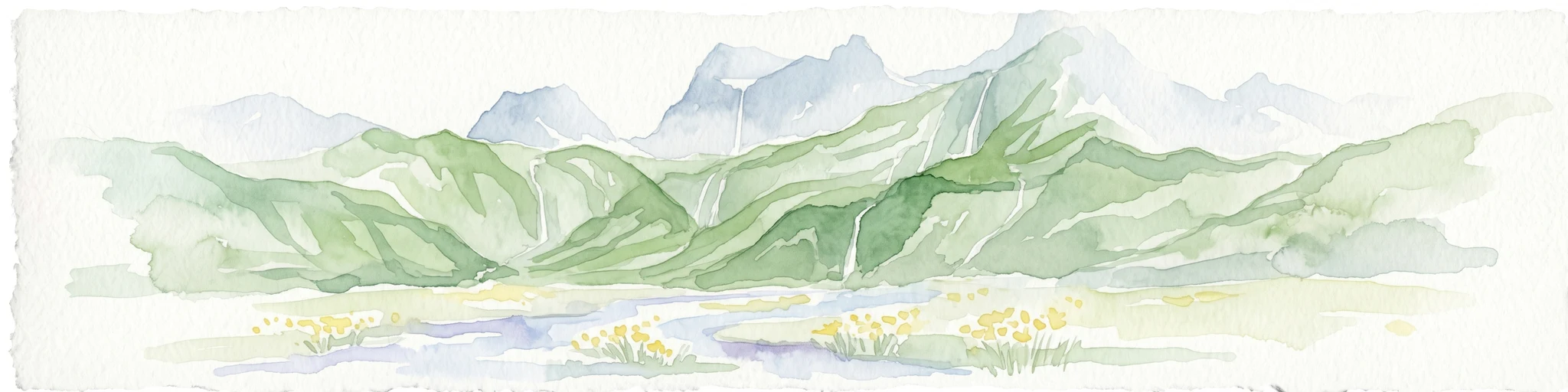
The park's landscape is defined by the dramatic Singalila Ridge, a north-south running mountain spine that forms the western boundary of Himalayan West Bengal. The terrain rises sharply from around 2,300 meters at its lower reaches to peaks exceeding 3,600 meters at Sandakphu and Phalut, the two highest points in West Bengal. Steep forested slopes, alpine meadows, and rocky ridgelines characterize the park's diverse topography. The Rammam River and Srikhola River are the principal watercourses flowing through the park, carved into the mountainous terrain. The ridge offers sweeping panoramic views across the Himalayan landscape, with the Kangchenjunga massif dominating the northern horizon and Everest visible on clear days. The area around Kala Pokhri features notable high-altitude lakes that add to the landscape's variety. The contrast between the dense rhododendron and bamboo forests of the lower slopes and the open alpine meadows at higher elevations creates a visually striking progression of ecosystems.
Singalila National Park ecosystems, habitats, and plant life
The ecological diversity of Singalila National Park is remarkable given its relatively compact area, stemming from the substantial elevation range that encompasses three distinct biomes. The park supports three corresponding ecoregions: Eastern Himalayan subalpine conifer forests, Eastern Himalayan broadleaf forests, and Himalayan subtropical pine forests. The subtropical biome occupies elevations roughly between 1,800 and 3,000 meters, while the temperate biome extends from 3,000 to 4,500 meters. The vegetation cover is dominated by thick bamboo, oak, magnolia, and rhododendron forests between 2,000 and 3,600 meters, creating dense forest canopy across much of the park. Two distinct wildflower bloom seasons occur annually: spring (March and April) brings rhododendron flowering across the ridge, while the post-monsoon season (around October) sees lower forests burst into bloom with Primula, Geranium, Saxifraga, Bistort, Senecio, Cotoneaster, and numerous orchid species. Sandakphu is locally known as the mountain of poisonous plants due to the dense concentration of Himalayan cobra lilies (Arisaema) growing there.
Singalila National Park wildlife and species highlights
Singalila National Park supports a diverse mammalian fauna adapted to its high-altitude Himalayan environment. The park is particularly notable for its red panda population, which represents one of the key conservation priorities for the protected area. Smaller mammals include the leopard cat, barking deer, yellow-throated marten, wild boar, Indian pangolin, and pika. Larger mammals roaming the park include the Himalayan black bear, leopard, clouded leopard, serow, and takin. Tigers occasionally pass through the area but lack sufficient prey populations to establish permanent residence. The park is a birdwatcher's paradise with over 120 species recorded, including many rare and exotic Himalayan species such as the Himalayan Vulture, scarlet minivet, kalij pheasant, blood pheasant, satyr tragopan, brown and fulvous parrotbills, rufous-vented tit, fire-tailed myzornis, and golden-breasted fulvetta. The park lies on a migratory bird flyway, adding seasonal visitors to the resident avifauna. The endangered Himalayan newt frequents nearby lakes at Jore Pokhri and Sukhiapokhri, within 20 kilometers of the park boundary, for breeding purposes.
Singalila National Park conservation status and protection priorities
The primary conservation challenges facing Singalila National Park include waste management along popular trekking routes, minimizing vegetation damage from foot traffic given the slow-growing nature of high-altitude flora, and managing grazing pressure from yak and cattle belonging to neighboring communities. Forest fires pose a significant threat, particularly in spring when accumulated winter debris creates hazardous conditions; a significant fire swept through the park in March 2006. The park's red panda population, estimated at approximately 42 individuals in 2019, has been the focus of a pioneering reintroduction program. Project Red Panda, funded by the Central Zoo Authority and conducted in collaboration with the Padmaja Naidu Himalayan Zoological Park in Darjeeling, released two captive-bred red pandas (Sweety and Milli) into the park in November 2004. Despite Milli being killed by a leopard, Sweety successfully adapted to the wild and produced offspring, marking the first successful red panda reintroduction in India. This conservation success was documented in the acclaimed documentary Cherub of the Mist, which won the Best Conservation and Environmental Film award at the 29th International Wildlife Film Festival in Montana.
Singalila National Park cultural meaning and human context
Singalila National Park does not have a significant history of permanent human settlement within its boundaries, though small communities have developed along the established trekking routes to Sandakphu and Phalut. The village of Kala Pokhri, centered around the lake of the same name, represents one of the larger settlements within the park's vicinity. The ridge itself has historical significance as an approach route used by early expeditions to the great Himalayan peaks, most notably the 1905 Kangchenjunga attempt. The area's recent human history is more closely tied to the development of Darjeeling as a hill station during the British colonial period and the subsequent growth of trekking culture rather than traditional settlement patterns. The region's management involves coordination between the Government of India and the Government of West Bengal, with the Darjeeling Gorkha Hill Council managing visitor facilities at various trekking stations.
Top sights and standout views in Singalila National Park
The trek to Sandakphu and Phalut along the Singalila Ridge stands as the park's signature attraction, offering unobstructed views of the Kangchenjunga and Everest ranges from West Bengal's highest points. The spring rhododendron bloom transforms the forests into vivid displays of color, while post-monsoon wildflowers create a different but equally striking seasonal spectacle. The park's exceptional bird diversity, with over 120 species including numerous Himalayan endemics, makes it one of the Eastern Himalayas' premier birding destinations. The red panda population and successful reintroduction program represent a significant conservation achievement. The multi-stage trekking route through diverse landscapes, from dense forest through alpine meadows to rocky summits, provides a complete Himalayan mountain experience. The proximity to Darjeeling allows easy integration with broader Himalayan travel itineraries.
Best time to visit Singalila National Park
The optimal seasons for visiting Singalila National Park are spring (March through May) and the post-monsoon period (mid-September to early December). Spring brings the spectacular rhododendron bloom, with the forests and meadows displaying vibrant displays of red, pink, and white flowers. This season also coincides with pleasant temperatures and clear mountain views. The post-monsoon period offers another bloom of wildflowers across the lower forests and excellent visibility for mountain vistas. The park is closed to tourists from June 16 to September 15 each year due to the monsoon season, when heavy rainfall makes trekking routes hazardous and many facilities remain closed. Winter visits are possible but the cold temperatures and potential snowfall at higher elevations present challenges, while summer coincides with the monsoon closure period.