

Why Windjana Gorge National Park stands out
Windjana Gorge is best known for its exceptional geological heritage, representing one of the world's most accessible exposures of ancient Devonian reef systems. The gorge's towering sandstone walls display fossil reef structures in remarkable detail, offering visitors a visible window into marine ecosystems that existed hundreds of millions of years ago. The contrast between the rugged, ancient rock formations and the permanent waterholes that persist through the dry season creates a striking visual landscape. The park is particularly notable for its combination of geological significance, seasonal river dynamics, and the way it illustrates the geological processes that shaped the Kimberley region.
Windjana Gorge National Park history and protected-area timeline
Windjana Gorge National Park was officially established in 1971 as part of Western Australia's expanding network of national parks and conservation reserves. The park's creation reflected growing recognition of the Kimberley region's unique geological and landscape values, particularly the exceptional Devonian reef formations represented by the Napier Range. Prior to formal protection, the gorge and surrounding area held significance for the Walmajarri people, whose traditional country encompasses this landscape. The establishment of the park also acknowledged the need to protect the geological heritage represented by these ancient reef structures, which are scientifically significant on a global scale. Management responsibility rests with the Department of Environment and Conservation, which oversees visitor access and conservation activities within the park.
Windjana Gorge National Park landscape and geographic character
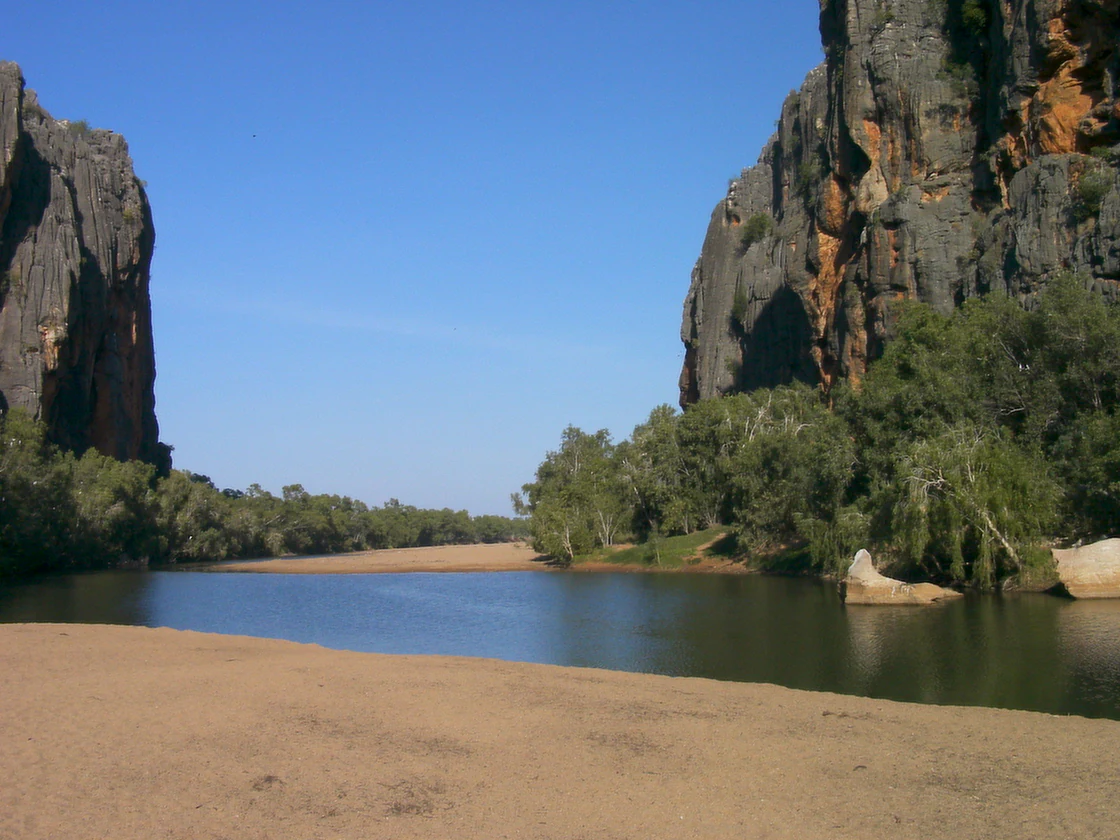
The landscape of Windjana Gorge National Park is defined by the dramatic contrast between the ancient, weathered sandstone walls of the Napier Range and the verdant riparian corridor that follows the Lennard River through the gorge. The gorge walls, composed of fossil-rich Devonian reef limestone, rise sharply from the river channel, creating a canyon environment that captures and concentrates moisture and vegetation along the watercourse. The river channel itself varies from a flowing stream during the wet season to a chain of permanent pools during the dry months. Beyond the gorge, the surrounding Kimberley plateau presents a landscape of low, rugged hills and occasional rock outcrops, all shaped by millions of years of weathering and erosion. The combination of vertical cliff faces, seasonal water flow, and dense riverside vegetation creates a landscape of considerable visual drama and ecological complexity.
Windjana Gorge National Park ecosystems, habitats, and plant life
The nature of Windjana Gorge is characterised by the interplay between ancient geological formations and the contemporary ecosystems that have developed in their shadow. The Devonian reef structures, now exposed as fossil limestone within the gorge walls, represent marine invertebrate communities that once thrived in a tropical shallow-sea environment hundreds of millions of years ago. The riparian zones along the Lennard River support distinct vegetation communities including paperbark trees, native fig trees, and leichhardt trees, which persist around the permanent waterholes throughout the dry season. These vegetation communities provide habitat and food resources for various bird species and other wildlife that depend on the water and shelter provided by the gorge. The broader surrounding landscape supports typical Kimberley vegetation including spinifex grasslands and scattered eucalypt woodlands on the plateau areas.
Windjana Gorge National Park wildlife and species highlights
While the Wikipedia source provides limited specific wildlife details, the gorge's permanent waterholes and riparian vegetation support birdlife and other fauna typical of Kimberley river systems. The paperbark and fig trees along the riverbanks provide nesting habitat and food sources for various bird species. The contrast between the harsh, dry plateau environment and the watered gorge creates a natural refuge for wildlife during the long dry season, when water becomes scarce across the broader landscape. The park's position within the Kimberley region, known for its rich biodiversity including numerous bird species, reptiles, and mammals, suggests meaningful wildlife values, though the source material does not provide detailed species inventories.
Windjana Gorge National Park conservation status and protection priorities
Windjana Gorge National Park is recognised as part of the broader Balili (Devonian Reef) Conservation Park, reflecting the significant scientific and conservation value of the Devonian reef formations. The park's protection ensures the preservation of these ancient geological structures and the contemporary ecosystems they support. The seasonal access restrictions, limiting visitation to the dry season, serve both visitor safety objectives and help minimise impacts on the sensitive riparian environments and wildlife that depend on the gorge's waterholes. Conservation management focuses on maintaining the geological integrity of the reef formations while allowing appropriate public access to appreciate this remarkable ancient landscape.
Windjana Gorge National Park cultural meaning and human context
Windjana Gorge lies within the traditional country of the Walmajarri people, an Aboriginal group whose connection to this landscape extends back over many thousands of years. The gorge and surrounding landscape would have held significance as a source of water, food, and spiritual meaning for Indigenous communities, as evidenced by the presence of permanent waterholes in an otherwise dry landscape. While the Wikipedia source does not detail specific cultural sites or Traditional Owner relationships, the park's location within the Kimberley region places it within one of Australia's areas of richest Indigenous cultural heritage.
Top sights and standout views in Windjana Gorge National Park
The park's primary highlight remains its exceptional geological heritage, offering visitors the opportunity to walk through an ancient Devonian reef system and observe fossil reef structures in their natural setting. The seasonal transformation of the gorge, from a flowing river during the wet season to a series of tranquil pools surrounded by paperbark and fig trees during the dry, provides a compelling visual contrast. The combination of geological significance, seasonal dynamics, and the relatively accessible nature of the gorge compared to other remote Kimberley landscapes makes Windjana a distinctive destination for visitors interested in both natural history and landscape appreciation.
Best time to visit Windjana Gorge National Park
The park is open only during the dry season, typically from April to November, with exact dates varying according to annual conditions. This restriction reflects the challenges of accessing the Kimberley during the wet season when heavy rainfall can make roads impassable and create dangerous flooding within the gorge. The optimal visiting period generally spans from May through September when daytime temperatures are moderate and the waterholes within the gorge are at their most scenic, surrounded by lush vegetation and providing pleasant conditions for walking and photography. Visitors planning trips should check current conditions and road access status before travelling, as the remote location and seasonal access limitations require careful advance planning.
