Why Watarrka National Park stands out
Watarrka National Park is best known for Kings Canyon, a dramatic sandstone gorge carved over millions of years by wind and water erosion. The canyon reaches depths of over 100 meters and features towering red rock walls, permanent rock pools, and ancient cycad groves. The botanical significance is exceptional, with the canyon acting as a refugium for approximately 60 rare or relict plant species and supporting a total of 572 different plant species. The area also contains well-preserved Aboriginal paintings and engravings, representing one of the most significant cultural heritage sites in Central Australia. The park receives approximately 176,100 visitors annually, making it one of the Northern Territory's most visited protected areas.
Watarrka National Park history and protected-area timeline
The establishment of Watarrka National Park in 1989 formalized protection for a landscape of extraordinary natural and cultural significance. The park was created on land that had been owned by England-born Jack Cotterill and his two sons, Jack and Jim, who had operated Wallara Ranch and opened portions of the property to tourism. The park takes its name from the Luritja and Arrernte Aboriginal word 'watarrka,' which refers to the umbrella bush (Acacia ligulata), a common shrub in the region. Prior to national park designation, the area was recognized for its significance in 1986 when it was listed on the now-defunct Register of the National Estate. The park lies on the traditional lands of the Matutjara people, and this Aboriginal connection to country predates European settlement by tens of thousands of years, with the rock art and engravings throughout the canyon providing physical evidence of this long-standing relationship between Aboriginal people and this landscape.
Watarrka National Park landscape and geographic character
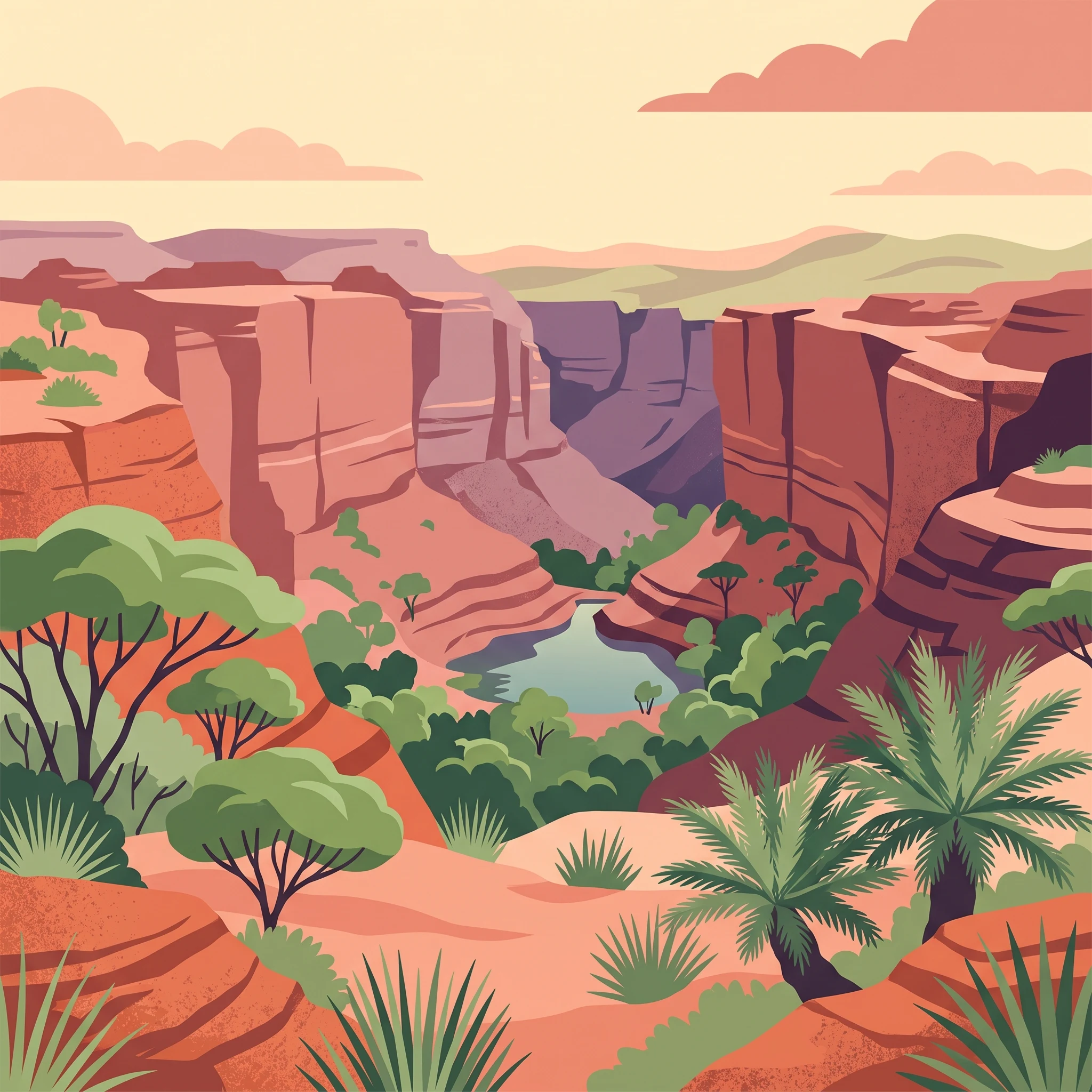
The landscape of Watarrka National Park is dominated by the dramatic sandstone formations of Kings Canyon within the George Gill Range. The canyon itself features near-vertical walls reaching heights of over 100 meters, carved by ancient watercourses and subsequently shaped by wind erosion. The canyon floor contains a series of permanent rock pools, known as the Garden of Eden, where water persists year-round despite the surrounding arid conditions. These pools support dense vegetation including river red gums and significant stands of cycads, ancient plants that represent a primitive lineage dating back millions of years. The surrounding terrain consists of vast spinifex grasslands, rocky plains, and isolated mountain ranges characteristic of Central Australia's desert environment. The red and orange hues of the sandstone create a striking visual contrast with the green vegetation in the canyon, particularly during sunrise and sunset when the light transforms the landscape into a display of warm colors.
Watarrka National Park ecosystems, habitats, and plant life
Watarrka National Park supports an extraordinary concentration of plant diversity relative to the surrounding desert environment, a phenomenon that led scientists to describe Kings Canyon as a 'living plant museum.' The canyon acts as a refugium, providing microhabitats that support species unable to survive in the harsher conditions of the surrounding plains. Approximately 572 different plant species have been documented within the park, including around 60 rare or relict species that represent ancient lineages or isolated populations. The permanent rock pools create riparian environments supporting river red gums and other water-dependent species, while the shaded canyon walls provide conditions for ferns and other moisture-loving plants. The cycad groves found throughout the canyon represent some of the most significant populations of these ancient plants in Central Australia, with some individuals estimated to be over 1,000 years old.
Watarrka National Park wildlife and species highlights
While the Wikipedia source focuses primarily on the botanical significance of Watarrka, the park supports diverse fauna adapted to the desert environment. The documented 80 bird species recorded in the 1986 assessment include representatives of both desert-specialized birds and those associated with the riparian environments of the canyon. The permanent rock pools provide critical water sources for wildlife during the dry season, attracting species ranging from small reptiles to larger mammals. The rocky terrain of the canyon walls provides nesting habitat for raptors, while the dense vegetation in the canyon floor supports honeyeaters and other passerine birds. The surrounding spinifex grasslands shelter a variety of reptiles including goannas and snakes, while small mammals such as hopping mice and dunnarts are adapted to survive on the limited water available in this arid environment.
Watarrka National Park conservation status and protection priorities
Watarrka National Park represents one of the most significant protected areas in Central Australia, preserving both exceptional natural biodiversity and irreplaceable cultural heritage. The park's designation as an IUCN Category II protected area reflects its primary purpose of conserving natural landscapes and associated biodiversity. The conservation significance derives largely from the role that Kings Canyon plays as a biodiversity refugium, supporting plant species that cannot survive in the surrounding desert. The protection of the permanent rock pools and their associated riparian communities is particularly important, as these water sources are extremely rare in the Central Australian landscape. The Aboriginal cultural heritage within the park, including rock paintings and engravings, represents another dimension of conservation value that requires ongoing protection and management.
Watarrka National Park cultural meaning and human context
The cultural context of Watarrka National Park is deeply intertwined with the Aboriginal peoples whose traditional lands the park occupies. The Matutjara people are the traditional owners of the area, and their connection to this landscape extends back tens of thousands of years. The Luritja and Arrernte languages both contribute to the region's cultural heritage, with the park's name 'watarrka' deriving from the Luritja word for the umbrella bush. The rock art and engravings found throughout Kings Canyon represent some of the most significant Aboriginal cultural heritage in Central Australia, providing physical evidence of the long relationship between Aboriginal people and this landscape. These cultural sites are not merely historical artifacts but continue to hold contemporary significance for the traditional owners and require respectful management.
Top sights and standout views in Watarrka National Park
Watarrka National Park offers visitors access to some of Central Australia's most iconic desert landscapes, with Kings Canyon standing as the undisputed highlight. The rim walk circuit provides spectacular views over the canyon walls and down to the Garden of Eden rock pools below. The ancient cycad groves represent living monuments of botanical history, with some individuals predating European colonization of Australia. The Aboriginal rock art sites scattered throughout the canyon provide windows into the cultural traditions of the region's traditional owners. The contrast between the lush green vegetation surrounding the permanent rock pools and the red desert landscape creates one of the most visually striking environments in the Australian outback.
Best time to visit Watarrka National Park
The climate of Watarrka National Park features extreme seasonal variation that significantly affects the visitor experience. Summer temperatures regularly exceed 38 degrees Celsius and can make daytime hiking dangerous, though the permanent rock pools provide some respite. The winter months from May to August offer more comfortable temperatures for walking, with daytime maxima in the low 20s Celsius, though nighttime temperatures can drop to around 6 degrees Celsius requiring warm layers for early morning starts. The shoulder seasons of autumn and spring provide moderate temperatures and represent popular times to visit, though summer rains from December to March can create dramatic storms and affect access to some areas. The dry season from May to November typically offers more consistent trail conditions, while the landscape is most verdant shortly after summer rains.