Why Tjoritja / West MacDonnell National Park stands out
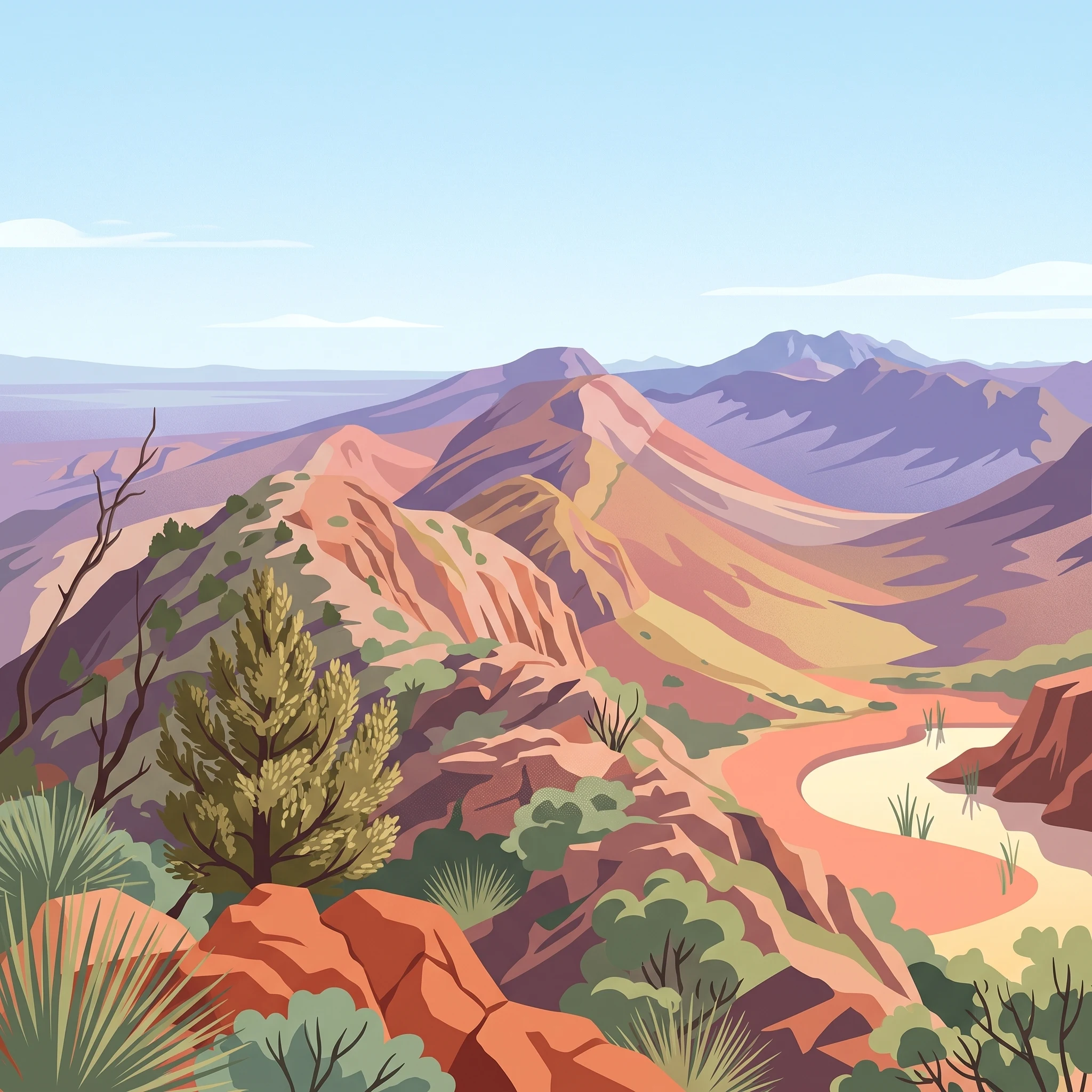
Tjoritja is best known for the Larapinta Trail, a 223-kilometre bushwalking track that follows the spine of the West MacDonnell Ranges through some of the most scenically dramatic terrain in Australia's interior. The park is also renowned for its spectacular gorges and natural attractions including Standley Chasm, a narrow geological cleft that fills with light at certain times of day, Glen Helen Gorge where the Finke River cuts through ancient rock, and Ormiston Pound, a large sandstone enclosure with its own ecosystem. The Ochre Pits, a significant cultural site where traditionalArrernte people collected mineral pigments for ceremonial purposes, represents another distinctive feature. Mount Sonder, the fourth-highest peak in the Northern Territory, marks the western terminus of the park and offers challenging summit walks with panoramic views across the ranges.
Tjoritja / West MacDonnell National Park history and protected-area timeline
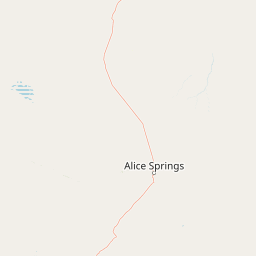
The land that now comprises Tjoritja / West MacDonnell National Park has been continuously inhabited by theArrernte people for thousands of years, with archaeological evidence indicating human presence in the MacDonnell Ranges region extending back at least 30,000 years. The formal establishment of the national park occurred on 30 September 1992, consolidating what had previously been a series of separate reserves and recreational areas into a single protected unit managed by the Parks and Wildlife Commission of the Northern Territory. Prior to national park designation, the area had been managed as a collection of reserves and crown land, with varying levels of protection and access. The Larapinta Trail, originally known as the Bicentennial Trail, was developed in the early 1990s as a collaborative project between the Northern Territory Government and the Australian Bicentennial Authority to create a long-distance walking experience that would showcase the natural and cultural heritage of the MacDonnell Ranges. The trail was officially renamed the Larapinta Trail in 1997, using theArrernte word for the platypus, and has since become one of Australia's most celebrated multi-day hiking routes.
Tjoritja / West MacDonnell National Park landscape and geographic character
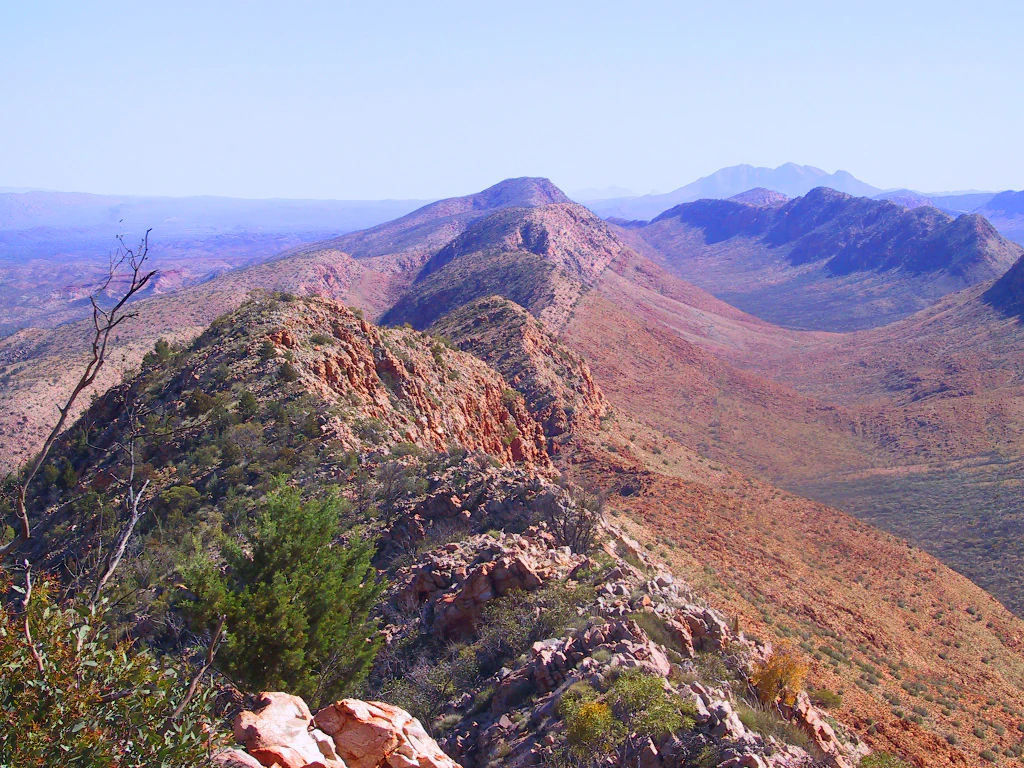
The physical landscape of Tjoritja is dominated by the West MacDonnell Ranges, a series of quartzite and sandstone ridges that have been sculpted by erosion into dramatic crests, valleys, and gorges. The ranges rise abruptly from the surrounding desert plains, creating a mountainous environment in the heart of Australia's semi-arid interior. Prominent geological features include the sheer quartzite walls of Standley Chasm, the落差 of Ellery Creek Bighole where a natural amphitheatre has been carved by water erosion, and the deep cleft of Serpentine Gorge. The Finke River, one of the oldest river systems in the world, flows through the park in an intermittent fashion, carving gorges such as Glen Helen before disappearing into the sand plains to the west. Redbank Gorge at the western end of the park represents another dramatic geological feature where ancient rock formations create a narrow passage. The landscape varies considerably along the park's length, with some sections dominated by steep escarpments while others feature more gently undulating terrain and open valleys.
Tjoritja / West MacDonnell National Park ecosystems, habitats, and plant life
The ecological character of Tjoritja reflects the harsh but biodiverse nature of Central Australian desert environments. The park encompasses multiple habitat types including rocky ridges, river corridors, permanent waterholes, and open spinifex grasslands, each supporting distinct communities of plants and animals. The MacDonnell Ranges serve as an important biodiversity corridor in an otherwise arid landscape, with the ranges capturing more moisture than the surrounding plains and supporting vegetation communities including ghost gums, witchetty bushes, and various acacia species. The permanent waterholes found throughout the park, such as those at Ormiston Gorge and Glen Helen, provide critical refuges for wildlife during dry periods and support ecological communities quite different from the surrounding desert. These waterholes are surrounded by river red gums and coolabah trees that depend on the reliable presence of water. The park's elevation range creates temperature variations that influence the distribution of species, with higher ridgelines supporting different plant communities than the valley floors.
Tjoritja / West MacDonnell National Park wildlife and species highlights
The wildlife of Tjoritja includes a range of species adapted to the extreme conditions of the Australian desert, with the park's gorges and waterholes providing important habitat for many animals. Birdlife is particularly diverse, with over 150 species recorded in the park including the endangered Alexandra's parrot, the spinifex pigeon, and various honeyeater species that visit flowering plants throughout the year. Red-tailed black cockatoos are a common sight along the ranges, and the permanent waterholes attract waterbirds including ducks, grebes, and herons. Mammals found in the park include the euro or wallaroo, which is well adapted to rocky terrain, as well as smaller marsupials such as the central rock-rat and various possum species. Reptiles are well represented, with numerous snake and lizard species including the desert monitor and various gecko species. The park's permanent waterholes support fish populations including the desert rainbowfish and other native species adapted to the variable water conditions of Central Australian rivers.
Tjoritja / West MacDonnell National Park conservation status and protection priorities
Tjoritja / West MacDonnell National Park plays a significant role in the conservation of Central Australia's unique natural heritage, protecting a representative sample of the MacDonnell Ranges bioregion. The park encompasses ecosystems that are relatively intact compared to many lowland areas that have been more heavily modified by pastoral activity, and the protection of the range habitats ensures the continuity of ecological processes in a region where water is the limiting factor for most species. The park's management focuses on maintaining biodiversity while allowing sustainable visitor access, with fire management strategies designed to protect the mosaic of habitats across the landscape. The protection of cultural sites in collaboration with traditional owners also contributes to broader conservation outcomes, asArrernte land management practices have shaped the landscape over millennia. The park's inclusion in national park reserves ensures that key habitat for threatened species, including several birds and mammals, receives formal protection under Australian law.
Tjoritja / West MacDonnell National Park cultural meaning and human context
The cultural landscape of Tjoritja is inseparable from the living culture of theArrernte people, the traditional owners whose connection to this country extends back through countless generations. TheArrernte name Tjoritja reflects the deep significance of this place within their cultural framework, and many sites throughout the park hold specific meaning relating toDreamtime stories, ancestral beings, and traditional resource use. The Ochre Pits represent one of the most significant cultural sites, where mineral pigments have been extracted for ceremonial purposes, including body painting for ceremonies and funerary practices. These ochre deposits are not merely historical artifacts but continue to hold cultural importance for contemporaryArrernte communities. The landscape itself is understood through a cultural lens that connects physical features to stories and responsibilities, creating a framework for understanding country that differs fundamentally from Western scientific perspectives but provides equally sophisticated knowledge of the environment.
Top sights and standout views in Tjoritja / West MacDonnell National Park
The Larapinta Trail stands as the park's signature experience, offering hikers the opportunity to traverse the full length of the West MacDonnell Ranges through terrain of exceptional scenic quality. Standley Chasm provides a dramatic natural spectacle where visitors can witness the narrow gorge filled with golden light during mid-morning. Glen Helen Gorge offers both scenic beauty and the chance to swim in permanent waterholes surrounded by ancient rock walls. The Ochre Pits connect visitors to the deep cultural heritage of theArrernte people and the traditional use of natural materials. Mount Sonder, as the western anchor of the park, offers a challenging but rewarding climb to a summit providing sweeping views across the ranges and plains beyond. Ormiston Pound encloses a distinctive landscape of its own, with the Pound walk providing a circuit of the sandstone amphitheare.
Best time to visit Tjoritja / West MacDonnell National Park
The cooler months from April to September represent the most comfortable time for outdoor activities in Tjoritja, with daytime temperatures moderate enough for hiking and sightseeing. During these winter and spring months, minimum temperatures can drop significantly at night, particularly in June and July, while maximum temperatures typically range from the high teens to mid-twentiles Celsius. Summer months from October to March bring extreme heat to the Central Australian landscape, with daytime temperatures regularly exceeding 40 degrees Celsius making sustained outdoor activity dangerous. The summer period does, however, bring the wet season, and occasional thunderstorms can transform the landscape with temporary waterfalls and increased water flow through the gorges. The most spectacular wildflower displays typically occur in late winter and early spring following the winter rains.