
Why Woraksan National Park stands out
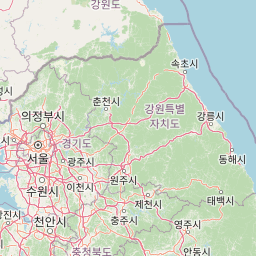
Woraksan National Park is best known for its densely forested mountain landscape dominated by deciduous and mixed forest communities that display vivid seasonal color changes throughout the year. The park's defining feature is the prominent ridgeline of Mount Worak, which rises dramatically from the surrounding terrain and offers panoramic views from its upper reaches. The mountain's steep granite cliffs and rocky outcrops create distinctive visual landmarks within the park. The park is particularly recognized for its biodiversity significance, harboring over 1,200 plant species within a relatively compact protected area and supporting populations of endangered species including the Korean goral and various raptor species. The combination of accessible hiking trails, ecological diversity, and the mountain's striking profile makes Woraksan a notable destination within South Korea's national park system.
Woraksan National Park history and protected-area timeline
Woraksan National Park was designated as South Korea's 17th national park on 31 December 1984, reflecting a period when South Korea was systematically expanding its national park network to protect representative ecosystems and scenic landscapes across the country. The selection of Mount Worak and its surrounding terrain for protected area status acknowledged both the mountain's geological and ecological significance and its cultural importance within the regional landscape. Prior to national park designation, the forest ecosystems of the Mount Worak area had experienced various levels of human use, including timber extraction and traditional agricultural practices in lower elevations. The establishment of the park initiated a formal conservation regime that restricted certain activities within the protected boundary while providing for managed public access. The Korea National Park Service assumed management responsibility, implementing trail development, visitor facilities, and conservation programs designed to balance public enjoyment with ecological preservation. Over the subsequent decades, the park has maintained its protected status and continued to serve as a conservation anchor within the central-eastern region of South Korea.
Woraksan National Park landscape and geographic character
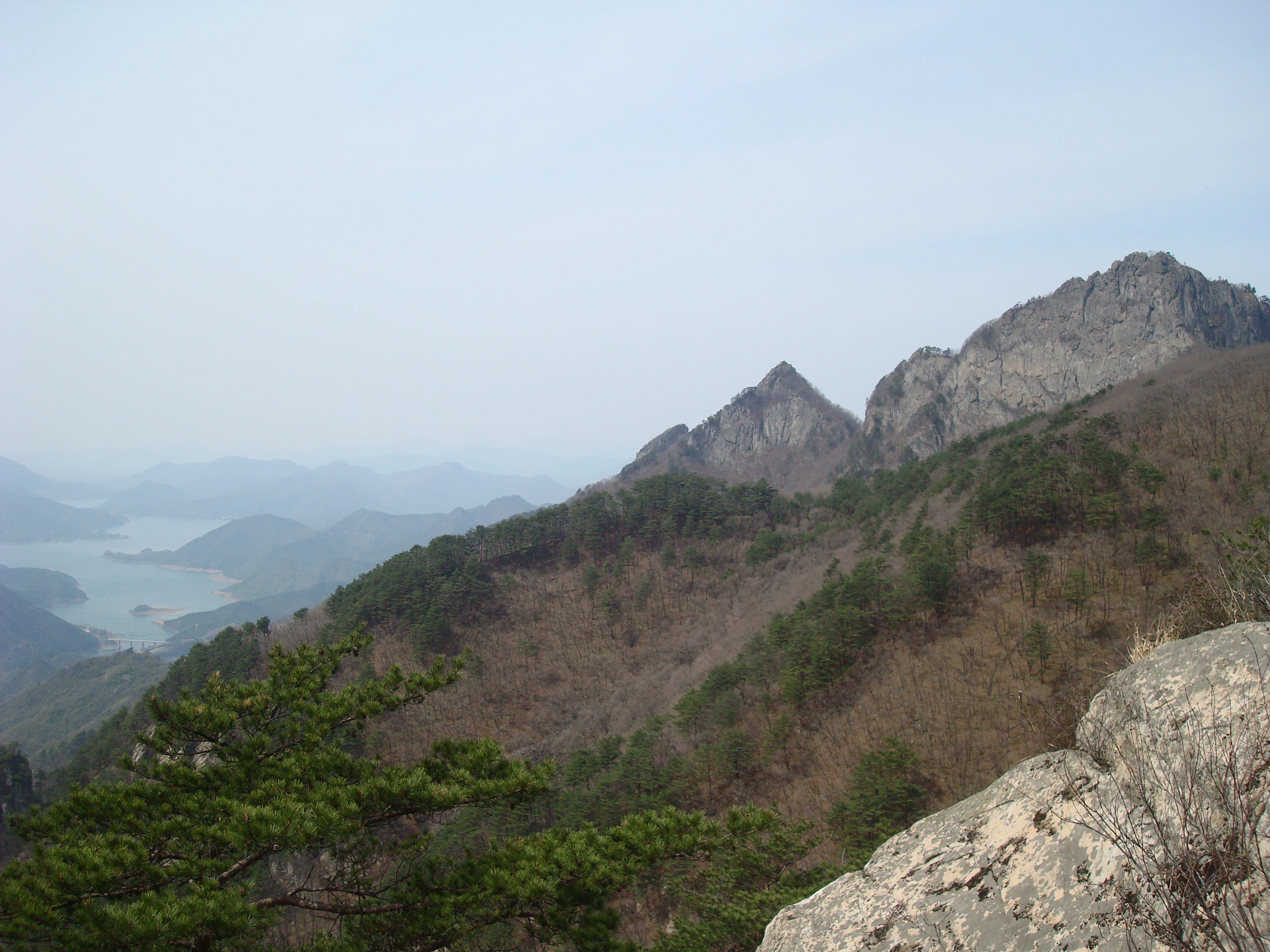
The landscape of Woraksan National Park is defined by the prominent peak of Mount Worak, a 1,094-metre mountain composed primarily of granite and ancient metamorphic rocks that form the visual centerpiece of the protected area. The mountain rises sharply from the surrounding lower terrain, creating dramatic ridgelines that extend along the main spine of the park. Steep-sided valleys radiate outward from the central peak, carved by seasonal water flow and giving the terrain a characteristic V-shaped cross-section typical of mountain streams in the region. The park's elevation range supports distinct vegetation zones, with deciduous broadleaf forest dominating lower elevations and transitioning to mixed forest communities at higher elevations. Rock outcrops and cliff formations are prominent features along the upper ridgelines, where exposed granite surfaces contrast with the surrounding forest cover. The overall impression is one of a densely forested mountain rising into rocky summit terrain, representative of the mid-range mountain landscapes that characterize much of eastern South Korea.
Woraksan National Park ecosystems, habitats, and plant life
The ecological character of Woraksan National Park reflects the temperate forest ecosystem that dominates the Korean peninsula's mountain environments. The park supports approximately 1,200 plant species, a remarkable diversity for a protected area of this size that reflects the confluence of different biogeographic influences and the variety of microhabitats created by the park's topographic complexity. Forest communities include oak, maple, and birch species at lower elevations, transitioning to pine and mixed conifer stands at higher elevations. The park encompasses headwater streams and riparian corridors that connect different habitat types and provide critical water resources for both wildlife and downstream ecosystems. The combination of forest cover, rocky terrain, and water features creates a heterogeneous landscape that supports diverse ecological communities. The park's designation as a protected area has helped preserve these ecosystems from more intensive development pressures that have affected other regions of South Korea.
Woraksan National Park wildlife and species highlights
Woraksan National Park supports a diverse animal community documented through systematic biodiversity surveys. The park records 17 mammal species, 67 bird species, 10 amphibian species, 14 reptile species, 27 freshwater fish species, and 118 spider species. Of particular conservation significance, 16 animal species found within the park are classified as endangered, reflecting the ecological importance of this mountain habitat. Mammalian species include the Korean goral, a threatened ungulate adapted to steep mountainous terrain, as well as various small mammals that occupy the forest floor and canopy layers. Bird species include both resident and migratory forms, with raptors utilizing the open ridgelines for hunting and nesting. The park's stream systems support freshwater fish populations, while amphibian and reptile species occupy the moist valley environments and forest floor habitats. Insect diversity is particularly high, with over 1,000 species recorded, reflecting the diverse plant communities and varied habitat conditions present within the protected area.
Woraksan National Park conservation status and protection priorities
Woraksan National Park functions as an important conservation unit within South Korea's national park system, protecting a representative sample of the nation's temperate mountain ecosystems. The park's biodiversity significance is underscored by the presence of 16 endangered animal species, a notable concentration that reflects the ecological quality of the protected area. As a Category II protected area under IUCN classification, the park is managed primarily for ecosystem conservation while also providing for sustainable public use and environmental education. The Korea National Park Service implements management practices aimed at maintaining forest health, protecting water quality in stream systems, and preserving habitat conditions for threatened species. The park's location spanning two provinces requires coordination between different administrative jurisdictions, with management decisions reflecting both local conditions and national conservation priorities.
Woraksan National Park cultural meaning and human context
The Mount Worak area holds cultural significance within the regional landscape of central-eastern South Korea, though the park itself is primarily oriented toward natural landscape preservation rather than explicit cultural heritage protection. The mountain has historically been part of the spiritual and aesthetic landscape appreciated by local communities, consistent with the traditional Korean appreciation for mountain scenery that is reflected in historical art and literature. Place names in the region incorporate both Korean and traditional Hanja characters, with 월악산 (Woraksan) and its Hanja equivalent 月岳山 (Woraksan) reflecting the long history of written records referring to this landscape. The establishment of the national park in 1984 marked a transition in how the mountain and surrounding landscape were conceptualized and managed, shifting from primarily extractive uses toward conservation-oriented management that emphasizes ecological preservation and public enjoyment of the natural environment.
Top sights and standout views in Woraksan National Park
Woraksan National Park offers visitors an accessible mountain hiking experience within a landscape of significant ecological value. The Mount Worak summit provides a clear destination for hikers, with trails ascending through changing forest environments to reach panoramic viewpoints from the upper ridgelines. The park's biodiversity, including over 1,200 plant species and numerous endangered animals, represents a living ecosystem that visitors can observe while exploring the trail network. The seasonal changes in the park are particularly notable, with spring wildflower displays, summer forest foliage, autumn color transitions, and winter snow on the upper peaks each creating distinct visitor experiences. The park's position between two provinces makes it accessible from multiple population centers, supporting its role as a regional recreation and environmental education destination.
Best time to visit Woraksan National Park
Woraksan National Park can be visited throughout the year, with each season offering distinct character and conditions. Spring and early summer bring new foliage growth and wildflower displays in the lower elevation forests, while the mountain streams are at their most reliable flow following spring rainfall. Autumn provides perhaps the most visually striking conditions as the deciduous forests display vivid color changes, and many visitors time their trips to experience this seasonal transformation. Winter snow occasionally blankets the upper elevations, creating a different landscape character that appeals to visitors seeking a quiet, contemplative mountain experience. Summer months can be warm and bring more visitors to the park, though the forest shade provides some cooling relief on the lower trails. The shoulder seasons of spring and autumn generally offer the most pleasant hiking conditions and the most visually dynamic landscapes.