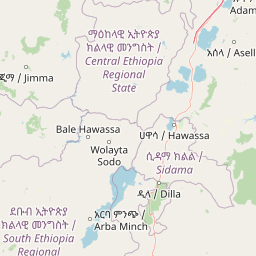
Why Arsi Mountains National Park stands out
Arsi Mountains National Park is best known for its exceptional biodiversity and the protection of Ethiopia's unique Afro-alpine ecosystems. The park is a critical refuge for several endangered endemic species, most notably the mountain nyala, one of Ethiopia's most iconic and threatened antelopes, and the Ethiopian wolf, Africa's rarest canid and one of the world's most endangered carnivores. The park's vegetation is remarkable for the giant lobelia Lobelia rhynchopetalum, which forms distinctive stands in the Afro-alpine zone and is endemic to the Ethiopian Highlands. The dramatic transition from montane forest through subalpine heath to alpine grassland creates a visually striking landscape that distinguishes this park from other Ethiopian protected areas. The presence of 30 endemic mammal species and 99 bird species further underscores its conservation significance.
Arsi Mountains National Park history and protected-area timeline
Arsi Mountains National Park was officially designated in 2011, making it one of Ethiopia's more recently established national parks. The creation of the park reflected Ethiopia's growing commitment to biodiversity conservation and the recognition that the Arsi Mountains contained unique ecological values requiring formal protection. Prior to national park status, the area had been recognized for its ecological significance, with the montane and Afro-alpine habitats of the Ethiopian Highlands long known to contain endemic species of global conservation concern. The establishment of the park was part of broader efforts by the Ethiopian government to expand the national protected area network, building on the success of older parks like Bale Mountains National Park. Management responsibility was delegated to the Oromia Forest and Wildlife Enterprise, the regional body overseeing forest and wildlife resources in Oromia Region. The designation as a Category II protected area aligned the park with international conservation standards and provided a framework for sustainable management and tourism development.
Arsi Mountains National Park landscape and geographic character
The landscape of Arsi Mountains National Park is dominated by a dramatic mountain range that forms the southern boundary of the African Rift Valley in central Ethiopia. The Arsi Mountains extend in a northeast to southwest orientation, creating a spectacular backdrop of rugged peaks, steep ridges, and deep valleys. Mount Chilalo, rising to 4,036 meters, is the highest peak in the park and features a prominent volcanic caldera that represents the park's highest point. The Galama Ridges, Mount Kaka, and Hunkolo add to the topographic diversity, while the Dhara Dilfekar block provides additional mountainous terrain. The landscape is shaped by volcanic origins, with the underlying geology contributing to the fertile soils and diverse habitats found throughout the park. The combination of high elevation, steep terrain, and the intersection of different ecological zones creates a visually diverse landscape that transitions from forested slopes through heath-covered zones to open alpine grasslands. The numerous streams and alpine lakes fed by mountain rainfall add further scenic value, with Lake Ziway being among the most notable of these high-altitude water bodies.
Arsi Mountains National Park ecosystems, habitats, and plant life
The ecological diversity of Arsi Mountains National Park is defined by its elevational gradient, which creates three distinct vegetation zones. The lowest of these is the dry evergreen Afromontane forest zone, occurring between approximately 2,843 and 3,756 meters elevation. These forests represent the typical montane vegetation of the Ethiopian Highlands and are characterized by dense tree cover with a diverse understory. Within this zone, between 3,181 and 3,340 meters, there are areas of mixed plantations combining native and exotic tree species. Above the tree line, from roughly 3,202 to 3,985 meters, subalpine vegetation dominates, consisting primarily of heath shrubland. This zone is characterized by the dominance of two Erica species, Erica arborea and Erica trimera, which form extensive shrub communities across the landscape. The highest vegetation zone is Afro-alpine, occurring from approximately 3,576 to 4,008 meters elevation. This alpine environment features a mix of grasses, herbs, dwarf shrubs, and the distinctive giant lobelia Lobelia rhynchopetalum, a species endemic to the Afro-alpine zones of the Ethiopian Highlands. The Helichrysum and Alchemilla genera are also well-represented in this high-elevation flora.
Arsi Mountains National Park wildlife and species highlights
Arsi Mountains National Park supports an impressive array of wildlife, with 30 mammal species endemic to the ecoregion recorded within its boundaries. The park is particularly significant for three endangered ungulate species: the mountain nyala, Menelik's bushbuck, and the critically important Ethiopian wolf. The mountain nyala represents one of Ethiopia's most distinctive large mammals, while the Ethiopian wolf is among Africa's rarest carnivores and one of the world's most endangered canid species, with most of the global population confined to the Ethiopian Highlands. The park also protects several rare and restricted-range highland rodents, including the Ethiopian striped mouse, Nikolaus's mouse, Blick's grass rat, the black-clawed brush-furred rat, and the Ethiopian forest brush-furred rat. Beyond these endemic species, the park supports a diverse community of more common mammals including spotted hyenas, greater and lesser kudus, leopards, servals, caracals, olive baboons, and numerous other species. The avifauna includes 99 bird species across 39 families, with species such as the helmeted guineafowl, various sunbirds, and birds of prey like the long-crested eagle and black kite commonly observed.
Arsi Mountains National Park conservation status and protection priorities
Arsi Mountains National Park plays a critical role in protecting Ethiopia's unique highland biodiversity, with the park's conservation significance extending beyond its boundaries to the broader Ethiopian Highlands ecoregion. The protection of the Arsi Mountains preserves one of the few remaining large tracts of intact montane and Afro-alpine habitat in eastern Africa. The presence of endangered species including the mountain nyala and Ethiopian wolf elevates the park's global conservation importance, as both species have very limited distributions and face significant threats outside protected areas. The three vegetation zones protected within the park represent the full ecological spectrum of the Ethiopian Highlands, from Afrompine forests through subalpine heath to Afro-alpine moorlands, ensuring the preservation of complete ecological communities. However, the park faces significant conservation challenges including excessive livestock grazing pressure, human-caused fires, and wood collection activities that threaten the integrity of the vegetation and the wildlife it supports. Effective management of these threats is essential for maintaining the park's ecological values and the long-term survival of its endemic species.
Arsi Mountains National Park cultural meaning and human context
Arsi Mountains National Park is situated within the Arsi Zone of Oromia Region, an area with a rich cultural heritage tied to the broader Oromo people who inhabit this part of central Ethiopia. The landscape has been shaped by generations of human activity, with traditional pastoralism and agriculture historically practiced in the surrounding areas. While the park itself is protected, the surrounding landscape maintains the cultural traditions of the Oromo communities, who have coexisted with the highland environment for centuries. The park's establishment represents a balance between conservation objectives and the traditional land use patterns of local communities. The Arsi Mountains themselves hold cultural significance for local populations, with the landscape featuring in traditional practices and community identity.
Best time to visit Arsi Mountains National Park
The Arsi Mountains National Park can be visited year-round, though the dry season from October through May typically offers the most favorable conditions for wildlife viewing and trekking. The period from December to February represents the driest months, with clearer skies and more accessible trails in the highland areas. The short rainy season from June to September can make some trails difficult and may limit access to higher elevations, though the landscape is at its greenest and the Afro-alpine meadows are particularly vibrant during this period. The Ethiopian Highlands have a temperate climate at higher elevations, with temperatures coolest during the morning and evening hours. Visitors interested in wildlife viewing may find the dry season more productive as animals concentrate around remaining water sources, while those interested in birdwatching will find the park's 99 species present throughout the year with some seasonal variation in observable species.