Mori Atlas logo
National parkDay Forest National Park

Discover the unique geography and endemic species refuge of this critical East African forest ecosystem.

Day Forest National Park: Djibouti's Ancient Juniper Forest and Protected Landscape Atlas

(Forêt du Day National Park)

Day Forest National Park stands as Djibouti's oldest national park and its sole significant forest sanctuary, an ecological marvel in the arid Horn of Africa. Situated within the Goda Mountains of the Tadjourah Region, this protected area safeguards a rare East African juniper woodland, an isolated refuge crucial for endemic biodiversity. Explore the park's unique mountainous terrain, where approximately 5,900 hectares of vital forest survive due to localized precipitation, creating a stark, verdant contrast against the surrounding semi-desert landscape.

Juniper forestEndemic speciesMountain forestBirdwatchingProtected forestEast Africa

Day Forest National Park

National park

Park overview

Structured park overview, official facts, and landscape profile for Day Forest National Park

Day Forest National Park park facts, protected area profile, and essential visitor context
Review the core facts for Day Forest National Park, including designation, size, terrain, visitor scale, habitats, and operating context in one park-focused overview.

About Day Forest National Park

Day Forest National Park occupies a unique place in Djibouti's environmental heritage as the country's largest and oldest protected forest area. Located in the Goda Mountains within the Tadjourah Region, the park rises above the surrounding semi-desert terrain, creating a distinct ecological island that supports remarkable biodiversity. The park's establishment in 1939 reflected early recognition of the area's exceptional ecological value, and it remains the cornerstone of Djibouti's conservation estate. The forest ecosystem is characterized by its juniper-dominated canopy at higher elevations, where ancient trees form a dense woodland that would be impossible in the surrounding climate. The park's significance extends beyond its immediate boundaries as a watershed and biodiversity refuge in one of Africa's most environmentally vulnerable countries.

Quick facts and research context for Day Forest National Park

Day Forest National Park covers roughly 5,900 hectares in the Goda Mountains, with its most significant feature being a 900-hectare stand of East African junipers growing above 950 metres elevation. The park was established in 1939 and holds IUCN Category II protection status. It contains four dominant tree species: Juniperus procera, Olea europaea subsp. cuspidata, Buxus hildebrandtii, and Tarchonanthus camphoratus. The region receives about 500 millimetres of rainfall annually, making it the wettest part of Djibouti. The park lies near the town of Tadjoura and represents one of only two remaining closed-forest areas in the country.

Park context

Deeper park guide and search-rich context for Day Forest National Park

Day Forest National Park history, landscape, wildlife, and travel context
Explore Day Forest National Park through its history, landscape character, ecosystems, wildlife, conservation priorities, cultural context, and seasonal travel timing in a structured park guide built for atlas discovery and search intent.

Why Day Forest National Park stands out

Day Forest is best known for its remarkable East African juniper forest, which is the largest and most significant juniper woodland in Djibouti. The park protects one of the last remaining closed-forest ecosystems in a country that is predominantly semi-desert, making it a critical ecological island in the Horn of Africa. It is also renowned for its population of endemic bird species, including the Djibouti spurfowl and a potentially distinct population of green-winged pytilia, both found only within this forest. The juniper trees can reach heights of 20 metres, creating a distinctive mountainous forest environment that contrasts sharply with the surrounding arid landscape.

Day Forest National Park history and protected-area timeline

Day Forest National Park was established in 1939, making it Djibouti's oldest national park and one of the earliest protected areas in the Horn of Africa. The creation of the park reflected colonial-era recognition of the forest's unique ecological character and its importance as a watershed for surrounding communities. Over the subsequent decades, the park has maintained its protected status through various political transitions, from French Somaliland to independent Djibouti. The park's boundary and management framework have provided continuous protection for the forest ecosystem, though conservation challenges have intensified over time as pressures on natural resources have grown across the region.

Day Forest National Park landscape and geographic character

The landscape of Day Forest National Park is defined by the Goda Mountains, a range that rises dramatically from the surrounding semi-desert lowlands. The park's terrain ranges from lower slopes dominated by mixed woodland to crest areas where the ancient juniper forest creates a distinctive mountainous forest environment. Elevation is a key driver of vegetation patterns, with the most valuable juniper stands occurring above 950 metres where moisture conditions support denser growth. The forest exists as an isolated patch of green amid extensive arid terrain, visible from considerable distances as a dark band across the mountain crest. The combination of mountain terrain, forest canopy, and the sharp contrast with surrounding savanna creates a landscape of significant visual and ecological distinction.

Day Forest National Park ecosystems, habitats, and plant life

The ecological character of Day Forest National Park is defined by its closed-forest ecosystem, which represents one of only two such areas remaining in Djibouti. The forest contains four dominant tree species: East African juniper (Juniperus procera), wild olive (Olea europaea subsp. cuspidata), boxwood (Buxus hildebrandtii), and Tarchonanthus camphoratus. The most significant ecological component is the juniper forest, which forms a 900-hectare stand at higher elevations. This juniper woodland represents a relict forest type with limited distribution in the Horn of Africa. The forest exists in a precarious ecological position, surviving in the wettest part of Djibouti where approximately 500 millimetres of annual precipitation provides the moisture necessary for closed-canopy forest development. The vegetation transitions from denser forest at higher elevations to more open woodland at lower slopes, with species composition shifting according to moisture availability and altitude.

Day Forest National Park wildlife and species highlights

Day Forest National Park supports a distinctive avian community with several species of notable conservation significance. The Djibouti spurfowl (Pternistis ochropectus) is a bird endemic to Djibouti that occurs within the park and represents one of the rarest Francolin species in Africa. A population of green-winged pytilia within the park may represent a distinct species or subspecies (Pytilia melba flavicaudata), further emphasizing the area's endemism. The mysterious Tôha sunbird, also known as the Djibouti sunbird, has only ever been recorded within Day Forest and remains undescribed scientifically. More widespread forest birds include the Gambaga flycatcher, Somali bulbul, and Somali starling. The park also provides habitat for the rare colubrid snake Platyceps afarensis. The combination of endemic and range-restricted species gives the park significant conservation value beyond its role as a forest refuge.

Day Forest National Park conservation status and protection priorities

Day Forest National Park faces severe conservation challenges despite its protected status. Approximately 88 percent of the original forest has been lost over the past two centuries, with more than 20 percent of that loss occurring within the last 50 years. This dramatic decline reflects the broader pattern of forest loss across Djibouti, where the combination of climate pressures, human activity, and limited regulatory capacity has accelerated environmental degradation. The juniper forest, once the dominant canopy type, has suffered significant mortality in recent decades, with many trees dying while boxwood has expanded in their place. The park remains the largest and most significant protected forest in Djibouti, but continued loss threatens its ecological viability. Conservation focus centers on protecting the remaining forest area, particularly the critical juniper stands above 950 metres elevation.

Day Forest National Park cultural meaning and human context

Day Forest exists within the cultural landscape of the Tadjourah Region, an area with traditional pastoralist and agricultural communities. The forest's existence as a wetter, more fertile area has historically provided resources and water catchments for local populations. The Goda Mountains hold cultural significance for surrounding communities, though the park's strict protection status now limits traditional land uses within its boundaries. The region around Tadjoura has historical connections to trade routes and Islamic culture that have shaped human settlement patterns across the Horn of Africa.

Top sights and standout views in Day Forest National Park

Day Forest National Park stands as Djibouti's ecological crown jewel, protecting the largest and most significant forest in a country that is otherwise overwhelmingly semi-desert. The ancient juniper forest at higher elevations represents a relict ecosystem with limited global distribution. The park's endemic bird species, including the Djibouti spurfowl and the mysterious Tôha sunbird, cannot be found anywhere else on Earth. The contrast between the forest's green canopy and the surrounding arid terrain creates one of the most visually striking landscapes in the Horn of Africa. The park provides critical watershed functions for the region and serves as a genetic reservoir for forest species adapted to this limited habitat.

Best time to visit Day Forest National Park

The optimal time to visit Day Forest National Park corresponds to the wet season, which typically runs from October through April when rainfall is most reliable and temperatures are moderate. The dry season from May to September brings hotter conditions and reduced water availability, though the forest retains its evergreen character year-round due to moisture retention in the higher elevations. Visitors interested in birdwatching may find the wet season most productive as resident species are more active and migratory movements occur. The cooler months from November to February offer the most comfortable conditions for hiking and exploration within the park.

Park location guide

Geography guide, regional context, and park location map for Day Forest National Park

Day Forest National Park park geography, regions, and map view in Djibouti
Understand where Day Forest National Park sits in Djibouti through a broader geographic reading of the surrounding landscape, nearby location context, and its mapped position within the national park landscape.

How Day Forest National Park fits into Djibouti

Djibouti is a small coastal country in the Horn of Africa, located along the Red Sea and Gulf of Aden. It gained independence from France in 1977 and serves as a key maritime hub and strategic military base location.

Wider geography shaping Day Forest National Park in Djibouti

Djibouti is situated in the Horn of Africa region of East Africa. It borders Somalia to the south, Ethiopia to the southwest, and Eritrea to the north, with coastline along the Red Sea and Gulf of Aden to the east. The terrain is mostly low-lying coastal desert, with some highlands in the southwest.

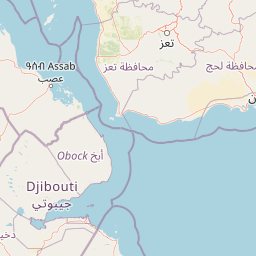
Map view of Day Forest National Park

Use this park location map to pinpoint Day Forest National Park in Djibouti, understand its exact geographic position, and read its mapped placement within the surrounding landscape more clearly.

Pigeon | © OpenStreetMap contributors

Location context for Day Forest National Park

Tadjourah Region
Park atlas

Map the surrounding protected landscapes, unique ecosystems, and regional park geography in the Horn of Africa.

Explore Other National Parks and Protected Areas Near Day Forest National Park in Djibouti
Expand your discovery from Day Forest National Park to browse other national parks and protected areas across Djibouti and the wider Horn of Africa region, comparing diverse landscapes. Trace the mapped geography of these conservation areas to understand their regional context, unique ecosystems, and important environmental roles.
National parkAfar Region

Yangudi Rassa National Park: Protected Semi-Desert National Park in Afar Region

Mapped landscape and dryland ecosystems.

Yangudi Rassa National Park represents a critical protected area within Ethiopia's Afar Region, covering extensive semi-desert and grassland terrains. The park's geography is marked by Mount Yangudi and the broad Rassa Plains, with the Awash River shaping its riverine forests and marshes. This national park offers a unique insight into dryland ecosystems and their conservation, providing a distinct mapped landscape for geographic study and exploration.

Area
4,731 km²
Established
1969
IUCN
II
National parkEthiopia

Awash National Park: Mapped Protected Boundaries and Ethiopian Regional Geography

Discover the protected landscape of this Ethiopian National Park.

Awash National Park represents a significant protected area within Ethiopia, offering a rich focus for geographic discovery. This page illuminates the park's specific mapped boundaries and its positioning within the surrounding regional geography. It serves as a detailed entry point for understanding the park's landscape character and its role as a national park in East Africa.

Area
850 km²
Established
1966
IUCN
II
National parkArsi Zone

Arsi Mountains National Park: Protected Ethiopian Highlands Landscape & Geography

Mapped protected terrain and endemic species habitat within the Arsi Zone.

Arsi Mountains National Park is a vast protected area celebrated for its significant biodiversity and distinctive Afro-alpine ecosystems. Situated in the Arsi Zone, this national park encompasses a dramatic mountain landscape central to the Ethiopian Highlands. It serves as a crucial refuge for endangered endemic species, including the mountain nyala and Ethiopian wolf, within its varied ecological zones and protected park boundaries, offering rich context for geographic exploration.

Area
10,876 km²
Established
2011
IUCN
II
National parkEthiopia

Didessa National Park: Protected River Valley Landscape in Ethiopia's Western Highlands

Discover dramatic escarpments, forested terrain, and waterfalls.

Explore Didessa National Park, a protected area in western Ethiopia notable for its dramatic topographical features. This national park showcases a striking landscape of steep escarpments flanking the Didessa River valley, supporting lush forest ecosystems. Key features include numerous waterfalls that contribute to the park's distinctive terrain and ecological significance. Understanding Didessa National Park offers insight into Ethiopia's protected lands and their unique geographic attributes.

Area
1,300 km²
Established
2017
IUCN
II
Relief
Lowland
National parkNorth Gondar Zone

Alitash National Park: Protected Lowland Woodland & Savanna Landscape

Explore the geographic context of this Ethiopian National Park.

Alitash National Park serves as a vital protected area within Ethiopia's North Gondar Zone, encompassing 2,665.7 square kilometers of distinct lowland woodland and savanna ecosystems. The park's landscape is characterized by gently undulating terrain, seasonal river valleys, and the prominent Twin Mountains of Amadog. Its mapped boundaries delineate an area rich in biodiversity, highlighting its significance as a national park for conservation efforts. Understanding Alitash National Park's geographic setting is key to appreciating its role in regional ecological preservation and atlas exploration.

Area
2,665.7 km²
Established
2006
IUCN
II
National parkEthiopia

Maze National Park: Ethiopia's Essential National Park for Swayne's Hartebeest and Geothermal Wonders

Discover mapped savanna ecosystems and unique montane geography within this protected Ethiopian landscape.

Maze National Park represents a significant protected area within Ethiopia, vital for the conservation of the endangered Swayne's hartebeest. Its diverse terrain includes savanna grasslands and unique geothermal features such as active geysers, all set against a distinctive montane backdrop. This national park offers a deep dive into Ethiopia's natural heritage, providing a clear geographic identity and valuable context for landscape exploration.

Area
210 km²
Established
2005
IUCN
II
National parkMandera County

Malka Mari National Park: Remote Frontier Protected Landscape and Dawa River Ecosystem

Explore the semi-arid bushland and riparian woodland geography.

Malka Mari National Park offers a profound wilderness experience as Kenya's most remote national park, situated along the Dawa River in Mandera County. This protected area features striking contrasts between arid bushland and verdant riparian woodlands, supporting unique plant species and wildlife adapted to the semi-arid environment. Its vast, undeveloped character makes it a significant site for frontier conservation and a unique destination for atlas-style landscape exploration.

Area
1,500 km²
Established
1989
IUCN
II
National parkSudan

Suakin Archipelago National Park: Sudan's Red Sea Marine Protected Area and Seabird Sanctuary

Explore the geography and mapped boundaries of this vital island ecosystem.

Suakin Archipelago National Park is a crucial protected area located in the Red Sea off Sudan's coast. This national park comprises a significant cluster of islets recognized for their abundant seabird nesting sites and as a critical habitat for marine fauna including sea turtles and dugongs. Its designation as an Important Bird Area underscores its international importance for coastal conservation, offering a distinct perspective on Sudan's natural geography and protected landscapes.

Area
1,500 km²
IUCN
II
Relief
Lowland
Climate
Arid

Common questions about visiting, size, designation, and location context for Day Forest National Park

Day Forest National Park FAQs for park facts, access, geography, and protected area context
Find quick answers about Day Forest National Park, including protected-area facts, park geography, trail and visitor context, and how the park fits into its surrounding country and regional landscape.
MoriAtlas Explorer

Continue Your Protected Areas Search Across the Global Atlas

Deepen your exploration by continuing the structured search for national parks and protected areas worldwide. Utilize the comprehensive filtering capabilities to compare different conservation landscapes and refine your understanding of global park geography. Discover more about the distribution and characteristics of protected natural areas.

Global natural geography