Why Banco National Park stands out
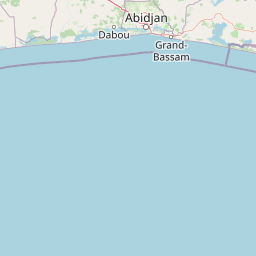
Banco National Park is most distinctive for being one of only two dense primary tropical forests located entirely within a major urban center worldwide, the other being Tijuca National Park in Rio de Janeiro. The park's extraordinary ecological significance stems from its location in the heart of Abidjan, making it a remarkable example of urban conservation where primary forest has been preserved amid city development. Beyond its biological value, the park serves as a critical infrastructure component for Abidjan, providing the majority of the city's drinking water through its hydraulic reservoir and playing a vital role in carbon sequestration. The park also contains rare tree species such as mahogany and avodire, and supports remaining populations of wildlife including chimpanzees, various primate species, antelopes, and diverse birdlife.
Banco National Park history and protected-area timeline
The protection of Banco National Park began in 1926 when the forest was granted the status of forest station, marking the initial recognition of its ecological importance. In 1953, the forest station was upgraded to become Banco National Park, formalizing its protected status at the national level. The park acquired additional legal recognition in 1966 when it was designated as a Permanent Forest Estate of the State under Law 66-433, which established regulations for the status and classification of natural reserves and national parks in Ivory Coast. A significant infrastructure development occurred in 1978 when a corridor for high-voltage power lines was opened in the northeastern part of the park at the request of the national electricity company to support Abidjan's growing energy needs. This corridor, measuring 1.7 kilometers long and 150 meters wide, created a distinctive horn-shaped feature now known as the Triangle de Sagbé, named after the nearby Abobo-Sagbé district. In 2002, Law 2002-102 further clarified the legal framework for national parks in Ivory Coast, defining national parks as areas under state control with boundaries that cannot be changed without legislative authority, designated exclusively for the propagation, protection, and conservation of vegetation and wildlife populations.
Banco National Park landscape and geographic character
The physical landscape of Banco National Park is characterized by its exceptional position as a primary tropical forest enclave within an urban setting. The park's terrain is relatively flat, typical of the coastal plain region of Ivory Coast, and is centered around the Gbangbo River, which flows through the middle of the protected area. The river's name, derived from the Ebrié language, translates to refreshing water source, reflecting the water's importance to both ecological and human communities. The park contains approximately 600 hectares of primary forest featuring rare and valuable tree species including mahogany and avodire. A hydraulic reservoir within the park serves as a critical water source for Abidjan, feeding multiple boreholes that supply the city. The park's square configuration measures 7.8 kilometers on each side, with a boundary line of 25.58 kilometers creating a clearly defined protected zone amid the surrounding urban development. The landscape includes a distinctive notch in the northeastern section created by the 1978 power line corridor, a feature that has become locally known as the Triangle de Sagbé.
Banco National Park ecosystems, habitats, and plant life
The ecological character of Banco National Park centers on its status as a rare example of intact primary tropical forest in an urban environment. The park contains approximately 600 hectares of primary forest characterized by old-growth trees including valuable species such as mahogany and avodire. This forest ecosystem provides critical habitat within the metropolitan area of Abidjan, maintaining biodiversity in a region where surrounding lands have been largely converted to urban or agricultural uses. The park's hydrological system is ecologically significant, with the Gbangbo River and associated reservoir supporting groundwater recharge that feeds 29 boreholes. The vegetation collectively captures approximately 90,000 tons of carbon dioxide annually, demonstrating the park's contribution to climate regulation and air quality maintenance for the surrounding city. The ecosystem services provided by this urban forest extend beyond biodiversity conservation to include water purification, flood regulation, and temperature moderation within the heat island effect of the growing city.
Banco National Park wildlife and species highlights
Banco National Park was historically notable for its rich biodiversity, supporting populations of various native species including the harnessed guib, a type of antelope, as well as multiple duiker species, various primates, suids including giant forest hogs and bushpigs, and a large number of bird species. However, the park's wildlife populations have faced significant pressure from surrounding urban development and human activity. Today, populations of the harnessed guib, certain monkey species, and some bird species persist within the park, though many species have declined significantly and some face extinction threats. A study conducted in 2004 and 2005 identified approximately twelve chimpanzees remaining in the park, representing a remnant population of this keystone species. The continued presence of these primates and other surviving wildlife demonstrates the park's ongoing ecological value as habitat within the urban matrix, though conservation efforts face challenges from illegal hunting, habitat fragmentation, and the impacts of surrounding urbanization.
Banco National Park conservation status and protection priorities
Banco National Park faces significant conservation challenges from its unique position within the rapidly growing city of Abidjan. The park is threatened by illegal logging and poaching activities, uncontrolled urbanization advancing from surrounding areas, and residents disposing of waste within the park boundaries. These pressures have contributed to the depletion of many wildlife species that once inhabited the forest. In response to these threats, a major conservation initiative was launched in 2022 involving the construction of a protective wall around the park perimeter. This brick curtain stands 2.5 meters high and will extend over 8 kilometers in total length when completed, designed in two phases of 4,400 meters and 4,500 meters respectively. The wall aims to shield the park from the advance of urbanization and reduce illegal access. Annual maintenance of the park requires approximately 200 million CFA francs. The park's legal protection falls under Law 2002-102, which establishes national parks as areas under state control with boundaries that cannot be altered except by legislative authority, designated for the propagation, protection, and conservation of vegetation and wildlife populations.
Banco National Park cultural meaning and human context
Banco National Park occupies land that extends over the former customary domains of Atié villages including Andokoi and Ebrié, as well as Anonkoua-Kouté and Agba, reflecting the area's historical connections to local communities. The park contains the Gbangbo River, whose name in the Ebrié language means refreshing water source, indicating the long-standing cultural significance of water resources in this landscape. A forestry school operates within the park, providing education and training in forest management and conservation. The park's establishment as a forest station in 1926 and subsequent designation as a national park in 1953 reflects Ivorian efforts to preserve forest resources in their natural state while balancing development needs in the capital city. The area also bears marks of modern infrastructure development, including the Triangle de Sagbé corridor created for electrical power lines in 1978, demonstrating the ongoing negotiation between conservation and urban development in Abidjan.
Top sights and standout views in Banco National Park
Banco National Park stands as one of the world's most significant urban protected areas, representing one of only two dense primary tropical forests located entirely within a major city. The park provides approximately 40% of Abidjan's drinking water through its hydraulic system while capturing 90,000 tons of carbon dioxide annually. Its 600 hectares of primary forest contain rare species including mahogany and avodire, and the park supports remaining populations of primates including chimpanzees. The park features 80 kilometers of bike paths and hiking trails for visitor exploration. The 2022 conservation wall project represents a major investment in protecting this urban forest from advancing development. As the second largest urban park globally, Banco National Park demonstrates the possibility of maintaining substantial ecological value within metropolitan environments.
Best time to visit Banco National Park
Banco National Park can be visited year-round given its location within Abidjan, though the best conditions typically occur during the dry seasons from November to March and from July to August. During these periods, trail conditions are generally more favorable for hiking and cycling activities, and wildlife visibility may improve as animals concentrate around water sources. The wet seasons from April to June and September to October bring heavier rainfall that can make trails muddy and less accessible, though the forest appears more lush and vibrant during these periods. The park's primary forest provides shade and relatively stable temperatures compared to the surrounding urban heat island, making any visit more comfortable. Early morning visits offer the best opportunities for wildlife observation when animals are most active, and the cooler temperatures make outdoor activity more pleasant in the tropical climate.