
Mori Atlas logo
National parkNini-Suhien National Park

Mapping the protected boundaries and tropical forest habitat of this key avian sanctuary.

Nini-Suhien National Park: Ghana's Vital Coastal Forest Protected Landscape

Nini-Suhien National Park represents a crucial protected area within Ghana's Western Region, established in 1976 to safeguard one of the nation's diminishing coastal forest ecosystems. Covering 160 square kilometers, it forms an integral part of the larger Ankasa Conservation Area, contributing significantly to wildlife corridors and the preservation of biologically vital forest landscapes. This park offers a unique atlas perspective on Ghana's natural heritage and its commitment to conservation.

National ParksGhanaCoastal ForestsImportant Bird AreasWest AfricaProtected Areas

Nini-Suhien National Park

National park

Park overview

Structured park overview, official facts, and landscape profile for Nini-Suhien National Park

Nini-Suhien National Park park facts, protected area profile, and essential visitor context
Review the core facts for Nini-Suhien National Park, including designation, size, terrain, visitor scale, habitats, and operating context in one park-focused overview.

About Nini-Suhien National Park

Nini-Suhien National Park serves as a vital protected area within Ghana's western forest zone, representing one of the nation's most important conservation landscapes. The park was created in 1976 as part of Ghana's commitment to preserving its natural heritage and maintaining ecological processes in perpetuity. It forms the northern portion of the larger Ankasa Conservation Area, which spans approximately 500 square kilometers and includes the Ankasa Resource Reserve to the south. This contiguous protected landscape creates a substantial forest block that supports ecological connectivity and provides habitat for species requiring large territories or migration corridors.

Quick facts and research context for Nini-Suhien National Park

Nini-Suhien National Park is situated in southwestern Ghana at approximately 5.267°N latitude and 2.567°W longitude. The protected area spans 160 square kilometers and was formally established in 1976 under Ghana's national park system. It holds IUCN Category II designation as a national park and operates as part of the broader Ankasa Conservation Area, which together with the Ankasa Resource Reserve covers roughly 500 square kilometers of contiguous forest habitat.

Park context

Deeper park guide and search-rich context for Nini-Suhien National Park

Nini-Suhien National Park history, landscape, wildlife, and travel context
Explore Nini-Suhien National Park through its history, landscape character, ecosystems, wildlife, conservation priorities, cultural context, and seasonal travel timing in a structured park guide built for atlas discovery and search intent.

Why Nini-Suhien National Park stands out

Nini-Suhien National Park is best known as a premier birdlife destination within Ghana. The park, together with the adjacent Ankasa Resource Reserve, has been recognized by BirdLife International as an Important Bird Area due to its significance for maintaining populations of numerous bird species. The coastal forest ecosystem supports a diverse avifauna community that depends on the park's protected status for survival. The park also represents one of Ghana's key remaining areas of intact coastal forest, a habitat type that has suffered extensive loss across West Africa.

Nini-Suhien National Park history and protected-area timeline

Nini-Suhien National Park was established in 1976, during a period when Ghana was expanding its protected area network to address growing concerns about deforestation and biodiversity loss in the country's forest zones. The park's creation reflected a growing recognition that the coastal forest ecosystem of southwestern Ghana contained irreplaceable ecological values requiring formal protection. The park was integrated into the broader Ankasa Conservation Area framework, which was designed to protect a substantial contiguous block of forest rather than isolated fragments. This landscape-level approach to conservation acknowledged that effective biodiversity protection requires larger land areas that can sustain ecological processes and wildlife populations over time.

Nini-Suhien National Park landscape and geographic character

The park occupies a portion of Ghana's coastal forest zone, characterized by tall evergreen and semi-deciduous forest vegetation. The landscape features relatively flat to gently rolling terrain typical of the coastal plain in the Western Region. The forest ecosystem within the park represents a transition zone between the rainforest of the interior and more open coastal habitats, creating a diverse mosaic of vegetation types. The area receives substantial annual rainfall supporting lush forest growth and maintaining the evergreen character of the vegetation.

Nini-Suhien National Park ecosystems, habitats, and plant life

Nini-Suhien National Park protects a critical example of Ghana's coastal forest ecosystem, a habitat that has been significantly reduced across West Africa due to agricultural expansion, logging, and other human activities. The forest supports a complex community of plant and animal species adapted to the moist tropical conditions. Beyond its significance for avifauna, the park contributes to watershed protection, soil conservation, and carbon storage functions that provide ecosystem services extending well beyond the protected boundary.

Nini-Suhien National Park wildlife and species highlights

The park's wildlife significance is most prominently documented through its Important Bird Area designation by BirdLife International. The forest supports populations of numerous bird species that depend on intact forest habitat for feeding, nesting, and breeding. While the source material emphasizes the park's birdlife value, the coastal forest ecosystem also provides habitat for various mammal, reptile, and invertebrate species typical of West African forest environments.

Nini-Suhien National Park conservation status and protection priorities

Nini-Suhien National Park contributes to Ghana's commitments to forest conservation and biodiversity protection at both national and international levels. The Important Bird Area designation recognizes the site's global significance for bird conservation, highlighting the presence of significant populations of species that cannot be adequately protected in smaller or more isolated areas. As part of the Ankasa Conservation Area, the park benefits from a landscape-scale conservation approach that maintains ecological connectivity and supports species that require large home ranges.

Top sights and standout views in Nini-Suhien National Park

Nini-Suhien National Park stands as one of Ghana's key forest protected areas, representing the country's coastal forest ecosystem which has become increasingly rare across West Africa. The park's Important Bird Area status underlines its global significance for avian biodiversity. The integration with the larger Ankasa Conservation Area provides ecological resilience that smaller isolated reserves cannot achieve.

Best time to visit Nini-Suhien National Park

The best time to visit Nini-Suhien National Park falls within the dry season months from November through March, when rainfall is reduced and trail conditions are most favorable for forest exploration. The park can be visited year-round, though the wet season from April through October brings heavier rainfall that may affect accessibility and visibility of wildlife.
Park location guide

Geography guide, regional context, and park location map for Nini-Suhien National Park

Nini-Suhien National Park park geography, regions, and map view in Ghana
Understand where Nini-Suhien National Park sits in Ghana through a broader geographic reading of the surrounding landscape, nearby location context, and its mapped position within the national park landscape.

How Nini-Suhien National Park fits into Ghana

Ghana, officially the Republic of Ghana, is a West African nation spanning approximately 240,000 km² along the Gulf of Guinea. It achieved independence from Britain in 1957, becoming the first Sub-Saharan colony to do so, and transitioned to a republic in 1960. The country has a population of over 35 million, with Accra as its capital and largest city. Ghana features diverse ecosystems from coastal savannas to tropical rainforests and is linguistically and ethnically rich, with English as the official language.

Wider geography shaping Nini-Suhien National Park in Ghana

Ghana is located in West Africa along the Gulf of Guinea and Atlantic Ocean to its south. It borders Côte d'Ivoire to the west, Burkina Faso to the north, and Togo to the east. The country spans diverse ecologies including coastal savannas and tropical rainforests.

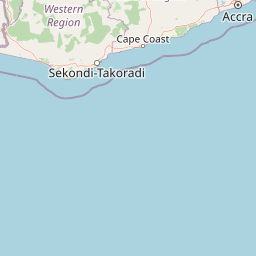
Map view of Nini-Suhien National Park

Use this park location map to pinpoint Nini-Suhien National Park in Ghana, understand its exact geographic position, and read its mapped placement within the surrounding landscape more clearly.

Pigeon | © OpenStreetMap contributors
Park atlas

Explore the geographic spread of protected landscapes surrounding Nini-Suhien National Park

Discover National Parks and Protected Areas Near Nini-Suhien National Park
Browse national parks and protected areas located in the geographic vicinity of Nini-Suhien National Park, tracing the interconnected conservation landscapes of the region. This structured overview allows for detailed comparison of nearby protected areas, providing rich regional context and aiding further park discovery.
National parkWestern North Region

Bia National Park: Ghana's Vital Protected Forest Landscape with West Africa's Tallest Trees

Explore the unique mapped geography and biodiversity of this key conservation area.

Bia National Park serves as a crucial protected landscape in Ghana's Western North Region, celebrated for harboring some of West Africa's tallest trees and a rich diversity of wildlife. This detailed entry provides context on its mapped boundaries and ecological significance as one of the last relatively untouched forest remnants in the region. Understand the park's place within Ghana's geography and its value for conservation research, showcasing its unique transitional forest ecosystem and the documented species it protects.

Area
563 km²
Established
1974
IUCN
II
Climate
Tropical
National parkAbidjan

Banco National Park National Park: Primary Forest Landscape and Abidjan Geography

Explore mapped boundaries and urban conservation.

Banco National Park is a globally significant protected area, uniquely preserving dense primary tropical forest within the urban sprawl of Abidjan, Ivory Coast. This national park offers critical insights into urban conservation, featuring rare tree species and providing essential ecosystem services like water supply and carbon sequestration for the surrounding region. Its landscape, characterized by the Gbangbo River and rare mahogany and avodire trees, forms a vital geographic element within the metropolitan atlas.

Area
30 km²
Established
1953
IUCN
II
National parkGhana

Bui National Park: Protected Savanna Landscape and Black Volta River Geography in Ghana

Explore the mapped boundaries and unique ecosystems of this national park.

Bui National Park, a protected national park in Ghana, offers a rich geographic discovery of savanna ecosystems bisected by the Black Volta River. Its vast mapped area provides a unique setting for understanding riparian corridors, woodland savanna, and mountainous terrain. The park is critically important for its significant hippopotamus population and its designation as an Important Bird Area, showcasing its ecological value. Exploration of Bui National Park provides insight into Ghana's protected landscapes and their strategic position within West African geography, serving as a key entity for any natural atlas.

Area
1,820 km²
Established
1971
IUCN
II
National parkBono East Region

Digya National Park: Ghana's Oldest National Park, Bordering Lake Volta

Explore its unique geography and mapped protected boundaries.

Digya National Park is a significant protected area in Ghana, renowned as the nation's oldest, established in 1900 and gazetted as a national park in 1971. Occupying 3,743 square kilometers in the Bono East Region, it is distinctively bordered on three sides by the vast Lake Volta, creating an unparalleled terrestrial-aquatic habitat interface. This national park represents a key point in Ghana's geographic atlas, situated in a transitional zone between forest and savanna ecosystems, and is a vital hub for wildlife conservation and the study of its unique landscape character.

Area
3,743 km²
Established
1971
IUCN
II
National parkIvory Coast

Comoé National Park: A UNESCO World Heritage Site and Ivory Coast's Largest National Park

Explore its diverse savanna ecosystems and gallery forest geography.

Comoé National Park is a landmark protected area in West Africa, celebrated as the most biodiverse savanna on Earth. Situated across northeastern Ivory Coast, it encompasses a unique geographic gradient from Guinea savanna to Sudanian zones, supporting varied habitats from expansive savannas to dense gallery forests along the Comoé River. Its status as a national park highlights its critical role in wildlife conservation and its significant contribution to the understanding of transitional ecological landscapes.

Area
11,500 km²
Established
1983
IUCN
II
National parkOti Region

Kyabobo National Park: Ghana's Highland National Park with Mount Dzebobo and Forest-Savanna Transition

Explore mountainous terrain, park boundaries, and regional geography in Oti Region.

Kyabobo National Park is a significant protected landscape in Ghana's Oti Region, celebrated for its mountainous topography and the commanding presence of Mount Dzebobo. This national park, established in 1993, safeguards a critical ecological transition zone featuring diverse habitats from dense forests to open tree savanna. Its unique geography and protected status make it a vital site for understanding regional conservation and atlas-based landscape exploration in West Africa, offering insights into varied terrain and ecosystems.

Area
360 km²
Established
1993
IUCN
II
National parkSavannah Region

Mole National Park: A Premier Protected Landscape in Ghana's Savannah Region

Explore mapped boundaries and Guinea savannah ecosystems.

Mole National Park represents a significant protected landscape within Ghana's Savannah Region, serving as the country's largest national park and a crucial conservation area for West African wildlife. The park's geography is defined by extensive Guinea savannah, characterized by grasslands with scattered woodlands and a prominent escarpment along its southern edge. Its vast expanse offers a unique opportunity to study mapped park boundaries and understand the ecosystem's role in regional conservation efforts. Discover the unique landscape context and protected area identity of this major West African wildlife refuge.

Area
4,840 km²
Established
1958
IUCN
II
National parkIvory Coast

Taï National Park: A Primary Rainforest Protected Area in Ivory Coast

Explore mapped boundaries and critical primate habitats in West Africa.

Taï National Park in Ivory Coast stands as a monumental protected landscape, comprising the largest contiguous area of primary rainforest remaining in West Africa. Its designation as a national park highlights its critical role in preserving biodiversity and unique geographic features. Users exploring this destination can delve into its mapped terrain, understand its regional landscape context within Ivory Coast, and appreciate its significance as a vital habitat for endangered species and an integral part of the Upper Guinean forest ecosystem.

Area
3,300 km²
Established
1972
IUCN
II

Common questions about visiting, size, designation, and location context for Nini-Suhien National Park

Nini-Suhien National Park FAQs for park facts, access, geography, and protected area context
Find quick answers about Nini-Suhien National Park, including protected-area facts, park geography, trail and visitor context, and how the park fits into its surrounding country and regional landscape.
MoriAtlas Explorer

Continue Your Protected Areas Search Across the Global Atlas

Deepen your exploration by continuing the structured search for national parks and protected areas worldwide. Utilize the comprehensive filtering capabilities to compare different conservation landscapes and refine your understanding of global park geography. Discover more about the distribution and characteristics of protected natural areas.

Global natural geography