Why Kyabobo National Park stands out
Kyabobo National Park is best known for its dramatic highland scenery and the iconic Mount Dzebobo, which dominates the park's skyline and provides one of Ghana's most impressive mountain views. The Breast Mountains form a distinctive pair of peaks that are the park's most recognizable landmark and a major attraction for hikers. The park sits at a critical ecological crossroads, protecting the transition zone between Ghana's forested south and the savanna regions to the north. Its diverse habitats support significant populations of large mammals including African bush elephants and African leopards, while the rock hyrax has become an unofficial symbol of the park. The area is also notable for its butterfly diversity, with surveys recording more than 500 species within the park boundaries.
Kyabobo National Park history and protected-area timeline
Kyabobo National Park was established as a protected area in 1993, marking Ghana's commitment to preserving the unique highland ecosystems of the Oti Region. During the early years following its designation, the park boundaries underwent several adjustments as officials worked to balance conservation objectives with local land use patterns and community needs. These boundary negotiations concluded in September 1999 when the current perimeter was formally fixed, providing clarity for both management authorities and surrounding communities. The establishment of Kyabobo reflected a growing recognition in Ghana during the 1990s of the need to protect representative samples of the country's diverse ecosystems, particularly in regions like the Volta Highlands where forest cover was declining. Prior to national park status, the area had likely existed as a forest reserve or game production zone, common designations for Ghana's wildlife areas before the establishment of the national park system.
Kyabobo National Park landscape and geographic character
The landscape of Kyabobo National Park is defined by its mountainous terrain and the dramatic contrast between high ridgelines and sheltered valleys. Mount Dzebobo rises to significant elevation, making it the second-highest point in Ghana and creating a prominent landmark visible from considerable distances across the Volta Region. The mountain's slopes are covered in dense vegetation that transitions from forest on the lower reaches to more open woodland at higher elevations. The Breast Mountains form a distinctive geological feature in the southeastern portion of the park, consisting of two rounded peaks that create an unmistakable silhouette against the sky. These formations provide excellent hiking opportunities, with trails ascending to strategic viewpoints where visitors can survey the surrounding countryside and glimpse the distant waters of Lake Volta. Rocky outcrops and boulder fields punctuate the landscape, particularly in higher elevations, creating microhabitats for specialized species like the rock hyrax. The park's position in a transition zone means that the vegetation varies considerably across short distances, with moist forest patches in sheltered valleys giving way to drier tree savanna on exposed ridges and lower slopes.
Kyabobo National Park ecosystems, habitats, and plant life
Kyabobo National Park occupies a critical position in Ghana's ecological landscape, protecting a transition zone where tropical rainforest gives way to tree savanna. This blending of ecosystems creates a mosaic of habitats that supports extraordinary biodiversity, with the park serving as a bridge between West Africa's forested zone and the more open landscapes to the north. The moist forest areas along valleys and lower slopes support tall trees, dense understory vegetation, and the species typically associated with Ghana's rainforest ecosystems. Moving upslope, the canopy becomes more open as tree savanna takes over, with grasses and scattered woody plants dominating the higher terrain. This ecological diversity explains the park's remarkable butterfly population, with more than 500 species recorded within its boundaries. The varied topography creates numerous microclimates and habitats, while the proximity to the Togolese border suggests this area may serve as part of a larger transboundary ecosystem that allows species movement across national boundaries.
Kyabobo National Park wildlife and species highlights
The wildlife community of Kyabobo National Park reflects the park's position at an ecological crossroads, combining species from both forest and savanna environments. Large mammals inhabiting the park include African bush elephants, which roam the forested areas and clearings, African leopards that maintain territories in the more remote sections, and African buffalo that graze in savanna portions of the park. Waterbuck are commonly observed near water sources, while bushbuck and various duiker species occupy the forest understory and forest edges. Several primate species are present, likely including various monkeys that use the forest canopy as their primary habitat. The rock hyrax has become particularly associated with the park, often observed basking on rocky outcrops and serving as an unofficial symbol of Kyabobo. Bird surveys have recorded 235 species within the park, contributing to its designation as an Important Bird Area by BirdLife International. This avifauna includes both forest-dependent species and savanna specialists, reflecting the diverse habitats the park protects.
Kyabobo National Park conservation status and protection priorities
Kyabobo National Park's designation as an Important Bird Area by BirdLife International highlights its significance beyond national boundaries, recognizing that the park supports significant populations of bird species that depend on these habitats for their survival. The park's location in a transition zone means it contains examples of ecosystems that are under pressure across West Africa, making its protection particularly valuable for conserving biodiversity in the region. The diverse habitats within Kyabobo serve as refuge for species that require large, interconnected areas to maintain viable populations, including wide-ranging mammals like elephants that need extensive territory to meet their ecological needs. Beyond species protection, the park contributes to watershed protection for the Volta Region, with its forested slopes helping to regulate water flow and reduce soil erosion in a landscape where agriculture and development pressure are increasing.
Kyabobo National Park cultural meaning and human context
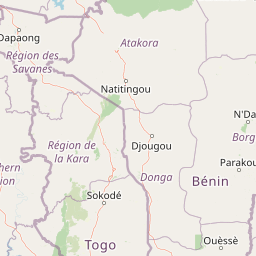
Kyabobo National Park is situated in the heart of Ewe traditional territory, with the mountain's name Dzebobo deriving from the Ewe language. In Ewe, dzebo means seen from afar or prominent, a reference to the mountain's striking visibility across the landscape that has made it a landmark for generations of local communities. The park lies near Nkwanta, a town that has historically served as a regional center for the surrounding farming communities. The local population practices agriculture and maintains traditional connections to the land that now falls within the park boundaries. This cultural context adds depth to the park's identity, connecting the protected area to the region's heritage and the communities who have lived in the shadow of these mountains for centuries.
Top sights and standout views in Kyabobo National Park
Kyabobo National Park offers visitors the chance to summit Ghana's second-highest mountain, with the hike to Mount Dzebobo's peak providing panoramic views of Lake Volta and the surrounding highlands. The Breast Mountains present another popular hiking destination, with trails ascending to viewpoints that overlook the park's forested valleys and the distant landscape beyond. Seven hiking trails and two mountain biking trails provide visitors with options for exploring the park's diverse terrain, from valley walks to challenging ridge climbs. The rock hyrax, a distinctive small mammal often observed basking on sun-warmed rocks, has become an unofficial mascot for the park and provides wildlife watchers with reliable viewing opportunities. The park's butterfly diversity, exceeding 500 species, offers exceptional opportunities for entomology enthusiasts and contributes to the park's status as one of Ghana's most ecologically valuable protected areas.
Best time to visit Kyabobo National Park
The optimal time to visit Kyabobo National Park falls within the dry season, typically from November through March, when rainfall is reduced and trail conditions are most favorable for hiking and outdoor activities. During this period, the landscape is more accessible and wildlife viewing can be more productive as animals concentrate around remaining water sources. The months following the rainy season, around April and May, can offer lush green scenery as vegetation responds to the moisture, though some trails may remain slippery or inaccessible. Visitors planning trips during the wet season months of June through October should be prepared for muddy conditions and potential trail closures, though the park's waterfalls and streams will be flowing at their fullest.