Why Old Oyo National Park stands out
Old Oyo National Park is best known for its unique blend of natural and cultural heritage. The park preserves the archaeological remains of Oyo-lle, the ancient capital of the Oyo Empire, making it one of Nigeria's most historically significant protected areas. The savanna landscape features dramatic granite outcrops, caves, and rock shelters that are suitable for mountaineering and exploration. The park supports populations of large mammals including African buffalo, roan antelope, western hartebeest, and waterbuck, with the Ikere Gorge Dam on the Ogun River offering water recreation facilities. The combination of archaeological significance, diverse wildlife, and varied topography distinguishes this park within Nigeria's national park system.
Old Oyo National Park history and protected-area timeline
The establishment of Old Oyo National Park traces to the colonial era of British administration in Nigeria. The protected area originated from two earlier native administrative forest reserves: Upper Ogun, established in 1936, and Oyo-lle, established in 1941. These forest reserves were converted to game reserves in 1952 before being combined and upgraded to national park status, creating the present-day protected area. The park's name derives directly from Oyo-lle, the historic capital of the Oyo Empire, which was one of the most powerful pre-colonial states in West Africa and served as the political center of the Yoruba people. The park contains the ruins of this ancient city, preserving physical evidence of the empire's architectural and urban planning achievements. By the early 2020s, the park faced significant conservation challenges including poaching, illegal logging, and encroachment by herders. While poaching had decreased from levels seen in the early 2000s, herder encroachment remained a pressing concern, with organizations like Miyetti Allah acknowledging the issue while noting that many local herders were unaware of the park's exact boundaries and ecological significance. Climate change has been identified as an additional factor pushing herders further south and into park boundaries. Security operations in subsequent years resulted in mass arrests of illegal miners, herders, and poachers within the park.
Old Oyo National Park landscape and geographic character
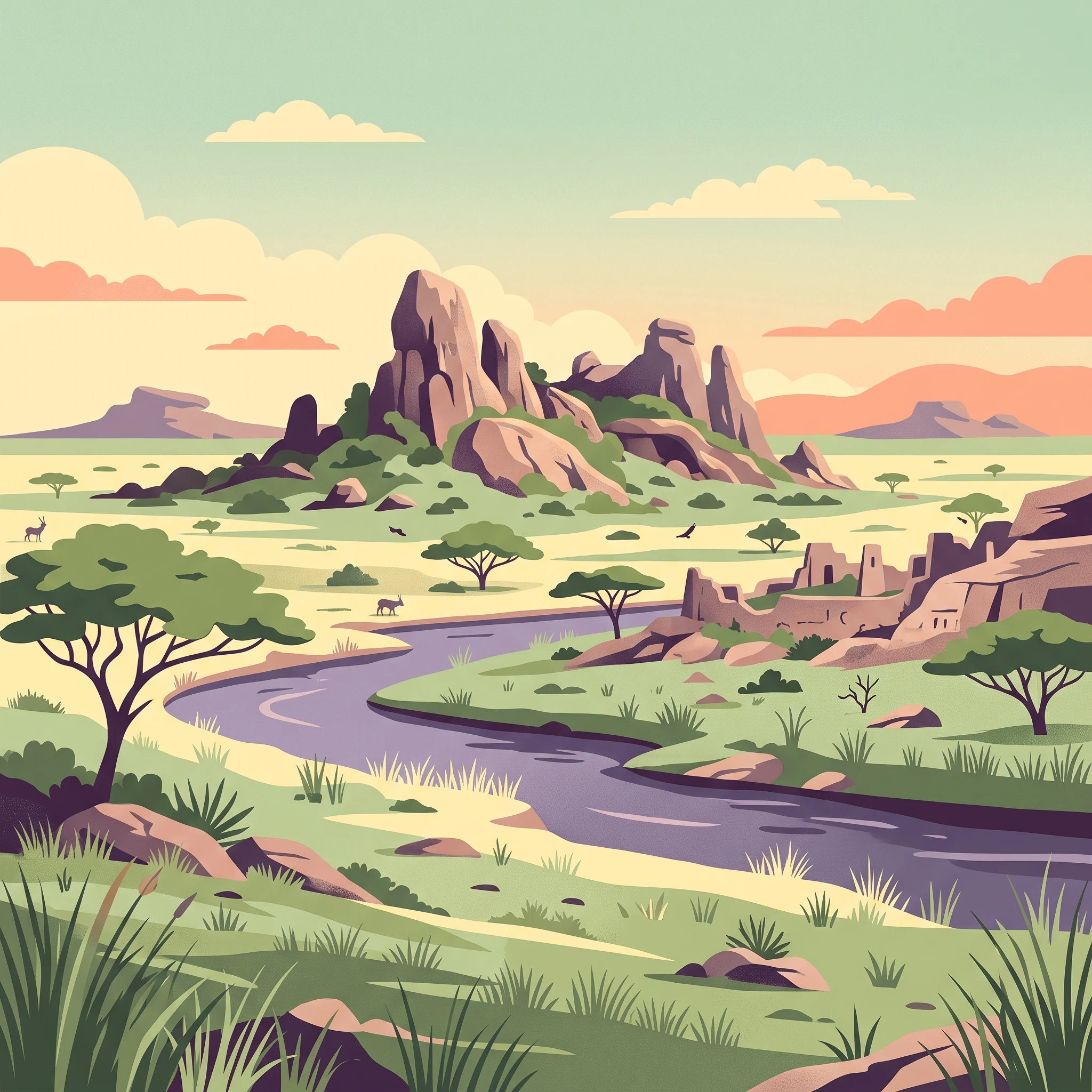
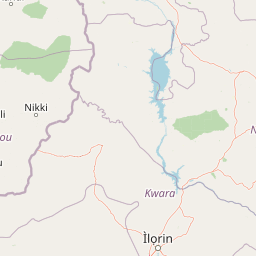
The physical landscape of Old Oyo National Park is dominated by lowland savanna plains situated at elevations between 330 and 508 meters above sea level. The terrain is characterized by its relatively flat to gently undulating nature, with the southern portion traversed by several important river systems including the Owu, Owe, and Ogun Rivers, the latter of which is dammed at Ikere Gorge to create a reservoir that provides recreational opportunities. The northern sector is drained by the Tessi River, which flows through more rolling terrain. The central part of the park features scattered hills, ridges, and rock outcrops that rise above the surrounding plains, creating topographical variation and offering potential mountaineering opportunities. Granite outcrops are particularly characteristic of the northeastern zone, where they appear at various locations including the historic site of Oyo-lle. These granite formations contain caves and rock shelters that hold both geological and archaeological significance. The combination of river valleys, savanna plains, and rocky uplands creates a diverse landscape that supports varied ecological communities and provides scenic variety for visitors.
Old Oyo National Park ecosystems, habitats, and plant life
The savanna ecosystem of Old Oyo National Park supports a range of habitat types characterized by grassland with scattered trees and woodland patches. The park's location in southwestern Nigeria places it within the Guinea savanna zone, which transitions between the forest belt to the south and the drier Sudan savanna to the north. The river systems, particularly the Ogun River and its tributaries, create riparian corridors that support more lush vegetation than the surrounding savanna plains. The granite outcrops and rock shelters provide specialized microhabitats for various plant and animal species adapted to these rocky environments. The landscape's variety, from flat plains to hills and river valleys, creates ecological diversity that supports the park's wildlife populations. The protected status of the area has helped preserve these savanna habitats, though surrounding agricultural expansion and human settlement create pressure on the park's boundaries.
Old Oyo National Park wildlife and species highlights
Old Oyo National Park supports populations of several notable large mammal species characteristic of West African savanna ecosystems. The African buffalo represents one of the park's prominent megafauna, while bushbuck and waterbuck are commonly observed in the woodland and riparian areas. The kob, a medium-sized antelope, inhabits the savanna plains, alongside the larger roan antelope and western hartebeest, both of which are impressive additions to the park's ungulate fauna. The patas monkey, known for its distinctive red-brown coat and terrestrial habits, is present in the park's woodland and grassland habitats. Historically, the park provided habitat for the endangered West African wild dog (Lycaon pictus manguensis), but this species has been locally extirpated due to hunting pressure and habitat loss from expanding human populations in the region. The park also contains diverse birdlife, though detailed species inventories are not comprehensively documented in available sources.
Old Oyo National Park conservation status and protection priorities
Old Oyo National Park serves as an important protected area for Nigeria's savanna ecosystems and cultural heritage, though it faces significant conservation challenges. The park's designation as an IUCN Category II protected area reflects its national park status and the intention to preserve both natural and cultural values. Conservation pressures include poaching, which although decreased from early 2000s levels, remains a concern, as well as illegal logging activities within park boundaries. Perhaps most significantly, the park faces ongoing encroachment from pastoralists and their livestock, a challenge attributed partly to climate change pushing herders southward into previously uninhabited areas. The interaction between conservation goals and local livelihoods creates complex management challenges. The presence of the West African wild dog as a historically resident but now extirpated species highlights the vulnerability of large carnivores in Nigerian protected areas and the broader challenges of maintaining viable populations of endangered species in fragmented landscapes.
Old Oyo National Park cultural meaning and human context
Old Oyo National Park possesses extraordinary cultural significance as the site of Oyo-lle, the ancient capital of the Oyo Empire, one of the most powerful pre-colonial states in West Africa. The Oyo Empire was a major political and economic force among the Yoruba people, controlling trade routes and maintaining military power that extended across much of what is now southwestern Nigeria. The ruins within the park represent the physical remains of this sophisticated urban center, including architectural foundations, settlement patterns, and cultural artifacts that evidence the empire's prominence. The park's name directly references this historical significance, connecting the protected area to a rich heritage of Yoruba civilization. The local government areas surrounding the park remain inhabited by Yoruba communities whose cultural practices, traditional land use patterns, and historical connections to the landscape predate and extend beyond the formal protected area designation.
Top sights and standout views in Old Oyo National Park
Old Oyo National Park stands out for its unique combination of archaeological significance and natural diversity. The ancient ruins of Oyo-lle provide a window into the history of the Oyo Empire, while the savanna landscape supports populations of African buffalo, roan antelope, western hartebeest, and other notable wildlife. The Ikere Gorge Dam on the Ogun River offers water-based recreation opportunities, distinguishing this park from many other Nigerian protected areas. The central zone's scattered hills, ridges, and rock outcrops provide excellent mountaineering and exploration opportunities, with granite caves and shelters adding geological and historical interest. The park's location at the ecological transition between forest and Sudan savanna creates habitat diversity that supports the park's wildlife populations.
Best time to visit Old Oyo National Park
The best time to visit Old Oyo National Park is during the dry season from November to April, when weather conditions are most favorable for outdoor exploration and wildlife viewing. During this period, vegetation is less dense and wildlife tends to congregate around remaining water sources, making animals easier to observe. The dry season coincides with cooler temperatures, particularly in the mornings and evenings, enhancing visitor comfort during game drives and hiking activities. The wet season from May to October brings heavier vegetation that can obscure wildlife viewing, though the landscape becomes greener and some visitors prefer this period for its scenic qualities. Visitors should note that the park's accessibility from surrounding towns remains relatively consistent year-round, though road conditions may deteriorate during peak rainy months. The administrative head office in Oyo town can provide current information on park conditions and visitor arrangements.