Why Kamuku National Park stands out
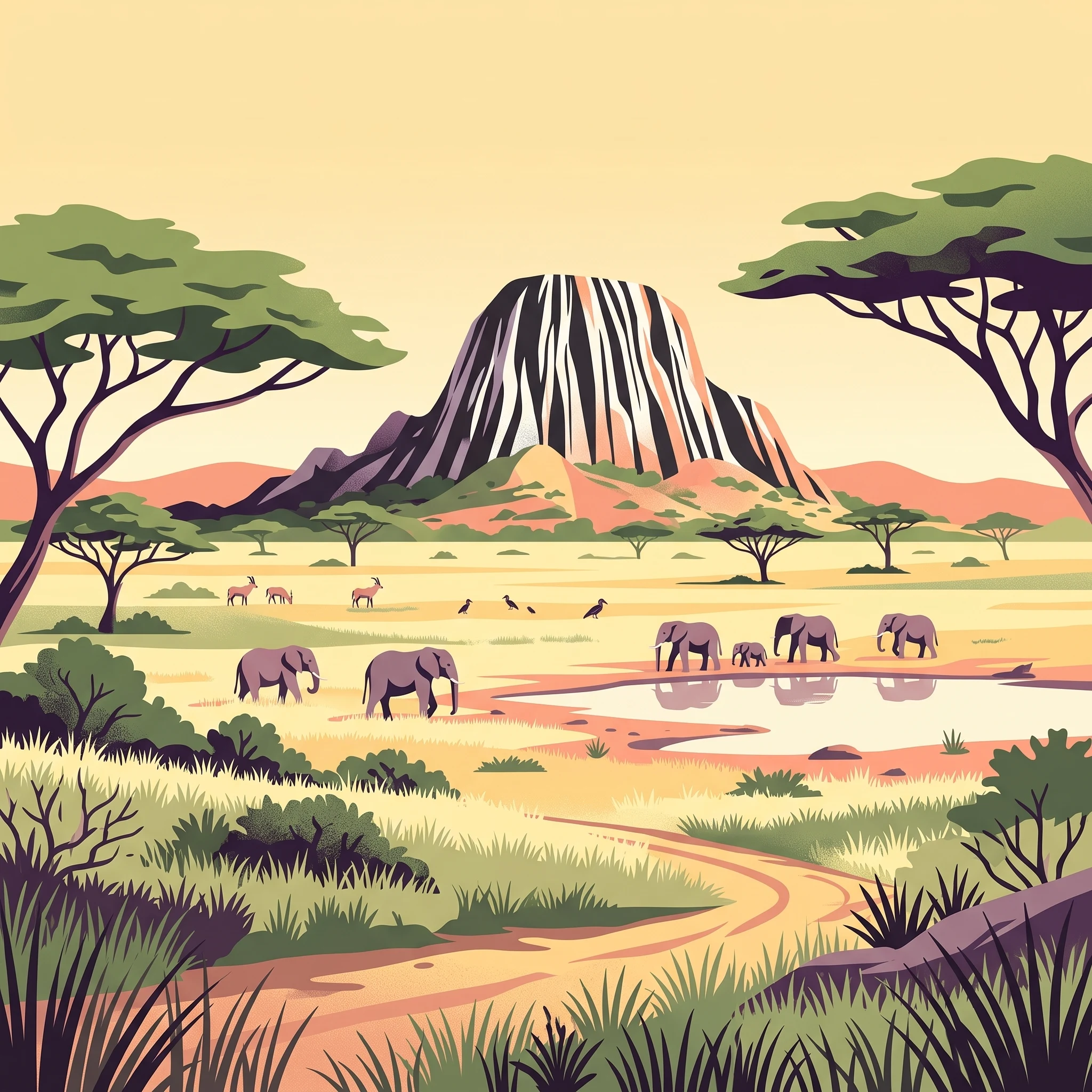
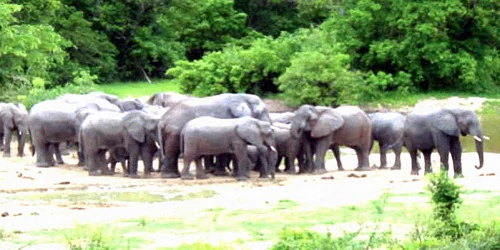
Kamuku National Park is best known for its dramatic inselberg landscape, particularly the striking Goron Dutse, a large isolated granite peak with a visually distinctive smooth surface marked by alternating black and white bands. The park is also renowned for its population of African elephants, which serve as a major attraction for visitors, and for supporting significant populations of roan antelopes, a species that is declining in many other Nigerian protected areas. The park's birdlife is exceptional, with rare species including the secretarybird, Denham's bustard, and Abyssinian ground-hornbill, all of which are difficult to encounter in other parts of Nigeria.
Kamuku National Park history and protected-area timeline
The conservation history of Kamuku National Park traces back to 1936 when the area was first designated as the Native Authority Forest Reserve of Birnin Gwari under the Northern Nigeria Government. This early designation reflected the region's ecological importance and the colonial administration's recognition of the need to protect remaining forest cover in the savanna zone. The area was subsequently upgraded to a state game reserve, reflecting its growing importance for wildlife conservation. In May 1999, the reserve was elevated to national park status, marking its formal inclusion among Nigeria's premier protected areas. This elevation came after successful community-based conservation initiatives that promoted sustainable resource usage among local populations, demonstrating that collaborative approaches to conservation could yield positive results. The park's location adjacent to the Kwiambana Game Reserve to the northwest creates a larger conservation landscape, though both areas face ongoing challenges from illegal hunting and cattle grazing by pastoralist settlements.
Kamuku National Park landscape and geographic character
The physical landscape of Kamuku National Park is characterized by generally flat terrain that gradually slopes upward toward the Birnin Gwari Ridge along the eastern boundary. The park's most distinctive geological feature is the Goron Dutse, a large isolated inselberg that rises prominently from the savanna plains. This granite formation is notable for its smooth surface, which displays a striking pattern of black and white squares created by differential weathering of the rock's mineral composition. Another significant feature is the Dogon Ruwa Waterfalls, which provide a focal point of scenic interest within the park. The Tsaunin Rema area consists of large boulders stacked upon each other, creating interesting rock formations and providing habitat for rock hyraxes. The landscape is intersected by small seasonal rivers lined with riparian forests, adding ecological diversity to the predominantly savanna terrain.
Kamuku National Park ecosystems, habitats, and plant life
Kamuku National Park protects one of the best-preserved blocks of Guinea Savanna ecosystem in Nigeria, with transitional Sudan Savanna elements in certain areas. The park's vegetation is dominated by tree species adapted to the seasonal rainfall patterns of the savanna zone, including Isoberlinia doka, Terminalia avicennioides, and Detarium macrocarpum, which form the characteristic canopy of the Guinea Savanna. Other common trees include Daniellia oliveri, Nauclea latifolia, various Acacia species, Lophira lanceolata, Parkia biglobosa, Prosopis africana, and Isoberlinia tomentosa. The riparian forests that follow the seasonal rivers feature oil palms as a dominant species, while additional plant communities include Afzelia, Monotes, and Raphia shrubs. This vegetation structure supports the park's diverse faunal community and maintains ecological connectivity with surrounding forest reserves.
Kamuku National Park wildlife and species highlights
The mammalian fauna of Kamuku National Park includes approximately 19 species, with African elephants being the most prominent and serving as a major ecotourism attraction. Other significant mammal species include roan antelopes, duikers, hartebeest, baboons, warthog, bushbuck, patas monkeys, and green monkeys. The park's avifauna is particularly impressive, with at least 177 bird species recorded including both migratory and resident species. Three bird species are especially notable for their rarity within Nigeria: the secretarybird, a distinctive raptorial bird associated with savanna habitats; Denham's bustard, a large ground-dwelling bird; and the Abyssinian ground-hornbill, a striking species that is difficult to find in other parts of the country. The Tsaunin Rema boulder formations support a large population of rock hyraxes, small mammals that are well-adapted to the rocky terrain.
Kamuku National Park conservation status and protection priorities
Kamuku National Park represents an important conservation asset for Nigeria, protecting one of the country's most intact savanna ecosystems. The park's designation as IUCN Category II reflects its primary purpose of protecting natural biodiversity while allowing for sustainable visitor use. The Guinea Savanna ecosystem, which the park preserves, has been heavily modified in many parts of Nigeria through agricultural expansion and human settlement, making the protected blocks within Kamuku and adjacent forest reserves particularly valuable. The park's success in maintaining elephant populations and supporting rare bird species demonstrates the effectiveness of its conservation management. However, the park faces ongoing threats from illegal hunting and cattle grazing, and operations were temporarily suspended in 2021 due to regional insecurity, highlighting the complex relationship between conservation and human pressures in Nigeria's protected areas.
Kamuku National Park cultural meaning and human context
The area in and around Kamuku National Park is home to the Gwari and Kamuku peoples, whose traditional livelihoods include farming, hunting, pastoralism, and crafts such as weaving, mat making, and pottery. According to historical accounts, the Gwari people originated from Zungeru in Niger State, while the Kamuku people migrated from the Sokoto and Katsina areas during the Fulani jihad at the start of the 19th century. The park contains sites of cultural significance to these communities, including hills, rock outcrops, marshes, streams, and the ancient Parnono Shrine. The present town of Birnin Gwari was founded in 1957 by Gwari people who migrated from an earlier settlement approximately fifty kilometers to the north. These traditional communities have maintained connections to the landscape for generations, and their cultural practices are interwoven with the natural features that the park now protects.
Top sights and standout views in Kamuku National Park
The Goron Dutse inselberg stands as Kamuku National Park's most visually striking feature, a granite monolith with a distinctive black and white striped surface created by natural weathering patterns. The Dogon Ruwa Waterfalls provide a scenic water feature amid the savanna landscape, while the Tsaunin Rema boulder field offers both geological interest and wildlife viewing opportunities for rock hyraxes. The park's elephant population represents a significant conservation achievement, maintaining viable numbers of this iconic species within a protected savanna environment. Bird enthusiasts will find the park exceptional for sightings of secretarybirds, Denham's bustards, and Abyssinian ground-hornbills, species that are rarely encountered in other Nigerian protected areas. The combination of dramatic geology, meaningful wildlife populations, and cultural heritage makes Kamuku a distinctive destination within Nigeria's national park system.
Best time to visit Kamuku National Park
The optimal time to visit Kamuku National Park falls during the dry season from November to April, when wildlife viewing conditions are most favorable as vegetation thins and animals congregate more predictably around remaining water sources. The cooler months of December through February offer comfortable temperatures for game drives and outdoor exploration. During the wet season from May to October, the landscape becomes lush and green but wildlife becomes more dispersed and difficult to observe. The park's accessibility may be affected by seasonal road conditions, and visitors should be aware that park operations have faced interruptions due to regional security concerns in recent years. Planning a visit should involve checking current operational status and consulting with park authorities regarding conditions and access arrangements.