Why W National Park stands out
W National Park is best known as a last stronghold for West Africa's large mammal populations, particularly its significant elephant herds and the endangered Northwest African cheetah. The park's distinctive W-shaped river bend provides a dramatic scenic backdrop, while its transborder status makes it unique among African protected areas. It is also recognized for its birdlife, with over 350 species recorded including numerous migratory species, and for the archaeological significance of historical human settlement sites.
W National Park history and protected-area timeline
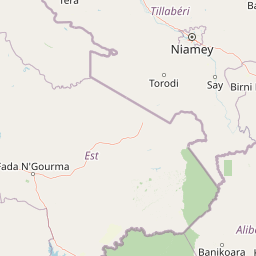
W National Park was established by decree on August 4, 1954, creating one of West Africa's earliest national parks within Niger. The park's transborder nature emerged from the recognition that the Niger River's meander and its associated ecosystems spanned natural boundaries, necessitating collaborative management across what would become three independent nations. Following its establishment, the park gained international recognition when it was inscribed as a UNESCO World Heritage Site in 1996, becoming part of the select group of protected areas recognized for their outstanding natural value. The management framework evolved significantly with the EU-funded ECOPAS project, which supported regional coordination from 1996 until 2008. In 2020, the Beninese portion of the park came under direct management by African Parks, bringing professional conservation administration to over 8,000 square kilometers of the protected area. The park has faced serious security challenges in recent years, including a tragic land mine incident in 2022 that killed eight people, fatal attacks on rangers and soldiers in 2024, and a significant loss of life in 2025.
W National Park landscape and geographic character
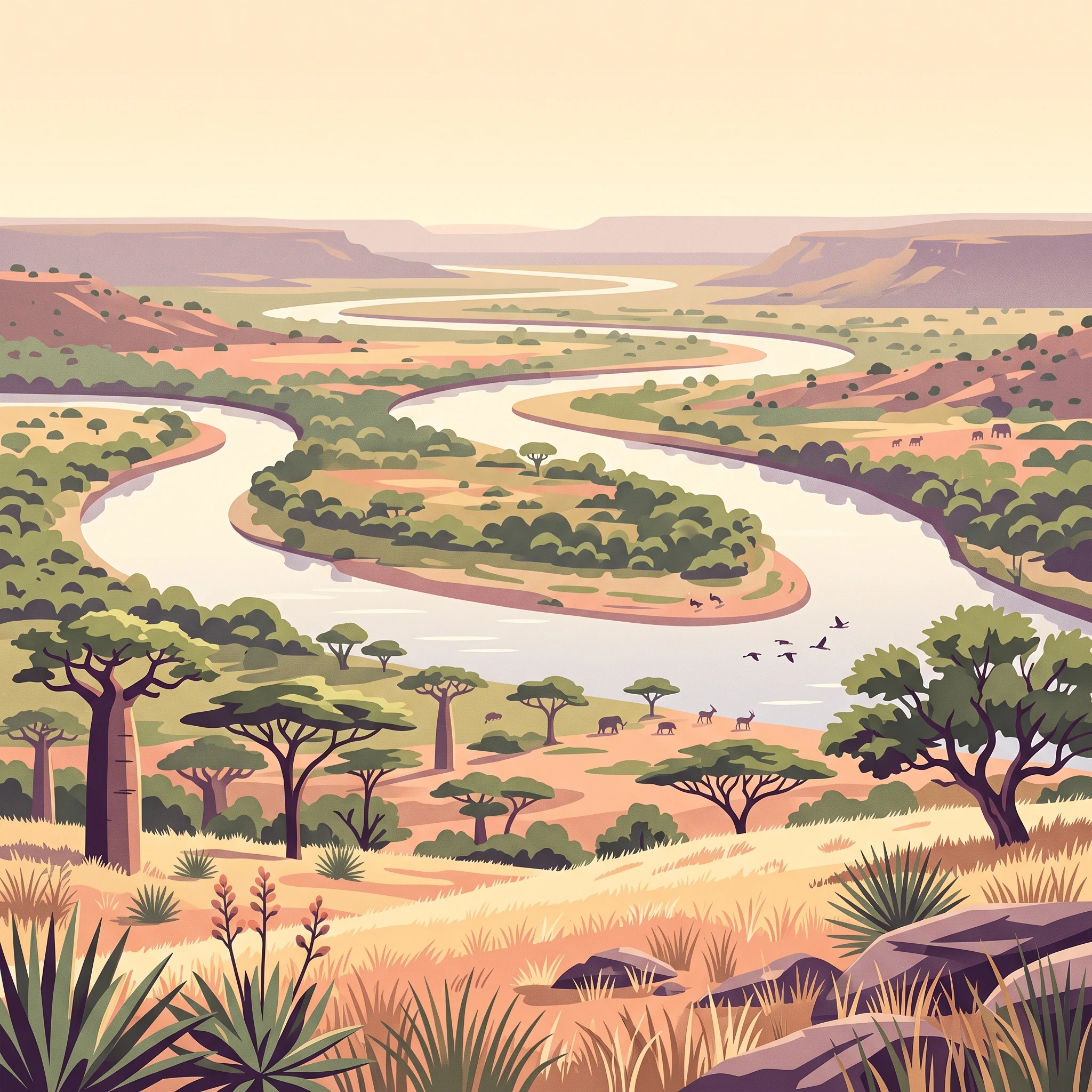
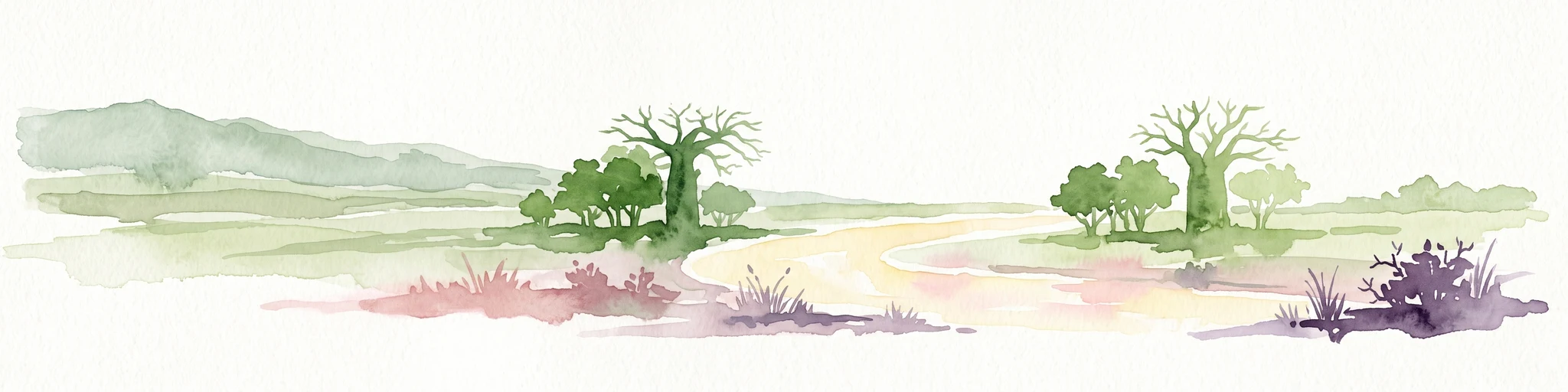
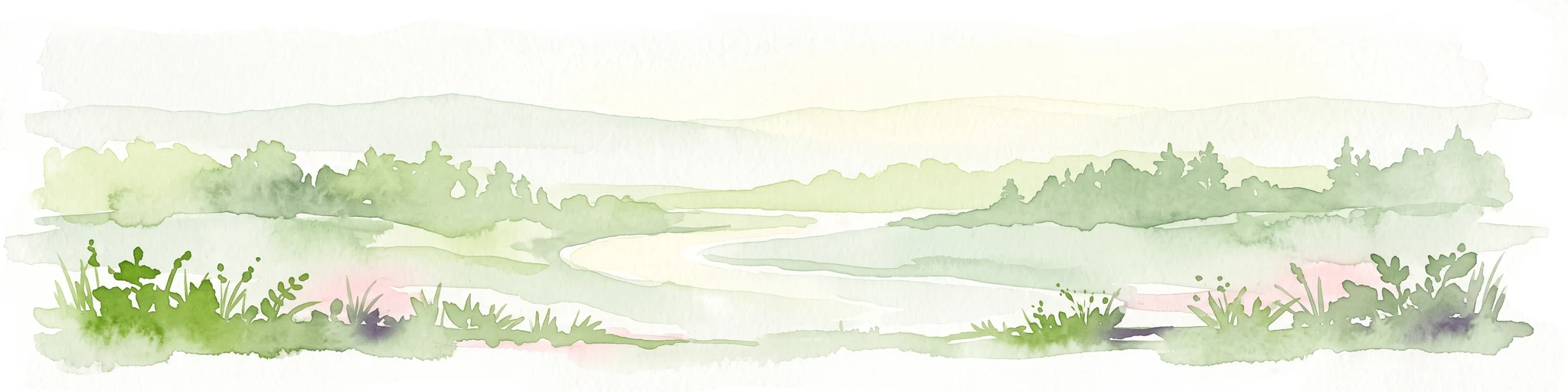
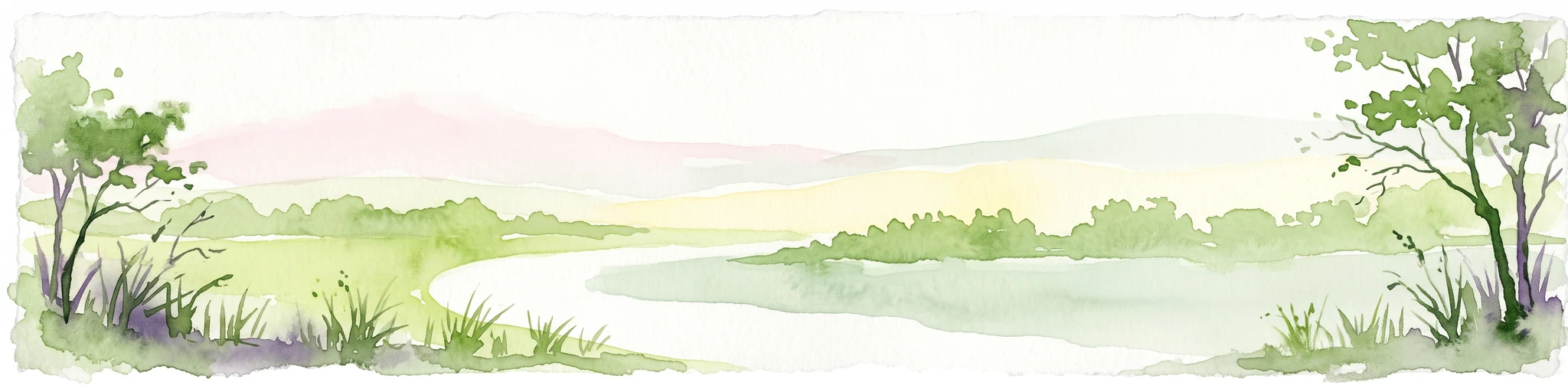
The physical landscape of W National Park is defined by the dramatic curvature of the Niger River, whose W-shaped meander creates a visually striking geographical feature that inspired the park's name. The terrain combines several distinct environments: the river channel and its floodplains form wetlands of international importance, while the broader landscape encompasses savanna plains broken by rocky hills that punctuate the otherwise flat terrain. The Mékrou River delta where it joins the Niger creates an extensive wetland complex that historically rendered the area malarial and largely uninhabited until the mid-20th century. The interplay between permanent water bodies and seasonal flood zones produces a dynamic landscape that shifts between wet and dry season character. Rocky outcrops and elevated terrain provide contrasting habitat for species adapted to drier conditions, creating ecological diversity within the protected area.
W National Park ecosystems, habitats, and plant life
The ecological character of W National Park reflects its position at the transition between Sahelian and Sudanian biomes, creating a diverse mosaic of habitats. The park supports 454 documented plant species, including two orchid species found nowhere else in Niger, highlighting its botanical significance. The southern limit of tiger bush plateaus distribution in Niger falls within the park, representing an important biogeographical boundary. Wetland areas formed by the Niger and Mékrou rivers provide critical habitat for migratory waterbirds and support ecological processes that sustain the broader savanna ecosystem. The combination of permanent water, seasonal flooding, and upland savanna creates ecological diversity that supports the park's remarkable wildlife populations.
W National Park wildlife and species highlights
W National Park harbors impressive populations of large mammals, representing some of West Africa's last remaining wildlife populations outside fenced conservancies. The park provides crucial habitat for African bush elephants, with the Beninese portion particularly significant for elephant conservation. Large predators present include African leopards, the endangered West African lion, and a small population of Northwest African cheetahs estimated at approximately 25 individuals across the broader protected area complex. Other notable species include African buffaloes, hippopotamuses in the river channels, caracals, servals, and warthogs. The park has historical records of West African wild dog packs, though this species may now be locally extinct. Bird diversity is exceptional, with over 350 species recorded, including numerous migratory species that use the park as a seasonal habitat. The area is recognized as an Important Bird Area, supporting both resident and transitory bird populations.
W National Park conservation status and protection priorities
W National Park holds multiple international conservation designations that recognize its outstanding universal value. Its UNESCO World Heritage status since 1996 acknowledges the park as a natural site of significance meeting criteria for natural phenomena, ecosystems, and biodiversity conservation. The park's Ramsar designations across three dates (1987, 1990, and 2007 for the W Complex) recognize its importance as a wetland of international importance, providing critical habitat for waterbirds and supporting ecological processes. The W-Arly-Pendjari Complex, of which W National Park is the central component, forms one of West Africa's most important conservation landscapes. Management by African Parks in the Beninese section brings professional conservation capacity to a portion of the park, while collaborative management across three nations demonstrates transboundary conservation cooperation.
W National Park cultural meaning and human context
The landscape of W National Park carries evidence of significant human historical presence, with archaeological sites including numerous tombs discovered throughout the area suggesting it was once a major zone of human habitation. This historical dimension adds cultural depth to the park's natural values, connecting the present ecological landscape to human history in the region. The park's name itself derives from the French description of the river's shape as a double V, reflecting the colonial linguistic heritage that influenced naming conventions in Francophone West Africa. Traditional land use patterns in the surrounding regions have shaped both human history and the park's conservation trajectory, with the historical avoidance of the malarial wetlands contributing to the area's preservation.
Top sights and standout views in W National Park
W National Park stands as one of Africa's few true transborder national parks, offering visitors and researchers access to a magnificent river landscape where the Niger River creates its distinctive W-shaped bend across three national boundaries. The park provides rare opportunities to observe West African wildlife including elephants, lions, and cheetahs in a relatively intact savanna ecosystem. Its recognition as a UNESCO World Heritage Site and multiple Ramsar designations underscore its international conservation significance. The combination of dramatic river scenery, significant wildlife populations, and transboundary cooperation makes this park a model for regional conservation in West Africa.
Best time to visit W National Park
The optimal time to visit W National Park corresponds with the dry season from November through April, when wildlife viewing opportunities improve as animals concentrate around remaining water sources and vegetation thins. The wet season from May to October transforms the landscape with seasonal flooding and denser vegetation, which while aesthetically striking, can make wildlife observation more challenging. Bird migration patterns mean that the park is particularly rewarding for ornithologists during both the arrival and departure periods of trans-Saharan migrants. Visitors should be aware of the park's transborder nature and check current entry requirements for each country section, as well as any security advisories given recent incidents in the region.