Mori Atlas logo
National parkDeux Balés National Park

Discover mapped boundaries and savanna geography of this vital West African conservation area.

Deux Balés National Park: Burkina Faso's Premier Elephant Sanctuary and Protected Landscape

Deux Balés National Park represents a crucial protected area within Burkina Faso, recognized internationally as a significant stronghold for elephants in West Africa. This national park shelters a substantial population of these endangered animals amidst a unique Sudano-Zambezian savanna landscape. Users can explore the park's geographic context, including its undulating granitic plains, lateritic plateaux, gallery forests along the Black Volta River, and the presence of iconic African baobab trees. Understanding Deux Balés National Park offers insight into regional conservation efforts and the mapped distribution of protected lands in West Africa.

national parkelephant sanctuarysavanna ecosystemgallery forestWest AfricaBurkina Faso

Deux Balés National Park

National park

Park overview

Structured park overview, official facts, and landscape profile for Deux Balés National Park

Deux Balés National Park park facts, protected area profile, and essential visitor context
Review the core facts for Deux Balés National Park, including designation, size, terrain, visitor scale, habitats, and operating context in one park-focused overview.

About Deux Balés National Park

Deux Balés National Park occupies a significant position in Burkina Faso's protected area network as the country's premier location for elephant conservation. The park's 810 square kilometer expanse lies in central eastern Burkina Faso within Mouhoun Province, positioned immediately west of the Black Volta River which forms a natural eastern boundary. The landscape consists of an undulating granitic plain with scattered rock outcrops and lateritic plateaux, typical of the Sudano-Zambezian ecological zone that spans much of West Africa's interior. Elevation ranges from 235 to 310 meters above sea level, creating a relatively flat to gently rolling terrain. The park's conservation significance was recognized early in the 20th century when it was designated as a classified forest in 1937 under French colonial rule, making it one of the oldest protected areas in Burkina Faso. The transition to national park status in 1967 reflected growing post-independence interest in wildlife conservation, though the formal legal framework for the park remains incomplete. The park's location along the Black Volta River provides critical habitat for species requiring water access, while the surrounding savanna supports diverse mammal communities including buffaloes, antelopes, and hippopotamuses.

Quick facts and research context for Deux Balés National Park

Deux Balés National Park spans 810 square kilometers in Mouhoun Province, Burkina Faso, at elevations between 235 and 310 meters above sea level. The protected area lies immediately west of the Black Volta River, which forms its eastern boundary. Originally established as a classified forest in 1937 during the French colonial period, the area received national park designation in 1967 but lacks a formal establishing law. The park supports the largest elephant population in West Africa, with approximately 400 individuals recorded by 2001. Vegetation consists of Sudano-Zambezian savanna with gallery forests along watercourses, and the landscape features granitic plains with lateritic plateau formations.

Park context

Deeper park guide and search-rich context for Deux Balés National Park

Deux Balés National Park history, landscape, wildlife, and travel context
Explore Deux Balés National Park through its history, landscape character, ecosystems, wildlife, conservation priorities, cultural context, and seasonal travel timing in a structured park guide built for atlas discovery and search intent.

Why Deux Balés National Park stands out

Deux Balés National Park is best known as a premier elephant sanctuary in West Africa. The park shelters approximately 400 elephants, representing the largest population of this endangered species in the entire region. This concentration of elephants, combined with the park's status within Burkina Faso's network of protected areas, makes it a critical conservation stronghold for large mammal populations in West Africa. The park's iconic baobab trees, some of which are centuries old, dot the savanna landscape and serve as a distinctive visual特征 of the protected area. The presence of gallery forests along the Black Volta River adds ecological diversity to the predominantly savanna habitat.

Deux Balés National Park history and protected-area timeline

Deux Balés National Park traces its institutional history to the French colonial period in West Africa. In 1937, the area was established as the forêts classées des Deux Balés, or the Deux Balés Classified Forests, covering an initial area of 610 square kilometers within what was then French West Africa. This designation reflected the colonial administration's interest in managing timber resources and controlling land use in environmentally significant areas. Following Burkina Faso's independence in 1960, the newly formed Republic of Upper Volta renamed the protected area as Parc national des Deux Balés in 1967, granting it national park status. However, despite this reclassification, no formal law has ever been enacted to legally establish the park, creating ongoing uncertainty about its protected status. Conservation challenges have persisted throughout the park's history. Poaching activities have threatened wildlife populations, and in 1968 significant reductions in large mammal populations occurred due to culling operations by the veterinary service. By 1989, the International Union for Conservation of Nature had expressed concern about the park's integrity, noting that agricultural and mining activities in the surrounding area conflicted with elephant population conservation. Despite these challenges, by 2001 Burkina Faso held the largest elephant population in West Africa, with Deux Balés and the adjacent Baporo Forest supporting approximately 400 individuals.

Deux Balés National Park landscape and geographic character

The physical landscape of Deux Balés National Park reflects the geology and topography of central eastern Burkina Faso. The park sits within an undulating granitic plain characterized by gentle起伏 that creates a subtly varied terrain across the savanna. Granite outcrops emerge periodically above the general land surface, providing rocky intrusions into the otherwise soft landscape. The lateritic plateaux represent ancient erosion surfaces where iron-rich soils have formed hard caprock that shapes local drainage patterns and vegetation distribution. Elevation ranges narrowly between 235 and 310 meters above sea level, placing the park in a relatively low-lying position within the West African interior. The Black Volta River marks the park's eastern boundary, and its banks support gallery forest vegetation that contrasts sharply with the surrounding savanna. The savanna itself consists of a carpet of grasses punctuated by scattered trees and woodland patches, with the African baobab serving as the most visually distinctive element of the landscape. These ancient trees, with their massive trunks and distinctive silhouettes, have become symbolic of the park's character and are frequently referenced in descriptions of the protected area.

Deux Balés National Park ecosystems, habitats, and plant life

The ecological character of Deux Balés National Park is defined by its position within the Sudano-Zambezian savanna biome, a vegetation zone that covers much of West Africa's interior. The park's vegetation consists primarily of savanna with a continuous ground layer of grasses beneath a scattered tree stratum. Key tree species include Anogeissus leiocarpus, Isoberlinia doka, and Terminalia laxiflora, which form the woodland component of the savanna. Along the Black Volta River, gallery forests develop where moisture availability supports denser tree growth and more complex forest structure. These gallery forests provide habitat for species that require more shaded, humid conditions than the surrounding savanna offers. The Black Volta River itself, with approximately 100 kilometers of its banks protected within the park, represents a critical water source for wildlife and a corridor for species movement. The park's designation as a protected area has helped preserve these habitats despite surrounding agricultural and mining pressures, though the overall diversity of fauna has reportedly declined from historical levels.

Deux Balés National Park wildlife and species highlights

Deux Balés National Park supports a diverse mammal community despite ongoing conservation challenges. The park is most notable for its elephant population, with approximately 400 individuals recorded by the early 2000s, representing the largest concentration of African elephants in West Africa. These elephants rely on the park's savanna habitats and the Black Volta River for water and forage. Other large mammals present include hippopotamuses Hippopotamus amphibius, which utilize the riverine habitats, and African buffaloes Syncerus caffer, which move through the savanna in herds. Various antelope species roam the grasslands and woodland areas, though conservation literature has noted concerns about the long-term survival of these populations without improved management practices. Reptiles including crocodiles are found in the Black Volta River, while the overall faunal diversity has reportedly decreased from historical levels due to poaching and human pressure. The park's significance for large mammals, particularly elephants, remains its primary wildlife value, though the integrity of these populations depends on effective protection and habitat management.

Deux Balés National Park conservation status and protection priorities

Deux Balés National Park holds significant conservation importance as West Africa's premier elephant sanctuary and a critical refuge for large mammals in Burkina Faso. The park's population of approximately 400 elephants represents a substantial portion of West Africa's total elephant numbers, making the protected area essential for regional species conservation. However, the park faces persistent conservation challenges. The lack of formal legal establishment as a national park has created ambiguity about protections and management authority. Poaching activities continue to threaten wildlife populations, and by 1968 significant reductions in large mammal numbers had already occurred. Agricultural expansion and mining activities in the surrounding area create pressure on the park's boundaries and habitat integrity. In 1989, the International Union for Conservation of Nature recommended reviewing the park's legal status in light of these conflicting activities. Gallery forest protection along 100 kilometers of the Black Volta River provides important riparian habitat preservation, while the broader savanna ecosystem requires continued management to maintain the ecological conditions that support the park's wildlife populations.

Deux Balés National Park cultural meaning and human context

Deux Balés National Park exists within a region of Burkina Faso where human communities have traditionally maintained close relationships with the savanna environment. The park's location in Mouhoun Province places it within an area where agricultural communities practice settled farming alongside pastoral activities. The Black Volta River has historically served as both a resource and a boundary for local populations, and the gallery forests along its banks likely hold cultural significance for surrounding communities. The park's establishment as a classified forest in 1937 under French colonial administration introduced formal protected area concepts to the landscape, creating a conservation framework that overlay existing land use patterns. The transition to national park status in 1967 reflected post-colonial national priorities around wildlife protection, though the incomplete legal process has left the park's status ambiguous. Conservation efforts have recognized that effective protection requires addressing the needs and practices of local communities, as noted in discussions about antelope population survival requiring improvements beyond legal protection alone.

Top sights and standout views in Deux Balés National Park

Deux Balés National Park stands as the most important elephant conservation area in West Africa, sheltering approximately 400 individuals representing the largest regional population. The park's ancient baobab trees, some reaching hundreds of years old, create an iconic savanna landscape that defines the protected area's visual identity. Gallery forests extending along 100 kilometers of the Black Volta River provide critical habitat diversity and water access for wildlife. As one of Burkina Faso's oldest protected areas, established in 1937 as classified forests, the park represents decades of conservation legacy in the Sudano-Zambezian savanna zone. The undulating granitic landscape with lateritic plateaux offers a distinctive physical setting that differs from the more mountainous protected areas in the region. The park's conservation challenges, including poaching and incomplete legal status, highlight ongoing tensions between wildlife protection and development pressures in West Africa.

Best time to visit Deux Balés National Park

Visiting Deux Balés National Park is best during the dry season from November to April when wildlife congregates more visibly around water sources and vegetation is less dense, making animal observation easier. The dry months offer clearer landscapes and more accessible trails through the savanna, though temperatures can be warm. The wet season from May to October transforms the landscape with fresh vegetation and migratory bird activity, but some areas may become difficult to access and wildlife more dispersed. The Black Volta River remains a consistent attraction year-round, providing wildlife viewing opportunities regardless of season. Peak elephant activity occurs during the cooler dry months when animals regularly visit the river to drink and bathe.

Park location guide

Geography guide, regional context, and park location map for Deux Balés National Park

Deux Balés National Park park geography, regions, and map view in Burkina Faso
Understand where Deux Balés National Park sits in Burkina Faso through a broader geographic reading of the surrounding landscape, nearby location context, and its mapped position within the national park landscape.

How Deux Balés National Park fits into Burkina Faso

Burkina Faso is a landlocked West African nation. The Mossi people settled the area in the 11th and 13th centuries, establishing kingdoms such as Ouagadougou, Tenkodogo, and Yatenga. The French colonized the region in 1896 as part of French West Africa, and the country gained independence in 1960 as the Republic of Upper Volta before being renamed Burkina Faso in 1984 by President Thomas Sankara.

Wider geography shaping Deux Balés National Park in Burkina Faso

Burkina Faso is a landlocked country in West Africa, bordered by Mali to the northwest, Niger to the northeast, Benin to the southeast, Togo and Ghana to the south, and Ivory Coast to the southwest. The terrain consists primarily of a peneplain with some laterite plateaus in the southeast. The country has several major rivers including the Mouhoun, Nakambe, and Comoé, though most are seasonal.

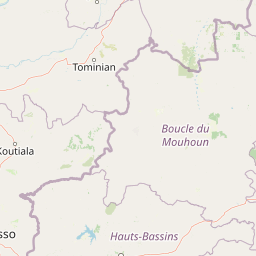
Map view of Deux Balés National Park

Use this park location map to pinpoint Deux Balés National Park in Burkina Faso, understand its exact geographic position, and read its mapped placement within the surrounding landscape more clearly.

Pigeon | © OpenStreetMap contributors

Location context for Deux Balés National Park

Mouhoun Province
Park atlas

Trace West Africa's regional park geography, compare savanna ecosystems, and explore contiguous protected landscapes.

Discover More National Parks and Protected Areas Near Deux Balés National Park
Continue your atlas exploration from Deux Balés National Park to browse other national parks and protected areas across Burkina Faso and the broader West African savanna ecosystems. Compare diverse conservation landscapes, map regional elephant sanctuaries, and trace the spread of unique gallery forests along river systems.
National parkBurkina Faso

Kaboré Tambi National Park: Burkina Faso's Largest National Park and Protected Landscape

Explore the mapped savanna and birdwatching geography of this vital West African area.

Kaboré Tambi National Park represents a critical protected area in Burkina Faso, spanning a considerable expanse of Sudan-Guinea savanna. The park's geography is defined by the Nazinon River and a mosaic of woodland and grassland ecosystems, making it a significant site for understanding regional protected lands and landscape ecology. It offers a valuable point of reference for atlas-based exploration of West African natural areas.

Area
1,555 km²
Established
1976
IUCN
II
Relief
Lowland
National parkSavannah Region

Mole National Park: A Premier Protected Landscape in Ghana's Savannah Region

Explore mapped boundaries and Guinea savannah ecosystems.

Mole National Park represents a significant protected landscape within Ghana's Savannah Region, serving as the country's largest national park and a crucial conservation area for West African wildlife. The park's geography is defined by extensive Guinea savannah, characterized by grasslands with scattered woodlands and a prominent escarpment along its southern edge. Its vast expanse offers a unique opportunity to study mapped park boundaries and understand the ecosystem's role in regional conservation efforts. Discover the unique landscape context and protected area identity of this major West African wildlife refuge.

Area
4,840 km²
Established
1958
IUCN
II
National parkIvory Coast

Comoé National Park: A UNESCO World Heritage Site and Ivory Coast's Largest National Park

Explore its diverse savanna ecosystems and gallery forest geography.

Comoé National Park is a landmark protected area in West Africa, celebrated as the most biodiverse savanna on Earth. Situated across northeastern Ivory Coast, it encompasses a unique geographic gradient from Guinea savanna to Sudanian zones, supporting varied habitats from expansive savannas to dense gallery forests along the Comoé River. Its status as a national park highlights its critical role in wildlife conservation and its significant contribution to the understanding of transitional ecological landscapes.

Area
11,500 km²
Established
1983
IUCN
II
National parkGhana

Bui National Park: Protected Savanna Landscape and Black Volta River Geography in Ghana

Explore the mapped boundaries and unique ecosystems of this national park.

Bui National Park, a protected national park in Ghana, offers a rich geographic discovery of savanna ecosystems bisected by the Black Volta River. Its vast mapped area provides a unique setting for understanding riparian corridors, woodland savanna, and mountainous terrain. The park is critically important for its significant hippopotamus population and its designation as an Important Bird Area, showcasing its ecological value. Exploration of Bui National Park provides insight into Ghana's protected landscapes and their strategic position within West African geography, serving as a key entity for any natural atlas.

Area
1,820 km²
Established
1971
IUCN
II
National parkKara Region

Oti-Kéran National Park: Togo's Vast Protected Savanna Ecosystem and Regional Geography

Explore the mapped terrain and protected landscape of this key national park.

Delve into the geography of Oti-Kéran National Park, Togo's largest national park situated in the Kara Region. This protected savanna landscape, recognized as a Ramsar site, offers insights into its unique sudanian zone terrain, important bird habitats, and its function as a wildlife migration corridor. Understanding its mapped boundaries and ecological significance provides a core piece of the West African protected areas atlas.

Area
690 km²
Established
1950
IUCN
II
Relief
Lowland
National parkBenin

Pendjari National Park: Exploring Benin's Largest Protected Area and Savanna Landscape

Mapped boundaries and regional geography of a key West African wilderness.

Pendjari National Park is the largest protected area in Benin, safeguarding nearly 2,800 square kilometers of essential West African savanna ecosystem. This national park is a crucial element of the WAP Complex, offering a profound look at one of the region's last viable wilderness expanses. Through its mapped terrain, diverse landscapes from river valleys to mountainous cliffs, and its status as a protected landscape, users gain a deep understanding of its geographic significance and conservation value.

Area
2,755 km²
IUCN
II
National parkOti Region

Kyabobo National Park: Ghana's Highland National Park with Mount Dzebobo and Forest-Savanna Transition

Explore mountainous terrain, park boundaries, and regional geography in Oti Region.

Kyabobo National Park is a significant protected landscape in Ghana's Oti Region, celebrated for its mountainous topography and the commanding presence of Mount Dzebobo. This national park, established in 1993, safeguards a critical ecological transition zone featuring diverse habitats from dense forests to open tree savanna. Its unique geography and protected status make it a vital site for understanding regional conservation and atlas-based landscape exploration in West Africa, offering insights into varied terrain and ecosystems.

Area
360 km²
Established
1993
IUCN
II
National parkBono East Region

Digya National Park: Ghana's Oldest National Park, Bordering Lake Volta

Explore its unique geography and mapped protected boundaries.

Digya National Park is a significant protected area in Ghana, renowned as the nation's oldest, established in 1900 and gazetted as a national park in 1971. Occupying 3,743 square kilometers in the Bono East Region, it is distinctively bordered on three sides by the vast Lake Volta, creating an unparalleled terrestrial-aquatic habitat interface. This national park represents a key point in Ghana's geographic atlas, situated in a transitional zone between forest and savanna ecosystems, and is a vital hub for wildlife conservation and the study of its unique landscape character.

Area
3,743 km²
Established
1971
IUCN
II

Common questions about visiting, size, designation, and location context for Deux Balés National Park

Deux Balés National Park FAQs for park facts, access, geography, and protected area context
Find quick answers about Deux Balés National Park, including protected-area facts, park geography, trail and visitor context, and how the park fits into its surrounding country and regional landscape.
MoriAtlas Explorer

Continue Your Protected Areas Search Across the Global Atlas

Deepen your exploration by continuing the structured search for national parks and protected areas worldwide. Utilize the comprehensive filtering capabilities to compare different conservation landscapes and refine your understanding of global park geography. Discover more about the distribution and characteristics of protected natural areas.

Global natural geography