Why Cutervo National Park stands out
Cutervo National Park is best known as Peru's oldest national park and a critical保护区 for Andean biodiversity. It protects the southernmost extent of páramo ecosystems in Peru and preserves old-growth montane forests dominated by Polylepis woodlands and Andean wax palms. The park is famous for its extensive cave systems, particularly the Gruta de los Guácharos (Oilbird Cave), which houses populations of the nocturnal oilbird. It also provides crucial habitat for endangered mammals including the spectacled bear and mountain tapir, and supports remarkable birdlife such as the golden-headed quetzal and Andean cock-of-the-rock.
Cutervo National Park history and protected-area timeline
The history of Cutervo National Park reflects Peru's early commitment to nature conservation in South America. Human occupation of the area dates to the Pre-Columbian era, and archaeological remains within the park, particularly at the El Perolito Archaeological Site, attest to the long human presence in these highlands. The modern conservation movement in the region emerged following the 8th Pan-American Conference held in Lima in 1938, which catalyzed the formation of the National Committee of Nature Protection. The Cultural Federation of Cutervo in Lima subsequently submitted an early proposal for a national park near Cutervo to the Ministry of Agriculture, though this initial effort was not successful. The eventual creation of the park came through the efforts of biologist Salomon Vilchez Murga, who represented the Cajamarca region in congress and championed the protected area concept. Law 13694 establishing Cutervo National Park was passed on September 8, 1961, taking effect twelve days later on September 20, 1961. The original park covered 2,500 hectares. After decades of advocacy for expanded protection, the Peruvian environmental authorities submitted a proposal in 2000 to increase the park's area, resulting in Law 28860, which expanded the park to its current 8,214 hectares on August 3, 2006. The establishment of a buffer zone in 2007 further strengthened the protection framework by addressing pressures from surrounding land uses.
Cutervo National Park landscape and geographic character
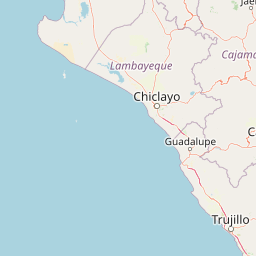
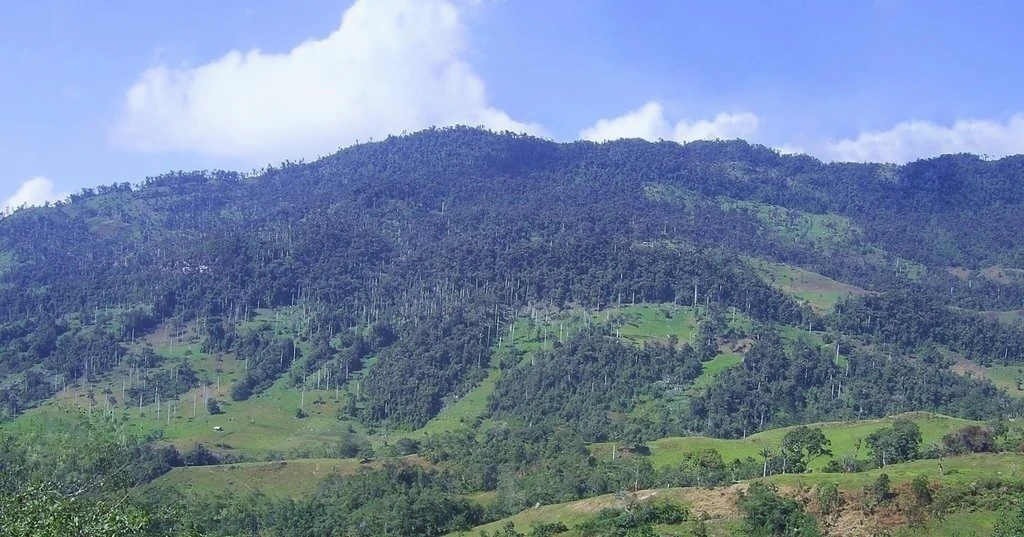
The landscape of Cutervo National Park is defined by its position in the northern Peruvian Andes, where rugged mountain terrain creates a dramatic backdrop of steep ridges, deep ravines, and high-altitude plateaus. The Cordillera de Tarros forms the park's most prominent geographical feature, reaching the highest elevations and serving as the hydrological source for numerous streams that descend through the protected area. Several notable caves punctuate this mountain range, including the Gruta de los Guácharos (Oilbird Cave), Gruta Blanca (White Cave), and Gruta del Murciélago (Bats' Cave), all of which feature impressive stalactite and stalagmite formations. The park's elevation gradient from 1,550 to 3,500 meters creates distinct landscape zones, with cloud-covered forested slopes in the lower reaches giving way to rocky paramo grasslands and small glacial lakes at the highest elevations. The northern sector covers approximately 2,430 hectares while the larger southern sector encompasses nearly 5,785 hectares, together forming a contiguous protected landscape that preserves the ecological integrity of this Andean watershed.
Cutervo National Park ecosystems, habitats, and plant life
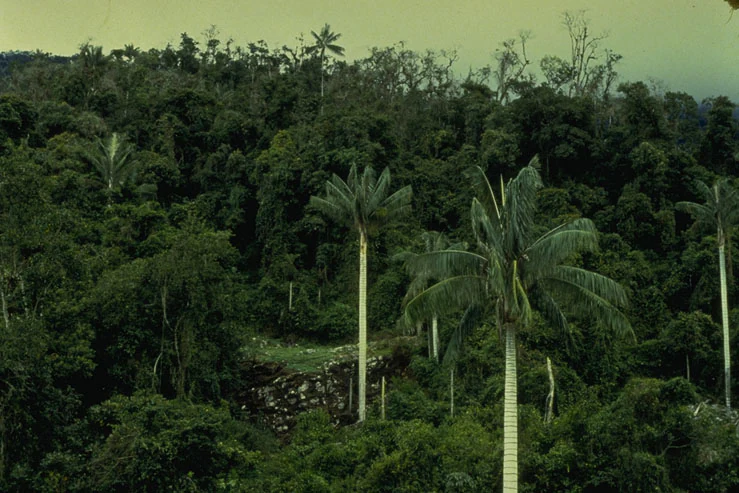
Cutervo National Park protects a significant portion of the Peruvian Yungas ecoregion, one of the most biologically diverse montane forest systems in the world. The park's ecological communities include wet montane forests at lower elevations, transitioning through Polylepis woodlands to high-elevation páramo grasslands above 3,000 meters, interspersed with rivers and small lakes. Over seven hundred species of vascular plants have been recorded within the park, including numerous broadleaved trees such as Chionanthus pubescens, Cornus peruviana, and Vallea stipularis, as well as conifers like Podocarpus oleifolius and the iconic Andean wax palms (Ceroxylon spp.). The park is particularly notable for its orchid diversity, with 88 morphospecies documented. The cloud forest environment, characterized by persistent fog and high humidity, creates ideal conditions for epiphytes, ferns, and moisture-dependent species, making this one of the most botanically rich areas in northern Peru.
Cutervo National Park wildlife and species highlights
The wildlife community of Cutervo National Park includes several mammal species facing extinction risk that find crucial habitat within its protected boundaries. The spectacled bear, South America's only bear species, inhabits the park's montane forests, while the endangered mountain tapir, the largest mammal in the Andes, roams the higher elevation zones. Other notable mammals include the neotropical otter, mountain paca, giant anteater, and the colocolo wild cat (Leopardus colocolo). The park's birdlife is equally remarkable, with the oilbird being a particularly notable resident that roosts in the dark cave systems and feeds on fruit from the palm tree forests. The golden-headed quetzal and Andean cock-of-the-rock represent two of the most visually striking bird species found in the park. Underground streams within the caves harbor a unique species of catfish, Astroblepus rosei, which has adapted to the subterranean aquatic environment. This assemblage of threatened species underscores the park's importance as a conservation refuge in the northern Peruvian Andes.
Cutervo National Park conservation status and protection priorities
Cutervo National Park holds significant conservation value as Peru's oldest national park and a critical protected area within the Andean biodiversity hotspot. Its inclusion in the IUCN Category II classification reflects its primary mandate of protecting natural ecosystems and biodiversity. The park preserves the southernmost extent of páramo ecosystems in Peru, representing a geographically significant boundary for these high-altitude grasslands that are endemic to the northern Andes. The protected area serves essential watershed functions, conserving headwater sources that support downstream communities and agricultural lands in the surrounding regions. The expansion of the park in 2006 and the establishment of the buffer zone in 2007 demonstrate Peru's ongoing commitment to strengthening the protection framework for this important area. However, the park faces ongoing conservation challenges from wood extraction, agricultural expansion, and forest clearing for pastures, as well as social tensions regarding the expanded park boundaries among some local communities.
Cutervo National Park cultural meaning and human context
The Cutervo National Park region has been inhabited since pre-Columbian times, as evidenced by archaeological remains found within the park boundaries, particularly at the El Perolito Archaeological Site. This historical presence indicates that the highland landscape has supported human communities for centuries, with traditional land use practices shaping the relationship between local populations and the mountain environment. The park is located within a network of districts that form part of the Cutervo Province, and the local communities maintain cultural connections to the land that now falls within the protected area. The expansion of the park boundaries in 2006 created some social tensions, as certain local inhabitants have expressed disagreement with the new park limits. Understanding this human dimension is important for effective park management and for developing conservation strategies that respect both ecological integrity and community livelihoods.
Top sights and standout views in Cutervo National Park
Cutervo National Park stands as Peru's pioneering protected area, established in 1961 to preserve the extraordinary biodiversity of the northern Andean highlands. The park's cloud-covered montane forests shelter over 700 plant species, including the iconic Andean wax palms and 88 orchid species, while its caves support colonies of the unusual oilbird. The mountains provide habitat for endangered species including the spectacled bear and mountain tapir, making it one of Peru's most important conservation areas. Visitors can explore three major caves with impressive stalactite formations and underground streams, while the high-elevation páramo zones contain grassland and lakes that complete this diverse mountain landscape. The park's elevation range from 1,550 to 3,500 meters creates a complete vertical gradient of Andean ecosystems within a relatively compact protected area.
Best time to visit Cutervo National Park
The optimal time to visit Cutervo National Park is during the dry season from July to October, when conditions are most favorable for camping and hiking activities. During this period, visitor access is facilitated by reduced precipitation and more stable weather conditions in the highland environment. The park's forests are covered in clouds and fog almost year-round, creating the characteristic cloud forest environment that supports the area's exceptional biodiversity. The wetter months bring higher rainfall, sometimes exceeding 1,500mm annually, which can make trail conditions more challenging but also maintains the lush vegetation that defines the park's character. Temperature variations are significant across the park's elevation range, with warmer conditions in the lower forest zones and cooler temperatures in the páramo areas above 2,500 meters.