Why Gola Rainforest National Park stands out
Gola Rainforest National Park is best known for its exceptional biodiversity within the Upper Guinea Forest ecosystem, hosting significant populations of western chimpanzees, pygmy hippopotamuses, and forest elephants. The park supports over 330 bird species, including 14 threatened species, and more than 650 butterfly species, making it one of the most species-rich protected areas in West Africa. Its designation as an Important Bird Area by BirdLife International reflects the presence of globally significant bird populations. The park also represents a successful model of community-based conservation, with forest-edge communities actively involved in protection and sustainable livelihood improvements since the 1990s.
Gola Rainforest National Park history and protected-area timeline
The Gola forest has experienced a complex history of exploitation and conservation that shaped its current protected status. Between the 1960s and 1980s, over 20,000 hectares of the forest were logged commercially, representing significant habitat loss for its resident wildlife populations. More recently, the forest has faced new pressures from mining activities, particularly diamond and iron ore extraction, which threaten to fragment remaining habitat and disrupt wildlife corridors. Beginning in the 1990s, a collaborative conservation initiative emerged involving the Government of Sierra Leone, the Conservation Society of Sierra Leone, and the Royal Society for the Protection of Birds. This partnership worked to establish long-term protection mechanisms while simultaneously improving livelihoods for communities living adjacent to the forest. The initiative recognized that sustainable conservation required meaningful engagement with local populations whose lives and livelihoods are intertwined with the forest ecosystem. A similar conservation arrangement developed across the border in Liberia's Gola Forest Community, acknowledging that the forest ecosystem and the communities it supports do not respect national boundaries. In December 2010, President Ernest Bai Koroma declared the national park through parliamentary legislation, amalgamating the Gola North, East, and West Forest Reserves into a single protected area. The park was officially opened in December 2011, establishing Sierra Leone's second national park after the country's pioneering designation of the Sierra Leone Peninsula in 1950.
Gola Rainforest National Park landscape and geographic character
The landscape of Gola Rainforest National Park is characterized by lowland tropical rainforest dominating the terrain at elevations ranging from approximately 200 to 600 meters above sea level. The forest exhibits a complex canopy structure with emergents rising above the main canopy, creating multiple vertical strata that support diverse ecological niches. The park lies within the broader Upper Guinea Forest region, which represents the westernmost extension of the African rainforest belt and contains exceptionally high levels of plant endemism. The terrain is generally undulating rather than mountainous, with numerous streams and watercourses draining through the forest, providing critical water resources for both wildlife and adjacent communities. The forest ecosystem includes areas of primary forest that have never been significantly disturbed as well as secondary forest that has regenerated following past logging activities, creating a mosaic of habitat types that support different species assemblages.
Gola Rainforest National Park ecosystems, habitats, and plant life
The ecological significance of Gola Rainforest National Park derives from its position within the Upper Guinea Forest biodiversity hotspot, one of the most important yet threatened forest regions in Africa. The park supports extraordinary biodiversity across multiple taxonomic groups, with biological surveys documenting more than 330 bird species, over 650 butterfly species, and 49 mammal species within its boundaries. This species richness places the park among the most biodiverse protected areas in West Africa. The forest provides critical habitat for species of global conservation concern, including western chimpanzees that maintain viable populations within the park's boundaries. The park's designation as an Important Bird Area by BirdLife International acknowledges its significance for bird conservation, particularly for the 14 bird species categorized as threatened with extinction. The ecosystem functions as a vital refuge for species that have been squeezed out of surrounding areas by agricultural expansion, logging, and mining activities.
Gola Rainforest National Park wildlife and species highlights
Gola Rainforest National Park protects significant populations of Africa's most iconic forest-dwelling species. The park hosts a population of over 300 western chimpanzees, representing one of the largest remaining populations of this endangered subspecies in West Africa. These intelligent primates inhabit the forest canopy and play critical ecological roles as seed dispersers, shaping forest composition and structure through their feeding activities. The park also supports populations of pygmy hippopotamuses, a species that is increasingly rare throughout its range due to habitat loss and hunting pressure. Forest elephants, a smaller and more forest-adapted relative of their savanna counterparts, once ranged throughout the forest in significant numbers but their populations have been much reduced by poaching and habitat fragmentation. The exceptional bird diversity includes numerous species restricted to the Upper Guinea Forest region, many of which are found nowhere else on Earth. The butterfly assemblages include species that serve as indicators of ecosystem health and forest condition.
Gola Rainforest National Park conservation status and protection priorities
Gola Rainforest National Park represents a critical conservation priority at both national and international levels. The park's inclusion in the UNESCO World Heritage List in 2025 as part of the Gola-Tiwai Complex acknowledges its outstanding universal value and the need for enhanced international protection and support. The conservation model implemented at Gola demonstrates the importance of community engagement, recognizing that long-term protection requires addressing the needs and aspirations of people who live adjacent to the forest. The partnership between government agencies, local conservation organizations, and international bodies like the Royal Society for the Protection of Birds has created a framework for sustainable management that can serve as a model for similar initiatives across the region. However, the park faces ongoing challenges from mining interests, logging pressures, and the broader development needs of Sierra Leone, requiring continued vigilance and support to ensure the forest's long-term survival.
Gola Rainforest National Park cultural meaning and human context
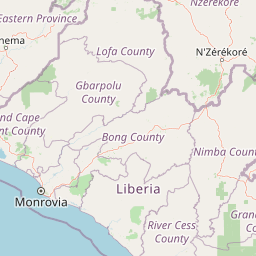
The Gola forest region is home to communities whose cultural practices and livelihoods are deeply intertwined with the forest ecosystem. The conservation initiative has explicitly incorporated community benefit mechanisms, recognizing that sustainable protection cannot be achieved without addressing local needs. The forest-edge communities share cultural connections with populations across the border in Liberia, reflecting the historical movement of people across what is now an international boundary. Similar conservation arrangements on the Liberian side of the forest acknowledge these cultural and ecological connections, creating opportunities for coordinated transboundary management that respects both environmental and human community needs.
Top sights and standout views in Gola Rainforest National Park
The highlights of Gola Rainforest National Park center on its exceptional biodiversity and its role as a refuge for species of global conservation significance. The park protects one of West Africa's largest remaining populations of western chimpanzees, offering opportunities for research and wildlife viewing that few other protected areas can provide. The birdlife is exceptional, with over 330 species including numerous Upper Guinea endemics that cannot be found anywhere else on Earth. The park's recent UNESCO World Heritage Site designation in 2025 cements its international significance and provides enhanced protection mechanisms. The community-based conservation approach represents a model for balancing environmental protection with human development needs. The transboundary connection to Liberia's Gola Forest creates one of the largest contiguous protected forest areas in West Africa.
Best time to visit Gola Rainforest National Park
The optimal time to visit Gola Rainforest National Park falls during the dry season, which typically runs from November to April, when rainfall is reduced and wildlife becomes more concentrated around water sources. During this period, trail conditions are generally better and hiking through the forest is more comfortable. The wet season from May to October brings heavier rainfall that can make some trails difficult and limit accessibility, though the forest becomes exceptionally lush and bird activity can be prolific. Visitors interested in chimpanzee viewing may find the drier months more productive as these primates tend to be more active and visible when water is scarcer. The park's relative newness and developing infrastructure mean that visitors should check current conditions and potentially engage local operators who can provide guidance on the best timing for their specific interests.