Mori Atlas logo
Protected areaNimba National Forest

Discover its mapped boundaries, avian significance, and regional geography at the tri-border area.

Nimba National Forest: Protected Mountain Landscape in Nimba County, Liberia

Nimba National Forest represents a vital protected area situated in Nimba County, Liberia, forming a key ecological component of the Upper Guinea forest zone. This mountainous sanctuary spans approximately 187 square kilometers across its eastern and western sections, encompassing the rugged slopes and terrain of the Nimba Range. As an Important Bird Area, it offers critical habitat for numerous bird species and contributes to the broader conservation landscape at the confluence of Liberia, Guinea, and Ivory Coast.

National ForestProtected AreaImportant Bird AreaMountain ForestWest AfricaNimba Range

Nimba National Forest

Protected area

Park overview

Structured park overview, official facts, and landscape profile for Nimba National Forest

Nimba National Forest park facts, protected area profile, and essential visitor context
Review the core facts for Nimba National Forest, including designation, size, terrain, visitor scale, habitats, and operating context in one park-focused overview.

About Nimba National Forest

Nimba National Forest represents a significant protected forest area in northern Liberia, positioned in the mountainous Nimba Range near the country's border with Guinea and Ivory Coast. The forest covers approximately 187 square kilometers divided between eastern and western sections, encompassing slopes and terrain that form part of a broader mountain system extending across the tri-border region of West Africa. The protected area was established to conserve the forest ecosystems and the biological diversity found within this mountainous landscape. The forest's location at the intersection of three countries gives it regional ecological importance, as it forms part of a contiguous ecological zone that transcends national boundaries. The Nimba Range itself is a notable topographic feature in West Africa, and the forest protection helps preserve watershed functions and habitat connectivity in this portion of the Upper Guinea forest zone. The area has been the focus of conservation interventions aimed at balancing environmental protection with sustainable community use of natural resources.

Quick facts and research context for Nimba National Forest

Nimba National Forest is situated in Nimba County, northern Liberia, occupying a mountainous area near the borders with Guinea and Ivory Coast. The forest is divided into eastern and western sections covering 96 km² and 91 km² respectively. The area is part of the larger Nimba Range, a mountainous region in West Africa. The forest has been designated an Important Bird Area by BirdLife International due to its significant bird populations. Conservation partnerships involving Conservation International Liberia and ArcelorMittal have been established to support biodiversity protection and community-based natural resource management in the region.

Park context

Deeper park guide and search-rich context for Nimba National Forest

Nimba National Forest history, landscape, wildlife, and travel context
Explore Nimba National Forest through its history, landscape character, ecosystems, wildlife, conservation priorities, cultural context, and seasonal travel timing in a structured park guide built for atlas discovery and search intent.

Why Nimba National Forest stands out

Nimba National Forest is best known for its designation as an Important Bird Area by BirdLife International, recognizing its significant populations of bird species. The forest is also recognized for its historical populations of western chimpanzees in the Nimba Range area. The mountain landscape and its position at the tri-border region of Liberia, Guinea, and Ivory Coast give it regional ecological significance. Conservation agreements linked to biodiversity protection and community livelihoods have been established through partnerships involving Conservation International Liberia and the mining company ArcelorMittal.

Nimba National Forest history and protected-area timeline

Nimba National Forest has existed as a designated protected area, though detailed historical information about its establishment and early management is limited in available sources. The forest reserves were affected significantly by Liberia's civil conflicts, particularly the First and Second Liberian Civil Wars that occurred between 1987 and 2003. During this period, the forest areas experienced pressures from factional fighting, resource extraction activities, and displacement of local populations into forested areas. Notably, local communities reported that chimpanzee populations in some forest reserve areas actually increased during the conflict period, possibly due to reduced human activity in remote areas. However, subsequent periods saw significant impacts from post-conflict pressures including renewed resource extraction and settlement expansion. Conservation partnerships have been developed in more recent years, with agreements involving Conservation International Liberia and corporate partners to support biodiversity protection while addressing community livelihood needs.

Nimba National Forest landscape and geographic character

Nimba National Forest is situated within the Nimba Range, a mountainous region in northern Liberia that forms part of the larger West African highland system. The forest encompasses the forested slopes of Mount Nimba and surrounding terrain, with terrain that includes steep slopes, ridges, and valley systems that drain into broader river networks. The landscape is characterized by forest-covered mountainous terrain that transitions from lower elevation forest zones to higher elevation habitats. The forest's position at the tri-border intersection of Liberia, Guinea, and Ivory Coast means it forms part of a contiguous landscape that extends across international boundaries. The eastern and western sections of the forest cover different portions of this mountainous terrain, with the two sections together comprising the protected forest area.

Nimba National Forest ecosystems, habitats, and plant life

Nimba National Forest is recognized as an Important Bird Area by BirdLife International, signifying that the forest supports significant populations of bird species warranting conservation attention. The forest is situated within the broader Nimba Range area, which represents an important ecological zone within the Upper Guinea forest region of West Africa. The forest ecosystems include various habitat types associated with the mountainous terrain, from lower elevation forest zones to higher elevation vegetation communities. The biodiversity significance of the area extends beyond birds to include other taxonomic groups, with the forest historically having supported populations of western chimpanzees. The conservation agreements established in the Nimba Range area have been designed to link biodiversity protection with community livelihoods, recognizing that sustainable conservation requires addressing the needs of local communities who depend on natural resources in and around the protected area.

Nimba National Forest wildlife and species highlights

Nimba National Forest is notable for its bird populations, having been designated an Important Bird Area because it supports significant populations of many bird species. The forest was historically thought to have supported populations of western chimpanzees before and during Liberia's civil conflict period, and local people reported that chimpanzee populations increased in certain forest reserve areas during the war years when human activity was reduced. However, post-conflict periods have seen increased pressures on wildlife from resource extraction and human settlement. The mountainous forest environment provides diverse habitats that support various wildlife species, though detailed species inventories and current population status information is limited in available sources. The broader Nimba Range area is recognized as an important region for biodiversity in West Africa, with the forest protection helping to preserve habitat for both bird and mammal species.

Nimba National Forest conservation status and protection priorities

Nimba National Forest has been recognized as an Important Bird Area by Bird Life International, a designation that highlights its significance for bird conservation at an international level. Conservation agreements in the Nimba Range area have involved partnerships between Conservation International Liberia, the corporate sector through ArcelorMittal, and local communities. These agreements are designed to link biodiversity protection with community livelihood improvement, recognizing that effective conservation requires addressing the socioeconomic needs of local populations. The forest has experienced significant conservation challenges from Liberia's civil conflicts and associated pressures including resource extraction and human displacement. Conservation efforts continue to focus on protecting the forest's biodiversity value while developing sustainable community-based approaches to natural resource management in the broader Nimba Range landscape.

Top sights and standout views in Nimba National Forest

Nimba National Forest stands as a protected mountain forest at the tri-border region of Liberia, Guinea, and Ivory Coast, representing an important ecological node in West Africa's Upper Guinea forest zone. The forest's designation as an Important Bird Area by BirdLife International highlights its international conservation significance for bird species. Conservation partnerships involving Conservation International Liberia and ArcelorMittal have established agreements linking biodiversity protection with community livelihoods in the Nimba Range area. The forest encompasses approximately 187 km² of mountainous terrain divided into eastern and western sections, providing habitat connectivity and watershed protection functions in this border region.

Park location guide

Geography guide, regional context, and park location map for Nimba National Forest

Nimba National Forest park geography, regions, and map view in Liberia
Understand where Nimba National Forest sits in Liberia through a broader geographic reading of the surrounding landscape, nearby location context, and its mapped position within the national park landscape.

How Nimba National Forest fits into Liberia

Liberia is a West African country on the Atlantic coast, bordered by Sierra Leone, Guinea, and Ivory Coast. Founded as an American Colonization Society settlement in 1822, it became Africa's first independent republic in 1847. The country has a population of approximately 5.4 million and uses both the US dollar and Liberian dollar as currency.

Wider geography shaping Nimba National Forest in Liberia

Liberia occupies the West African Atlantic coast, stretching from Sierra Leone in the northwest to Ivory Coast in the east. The country features a coastal plain that rises to a rolling plateau and mountainous regions in the northeast. Several rivers, including the Mano and St. John rivers, flow across the territory. The climate is tropical with distinct wet and dry seasons.

Map view of Nimba National Forest

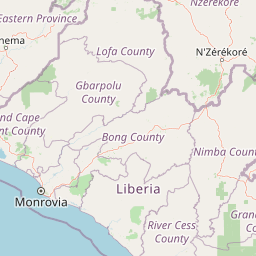
Use this park location map to pinpoint Nimba National Forest in Liberia, understand its exact geographic position, and read its mapped placement within the surrounding landscape more clearly.

Pigeon | © OpenStreetMap contributors

Location context for Nimba National Forest

Nimba County
Park atlas

Explore West African Protected Landscapes and Regional Park Geography Beyond Nimba National Forest's Borders

Discover Other National Parks and Protected Areas Near Nimba National Forest
Continue your exploration from Nimba National Forest to browse other significant national parks and protected areas across Liberia and the broader tri-border region of West Africa. Compare mountain forests, Important Bird Areas, and diverse conservation landscapes, gaining deeper geographic context and understanding the regional spread of protected zones.
Protected areaNimba County

Gibi National Forest: Protected Tropical Forest in Nimba County, Liberia

Mapped landscape and regional geography of this key conservation area.

Gibi National Forest, a protected tropical forest spanning 607 square kilometers in Nimba County, Liberia, plays a crucial role in the preservation of the Upper Guinea forest ecosystem. Established in 1960, its landscape features tropical forest terrain near the mountainous Nimba Range. This protected area contributes significantly to regional conservation strategies, offering a vital habitat within a biodiversity hotspot that faces considerable pressure.

Area
607 km²
Established
1960
IUCN
VI
Climate
Tropical
National parkIvory Coast

Taï National Park: A Primary Rainforest Protected Area in Ivory Coast

Explore mapped boundaries and critical primate habitats in West Africa.

Taï National Park in Ivory Coast stands as a monumental protected landscape, comprising the largest contiguous area of primary rainforest remaining in West Africa. Its designation as a national park highlights its critical role in preserving biodiversity and unique geographic features. Users exploring this destination can delve into its mapped terrain, understand its regional landscape context within Ivory Coast, and appreciate its significance as a vital habitat for endangered species and an integral part of the Upper Guinean forest ecosystem.

Area
3,300 km²
Established
1972
IUCN
II
National parkEastern Province

Gola Rainforest National Park: Sierra Leone's Premier Rainforest Protected Area

Explore mapped boundaries and biodiversity in Eastern Province's vast tropical rainforest.

Gola Rainforest National Park is Sierra Leone's second national park and the largest intact rainforest landscape in the country, located in the Eastern Province. As part of the Upper Guinea Forest biodiversity hotspot, it is renowned for its exceptional wildlife, including western chimpanzees and pygmy hippopotamuses. This protected area's mapped extent covers over 71,000 hectares, contributing significantly to regional conservation and providing a vital natural resource for both wildlife and local communities.

Area
710.7 km²
Established
2010
IUCN
II
Relief
Lowland
National parkFaranah Region

National Park of Upper Niger: Protected Landscape and Geographic Context in Faranah Region

Explore mapped boundaries and regional natural terrain.

National Park of Upper Niger is a key protected area within the Faranah Region of Guinea, providing a focal point for understanding regional geography and conservation landscapes. Its designation as a national park highlights its importance in the mapped atlas of protected territories. This page offers detailed insights into the park's geographic setting and its specific natural terrain, aiding exploration of Guinea's protected lands.

Area
6,000 km²
Established
1997
IUCN
II
Relief
Mixed relief
National parkAbidjan

Banco National Park National Park: Primary Forest Landscape and Abidjan Geography

Explore mapped boundaries and urban conservation.

Banco National Park is a globally significant protected area, uniquely preserving dense primary tropical forest within the urban sprawl of Abidjan, Ivory Coast. This national park offers critical insights into urban conservation, featuring rare tree species and providing essential ecosystem services like water supply and carbon sequestration for the surrounding region. Its landscape, characterized by the Gbangbo River and rare mahogany and avodire trees, forms a vital geographic element within the metropolitan atlas.

Area
30 km²
Established
1953
IUCN
II
National parkIvory Coast

Comoé National Park: A UNESCO World Heritage Site and Ivory Coast's Largest National Park

Explore its diverse savanna ecosystems and gallery forest geography.

Comoé National Park is a landmark protected area in West Africa, celebrated as the most biodiverse savanna on Earth. Situated across northeastern Ivory Coast, it encompasses a unique geographic gradient from Guinea savanna to Sudanian zones, supporting varied habitats from expansive savannas to dense gallery forests along the Comoé River. Its status as a national park highlights its critical role in wildlife conservation and its significant contribution to the understanding of transitional ecological landscapes.

Area
11,500 km²
Established
1983
IUCN
II
National parkWestern North Region

Bia National Park: Ghana's Vital Protected Forest Landscape with West Africa's Tallest Trees

Explore the unique mapped geography and biodiversity of this key conservation area.

Bia National Park serves as a crucial protected landscape in Ghana's Western North Region, celebrated for harboring some of West Africa's tallest trees and a rich diversity of wildlife. This detailed entry provides context on its mapped boundaries and ecological significance as one of the last relatively untouched forest remnants in the region. Understand the park's place within Ghana's geography and its value for conservation research, showcasing its unique transitional forest ecosystem and the documented species it protects.

Area
563 km²
Established
1974
IUCN
II
Climate
Tropical
National parkGhana

Bui National Park: Protected Savanna Landscape and Black Volta River Geography in Ghana

Explore the mapped boundaries and unique ecosystems of this national park.

Bui National Park, a protected national park in Ghana, offers a rich geographic discovery of savanna ecosystems bisected by the Black Volta River. Its vast mapped area provides a unique setting for understanding riparian corridors, woodland savanna, and mountainous terrain. The park is critically important for its significant hippopotamus population and its designation as an Important Bird Area, showcasing its ecological value. Exploration of Bui National Park provides insight into Ghana's protected landscapes and their strategic position within West African geography, serving as a key entity for any natural atlas.

Area
1,820 km²
Established
1971
IUCN
II

Common questions about visiting, size, designation, and location context for Nimba National Forest

Nimba National Forest FAQs for park facts, access, geography, and protected area context
Find quick answers about Nimba National Forest, including protected-area facts, park geography, trail and visitor context, and how the park fits into its surrounding country and regional landscape.
MoriAtlas Explorer

Continue Your Protected Areas Search Across the Global Atlas

Deepen your exploration by continuing the structured search for national parks and protected areas worldwide. Utilize the comprehensive filtering capabilities to compare different conservation landscapes and refine your understanding of global park geography. Discover more about the distribution and characteristics of protected natural areas.

Global natural geography