
Mori Atlas logo
National parkHazarganji-Chiltan National Park

Discover the rugged mapped terrain and unique mountain geography of this vital national park.

Hazarganji-Chiltan National Park: Balochistan's Endemic Wildlife Protected Landscape

Hazarganji-Chiltan National Park, a protected national park in Pakistan's Balochistan region, offers a significant atlas entry for understanding endemic wildlife conservation within a dramatic mountain landscape. This park, spanning approximately 15,555 hectares, is crucial for safeguarding the Chiltan ibex and Sulaiman Markhor. Its varied terrain, from arid desert habitats to higher elevation juniper forests, creates a unique ecological mosaic within the Sulaiman Mountains, providing vital context for its protected area status.

Mountain Protected AreaWildlife ConservationEndemic SpeciesJuniper ForestBalochistanSulaiman Mountains

Hazarganji-Chiltan National Park

National park

Park overview

Structured park overview, official facts, and landscape profile for Hazarganji-Chiltan National Park

Hazarganji-Chiltan National Park park facts, protected area profile, and essential visitor context
Review the core facts for Hazarganji-Chiltan National Park, including designation, size, terrain, visitor scale, habitats, and operating context in one park-focused overview.

About Hazarganji-Chiltan National Park

Hazarganji-Chiltan National Park occupies a distinctive position in Pakistan's protected area network as a mountainous refuge in the arid southwestern region of Balochistan. The park lies between the Chiltan and Hazarganji mountain areas, with the prominent Koh-i-Chiltan peak forming a notable geographic feature near the park's boundary. The landscape combines desert terrain with patches of juniper forest, creating a complex ecological mosaic that supports species adapted to both arid and more mesic conditions. The establishment of the park in 1980 marked an important step in Pakistan's conservation efforts, specifically targeting the protection of the Chiltan ibex population that had faced mounting pressure from hunting and habitat encroachment. The park's location near Quetta places it within reasonable access for research and limited tourism, though the rugged terrain and limited infrastructure ensure relatively low visitor pressure compared to more accessible protected areas. The Balochistan Wildlife Department maintains management authority, working to balance conservation objectives with the needs of local communities who have historically used these mountain areas.

Quick facts and research context for Hazarganji-Chiltan National Park

Hazarganji-Chiltan National Park is located in western Balochistan near Quetta, established in 1980 to protect endangered wildlife including the Chiltan ibex and Sulaiman Markhor. The park covers approximately 15,555 hectares in the Sulaiman Mountains, featuring a mix of desert and forest habitats at elevations ranging from around 1,500 to 2,500 meters. It is managed by the Balochistan Wildlife Department and holds IUCN category II protection status. The park supports 30 mammal species, 120 bird species, and 30 reptile species, making it one of the more biodiverse protected areas in Pakistan's arid western regions.

Park context

Deeper park guide and search-rich context for Hazarganji-Chiltan National Park

Hazarganji-Chiltan National Park history, landscape, wildlife, and travel context
Explore Hazarganji-Chiltan National Park through its history, landscape character, ecosystems, wildlife, conservation priorities, cultural context, and seasonal travel timing in a structured park guide built for atlas discovery and search intent.

Why Hazarganji-Chiltan National Park stands out

Hazarganji-Chiltan National Park is most renowned for its population of the Chiltan ibex, a distinct subspecies of wild goat endemic to this region, and the Sulaiman Markhor, a rare mountain goat species. The park provides critical protected habitat for approximately 800 Chiltan ibex and 300-400 Sulaiman Markhor individuals. These species represent the park's primary conservation significance and draw attention from wildlife researchers and conservationists. The park also protects significant juniper forests and serves as a refuge for predators including the Baluchistan leopard, caracal, and striped hyena, as well as hosting notable bird species such as the Houbara bustard and various raptors including griffon vultures and eagles.

Hazarganji-Chiltan National Park history and protected-area timeline

Hazarganji-Chiltan National Park was established in 1980 through official governmental designation, created specifically to provide formal protected status to the Chiltan ibex population that was experiencing significant conservation pressure. The creation of the park reflected growing recognition in Pakistan during the late 1970s and early 1980s of the need to establish dedicated protected areas for endangered mountain wildlife species. Prior to formal protection, the Chiltan and Hazarganji mountain areas had been subject to hunting pressure that had reduced ibex populations to concerning levels. The park's establishment represented a critical intervention, creating a legal framework for wildlife protection and restricting hunting activities within its boundaries. Management responsibility was assigned to the Balochistan Wildlife Department, which oversees conservation activities and enforcement within the park. The park's cultural history extends far beyond its modern protected status, as the area served as a historic trade and migration route known as Hazarganji, meaning "of a thousand treasures," connecting ancient civilizations and facilitating the movement of various peoples through the Sulaiman Mountains.

Hazarganji-Chiltan National Park landscape and geographic character

The physical landscape of Hazarganji-Chiltan National Park is defined by its position within the Sulaiman Mountains, a major mountain range that forms a natural barrier between the Iranian Plateau and the Indian subcontinent. The terrain is characterized by rugged mountain slopes, rocky outcrops, and steep valleys that create diverse microhabitats throughout the park. Elevations within the park range from around 1,500 meters in the lower valleys to over 2,500 meters on the higher ridgelines, particularly in the western sections where urial populations persist. The park sits between two named geographic features, Chiltan to the west and Hazarganji to the east, with the Koh-i-Chiltan peak rising prominently near the park's boundary. Desert habitats dominate the lower elevations, characterized by sparse vegetation and arid conditions, while juniper forests occur at higher elevations where moisture retention is greater. The combination of desert and forest habitats within a relatively compact mountain area creates an unusual ecological diversity for a protected area in this region.

Hazarganji-Chiltan National Park ecosystems, habitats, and plant life

The ecological character of Hazarganji-Chiltan National Park reflects a blend of arid and semi-forested habitats unusual in Pakistan's protected area system. The juniper forests represent one of the park's most distinctive vegetation types, with Pashtun Juniper (Juniperus macropoda) forming the dominant tree species across higher elevation zones. These juniper stands are interspersed with pistachio, almond, and ash trees, creating a layered forest structure that provides habitat and forage for various wildlife species. The desert and rocky terrain at lower elevations supports a different suite of plant species adapted to aridity, with scattered shrubs and xeric vegetation forming ground cover. The park's biodiversity figures are substantial for an arid-region protected area, with 30 mammal species, 120 bird species, and 30 reptile species documented within boundaries. The elevational gradient from approximately 1,500 to 2,500 meters creates distinct habitat zones that support different species assemblages, from desert-adapted small mammals and reptiles to forest-dwelling species in the juniper zones.

Hazarganji-Chiltan National Park wildlife and species highlights

The wildlife community of Hazarganji-Chiltan National Park is notably diverse for an arid mountain environment, with the park providing crucial habitat for several species of conservation concern. The Chiltan ibex represents the park's flagship species, a distinct subspecies of wild goat endemic to this specific region of Balochistan, with an estimated population of approximately 800 individuals within the park. The Sulaiman Markhor, another distinctive mountain ungulate, maintains a population of roughly 300-400 individuals in the park, making this one of the most important protected areas for this species. Urial sheep persist in smaller numbers on the western slopes between 1,500 and 2,100 meters elevation. The predator community includes the Indian wolf, striped hyena, Baluchistan leopard, and caracal, all of which rely on the park's prey populations. Smaller mammals include the common jackal, Indian crested porcupine, and various rodents. The avifauna is particularly diverse, with 120 species documented including the rare Houbara bustard, griffon vulture, Egyptian vulture, and numerous raptors such as the golden eagle, tawny eagle, and Bonelli's eagle. Raptor species include the laggar falcon, peregrine falcon, and common kestrel, while the park also supports owls, nightjars, and a variety of songbirds.

Hazarganji-Chiltan National Park conservation status and protection priorities

Hazarganji-Chiltan National Park holds significant conservation importance as a protected area for endemic and endangered wildlife species in Pakistan. The park's primary conservation value lies in its role as a stronghold for the Chiltan ibex, a subspecies with a highly restricted range limited to this specific mountain region. Similarly, the Sulaiman Markhor population represents an important segment of the species' total population, as this is one of the few areas where they receive formal protection. The park's IUCN Category II designation reflects its national park status and the formal protection it provides. Management by the Balochistan Wildlife Department includes enforcement against poaching and habitat degradation, though resource constraints typical of Pakistan's protected areas present ongoing challenges. The juniper forest habitats within the park represent another conservation priority, as these forests are limited in extent across the region and provide important ecosystem services.

Hazarganji-Chiltan National Park cultural meaning and human context

The cultural context of Hazarganji-Chiltan National Park is deeply rooted in the historical significance of the Hazarganji route, from which the park takes its name. The name "Hazarganji" translates to "of a thousand treasures" in the local language, reflecting the area's long history as a vital passage through the Sulaiman Mountains. This mountain corridor served as a route for ancient trade and migration, connecting the Greco-Bactrian Kingdom, facilitating Mongol movements, providing passage for Scythian groups, and enabling the migration of Baloch tribes across the region. This rich historical legacy gives the landscape cultural significance beyond its ecological value, as the mountains have supported human movement and settlement for millennia. The park lies within Balochistan Province, home to the Baloch people who maintain traditional connections to the landscape, though the park's protected status limits human settlement within its boundaries.

Top sights and standout views in Hazarganji-Chiltan National Park

Hazarganji-Chiltan National Park stands out as a mountain refuge protecting Pakistan's most significant populations of Chiltan ibex and Sulaiman Markhor, two endemic ungulate species with highly restricted ranges. The juniper forests of the Sulaiman Mountains provide a distinctive forest habitat in an otherwise arid region, supporting a surprising diversity of wildlife including leopards, caracals, and over 100 bird species. The park's location in the historic Hazarganji corridor gives it added cultural significance as an ancient passage for traders and migrating peoples. The combination of desert and forest habitats within a single protected area creates unusual ecological diversity, while the elevation gradient from 1,500 to 2,500 meters supports distinct ecological communities. The park offers opportunities for wildlife viewing focused on the ibex and markhor populations, though access is limited by the rugged terrain and proximity to Quetta.

Best time to visit Hazarganji-Chiltan National Park

The best time to visit Hazarganji-Chiltan National Park would typically be during the cooler months from autumn through early spring, when temperatures in the mountain environment are more comfortable for outdoor activity. Winter months can bring cold temperatures and occasional snow at higher elevations, while summer months can be extremely hot in the lower desert areas. The spring season often brings blooming vegetation and活跃 wildlife activity, making it particularly appealing for nature observation. Visitors should be aware that the park has limited infrastructure and facilities, and access may require coordination with the Balochistan Wildlife Department. The park's proximity to Quetta means that visitors can base themselves in the city while exploring the protected area, though the rugged terrain and limited roads require appropriate vehicles and local knowledge.

Park location guide

Geography guide, regional context, and park location map for Hazarganji-Chiltan National Park

Hazarganji-Chiltan National Park park geography, regions, and map view in Pakistan
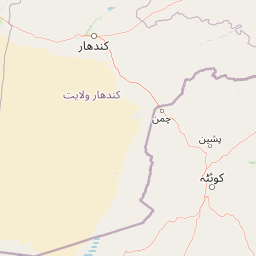
Understand where Hazarganji-Chiltan National Park sits in Pakistan through a broader geographic reading of the surrounding landscape, nearby location context, and its mapped position within the national park landscape.

How Hazarganji-Chiltan National Park fits into Pakistan

Pakistan, officially the Islamic Republic of Pakistan, is a federal parliamentary Islamic republic in South Asia. It is the fifth-most populous country and the 33rd-largest by area. The country gained independence from British India in 1947 and has a diverse history spanning ancient civilizations including Mehrgarh and the Indus Valley Civilisation. Pakistan shares maritime borders with Oman and is bounded by the Arabian Sea, Gulf of Oman, and several neighboring countries.

Wider geography shaping Hazarganji-Chiltan National Park in Pakistan

Pakistan is located in South Asia, bordered by the Arabian Sea to the south, the Gulf of Oman to the southwest, and shares land borders with India to the east, Afghanistan to the west, Iran to the southwest, and China to the northeast. The country also shares a maritime border with Oman in the Gulf of Oman. The Wakhan Corridor in Afghanistan separates Pakistan from Tajikistan in the northwest.

Map view of Hazarganji-Chiltan National Park

Use this park location map to pinpoint Hazarganji-Chiltan National Park in Pakistan, understand its exact geographic position, and read its mapped placement within the surrounding landscape more clearly.

Pigeon | © OpenStreetMap contributors

Location context for Hazarganji-Chiltan National Park

BalochistanMastung District
Park atlas

Trace the regional spread of protected areas and conservation landscapes across Balochistan Province, Pakistan.

Discover Other National Parks and Protected Areas Near Hazarganji-Chiltan National Park
Expand your exploration from Hazarganji-Chiltan National Park by browsing other protected areas within its surrounding mountain ranges and arid ecosystems. Compare the diverse mountain and desert habitats of nearby national parks to understand the broader conservation efforts in Balochistan Province, Pakistan.
National parkBalochistan

Takatu National Park: Balochistan's Mountainous National Park and Protected Landscape

Explore the park's mapped terrain and Sulaiman markhor habitat.

Takatu National Park represents a significant protected landscape in the highlands of Balochistan, Pakistan. Established in 2025, this national park features the dramatic mountainous terrain dominated by Koh-i-Takatu, the region's third-highest peak. The park's boundaries encompass critical habitat for the endangered Sulaiman markhor, contributing to a vital conservation corridor. Its geography offers a distinctive semi-arid mountain character, distinct from other protected areas in Pakistan, making it a notable site for atlas-driven exploration and understanding of regional biodiversity.

Area
135.246 km²
Established
2025
IUCN
II
Relief
Mountain
Protected areaAfghanistan

Ab-i Istada Protected Area: Mapped Wetland Landscape in Afghanistan's Hindu Kush

Explore its unique alkaline geography and bird habitat.

Ab-i Istada is a crucial protected area featuring a large, shallow endorheic salt lake set within a geological depression in Afghanistan's Hindu Kush foothills. This protected landscape is globally recognized for its importance as a stopover for migratory birds. The site's dynamic water levels, alkaline conditions, and surrounding wetlands offer a unique focus for atlas-based geographic exploration and understanding the context of protected areas in Central Asia.

Area
130 km²
Established
1974
IUCN
IV
Relief
Highland
National parkPunjab

Lal Suhanra National Park: Protected Landscape in Punjab, Pakistan with Desert, Forest, and Wetland

Explore the mapped boundaries and unique geography of this national park.

Lal Suhanra National Park, a expansive national park in Pakistan's Punjab province, is distinguished by its extraordinary ecological mosaic. This UNESCO Biosphere Reserve seamlessly integrates desert regions characterized by dynamic sand dunes with areas of dense forest plantations and vital wetland habitats. The park's terrain offers a fascinating study in contrasts, showcasing how diverse ecosystems can coexist and thrive within a protected area, providing rich context for geographic and landscape exploration. Understand its mapped protected area and its significance within the regional geography.

Area
657.91 km²
Established
1972
IUCN
II
National parkBalochistan

Hingol National Park: Pakistan's Unique Protected Landscape and Geological Atlas

Discover dramatic rock formations and coastal geography.

Hingol National Park stands as a monumental protected landscape within Balochistan, Pakistan, offering an unparalleled atlas view of geological diversity. Renowned for its hoodoos like the Princess of Hope and the Balochistan Sphinx, the park also features active mud volcanoes and striking coastal semi-desert terrain. The confluence of the Hingol River with the Arabian Sea creates important wetland habitats. This national park provides a rich context for exploring unique natural formations and regional geography, making it a significant point of discovery within Pakistan's protected areas.

Area
6,100 km²
Established
1988
IUCN
II
National parkRajasthan

Desert National Park: A Sprawling National Park in Rajasthan's Thar Desert

Explore unique desert geography, mapped terrain, and fossil discoveries.

Desert National Park offers an expansive atlas view of the Thar Desert's unique aeolian sand deposits and arid terrain. Covering over 3,100 square kilometers across Rajasthan's Jaisalmer and Barmer districts, this national park is a critical landscape for desert conservation. Its features include iconic sand dunes, rocky formations, and ancient fossil beds, providing a profound geographic context for understanding desert ecosystems and prehistoric life.

Area
3,162 km²
Established
1981
IUCN
II
National parkPunjab

Chinji National Park: National Park Atlas, Salt Range Geography, and Protected Landscape

Discover the unique eroded terrain and semi-arid ecosystems of Punjab, Pakistan.

Chinji National Park is a protected national park located in the Punjab province of Pakistan, specifically within the historic Salt Range. This park is characterized by its deeply eroded terrain, composed of sandstone and igneous rock formations, shaped by seasonal streams that lead towards the Soan River. As a key example of a semi-arid mountain ecosystem within the Baluchistan xeric woodlands ecoregion, Chinji National Park offers significant insights into the geological heritage and unique biodiversity of central Pakistan.

Area
60.95 km²
Established
1987
IUCN
II
National parkJhelum District

Tilla Reserve National Park: Mapped Protected Landscape and Dry Forest Ecosystem

Explore the geography and ancient heritage of this Salt Range national park.

Tilla Reserve National Park is a protected area recognized for its significant dry subtropical forest ecosystems and rich cultural history within Pakistan's Salt Range. Situated in Jhelum District, the park's landscape is characterized by steep, rocky ridges and ancient geological formations. Discover its unique mapped terrain, the distribution of its remnant forest habitats, and its importance as a protected natural and spiritual site.

Area
40.6 km²
Established
2021
IUCN
II
National parkPunjab

Kheri Murat National Park: Protected Scrub Forest and Wildlife Conservation in Punjab

Explore the mapped terrain and protected landscape context.

Discover Kheri Murat National Park, a recent national park designation located in Punjab, Pakistan, situated on the rolling hills of the Kala Chitta Range. This protected area features a distinct subtropical thorn scrub forest ecosystem, providing essential habitat for wildlife, including the Punjab urial, and serving as a critical site for bird conservation. Its unique landscape offers valuable insights into regional geography and the preservation of natural wilderness within a predominantly agricultural province, making it a noteworthy entity for atlas exploration.

Area
35.37 km²
Established
2020
IUCN
II

Common questions about visiting, size, designation, and location context for Hazarganji-Chiltan National Park

Hazarganji-Chiltan National Park FAQs for park facts, access, geography, and protected area context
Find quick answers about Hazarganji-Chiltan National Park, including protected-area facts, park geography, trail and visitor context, and how the park fits into its surrounding country and regional landscape.
MoriAtlas Explorer

Continue Your Protected Areas Search Across the Global Atlas

Deepen your exploration by continuing the structured search for national parks and protected areas worldwide. Utilize the comprehensive filtering capabilities to compare different conservation landscapes and refine your understanding of global park geography. Discover more about the distribution and characteristics of protected natural areas.

Global natural geography