Mori Atlas logo
National parkLal Suhanra National Park

A UNESCO Biosphere Reserve situated in Punjab, Pakistan, offering unique ecological and geographic context.

Lal Suhanra National Park: Pakistan's Diverse Desert, Forest, and Wetland Protected Landscape

Lal Suhanra National Park represents a significant protected landscape in Pakistan's Punjab province, notable for its remarkable synthesis of arid dune environments, irrigated forest plantations, and permanent wetland habitats. Spanning over 127,000 acres, this national park is recognized globally as a UNESCO Biosphere Reserve, underscoring its crucial role in conservation. Its generally flat terrain is punctuated by sand dunes, contrasting with the lush forest belts and water bodies, creating a visually striking and ecologically rich terrain. This page offers a detailed look into the park's mapped boundaries and its unique geographic character for atlas exploration.

National ParkUNESCO Biosphere ReserveDesert LandscapeForest EcosystemWetland HabitatWildlife Conservation

Lal Suhanra National Park

National park

Park overview

Structured park overview, official facts, and landscape profile for Lal Suhanra National Park

Lal Suhanra National Park park facts, protected area profile, and essential visitor context
Review the core facts for Lal Suhanra National Park, including designation, size, terrain, visitor scale, habitats, and operating context in one park-focused overview.

About Lal Suhanra National Park

Lal Suhanra National Park represents one of Pakistan's premier conservation landscapes, combining ecological diversity with historical significance in the heart of Punjab's semi-arid region. The park's location approximately 35 kilometers east of Bahawalpur places it along an ancient river system that once supported the Indus Valley Civilization, leaving behind archaeological treasures within the protected area today. The park occupies land on both sides of the Desert Branch canal, creating an engineered water system that has helped sustain forest plantations and wetland habitats within the broader desert landscape. This combination of natural and semi-natural habitats makes Lal Suhanra ecologically distinctive, supporting species adapted to desert conditions alongside those requiring more verdant environments. The UNESCO Biosphere Reserve designation reflects the park's importance not just as a protected area but as a model of integrated conservation that balances ecological preservation with sustainable use of natural resources. Visitors to the park encounter a landscape of considerable visual variety, from rolling sand dunes to managed forest stands to seasonal lakes and ponds, all within a protected framework that ensures the long-term survival of this unique ecosystem.

Quick facts and research context for Lal Suhanra National Park

Lal Suhanra National Park covers approximately 657.91 square kilometers (127,480 acres) in Punjab, Pakistan, making it one of the country's largest protected areas. The park was established in 1972 and was later designated as a UNESCO Biosphere Reserve, acknowledging its ecological significance. The landscape is divided into three main zones: about 20,974 acres consist of green land with irrigated plantations, 101,726 acres comprise dry desert terrain, and 4,780 acres include wet land with ponds and lakes. The park lies near the historical channel of the ancient Ghaggar-Hakra River, which archaeologists associate with the lost Saraswati River of Vedic tradition. The nearest major city is Bahawalpur, which serves as the primary gateway for visitors to the reserve.

Park context

Deeper park guide and search-rich context for Lal Suhanra National Park

Lal Suhanra National Park history, landscape, wildlife, and travel context
Explore Lal Suhanra National Park through its history, landscape character, ecosystems, wildlife, conservation priorities, cultural context, and seasonal travel timing in a structured park guide built for atlas discovery and search intent.

Why Lal Suhanra National Park stands out

Lal Suhanra is best known for its remarkable ecological diversity, protecting desert, forest, and wetland habitats within a single protected area in Pakistan's Punjab province. The park is particularly significant as one of the country's largest national parks and as a UNESCO Biosphere Reserve, placing it among Pakistan's most important conservation landscapes. The presence of archaeological remains from the ancient Indus Valley Civilization along the former Ghaggar-Hakra River channel adds historical depth to the park's ecological significance. The park supports populations of notable species including the Asiatic wildcat, nilgai, blackbuck, and various desert-adapted reptiles, making it an important stronghold for South Asian desert fauna.

Lal Suhanra National Park history and protected-area timeline

Lal Suhanra National Park was established in 1972 as part of Pakistan's expanding network of protected areas during the country's early national park development program. The park was later recognized for its exceptional ecological value and designated as a UNESCO Biosphere Reserve, joining an international network of sites designated for their significance in conservation and sustainable development. This dual status as both a national park and a biosphere reserve reflects Pakistan's commitment to protecting representative samples of its diverse ecosystems while also maintaining areas where conservation can coexist with limited sustainable use. The park's location in Bahawalpur district places it within a region that has historical connections to the ancient Indus Valley Civilization, which flourished along the Ghaggar-Hakra river system that once flowed through this area. The dried river bed that crosses the park today represents not only an important archaeological resource but also a reminder of the dramatic environmental changes that have shaped this landscape over millennia.

Lal Suhanra National Park landscape and geographic character

The landscape of Lal Suhanra National Park presents a distinctive blend of desert, forest, and wetland environments arranged across generally flat terrain. Sand dunes ranging from 1 to 6 meters in height dominate the desert portions of the park, with some individual dunes occupying thousands of acres. These dunes represent the active sand sheet that characterizes much of the Cholistan desert region adjoining the park. Interspersed among the dunes are areas of irrigated plantation forest where Indian rosewood and Acacia species have been established, creating pockets of green vegetation that starkly contrast with the surrounding desert. The wetland component of the park includes Patisar Lake and numerous smaller ponds and lakes that provide permanent water sources within the otherwise semi-arid landscape. The Desert Branch canal traverses the park, creating artificial water bodies and supporting the irrigated forest plantations that give Lal Suhanra its characteristic synthesized appearance of forest and desert life. The park's position on the ancient floodplain of the Ghaggar-Hakra River, now largely dry, adds geological and archaeological dimension to the physical landscape.

Lal Suhanra National Park ecosystems, habitats, and plant life

The ecological character of Lal Suhanra National Park is defined by the unusual combination of three distinct habitat types within a single protected area. The desert ecosystem occupies the largest portion of the park, characterized by sand dunes, sparse vegetation, and extreme temperature variations between seasons. The forest component consists of irrigated plantations that have been established through human intervention, creating modified habitats that nonetheless support significant biodiversity. Wetland areas centered around Patisar Lake and various ponds provide crucial water resources that sustain aquatic ecosystems and attract wildlife during the dry season. This mosaic of habitats creates ecological niches for species with different requirements, from desert-adapted reptiles to forest-dwelling mammals to waterfowl using the wetland areas. The park's designation as a UNESCO Biosphere Reserve recognizes its role in maintaining ecological processes and biodiversity while also serving as an area where conservation science can be applied and studied.

Lal Suhanra National Park wildlife and species highlights

Lal Suhanra National Park supports a diverse collection of mammal and reptile species adapted to the various habitats found within its boundaries. The mammalian fauna includes the Asiatic wildcat, a elusive predator of the desert and scrub forest habitats, as well as the nilgai, which is the largest antelope in South Asia and present in good numbers throughout the park. Blackbuck, another distinctive antelope species, thrives in the open woodland and grassland areas, while the Indian hog deer occupies the forest edges and wetland margins. The rabbit population provides prey for predators and supports the ecological pyramid within the park. The reptilian fauna is particularly well-represented, with species including the monitor lizard, Russell's viper, Indian cobra, saw-scaled viper, wolf snake, John's sand boa, and spiny-tailed lizard. The wetland areas attract birdlife including bustards, though specific waterbird species are not detailed in available sources. This collection of species reflects the park's importance as a refuge for both desert-adapted fauna and species requiring more vegetated habitats.

Lal Suhanra National Park conservation status and protection priorities

Lal Suhanra National Park holds significant conservation importance as Pakistan's one of largest national parks and a UNESCO-declared Biosphere Reserve. This dual designation places the park within an international conservation framework and commits Pakistan to maintaining the ecological integrity of the area according to UNESCO biosphere reserve principles. The park's diverse ecosystems represent important samples of Punjab's natural heritage, including desert, forest, and wetland environments that would be difficult to protect effectively outside a unified protected area. Conservation efforts within the park include ongoing reforestation with native species such as Indian rosewood and Acacia karroo, with plans to plant over 1,212 acres of barren land to expand the forest habitat. The protection of the ancient Ghaggar-Hakra river bed within the park boundary also preserves potential archaeological resources from the Indus Valley Civilization period. As a biosphere reserve, Lal Suhanra serves as an demonstration area for sustainable development practices that balance human needs with conservation objectives.

Lal Suhanra National Park cultural meaning and human context

The cultural significance of Lal Suhanra National Park extends beyond its ecological value to encompass important archaeological heritage from the Indus Valley Civilization. The dried bed of the Ghaggar-Hakra River that traverses the park is believed to have been one of the major river systems supporting this ancient civilization, which flourished between approximately 2600 and 1900 BCE. Archaeological remains within the park area testify to human occupation and activity along this river system during the height of the Indus Valley period. The Ghaggar-Hakra river is also associated in scholarly circles with the legendary Saraswati River of Vedic tradition, adding religious and cultural significance to the landscape. This archaeological dimension gives Lal Suhanra a unique position among Pakistan's protected areas, combining natural landscape preservation with the protection of tangible cultural heritage from one of the world's earliest urban civilizations.

Top sights and standout views in Lal Suhanra National Park

Lal Suhanra National Park stands out as one of Pakistan's largest and most ecologically diverse protected areas, combining desert, forest, and wetland ecosystems within a single UNESCO-designated Biosphere Reserve. The park's location near the ancient Ghaggar-Hakra River channel provides both archaeological significance, with remains from the Indus Valley Civilization, and ecological variety through its mix of permanent water bodies and arid dune landscapes. The presence of species such as the Asiatic wildcat, nilgai, blackbuck, and diverse reptiles makes it an important conservation area for South Asian fauna. The park's synthesis of managed forest plantations with natural desert and wetland habitats creates a distinctive landscape character that differentiates it from other protected areas in the region.

Best time to visit Lal Suhanra National Park

Lal Suhanra National Park can be visited throughout the year, though the optimal time for most visitors is during the cooler months from October through March when daytime temperatures are more comfortable for outdoor exploration. The summer months from May to September bring intense heat that can make daytime activities challenging, particularly given the desert environment and lack of shaded areas in portions of the park. The winter season offers pleasant weather and is also a good time to observe wildlife as animals are more active during daylight hours in cooler conditions. The wetland areas may be most productive for birdwatching during the winter months when migratory waterfowl are present. Visitors interested in combining wildlife viewing with historical exploration should consider the cooler months when both activities can be comfortably pursued.

Park location guide

Geography guide, regional context, and park location map for Lal Suhanra National Park

Lal Suhanra National Park park geography, regions, and map view in Pakistan
Understand where Lal Suhanra National Park sits in Pakistan through a broader geographic reading of the surrounding landscape, nearby location context, and its mapped position within the national park landscape.

How Lal Suhanra National Park fits into Pakistan

Pakistan, officially the Islamic Republic of Pakistan, is a federal parliamentary Islamic republic in South Asia. It is the fifth-most populous country and the 33rd-largest by area. The country gained independence from British India in 1947 and has a diverse history spanning ancient civilizations including Mehrgarh and the Indus Valley Civilisation. Pakistan shares maritime borders with Oman and is bounded by the Arabian Sea, Gulf of Oman, and several neighboring countries.

Wider geography shaping Lal Suhanra National Park in Pakistan

Pakistan is located in South Asia, bordered by the Arabian Sea to the south, the Gulf of Oman to the southwest, and shares land borders with India to the east, Afghanistan to the west, Iran to the southwest, and China to the northeast. The country also shares a maritime border with Oman in the Gulf of Oman. The Wakhan Corridor in Afghanistan separates Pakistan from Tajikistan in the northwest.

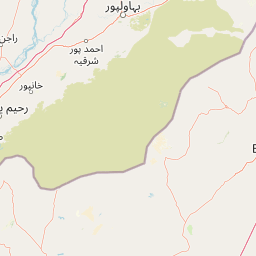
Map view of Lal Suhanra National Park

Use this park location map to pinpoint Lal Suhanra National Park in Pakistan, understand its exact geographic position, and read its mapped placement within the surrounding landscape more clearly.

Pigeon | © OpenStreetMap contributors

Location context for Lal Suhanra National Park

Punjab
Park atlas

Discover additional protected landscapes in Pakistan, comparing regional geography and diverse ecosystems adjacent to Lal Suhanra.

Explore Other National Parks and Protected Areas Near Lal Suhanra National Park
Continue your protected area discovery from Lal Suhanra National Park by mapping other national parks and conservation landscapes across Pakistan, focusing on similar desert, forest, and wetland environments. Gain comprehensive regional context and compare the unique ecological mosaics of Pakistan's protected areas for deeper geographic understanding.
National parkRajasthan

Desert National Park: A Sprawling National Park in Rajasthan's Thar Desert

Explore unique desert geography, mapped terrain, and fossil discoveries.

Desert National Park offers an expansive atlas view of the Thar Desert's unique aeolian sand deposits and arid terrain. Covering over 3,100 square kilometers across Rajasthan's Jaisalmer and Barmer districts, this national park is a critical landscape for desert conservation. Its features include iconic sand dunes, rocky formations, and ancient fossil beds, providing a profound geographic context for understanding desert ecosystems and prehistoric life.

Area
3,162 km²
Established
1981
IUCN
II
National parkJhelum District

Tilla Reserve National Park: Mapped Protected Landscape and Dry Forest Ecosystem

Explore the geography and ancient heritage of this Salt Range national park.

Tilla Reserve National Park is a protected area recognized for its significant dry subtropical forest ecosystems and rich cultural history within Pakistan's Salt Range. Situated in Jhelum District, the park's landscape is characterized by steep, rocky ridges and ancient geological formations. Discover its unique mapped terrain, the distribution of its remnant forest habitats, and its importance as a protected natural and spiritual site.

Area
40.6 km²
Established
2021
IUCN
II
National parkPunjab

Chinji National Park: National Park Atlas, Salt Range Geography, and Protected Landscape

Discover the unique eroded terrain and semi-arid ecosystems of Punjab, Pakistan.

Chinji National Park is a protected national park located in the Punjab province of Pakistan, specifically within the historic Salt Range. This park is characterized by its deeply eroded terrain, composed of sandstone and igneous rock formations, shaped by seasonal streams that lead towards the Soan River. As a key example of a semi-arid mountain ecosystem within the Baluchistan xeric woodlands ecoregion, Chinji National Park offers significant insights into the geological heritage and unique biodiversity of central Pakistan.

Area
60.95 km²
Established
1987
IUCN
II
National parkPunjab

Pabbi and Rasul Reserve Forest National Park: Punjab's Protected Landscape and Regional Geography

Subtropical thorn scrub, undulating hills, and wetland habitats.

Pabbi and Rasul Reserve Forest National Park, situated in Punjab, Pakistan, is a significant protected area renowned for its subtropical thorn scrub vegetation and its role in conserving the Pothohar Plateau's biodiversity. The park's landscape features a diverse mosaic of undulating hills, scrub-covered ridges, grasslands, and wetlands, situated within the dry tropical environments characteristic of northern Punjab. Its recent designation as a national park highlights its importance for regional conservation efforts, offering a unique glimpse into the mapped geography and protected natural landscapes of the region.

Area
147.2 km²
Established
2023
IUCN
II
National parkPakistan

Deva Vatala National Park: Pakistan's Protected Tropical Thorn Forest Landscape

Explore mapped boundaries and regional geography within the Lower Himalayan foothills.

Deva Vatala National Park is a significant protected area located in Pakistan's Lower Himalayan Range, notable for its unique tropical thorn forest ecosystem. Occupying hilly terrain with elevations up to 1,101 meters, the park's landscape is defined by semiarid conditions and acacia-dominated vegetation, creating an unusual ecological interface. Its mapped boundaries encompass lake systems and diverse habitats, making it a critical conservation site within South Asia, distinct from typical Himalayan protected areas.

Area
70 km²
Established
1998
IUCN
II
National parkPunjab

Kheri Murat National Park: Protected Scrub Forest and Wildlife Conservation in Punjab

Explore the mapped terrain and protected landscape context.

Discover Kheri Murat National Park, a recent national park designation located in Punjab, Pakistan, situated on the rolling hills of the Kala Chitta Range. This protected area features a distinct subtropical thorn scrub forest ecosystem, providing essential habitat for wildlife, including the Punjab urial, and serving as a critical site for bird conservation. Its unique landscape offers valuable insights into regional geography and the preservation of natural wilderness within a predominantly agricultural province, making it a noteworthy entity for atlas exploration.

Area
35.37 km²
Established
2020
IUCN
II
National parkBalochistan

Takatu National Park: Balochistan's Mountainous National Park and Protected Landscape

Explore the park's mapped terrain and Sulaiman markhor habitat.

Takatu National Park represents a significant protected landscape in the highlands of Balochistan, Pakistan. Established in 2025, this national park features the dramatic mountainous terrain dominated by Koh-i-Takatu, the region's third-highest peak. The park's boundaries encompass critical habitat for the endangered Sulaiman markhor, contributing to a vital conservation corridor. Its geography offers a distinctive semi-arid mountain character, distinct from other protected areas in Pakistan, making it a notable site for atlas-driven exploration and understanding of regional biodiversity.

Area
135.246 km²
Established
2025
IUCN
II
Relief
Mountain
National parkAzad Jammu and Kashmir

Pir Lasura National Park: Pakistan National Park with Subtropical Pine Forest Landscape

Explore the mapped boundaries and geography of this unique Azad Jammu and Kashmir protected area.

Pir Lasura National Park in Azad Jammu and Kashmir, Pakistan, is a critical national park encompassing approximately 15.8 square kilometers of subtropical chir pine forest and scrub vegetation. Located in the Pir Lasura mountain range, it features a varied terrain with elevations ranging from 1,000 to 2,000 meters, contributing to its unique ecosystem at the transitional zone between major geographic regions. This page offers a detailed atlas-style exploration of the park's mapped features, its importance as a protected landscape, and its role in supporting diverse wildlife including significant vulture roosting sites and common leopard habitats.

Area
15.8 km²
Established
2005
IUCN
II

Common questions about visiting, size, designation, and location context for Lal Suhanra National Park

Lal Suhanra National Park FAQs for park facts, access, geography, and protected area context
Find quick answers about Lal Suhanra National Park, including protected-area facts, park geography, trail and visitor context, and how the park fits into its surrounding country and regional landscape.
MoriAtlas Explorer

Continue Your Protected Areas Search Across the Global Atlas

Deepen your exploration by continuing the structured search for national parks and protected areas worldwide. Utilize the comprehensive filtering capabilities to compare different conservation landscapes and refine your understanding of global park geography. Discover more about the distribution and characteristics of protected natural areas.

Global natural geography