Why Chinji National Park stands out
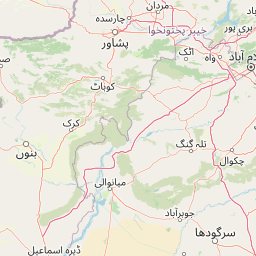
Chinji National Park is best known for its location in the historic Salt Range, a region of significant geological importance in central Pakistan. The park protects a semi-arid mountain ecosystem characterized by eroded sandstone and igneous terrain with visible rock salt deposits. It represents one of the few protected areas preserving the Baluchistan xeric woodlands ecoregion, hosting populations of notable species including the Punjab urial, Indian wolf, Bengal fox, and Indian pangolin. The park's position along the Soan River corridor and its proximity to Islamabad make it an accessible conservation area for understanding the ecological transition between Punjab's plains and the mountainous northern regions.
Chinji National Park history and protected-area timeline
Chinji National Park was established in 1987 as part of Pakistan's expanding network of protected areas during the late twentieth century. The creation of the park reflected growing recognition of the ecological significance of the Salt Range region, which had historically been valued primarily for its mineral resources rather than its biodiversity. The selection of the Chinji area for protection acknowledged both the unique geological character of the terrain and the wildlife populations that had persisted despite human activity in the surrounding landscape. The park was designated under IUCN Category II, recognizing its primary purpose as national park protection rather than strict nature reserve management. Management responsibility was assigned to the Wildlife and Parks Department of the Government of Punjab, which continues to oversee conservation activities, boundary enforcement, and visitor management. The establishment period coincided with broader environmental policy developments in Pakistan, including the formulation of national conservation strategies and increased attention to protected area expansion. While the park does not carry the historical significance of some older protected areas in Pakistan, its creation represents a specific institutional response to the ecological values of this particular geographic region.
Chinji National Park landscape and geographic character
The landscape of Chinji National Park is defined by its location within the Salt Range, a prominent geological formation that extends across central Punjab and contains significant deposits of rock salt and other minerals. The terrain consists of deeply eroded landforms where weathering has created a complex pattern of ridges, ravines, and seasonal drainage channels. The underlying geology transitions from sedimentary sandstone to igneous rock formations, with small deposits of rock salt visible in certain areas, reflecting the region's name and historical significance as a source of salt extraction. The topography slopes downward toward the Soan River, which passes through the park and serves as the primary drainage outlet for the surrounding catchment area. Deep torrential streams have carved ravines into the landscape, creating seasonal watercourses that carry monsoon rainfall and spring snowmelt from higher elevations. The combination of semi-arid climate, eroded terrain, and the presence of the Soan River has produced a landscape of considerable visual and geological interest, characterized by barren slopes, scattered vegetation in drainage corridors, and the distinctive pale coloration of salt-affected soils.
Chinji National Park ecosystems, habitats, and plant life
The natural environment of Chinji National Park represents the Baluchistan xeric woodlands ecoregion, a biome characterized by desert and xeric shrubland conditions. The park supports subtropical vegetation adapted to the region's semi-arid climate, with plant species that can withstand extended dry periods and seasonal moisture variation. The average annual rainfall of 537 millimeters, with over half falling during the monsoon season from July to September, creates pronounced wet and dry seasons that shape vegetation patterns. Maximum temperatures reach 27°C in June while minimum temperatures drop to 2.2°C in January, with frost being common during the winter months. The humidity can reach 80% during the monsoon period, providing temporary relief to the generally xeric conditions. This ecological setting produces a vegetation community dominated by drought-resistant shrubs and small trees, with more dense vegetation concentrated along drainage corridors and near water sources. The park's position within a transitional zone between different ecological regions contributes to its botanical diversity, as species from both desert and more temperate environments can be found within its boundaries.
Chinji National Park wildlife and species highlights
Chinji National Park supports a diverse collection of wildlife species adapted to the semi-arid conditions of the Salt Range region. The mammal population includes several species of conservation interest, most notably the Punjab urial, a subspecies of the urial sheep that is native to the northwestern regions of the Indian subcontinent. Predators present in the park include the Indian wolf, Bengal fox, and golden jackal, which prey on the various small mammals and ungulates found in the area. The Indian pangolin, a scaly anteater species, is among the notable mammals recorded within the park boundaries. The small mammal community includes Brandt's hedgehog, Indian long-eared hedgehog, Asian house shrew, Indian bush rat, and various other species. The bird community is particularly diverse, with game birds such as the grey francolin and chukar partridge being characteristic species. Raptors including black-winged kite and black kite are regularly observed, while water-associated species such as black-winged stilt, Eurasian teal, and common pochard utilize seasonal water bodies. The reptile community includes the Bengal monitor, yellow-belly gecko, and oriental garden lizard, representing the reptilian fauna adapted to the region's warm climate.
Chinji National Park conservation status and protection priorities
Chinji National Park serves as an important conservation unit within Pakistan's protected area network, preserving a sample of the Baluchistan xeric woodlands ecoregion that would otherwise face significant pressure from human development. The park's designation as IUCN Category II reflects its primary function of protecting natural ecosystems while allowing for limited sustainable use. The Salt Range region has experienced historical human activity through salt mining and agricultural expansion, making protected status essential for maintaining ecological processes and wildlife populations. The park provides critical habitat for the Punjab urial, a subspecies of conservation concern, as well as for the Indian wolf and Indian pangolin, both of which face population pressures across their ranges. The protection of the Soan River corridor within the park boundaries contributes to broader watershed conservation in the region. The modest visitor numbers of 2,000 to 5,000 annually indicate a management approach that prioritizes conservation outcomes over tourism development, allowing the ecosystem to maintain relatively natural processes while providing educational opportunities for visitors interested in understanding this distinctive environmental setting.
Chinji National Park cultural meaning and human context
Chinji National Park exists within a cultural landscape shaped by the historical significance of the Salt Range, which has been an important source of rock salt for centuries and gave the region its name. The town of Chinji, located near the park boundary, serves as a local center for the surrounding agricultural community. The broader District Talagang has been inhabited for centuries, with traditional land use patterns that included pastoral activities and small-scale agriculture. The establishment of the park in 1987 created a new institutional presence in the landscape, introducing conservation management alongside existing human activities. The Salt Range holds historical importance beyond its mineral resources, as the area has been traversed by travelers and traders moving between the Punjab plains and the mountainous territories to the north. While the park itself does not contain designated cultural heritage sites of major significance, the surrounding landscape carries the imprint of human activity extending back through multiple generations of local communities.
Top sights and standout views in Chinji National Park
Chinji National Park offers visitors the opportunity to experience the distinctive semi-mountainous terrain of the Salt Range, with its eroded sandstone formations and visible rock salt deposits creating a landscape unlike the more commonly visited mountainous parks of northern Pakistan. The park provides accessible wildlife observation opportunities, with species such as Punjab urial, Indian wolf, and various small mammals being potentially observable during careful exploration. The Soan River corridor adds hydrological and ecological interest to the park, particularly during the monsoon season when water flows through the drainage channels. The park's proximity to Islamabad makes it a feasible destination for day trips or short excursions, while the modest visitor pressure ensures that the natural environment remains relatively undisturbed. The combination of geological features, wildlife populations, and the semi-arid ecological character makes Chinji a useful park for understanding the environmental diversity of Punjab province beyond its famous agricultural plains.
Best time to visit Chinji National Park
The optimal time to visit Chinji National Park depends on visitor preferences, with different seasons offering distinct experiences. The winter months from November through February provide comfortable temperatures for exploration, though nighttime temperatures can drop significantly and frost is common. This period offers the advantage of clear skies and the opportunity to observe wildlife at water sources when natural water availability is reduced elsewhere. The pre-monsoon spring season from March through May sees warming temperatures but maintains relatively dry conditions, making it suitable for hiking and landscape observation. The monsoon season from July to September brings increased rainfall, transforming the drainage channels and producing seasonal waterfalls and pools, though high humidity and sudden downpours can complicate travel. The park can be visited year-round, though the extreme summer heat in June, when temperatures reach 27°C, may be uncomfortable for extended outdoor activities. Visitors interested in wildlife observation should consider the dry season when animals concentrate near water sources, while those interested in landscape photography may find the post-monsoon period particularly rewarding as vegetation greens the terrain.