

Mori Atlas logo
National parkPoonch River Mahaseer National Park

Mapping the critical river corridor and freshwater biodiversity of Azad Jammu and Kashmir.

Poonch River Mahaseer National Park: Pakistan's Pioneering Aquatic Protected Area

Poonch River Mahaseer National Park represents a unique conservation effort, established in 2010 along the Poonch River in Azad Jammu and Kashmir, Pakistan. This aquatic protected area focuses on safeguarding the river's ecosystem and its vital role as the last refuge for the endangered golden mahseer (Tor putitora) in the country. Its mapped boundaries extend along the river from near the Line of Control to the Mangla Reservoir, preserving essential breeding grounds and the overall freshwater biodiversity within this significant South Asian river corridor.

aquatic protected areariverine conservationgolden mahseerendangered fishAzad Jammu and Kashmirriver corridor

Poonch River Mahaseer National Park

National park

Park overview

Structured park overview, official facts, and landscape profile for Poonch River Mahaseer National Park

Poonch River Mahaseer National Park park facts, protected area profile, and essential visitor context
Review the core facts for Poonch River Mahaseer National Park, including designation, size, terrain, visitor scale, habitats, and operating context in one park-focused overview.

About Poonch River Mahaseer National Park

Poonch River Mahaseer National Park occupies a unique position in Pakistan's protected area network as the nation's first dedicated aquatic or riverine conservation area. The park follows the Poonch River corridor through the mountainous terrain of Azad Jammu and Kashmir, extending from areas near the Line of Control that divides the region from Indian-administered Kashmir down to where the river empties into the Mangla Reservoir. This river corridor supports a rich freshwater ecosystem that has been under increasing pressure from development, pollution, and overfishing, making the protected area designation particularly important for long-term conservation. The selection of the golden mahseer as the park's flagship species reflects both the ecological importance of this large cyprinid fish and its endangered status across its historic range in South Asian rivers. Beyond the main river channel, the park includes several tributary nullahs—including the Ban, Rangar, Nehl, and Hajeera streams—that function as essential breeding and nursery habitats for mahseer and other native cyprinid species. The park's boundary encompasses the riverbed and its immediate corridor, creating a protected aquatic highway that allows migratory fish movements and maintains ecological connectivity throughout the river system.

Quick facts and research context for Poonch River Mahaseer National Park

The park is located in northeastern Pakistan within Azad Jammu and Kashmir, following the Poonch River for roughly 5 kilometers in linear extent. Established in December 2010 through notification by the AJK Wildlife and Fisheries Department, it falls under IUCN Category II (national park) protection. The river system supports at least 37 fish species, with the golden mahseer serving as the flagship conservation target. The park is administered by the Azad Jammu and Kashmir Department of Wildlife and Fisheries, which has required that hydropower projects in the corridor demonstrate measurable net gains for biodiversity since 2014.

Park context

Deeper park guide and search-rich context for Poonch River Mahaseer National Park

Poonch River Mahaseer National Park history, landscape, wildlife, and travel context
Explore Poonch River Mahaseer National Park through its history, landscape character, ecosystems, wildlife, conservation priorities, cultural context, and seasonal travel timing in a structured park guide built for atlas discovery and search intent.

Why Poonch River Mahaseer National Park stands out

Poonch River Mahaseer National Park is best known as Pakistan's pioneering aquatic protected area, established specifically to protect the endangered golden mahseer (Tor putitora). The park represents a model for river-corridor conservation centered on an endangered flagship fish species. The Poonch River serves as the last refuge for Tor putitora in Pakistan, with active breeding occurring in the upper and middle reaches of the river within the park boundaries. The protected area also conserves the broader freshwater fish biodiversity of the river system, including commercially and conservation-significant cyprinids and other native fish species.

Poonch River Mahaseer National Park history and protected-area timeline

Poonch River Mahaseer National Park was formally designated on December 15, 2010, through an official notification issued by the AJK Wildlife and Fisheries Department (Reference SF/AV 11358-7/2010). The designation followed growing concern about the decline of mahseer populations in Pakistani rivers and recognition that the Poonch River still maintained a viable breeding population of the golden mahseer. Unlike traditional terrestrial national parks that protect land-based ecosystems, this protected area was specifically designed as an aquatic preserve, covering the river channel and its associated habitats rather than surrounding terrestrial terrain. The establishment of the park represented a new approach to conservation planning in Pakistan, focusing on protecting river ecosystems and the species that depend on them. Since its creation, the park has become a reference point for similar conservation initiatives in the region, demonstrating how river corridors can be effectively protected through dedicated protected area status.

Poonch River Mahaseer National Park landscape and geographic character

The Poonch River Mahaseer National Park encompasses the aquatic landscape of the Poonch River as it flows through the foothills and valleys of Azad Jammu and Kashmir. The river originates in the mountainous regions near the Line of Control and descends through a varying landscape of hills, plains, and agricultural areas before reaching the Mangla Reservoir, one of Pakistan's major water storage facilities. Within the park boundaries, the river follows a natural course with varying widths, depths, and flow characteristics that create diverse aquatic habitats. The tributary nullahs that feed into the main river—including Ban, Rangar, Nehl, and Hajeera—contribute additional aquatic habitat diversity and serve as important seasonal breeding areas for fish. The river corridor is flanked by varying terrain, from steeper mountainous sections in the upper reaches to more gentle gradients downstream, all of which influence the character of the aquatic environment within the protected area.

Poonch River Mahaseer National Park ecosystems, habitats, and plant life

The Poonch River system within the park supports a diverse freshwater ecosystem with at least 37 documented fish species. The river is particularly significant as a remaining stronghold for the golden mahseer (Tor putitora), a large cyprinid fish that has suffered population declines across much of its historic range in South Asia. The upper and middle reaches of the river within the park serve as active breeding grounds for mahseer, making the protected area critical for maintaining viable populations of this species. The tributary nullahs function as nursery areas where juvenile fish can develop in relatively protected conditions before moving into the main river. Beyond mahseer, the river supports numerous other cyprinid species and freshwater fish of conservation and commercial importance, making the entire ecosystem a valuable biodiversity asset for Pakistan.

Poonch River Mahaseer National Park wildlife and species highlights

The aquatic wildlife of Poonch River Mahaseer National Park centers on its fish populations, with the golden mahseer (Tor putitora) serving as the flagship species. This large cyprinid can reach significant sizes and was once widespread throughout major river systems of South Asia, but populations have declined dramatically due to habitat degradation, dam construction, overfishing, and pollution. The Poonch River represents one of the last remaining strongholds for this species in Pakistan, with breeding populations persisting in the protected river corridor. The fish community includes at least 37 species, with various cyprinids comprising the dominant group. Native fish species of conservation and commercial significance inhabit the river, contributing to both ecological integrity and local livelihoods dependent on fishing.

Poonch River Mahaseer National Park conservation status and protection priorities

Poonch River Mahaseer National Park represents a significant conservation initiative as Pakistan's first dedicated aquatic protected area. The park's establishment acknowledged that river ecosystems require specific protection approaches distinct from those used for terrestrial environments. Conservation of the golden mahseer is the central focus, with the species listed as endangered due to severe population declines across its range. The protected status of the river corridor helps maintain essential breeding and migratory habitats that mahseer populations need to sustain themselves. The AJK Department of Wildlife and Fisheries has implemented requirements that hydropower development in the corridor must demonstrate measurable net gains for biodiversity, a forward-thinking approach that acknowledges the cumulative impacts of infrastructure on river ecosystems. Organizations including the Himalayan Wildlife Foundation and WWF-Pakistan have supported baseline surveys and public awareness efforts related to mahseer conservation within the park.

Poonch River Mahaseer National Park cultural meaning and human context

The Poonch River flows through a region with significant historical and cultural ties to the broader Kashmir area. The river and its resources have supported local communities for generations, with fishing providing livelihoods for some residents along its course. The establishment of the protected area occurs within the context of Azad Jammu and Kashmir, a region with its own distinct administrative identity within Pakistan. While the park is primarily focused on aquatic conservation, the river corridor remains connected to surrounding communities whose activities and land use practices can influence the health of the aquatic ecosystem.

Top sights and standout views in Poonch River Mahaseer National Park

Pakistan's first riverine or aquatic national park, established in 2010 to protect the endangered golden mahseer. The Poonch River serves as the last refuge for Tor putitora in Pakistan, with active breeding in upper and middle reaches. Protected river corridor spanning from near the Line of Control to the Mangla Reservoir, encompassing the main river and key tributary breeding grounds. Model for river-corridor conservation centered on an endangered flagship fish species, with management requiring biodiversity net gains from development.

Best time to visit Poonch River Mahaseer National Park

The Poonch River flows through a region with distinct seasonal patterns that influence the aquatic environment within the park. The post-monsoon period from September through November typically brings more stable water conditions and clearer visibility in the river, which can be advantageous for observing aquatic life. The pre-monsoon spring months from March through May offer another favorable period for visits, though water clarity may be reduced as temperatures rise and flows decrease. Summer monsoons from June through August bring increased water flow and turbidity, which while natural, can affect river conditions for wildlife observation.

Park location guide

Geography guide, regional context, and park location map for Poonch River Mahaseer National Park

Poonch River Mahaseer National Park park geography, regions, and map view in Pakistan
Understand where Poonch River Mahaseer National Park sits in Pakistan through a broader geographic reading of the surrounding landscape, nearby location context, and its mapped position within the national park landscape.

How Poonch River Mahaseer National Park fits into Pakistan

Pakistan, officially the Islamic Republic of Pakistan, is a federal parliamentary Islamic republic in South Asia. It is the fifth-most populous country and the 33rd-largest by area. The country gained independence from British India in 1947 and has a diverse history spanning ancient civilizations including Mehrgarh and the Indus Valley Civilisation. Pakistan shares maritime borders with Oman and is bounded by the Arabian Sea, Gulf of Oman, and several neighboring countries.

Wider geography shaping Poonch River Mahaseer National Park in Pakistan

Pakistan is located in South Asia, bordered by the Arabian Sea to the south, the Gulf of Oman to the southwest, and shares land borders with India to the east, Afghanistan to the west, Iran to the southwest, and China to the northeast. The country also shares a maritime border with Oman in the Gulf of Oman. The Wakhan Corridor in Afghanistan separates Pakistan from Tajikistan in the northwest.

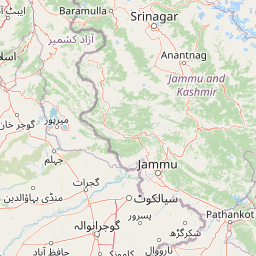
Map view of Poonch River Mahaseer National Park

Use this park location map to pinpoint Poonch River Mahaseer National Park in Pakistan, understand its exact geographic position, and read its mapped placement within the surrounding landscape more clearly.

Pigeon | © OpenStreetMap contributors

Location context for Poonch River Mahaseer National Park

Azad Jammu and Kashmir
Park atlas

Compare the diverse aquatic landscapes and riverine conservation efforts across the broader region.

Explore Nearby Protected Areas and Regional Parks Surrounding Poonch River Mahaseer National Park
Browse other national parks and protected areas geographically proximate to Poonch River Mahaseer National Park, tracing river corridors and diverse conservation landscapes. Compare their unique aquatic habitats, regional protected-area contexts, and conservation priorities to gain a comprehensive understanding of the broader South Asian landscape.
National parkAzad Jammu and Kashmir

Pir Lasura National Park: Pakistan National Park with Subtropical Pine Forest Landscape

Explore the mapped boundaries and geography of this unique Azad Jammu and Kashmir protected area.

Pir Lasura National Park in Azad Jammu and Kashmir, Pakistan, is a critical national park encompassing approximately 15.8 square kilometers of subtropical chir pine forest and scrub vegetation. Located in the Pir Lasura mountain range, it features a varied terrain with elevations ranging from 1,000 to 2,000 meters, contributing to its unique ecosystem at the transitional zone between major geographic regions. This page offers a detailed atlas-style exploration of the park's mapped features, its importance as a protected landscape, and its role in supporting diverse wildlife including significant vulture roosting sites and common leopard habitats.

Area
15.8 km²
Established
2005
IUCN
II
National parkAzad Kashmir

Panjal Mastan National Park: High-Altitude Plateau Landscape in Azad Kashmir

Discover mapped terrain and protected area geography.

Panjal Mastan National Park represents a significant protected landscape within the Pir Panjal mountain range of Azad Kashmir, Pakistan. This national park is characterized by its expansive high-altitude plateau, sitting at an average elevation of 2,800 meters, offering a unique regional geography. Known for its dramatic mountainous surroundings and seasonal wildflower meadows that bloom in spring, the park provides valuable context for understanding the natural terrain and protected area distribution in this part of the western Himalayas.

Area
300 km²
IUCN
II
National parkKhyber Pakhtunkhwa

Ayubia National Park: Protected Area Identity and Mountainous Terrain

Discover its mapped geography within Khyber Pakhtunkhwa

Ayubia National Park stands as a key protected landscape within the Himalayan foothills of Khyber Pakhtunkhwa, Pakistan. Its designation as a national park signifies its role in conserving unique temperate coniferous and mixed forests across steep mountainous terrain. This page details the park's geographic setting, its mapped boundaries, and the natural features that define its protected status, offering a structured view for atlas-driven exploration of Pakistan's natural heritage.

Area
33.12 km²
Established
1984
IUCN
V
National parkPunjab

Pabbi and Rasul Reserve Forest National Park: Punjab's Protected Landscape and Regional Geography

Subtropical thorn scrub, undulating hills, and wetland habitats.

Pabbi and Rasul Reserve Forest National Park, situated in Punjab, Pakistan, is a significant protected area renowned for its subtropical thorn scrub vegetation and its role in conserving the Pothohar Plateau's biodiversity. The park's landscape features a diverse mosaic of undulating hills, scrub-covered ridges, grasslands, and wetlands, situated within the dry tropical environments characteristic of northern Punjab. Its recent designation as a national park highlights its importance for regional conservation efforts, offering a unique glimpse into the mapped geography and protected natural landscapes of the region.

Area
147.2 km²
Established
2023
IUCN
II
National parkPakistan

Deva Vatala National Park: Pakistan's Protected Tropical Thorn Forest Landscape

Explore mapped boundaries and regional geography within the Lower Himalayan foothills.

Deva Vatala National Park is a significant protected area located in Pakistan's Lower Himalayan Range, notable for its unique tropical thorn forest ecosystem. Occupying hilly terrain with elevations up to 1,101 meters, the park's landscape is defined by semiarid conditions and acacia-dominated vegetation, creating an unusual ecological interface. Its mapped boundaries encompass lake systems and diverse habitats, making it a critical conservation site within South Asia, distinct from typical Himalayan protected areas.

Area
70 km²
Established
1998
IUCN
II
National parkIslamabad Capital Territory

Margalla Hills National Park: Pakistan's Gateway to Himalayan Foothills Geography

Mapped protected landscape with rich Sino-Himalayan biodiversity.

Margalla Hills National Park, situated in the Islamabad Capital Territory, serves as Pakistan's most accessible national park and a vital entry point to the Himalayan foothills. This protected landscape is defined by its rugged mountain terrain, ranging from lower scrublands to higher pine and oak woodlands, with elevations up to 1,604 meters. The park's geological significance, with ancient marine fossil formations, adds a unique dimension to its natural identity. Discover the mapped boundaries and ecological richness that characterize this important protected area, offering insights into regional geography and diverse habitats.

Area
173.86 km²
Established
1980
IUCN
V
National parkPunjab

Kheri Murat National Park: Protected Scrub Forest and Wildlife Conservation in Punjab

Explore the mapped terrain and protected landscape context.

Discover Kheri Murat National Park, a recent national park designation located in Punjab, Pakistan, situated on the rolling hills of the Kala Chitta Range. This protected area features a distinct subtropical thorn scrub forest ecosystem, providing essential habitat for wildlife, including the Punjab urial, and serving as a critical site for bird conservation. Its unique landscape offers valuable insights into regional geography and the preservation of natural wilderness within a predominantly agricultural province, making it a noteworthy entity for atlas exploration.

Area
35.37 km²
Established
2020
IUCN
II
National parkAzad Jammu and Kashmir

Machiara National Park: A Protected National Park in Pakistan's Himalayas

Explore mapped terrain and mountain biodiversity.

Machiara National Park, located in Azad Jammu and Kashmir, Pakistan, is a designated national park preserving unique Himalayan ecosystems. This atlas-focused exploration details the park's protected landscape, encompassing steep slopes, forested ridges, and varied terrain. Discover its significance for wildlife conservation and its position within the broader regional geography, offering a clear view of its mapped natural features.

Area
135.33 km²
Established
1996
IUCN
II

Common questions about visiting, size, designation, and location context for Poonch River Mahaseer National Park

Poonch River Mahaseer National Park FAQs for park facts, access, geography, and protected area context
Find quick answers about Poonch River Mahaseer National Park, including protected-area facts, park geography, trail and visitor context, and how the park fits into its surrounding country and regional landscape.
MoriAtlas Explorer

Continue Your Protected Areas Search Across the Global Atlas

Deepen your exploration by continuing the structured search for national parks and protected areas worldwide. Utilize the comprehensive filtering capabilities to compare different conservation landscapes and refine your understanding of global park geography. Discover more about the distribution and characteristics of protected natural areas.

Global natural geography