

Mori Atlas logo
National parkAyubia National Park

Discover mapped boundaries and temperate forest terrain in Khyber Pakhtunkhwa

Ayubia National Park: Protected Landscape and Geographic Atlas Context

Ayubia National Park represents a significant protected area within the mountainous Galyat region of Khyber Pakhtunkhwa, Pakistan. This national park spans 3,312 hectares of diverse temperate coniferous and broadleaf mixed forests, situated at an average elevation of 8,000 feet. Its landscape is defined by steep slopes, deep valleys, and striking mountain vistas, offering a rich context for geographic exploration and understanding the distribution of protected lands in the region.

Temperate ForestsHimalayan FoothillsProtected LandscapeMountain ParksPine ForestsWildlife Conservation

Ayubia National Park

National park

Park overview

Structured park overview, official facts, and landscape profile for Ayubia National Park

Ayubia National Park park facts, protected area profile, and essential visitor context
Review the core facts for Ayubia National Park, including designation, size, terrain, visitor scale, habitats, and operating context in one park-focused overview.

About Ayubia National Park

Ayubia National Park represents one of Pakistan's significant protected areas in the Himalayan foothills, situated within the Galyat region of Khyber Pakhtunkhwa. The park's establishment in 1984 reflected growing recognition of the need to conserve the temperate forest ecosystems that characterize this mountainous area. In 1998, the park was substantially expanded from its original 1,684 hectares to encompass 3,312 hectares, nearly doubling the protected territory. The park's name honors Muhammad Ayub Khan, who served as Pakistan's second president from 1958 to 1969. The surrounding area supports a population of approximately 18,000 people distributed across seven villages and several small towns, creating a landscape where human settlement and wildlife conservation intersect. The park has been developed as an integrated resort destination, combining facilities from Khaira Gali, Changla Gali, Khanspur, and Ghora Dhaka into a cohesive tourism complex. Managed by the Khyber Pakhtunkhwa Wildlife Department under the 1975 provincial wildlife act, the park balances conservation objectives with substantial recreational use, welcoming over 250,000 visitors annually who come to experience its forest trails, panoramic viewpoints, and mountain atmosphere.

Quick facts and research context for Ayubia National Park

Ayubia National Park covers 33.12 square kilometers in the Galyat hills of northern Pakistan, rising to an elevation of approximately 2,400 meters. The protected area was established in 1984 and expanded significantly in 1998 from its original 1,684 hectares to its current size. It is classified as an IUCN Category V protected landscape and is managed by the Khyber Pakhtunkhwa Wildlife Department. The park surrounds the small towns of Thandiani, Nathiagali, and Khanspur, and is part of a resort complex formed by four mini-resorts. The region receives annual rainfall of 1,644 millimeters with temperatures ranging from 3°C to 11°C, creating conditions favoring temperate forest development.

Park context

Deeper park guide and search-rich context for Ayubia National Park

Ayubia National Park history, landscape, wildlife, and travel context
Explore Ayubia National Park through its history, landscape character, ecosystems, wildlife, conservation priorities, cultural context, and seasonal travel timing in a structured park guide built for atlas discovery and search intent.

Why Ayubia National Park stands out

Ayubia National Park is best known for its pristine temperate coniferous and mixed forests, particularly the deodar cedar, blue pine, silver fir, and oak stands that cover its steep mountainous terrain. The park's Pipeline Walking Track, a four-kilometer trail connecting Ayubia to Nathiagali, is a signature attraction offering visitors access to the forest interior. The chairlift to Mukeshpuri summit, Pakistan's first recreational chairlift facility, provides panoramic views of the forested hills and remains a major draw for domestic tourists. The park also supports significant Himalayan biodiversity, including the Indian leopard, various pheasant species, and over 200 bird species.

Ayubia National Park history and protected-area timeline

Ayubia National Park was established in 1984 in the eastern corner of Khyber Pakhtunkhwa province as a conservation area focused on protecting the region's temperate forests. The original protected area encompassed 857 acres, though this initial designation represented only a portion of the forest ecosystem that would eventually come under protection. A significant expansion occurred in 1998, when the park's boundaries were extended to increase the protected territory to 1,685 acres, more than doubling the total area to 3,312 hectares. This expansion reflected both growing understanding of the ecological connectivity of the forest ecosystem and recognition of the importance of landscape-level conservation. Since the expansion, management responsibility has rested with the Khyber Pakhtunkhwa Wildlife Department, which operates under the framework of the 1975 Khyber Pakhtunkhwa Wildlife Act. The park headquarters are located at Dunga Gali, approximately 50 kilometers from Abbottabad and 25 kilometers from Murree. Recent history has included controversy, as in September 2023 a proposed de-notification of the park was announced, prompting opposition from wildlife officials, environmental groups, and legal experts who challenged the legality of the action and raised concerns that it would facilitate grazing expansion and timber smuggling.

Ayubia National Park landscape and geographic character

The landscape of Ayubia National Park is characterized by steep, forested mountain slopes rising through the Himalayan foothills in the Galyat region of northern Pakistan. The terrain features deep valleys, ridgelines, and summits that create dramatic topographic variation across the protected area. The park sits at elevations around 2,400 meters above sea level, placing it within the temperate climatic zone that supports distinctive forest types. The visual character of the park is dominated by coniferous forest, particularly deodar cedar and blue pine, with interspersed broadleaf species including oak and horse chestnut creating a varied canopy structure. The forest cover extends from valley floors up to ridge crests, creating continuous green coverage interrupted only by rocky outcrops and trail corridors. The area receives substantial annual precipitation, with rainfall of approximately 1,644 millimeters annually contributing to the lush forest character. Winter brings snowfall that caps the landscape through the latter part of the cold season, adding seasonal variation to the visual environment.

Ayubia National Park ecosystems, habitats, and plant life

Ayubia National Park encompasses significant temperate forest ecosystems classified as both coniferous forest and broadleaf mixed forest ecoregions. The park supports approximately 104 plant species, with the dominant tree species including deodar cedar (Cedrus deodara), blue pine, silver fir, yew, horse chestnut, and various oak species. These forests form a relatively continuous canopy across the park's mountainous terrain, creating habitat for diverse wildlife communities. Of particular note are the 21 plant species documented to have medicinal properties, representing 19 botanical families. These plants have traditional uses in treating conditions ranging from jaundice and stomach ulcers to diabetes, psoriasis, and snake bites. The World Wide Fund for Nature has conducted ethno-botanical work in the park focused on demonstrating sustainable use of plant resources as a conservation strategy. The forest structure supports multiple habitat layers from ground cover through understory to canopy, creating ecological niches for the park's mammal, bird, and reptile communities.

Ayubia National Park wildlife and species highlights

The wildlife community of Ayubia National Park includes 23 mammal species, 203 bird species, and 13 herpetofauna species, representing significant biodiversity within the Himalayan region. Mammal inhabitants include the Indian leopard and leopard cat as apex predators, alongside smaller carnivores such as golden jackal, red fox, yellow-throated marten, masked palm civet, and Asian palm civet. Herbivores include the Central Asian boar, while primate representation comes from the rhesus macaque. The park supports diverse small mammals including Kashmir field mouse, Ward's field mouse, Turkestan rat, Murree vole, and two species of flying squirrel, the Kashmir flying squirrel and red giant flying squirrel. Bat diversity includes the Java pipistrelle, big-eared horseshoe bat, and serotine bat. The bird community features notable Himalayan specialities including the Kalij pheasant and koklass pheasant, various pigeons and doves, the great barbet, Himalayan cuckoo, crested serpent-eagle, golden eagle, and Kashmir nuthatch. Reptile presence includes the Kashmir rock agama.

Ayubia National Park conservation status and protection priorities

Ayubia National Park holds IUCN Category V status as a protected landscape, recognizing its value in preserving both natural values and the cultural landscape character of the Galyat region. The park was established specifically to conserve the temperate forest ecosystems that characterize this portion of the Himalayan foothills. Conservation challenges include the substantial human population in surrounding villages and towns, with approximately 18,000 people in over 2,000 households living in proximity to the protected area. The 2023 controversy surrounding a proposed de-notification highlights ongoing pressures on the protected area, with wildlife experts and environmental groups opposing the move and raising concerns about potential expansion of grazing and timber smuggling activities. The Galiyat Tahafafuz Movement has committed to legal challenge if de-notification proceeds, reflecting community engagement in park protection. The park's management under the Khyber Pakhtunkhwa Wildlife Department operates within the framework of the 1975 provincial wildlife legislation.

Ayubia National Park cultural meaning and human context

Ayubia National Park exists within the cultural landscape of Galyat, a region of small towns and villages in the Himalayan foothills of Khyber Pakhtunkhwa. The park is surrounded by seven major villages and three small towns, with Thandiani, Nathiagali, and Khanspur being the primary settlements. The name Ayubia derives from Muhammad Ayub Khan, Pakistan's second president, reflecting the mid-twentieth century political context that shaped naming conventions for protected areas during that era. The development of the park as a resort complex incorporating Khaira Gali, Changla Gali, Khanspur, and Ghora Dhaka represents a particular approach to protected area management that integrates recreation and tourism infrastructure within the conservation framework. The area has long served as a retreat for visitors from Pakistan's major cities, particularly during the summer months when the cool mountain climate offers respite from valley heat.

Top sights and standout views in Ayubia National Park

Ayubia National Park's standout features include the temperate coniferous forest covering its steep mountain slopes, the historic Pipeline Walking Track stretching four kilometers between Ayubia and Nathiagali, and the chairlift to Mukeshpuri summit offering panoramic forest views. The park's location in the Galyat region places it within one of Pakistan's most scenic mountain areas, accessible from major hill stations. The biodiversity supported by the forest, including the Indian leopard, multiple pheasant species, and over 200 bird species, provides wildlife viewing opportunities. The chairlift remains Pakistan's first recreational chairlift facility, a historic distinction adding to the park's appeal. The annual visitor count exceeding 250,000 demonstrates the park's significance as a recreation destination in Pakistan's northern mountains.

Best time to visit Ayubia National Park

The best time to visit Ayubia National Park depends on visitor preferences for weather and experience. Summer months from May through June offer pleasant temperatures in the cool mountain climate, making this period popular for hiking the forest trails and enjoying the outdoor recreational facilities. The park experiences its warmest conditions during these months before the monsoon arrives. The monsoon season beginning in late July brings increased rainfall and ushers in cooler temperatures, with the landscape remaining green and lush through late summer. Winter transforms the park dramatically as temperatures drop and snowfall accumulates, creating a snow-capped environment that appeals to visitors seeking winter mountain scenery. The cold winter conditions, while harsh, offer a distinctly different park experience. The park's substantial annual rainfall of 1,644 millimeters means that visitors should be prepared for wet conditions throughout the year, with the landscape at its most verdant during the monsoon and post-monsoon periods.
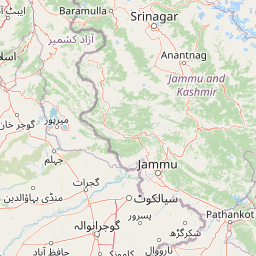

Park location guide

Geography guide, regional context, and park location map for Ayubia National Park

Ayubia National Park park geography, regions, and map view in Pakistan
Understand where Ayubia National Park sits in Pakistan through a broader geographic reading of the surrounding landscape, nearby location context, and its mapped position within the national park landscape.

How Ayubia National Park fits into Pakistan

Pakistan, officially the Islamic Republic of Pakistan, is a federal parliamentary Islamic republic in South Asia. It is the fifth-most populous country and the 33rd-largest by area. The country gained independence from British India in 1947 and has a diverse history spanning ancient civilizations including Mehrgarh and the Indus Valley Civilisation. Pakistan shares maritime borders with Oman and is bounded by the Arabian Sea, Gulf of Oman, and several neighboring countries.

Wider geography shaping Ayubia National Park in Pakistan

Pakistan is located in South Asia, bordered by the Arabian Sea to the south, the Gulf of Oman to the southwest, and shares land borders with India to the east, Afghanistan to the west, Iran to the southwest, and China to the northeast. The country also shares a maritime border with Oman in the Gulf of Oman. The Wakhan Corridor in Afghanistan separates Pakistan from Tajikistan in the northwest.

Map view of Ayubia National Park

Use this park location map to pinpoint Ayubia National Park in Pakistan, understand its exact geographic position, and read its mapped placement within the surrounding landscape more clearly.

Pigeon | © OpenStreetMap contributors

Location context for Ayubia National Park

Abbottabad DistrictKhyber Pakhtunkhwa
Park atlas

Compare mountain parks and protected landscapes, tracing their regional spread across Pakistan's scenic Galyat region.

Explore Nearby National Parks and Protected Areas in the Galyat Region After Ayubia National Park
Continue your geographic discovery beyond Ayubia National Park by exploring other national parks and protected landscapes within Pakistan's Galyat region and its Himalayan foothills. Compare diverse park geographies, forest ecosystems, and conservation profiles across a wider range of the country's protected areas through structured atlas views.
National parkIslamabad Capital Territory

Margalla Hills National Park: Pakistan's Gateway to Himalayan Foothills Geography

Mapped protected landscape with rich Sino-Himalayan biodiversity.

Margalla Hills National Park, situated in the Islamabad Capital Territory, serves as Pakistan's most accessible national park and a vital entry point to the Himalayan foothills. This protected landscape is defined by its rugged mountain terrain, ranging from lower scrublands to higher pine and oak woodlands, with elevations up to 1,604 meters. The park's geological significance, with ancient marine fossil formations, adds a unique dimension to its natural identity. Discover the mapped boundaries and ecological richness that characterize this important protected area, offering insights into regional geography and diverse habitats.

Area
173.86 km²
Established
1980
IUCN
V
National parkPunjab

Kheri Murat National Park: Protected Scrub Forest and Wildlife Conservation in Punjab

Explore the mapped terrain and protected landscape context.

Discover Kheri Murat National Park, a recent national park designation located in Punjab, Pakistan, situated on the rolling hills of the Kala Chitta Range. This protected area features a distinct subtropical thorn scrub forest ecosystem, providing essential habitat for wildlife, including the Punjab urial, and serving as a critical site for bird conservation. Its unique landscape offers valuable insights into regional geography and the preservation of natural wilderness within a predominantly agricultural province, making it a noteworthy entity for atlas exploration.

Area
35.37 km²
Established
2020
IUCN
II
National parkAzad Kashmir

Panjal Mastan National Park: High-Altitude Plateau Landscape in Azad Kashmir

Discover mapped terrain and protected area geography.

Panjal Mastan National Park represents a significant protected landscape within the Pir Panjal mountain range of Azad Kashmir, Pakistan. This national park is characterized by its expansive high-altitude plateau, sitting at an average elevation of 2,800 meters, offering a unique regional geography. Known for its dramatic mountainous surroundings and seasonal wildflower meadows that bloom in spring, the park provides valuable context for understanding the natural terrain and protected area distribution in this part of the western Himalayas.

Area
300 km²
IUCN
II
National parkAzad Jammu and Kashmir

Poonch River Mahaseer National Park: Pakistan's First Riverine Conservation Area

Mapped aquatic landscape and freshwater biodiversity in Azad Jammu and Kashmir.

Poonch River Mahaseer National Park is a significant aquatic protected area established in 2010, renowned for being Pakistan's first dedicated riverine conservation zone. Situated along the Poonch River in Azad Jammu and Kashmir, it spans approximately 22.5 square kilometers, encompassing the main river channel and key tributary nullahs crucial for breeding. The park's primary objective is to protect the endangered golden mahseer and the broader freshwater ecosystem, serving as a vital model for river-based conservation and mapped biodiversity stewardship in the region.

Area
22.5 km²
Established
2010
IUCN
II
National parkAzad Jammu and Kashmir

Machiara National Park: A Protected National Park in Pakistan's Himalayas

Explore mapped terrain and mountain biodiversity.

Machiara National Park, located in Azad Jammu and Kashmir, Pakistan, is a designated national park preserving unique Himalayan ecosystems. This atlas-focused exploration details the park's protected landscape, encompassing steep slopes, forested ridges, and varied terrain. Discover its significance for wildlife conservation and its position within the broader regional geography, offering a clear view of its mapped natural features.

Area
135.33 km²
Established
1996
IUCN
II
National parkAzad Jammu and Kashmir

Pir Lasura National Park: Pakistan National Park with Subtropical Pine Forest Landscape

Explore the mapped boundaries and geography of this unique Azad Jammu and Kashmir protected area.

Pir Lasura National Park in Azad Jammu and Kashmir, Pakistan, is a critical national park encompassing approximately 15.8 square kilometers of subtropical chir pine forest and scrub vegetation. Located in the Pir Lasura mountain range, it features a varied terrain with elevations ranging from 1,000 to 2,000 meters, contributing to its unique ecosystem at the transitional zone between major geographic regions. This page offers a detailed atlas-style exploration of the park's mapped features, its importance as a protected landscape, and its role in supporting diverse wildlife including significant vulture roosting sites and common leopard habitats.

Area
15.8 km²
Established
2005
IUCN
II
National parkPunjab

Chinji National Park: National Park Atlas, Salt Range Geography, and Protected Landscape

Discover the unique eroded terrain and semi-arid ecosystems of Punjab, Pakistan.

Chinji National Park is a protected national park located in the Punjab province of Pakistan, specifically within the historic Salt Range. This park is characterized by its deeply eroded terrain, composed of sandstone and igneous rock formations, shaped by seasonal streams that lead towards the Soan River. As a key example of a semi-arid mountain ecosystem within the Baluchistan xeric woodlands ecoregion, Chinji National Park offers significant insights into the geological heritage and unique biodiversity of central Pakistan.

Area
60.95 km²
Established
1987
IUCN
II
National parkJhelum District

Tilla Reserve National Park: Mapped Protected Landscape and Dry Forest Ecosystem

Explore the geography and ancient heritage of this Salt Range national park.

Tilla Reserve National Park is a protected area recognized for its significant dry subtropical forest ecosystems and rich cultural history within Pakistan's Salt Range. Situated in Jhelum District, the park's landscape is characterized by steep, rocky ridges and ancient geological formations. Discover its unique mapped terrain, the distribution of its remnant forest habitats, and its importance as a protected natural and spiritual site.

Area
40.6 km²
Established
2021
IUCN
II

Common questions about visiting, size, designation, and location context for Ayubia National Park

Ayubia National Park FAQs for park facts, access, geography, and protected area context
Find quick answers about Ayubia National Park, including protected-area facts, park geography, trail and visitor context, and how the park fits into its surrounding country and regional landscape.
MoriAtlas Explorer

Continue Your Protected Areas Search Across the Global Atlas

Deepen your exploration by continuing the structured search for national parks and protected areas worldwide. Utilize the comprehensive filtering capabilities to compare different conservation landscapes and refine your understanding of global park geography. Discover more about the distribution and characteristics of protected natural areas.

Global natural geography