

Mori Atlas logo
National parkMargalla Hills National Park

Discover the mapped boundaries and unique terrain of this key protected area near Islamabad.

Margalla Hills National Park: Protected Landscape in Pakistan's Himalayan Foothills

Margalla Hills National Park represents a significant protected landscape nestled in the Himalayan foothills, immediately north of Pakistan's capital. Established in 1980, this national park offers a unique geographic context, encompassing the striking topography of the Margalla Hills and the adjacent Rawal Lake. Its elevation gradient, ranging from 685 to 1,604 meters, supports diverse ecosystems from subtropical forests to pine woodlands. The park's strategic location within the Islamabad Capital Territory makes it a crucial green corridor and a focal point for understanding regional protected-area geography and natural terrain.

Himalayan foothillsProtected landscapeWildlife habitatBirdwatchingMountain hikingRock climbing

Margalla Hills National Park

National park

Park overview

Structured park overview, official facts, and landscape profile for Margalla Hills National Park

Margalla Hills National Park park facts, protected area profile, and essential visitor context
Review the core facts for Margalla Hills National Park, including designation, size, terrain, visitor scale, habitats, and operating context in one park-focused overview.

About Margalla Hills National Park

Margalla Hills National Park represents a critical protected area in Pakistan's ecological landscape, serving as the foothills gateway to the Himalayan mountain range. Established in 1980, the park encompasses approximately 17,386 hectares within the Islamabad Capital Territory, extending along the northern boundary adjacent to Haripur District in Khyber Pakhtunkhwa province. The park's terrain is dominated by the Margalla Hills, a series of steep ridges and valleys that rise from the surrounding plain to elevations exceeding 1,600 meters. These hills form part of the lesser Himalayas and represent the southernmost extent of the great Himalayan range. The park also incorporates Rawal Lake, an artificial reservoir that provides additional habitat diversity, and the Shakarparian sports and cultural complex. The Margalla range holds exceptional geological significance. Rock formations date back approximately 40 million years, revealing that the mountains rose from what was once the Tethys Sea, an ancient ocean that existed between the Indian subcontinent and the Asian continent. Fossil evidence including seashells, petrified wood, and marine organisms found in the hills provides tangible proof of this prehistoric marine environment. The park's biodiversity reflects its position at the crossroads of the Indomalayan and Palearctic ecological realms. The southern slopes support subtropical deciduous and evergreen forests with diverse shrub understory, while the cooler northern exposures feature chir pine forests and oak groves. This habitat diversity supports an impressive array of wildlife, with the park serving as a refuge for species whose ranges are centered further east in the Himalayas. The Margalla Hills also hold cultural significance as a recreation area for residents of Islamabad and Rawalpindi, with the area offering hiking, picnicking, and viewpoints that have been traditional destinations for city dwellers seeking mountain escape.

Quick facts and research context for Margalla Hills National Park

Margalla Hills National Park covers 17,386 hectares in the Islamabad Capital Territory, making it the third-largest national park in Pakistan. The park was established in 1980 and is governed by the Islamabad Wildlife Management Board. Tilla Charouni, rising to 1,604 meters, is the highest peak in the park. The geological formations in the hills are approximately 40 million years old, revealing that this region was once the seabed of an ancient ocean before the Indian subcontinent collided with Asia. The park supports around 600 plant species, 402 bird varieties, 38 mammals, and 27 reptile species. Key tourist attractions include Daman-e-Koh and Pir Sohawa hill stations, while the area serves as a major destination for hiking, birdwatching, and rock climbing.

Park context

Deeper park guide and search-rich context for Margalla Hills National Park

Margalla Hills National Park history, landscape, wildlife, and travel context
Explore Margalla Hills National Park through its history, landscape character, ecosystems, wildlife, conservation priorities, cultural context, and seasonal travel timing in a structured park guide built for atlas discovery and search intent.

Why Margalla Hills National Park stands out

Margalla Hills National Park is best known for its exceptional biodiversity in the Sino-Himalayan faunal region, particularly its populations of gray goral, barking deer, and Indian leopard. The park serves as the northern gateway to the Himalayan mountain system, with geological formations that clearly show evidence of the region's ancient marine origins. It is also renowned as the most accessible national park in Pakistan due to its proximity to Islamabad, offering popular hiking trails, rock climbing spots, and panoramic viewpoints like Daman-e-Koh that overlook the capital city. The combination of rich wildlife, geological significance, and accessibility makes it a unique protected area in South Asia.

Margalla Hills National Park history and protected-area timeline

Margalla Hills National Park was established in 1980 through official designation as a protected area, becoming one of Pakistan's earliest national parks. The park was created with the primary purpose of conserving the natural forests and wildlife of the Margalla Hills region, which form the northern edge of the Islamabad Capital Territory. The establishment came during a period when Pakistan was expanding its network of protected areas, following the recognition that the country's natural landscapes required formal legal protection. The governance of the park falls under the Islamabad Wildlife Management Board, the statutory body responsible for managing wildlife and protected areas within the capital territory. Over the decades, the park has faced various conservation challenges, including encroachment and habitat pressure from the expanding Islamabad metropolitan area. The Himalayan Wildlife Foundation has implemented sustainable management projects for the park, while the Margalla Hills Society, a non-governmental organization established in 1989, has worked to preserve the natural environment and prevent shrinkage of green areas. The park's management has also addressed issues of unauthorized construction, with notable enforcement actions including the demolition of commercial restaurants that had been operating illegally within the park boundaries. These efforts reflect ongoing challenges in balancing public access with conservation objectives in a park that is heavily used by urban populations.

Margalla Hills National Park landscape and geographic character

The Margalla Hills present a dramatic landscape of rugged mountain terrain rising abruptly from the plains surrounding Islamabad. The hills form a series of parallel ridges with steep-sided valleys, creating a distinctive topography that contrasts sharply with the relatively flat terrain of the Punjab plain to the south. The elevation gradient from 685 meters at the western end to 1,604 meters at Tilla Charouni creates a diverse range of microclimates and habitats within a relatively compact area. The hills are characterized by rocky outcrops, boulder-strewn slopes, and numerous small streams and springs that flow down through the valleys, particularly during the monsoon season. Natural springs emerge at various points throughout the range, providing water sources that support the local ecology. The southern aspects of the hills feature shorter, more scrubby vegetation due to greater sun exposure, while the northern slopes support denser tree cover. Scattered throughout the range are exposed rock faces that attract rock climbers, with crags offering routes from beginner to expert difficulty levels. The landscape also includes the artificial Rawal Lake, which adds a significant water body to the park's geography and provides different scenic character, particularly attractive at sunset when the lake reflects the surrounding hills.

Margalla Hills National Park ecosystems, habitats, and plant life

The nature of Margalla Hills National Park is defined by its position at the intersection of subtropical and temperate ecological zones, creating a unique blend of vegetation types and associated wildlife. The park's flora reflects this transitional character, with the southern slopes supporting subtropical deciduous and evergreen tree species alongside diverse shrub growth, while the northern areas feature chir pine forests and oak woodlands. This altitudinal zonation creates distinct habitat layers that support different assemblages of wildlife. The park's biodiversity is remarkably concentrated for its size, with approximately 600 plant species, 402 bird varieties, 38 mammal species, and 27 reptile species recorded within its boundaries. The birdlife is particularly notable, featuring both resident species and seasonal migrants that arrive from higher altitudes to the north. The park's wildlife management significance is enhanced by the presence of species that are at the western edge of their distribution in the Margalla Hills, including several that are more commonly associated with the eastern Himalayas. The presence of the Murree vole, a small mammal endemic to the Margalla Hills, Murree, and surrounding areas of Khyber Pakhtunkhwa, demonstrates the park's importance for range-restricted species.

Margalla Hills National Park wildlife and species highlights

Margalla Hills National Park supports a remarkable diversity of wildlife, with particular significance for species of the Sino-Himalayan faunal region. The park is home to approximately 38 mammal species, with the most notable being the gray goral, a goat-antelope native to the western Himalayas, the barking deer or muntjac, and the Indian leopard, a predator that maintains a presence in the hills despite the proximity to urban areas. The carnivore community also includes the jungle cat, leopard cat, golden jackal, white-footed fox, and the yellow-throated marten. Smaller mammals include the rhesus macaque, several mongoose species including the Indian gray mongoose and Javan mongoose, hedgehogs, and various rodents including the Kashmir flying squirrel and the endemic Murree vole. The bird population of over 400 species makes the park particularly significant for birdwatchers, with species ranging from large raptors like the Himalayan vulture, laggar falcon, and peregrine falcon to colorful pheasants including the cheer pheasant and kalij pheasant, and a variety of passerines such as the paradise flycatcher, golden oriole, and numerous bunting species. The reptile fauna includes several venomous species such as Russell's viper, Indian cobra, Himalayan pit viper, and saw-scaled viper, reflecting the diverse habitats present in the park.

Margalla Hills National Park conservation status and protection priorities

Margalla Hills National Park plays a crucial role in Pakistan's conservation framework as the third-largest national park and one of the most accessible protected areas in the country. The park's IUCN designation as Category V reflects its status as a protected landscape where natural processes continue alongside human use and enjoyment. Conservation efforts in the park are coordinated by the Islamabad Wildlife Management Board, which is responsible for balancing ecological protection with the heavy recreational use the area receives from Islamabad and Rawalpindi residents. The Himalayan Wildlife Foundation has implemented sustainable management strategies for the park, recognizing the challenges of maintaining ecological integrity in a protected area that experiences significant human traffic. The Margalla Hills Society, established in 1989, contributes to conservation through public education and advocacy. The park faces ongoing conservation challenges from urban expansion pressure, illegal construction, and the need to manage visitor impact while maintaining access for recreation. The presence of species at the western edge of their ranges, including gray goral and several Himalayan-associated birds, gives the park particular significance for maintaining genetic connectivity across the Himalayan foothills.

Margalla Hills National Park cultural meaning and human context

Margalla Hills holds deep cultural significance for the residents of Islamabad and Rawalpindi as the primary natural recreation area serving the twin cities. The hills have long been a destination for hiking, picnicking, and escaping the summer heat of the plains, with trails and viewpoints developed over decades of use. Daman-e-Koh and Pir Sohawa have developed as hill stations offering panoramic views of Islamabad and the surrounding region. The Monal Restaurant site, though now demolished following court orders, represented the long-standing tradition of recreational development in the hills. The Shakarparian area serves as a cultural complex combining recreational space with cultural facilities. The area also includes traditional villages such as Saidpur, where historical settlement patterns coexist with the protected area framework. The park's accessibility from the capital has made it an important space for environmental education and awareness, with various organizations conducting nature walks and conservation programs.

Top sights and standout views in Margalla Hills National Park

Margalla Hills National Park stands out as Pakistan's most accessible national park, located directly adjacent to the capital city of Islamabad and offering immediate mountain recreation opportunities. The park's exceptional biodiversity includes species such as gray goral, barking deer, and Indian leopard, supported by approximately 600 plant species and 400 bird varieties within its 17,386-hectare boundary. The geological significance of the hills, with 40-million-year-old rock formations containing fossils of ancient marine life, provides a tangible connection to the geological processes that created the Himalayas. Popular features include the Daman-e-Koh viewpoint overlooking Islamabad, multiple hiking trails ranging from easy walks to challenging treks, and rock climbing crags at various skill levels. The park serves as a critical green lung for the capital region, providing both ecological services and recreational opportunities that are unique in the context of South Asian national parks.

Best time to visit Margalla Hills National Park

The best time to visit Margalla Hills National Park depends on the intended activities, with different seasons offering distinct experiences. The winter months from November through February offer pleasant daytime temperatures for hiking and exploration, though nights can be cold at higher elevations. Spring from March to May brings milder weather and is particularly rewarding for birdwatching as many species are actively displaying and breeding. The summer months of June through September coincide with the monsoon season, bringing lush green vegetation to the hills but also increased risk of flash floods in valleys and more difficult trail conditions. Despite the rains, this is when the waterfalls and streams are most impressive and the landscape is at its most verdant. October offers another good window with comfortable temperatures and relatively stable weather. The park is accessible year-round, though visitors should be prepared for varying conditions based on the season and should check current trail conditions, particularly after the monsoon period.
Park location guide

Geography guide, regional context, and park location map for Margalla Hills National Park

Margalla Hills National Park park geography, regions, and map view in Pakistan
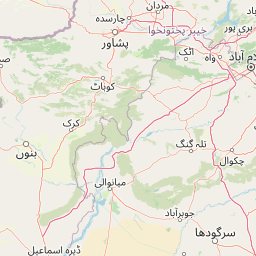
Understand where Margalla Hills National Park sits in Pakistan through a broader geographic reading of the surrounding landscape, nearby location context, and its mapped position within the national park landscape.

How Margalla Hills National Park fits into Pakistan

Pakistan, officially the Islamic Republic of Pakistan, is a federal parliamentary Islamic republic in South Asia. It is the fifth-most populous country and the 33rd-largest by area. The country gained independence from British India in 1947 and has a diverse history spanning ancient civilizations including Mehrgarh and the Indus Valley Civilisation. Pakistan shares maritime borders with Oman and is bounded by the Arabian Sea, Gulf of Oman, and several neighboring countries.

Wider geography shaping Margalla Hills National Park in Pakistan

Pakistan is located in South Asia, bordered by the Arabian Sea to the south, the Gulf of Oman to the southwest, and shares land borders with India to the east, Afghanistan to the west, Iran to the southwest, and China to the northeast. The country also shares a maritime border with Oman in the Gulf of Oman. The Wakhan Corridor in Afghanistan separates Pakistan from Tajikistan in the northwest.

Map view of Margalla Hills National Park

Use this park location map to pinpoint Margalla Hills National Park in Pakistan, understand its exact geographic position, and read its mapped placement within the surrounding landscape more clearly.

Pigeon | © OpenStreetMap contributors

Location context for Margalla Hills National Park

Islamabad Capital Territory
Park atlas

Compare Mountainous Landscapes, Diverse Habitats, and Regional Protected Area Context Across Pakistan

Explore Nearby Protected Areas and National Parks Around Margalla Hills National Park
Browse national parks and protected areas near Margalla Hills National Park, exploring the surrounding Himalayan foothills and diverse landscapes of northern Pakistan. Compare these protected landscapes to understand regional conservation efforts and the varied terrain across Pakistan's mountainous north.
National parkKhyber Pakhtunkhwa

Ayubia National Park: Protected Area Identity and Mountainous Terrain

Discover its mapped geography within Khyber Pakhtunkhwa

Ayubia National Park stands as a key protected landscape within the Himalayan foothills of Khyber Pakhtunkhwa, Pakistan. Its designation as a national park signifies its role in conserving unique temperate coniferous and mixed forests across steep mountainous terrain. This page details the park's geographic setting, its mapped boundaries, and the natural features that define its protected status, offering a structured view for atlas-driven exploration of Pakistan's natural heritage.

Area
33.12 km²
Established
1984
IUCN
V
National parkPunjab

Kheri Murat National Park: Protected Scrub Forest and Wildlife Conservation in Punjab

Explore the mapped terrain and protected landscape context.

Discover Kheri Murat National Park, a recent national park designation located in Punjab, Pakistan, situated on the rolling hills of the Kala Chitta Range. This protected area features a distinct subtropical thorn scrub forest ecosystem, providing essential habitat for wildlife, including the Punjab urial, and serving as a critical site for bird conservation. Its unique landscape offers valuable insights into regional geography and the preservation of natural wilderness within a predominantly agricultural province, making it a noteworthy entity for atlas exploration.

Area
35.37 km²
Established
2020
IUCN
II
National parkAzad Kashmir

Panjal Mastan National Park: High-Altitude Plateau Landscape in Azad Kashmir

Discover mapped terrain and protected area geography.

Panjal Mastan National Park represents a significant protected landscape within the Pir Panjal mountain range of Azad Kashmir, Pakistan. This national park is characterized by its expansive high-altitude plateau, sitting at an average elevation of 2,800 meters, offering a unique regional geography. Known for its dramatic mountainous surroundings and seasonal wildflower meadows that bloom in spring, the park provides valuable context for understanding the natural terrain and protected area distribution in this part of the western Himalayas.

Area
300 km²
IUCN
II
National parkPunjab

Chinji National Park: National Park Atlas, Salt Range Geography, and Protected Landscape

Discover the unique eroded terrain and semi-arid ecosystems of Punjab, Pakistan.

Chinji National Park is a protected national park located in the Punjab province of Pakistan, specifically within the historic Salt Range. This park is characterized by its deeply eroded terrain, composed of sandstone and igneous rock formations, shaped by seasonal streams that lead towards the Soan River. As a key example of a semi-arid mountain ecosystem within the Baluchistan xeric woodlands ecoregion, Chinji National Park offers significant insights into the geological heritage and unique biodiversity of central Pakistan.

Area
60.95 km²
Established
1987
IUCN
II
National parkAzad Jammu and Kashmir

Poonch River Mahaseer National Park: Pakistan's First Riverine Conservation Area

Mapped aquatic landscape and freshwater biodiversity in Azad Jammu and Kashmir.

Poonch River Mahaseer National Park is a significant aquatic protected area established in 2010, renowned for being Pakistan's first dedicated riverine conservation zone. Situated along the Poonch River in Azad Jammu and Kashmir, it spans approximately 22.5 square kilometers, encompassing the main river channel and key tributary nullahs crucial for breeding. The park's primary objective is to protect the endangered golden mahseer and the broader freshwater ecosystem, serving as a vital model for river-based conservation and mapped biodiversity stewardship in the region.

Area
22.5 km²
Established
2010
IUCN
II
National parkAzad Jammu and Kashmir

Machiara National Park: A Protected National Park in Pakistan's Himalayas

Explore mapped terrain and mountain biodiversity.

Machiara National Park, located in Azad Jammu and Kashmir, Pakistan, is a designated national park preserving unique Himalayan ecosystems. This atlas-focused exploration details the park's protected landscape, encompassing steep slopes, forested ridges, and varied terrain. Discover its significance for wildlife conservation and its position within the broader regional geography, offering a clear view of its mapped natural features.

Area
135.33 km²
Established
1996
IUCN
II
National parkJhelum District

Tilla Reserve National Park: Mapped Protected Landscape and Dry Forest Ecosystem

Explore the geography and ancient heritage of this Salt Range national park.

Tilla Reserve National Park is a protected area recognized for its significant dry subtropical forest ecosystems and rich cultural history within Pakistan's Salt Range. Situated in Jhelum District, the park's landscape is characterized by steep, rocky ridges and ancient geological formations. Discover its unique mapped terrain, the distribution of its remnant forest habitats, and its importance as a protected natural and spiritual site.

Area
40.6 km²
Established
2021
IUCN
II
National parkAzad Jammu and Kashmir

Pir Lasura National Park: Pakistan National Park with Subtropical Pine Forest Landscape

Explore the mapped boundaries and geography of this unique Azad Jammu and Kashmir protected area.

Pir Lasura National Park in Azad Jammu and Kashmir, Pakistan, is a critical national park encompassing approximately 15.8 square kilometers of subtropical chir pine forest and scrub vegetation. Located in the Pir Lasura mountain range, it features a varied terrain with elevations ranging from 1,000 to 2,000 meters, contributing to its unique ecosystem at the transitional zone between major geographic regions. This page offers a detailed atlas-style exploration of the park's mapped features, its importance as a protected landscape, and its role in supporting diverse wildlife including significant vulture roosting sites and common leopard habitats.

Area
15.8 km²
Established
2005
IUCN
II

Common questions about visiting, size, designation, and location context for Margalla Hills National Park

Margalla Hills National Park FAQs for park facts, access, geography, and protected area context
Find quick answers about Margalla Hills National Park, including protected-area facts, park geography, trail and visitor context, and how the park fits into its surrounding country and regional landscape.
MoriAtlas Explorer

Continue Your Protected Areas Search Across the Global Atlas

Deepen your exploration by continuing the structured search for national parks and protected areas worldwide. Utilize the comprehensive filtering capabilities to compare different conservation landscapes and refine your understanding of global park geography. Discover more about the distribution and characteristics of protected natural areas.

Global natural geography