

Mori Atlas logo
National parkPabbi and Rasul Reserve Forest

Discover the subtropical thorn scrub, undulating hills, and wetland habitats of this Punjab national park.

Pabbi and Rasul Reserve Forest National Park: Mapping Punjab's Protected Landscape and Regional Geography

(Pabbi-Rasul National Park)

Pabbi and Rasul Reserve Forest National Park, located in northern Punjab, Pakistan, represents a vital protected landscape within the Pothohar Plateau region. Spanning approximately 147 square kilometers, this park's geography is characterized by undulating hills and scrub-covered ridges that transition from the Pothohar Plateau toward the Salt Range foothills, situated near the Jhelum River corridor. As a key national park, it safeguards unique subtropical thorn scrub ecosystems, supporting a mosaic of grasslands and wetland areas that contribute significantly to regional biodiversity conservation.

National ParkProtected ForestPothohar PlateauThorn ScrubSubtropical ForestWildlife Conservation

Pabbi and Rasul Reserve Forest

National park

Park overview

Structured park overview, official facts, and landscape profile for Pabbi and Rasul Reserve Forest

Pabbi and Rasul Reserve Forest park facts, protected area profile, and essential visitor context
Review the core facts for Pabbi and Rasul Reserve Forest, including designation, size, terrain, visitor scale, habitats, and operating context in one park-focused overview.

About Pabbi and Rasul Reserve Forest

Pabbi and Rasul Reserve Forest occupies a significant ecological niche in northern Punjab's protected area network. The reserve comprises the Pabbi Reserve Forest as its core area, with associated blocks of the Rasul Reserve Forest forming an integrated protected landscape that stretches across administrative boundaries in Mandi Bahauddin and Gujrat districts. The area's location within the Pothohar Plateau and at the edge of the Salt Range foothills creates a distinctive setting where subtropical dry forest ecosystems meet more arid terrain, supporting a diversity of habitats within a relatively compact protected area. Management responsibility falls to the Range Management Division in Chakwal, which oversees enforcement, restoration, and afforestation activities throughout the national park. The designation as a national park in 2023 reflects Pakistan's ongoing efforts to expand and strengthen its protected area network, particularly in regions where ecological diversity faces pressure from agricultural expansion and development.

Quick facts and research context for Pabbi and Rasul Reserve Forest

The reserve extends across Tehsil Phalia in Mandi Bahauddin District and Tehsils Kharian and Sarai Alamgir in Gujrat District, covering an area of 36,374 acres. It is managed by the Range Management Division in Chakwal under the Punjab Wildlife and Parks Department. The terrain features gentle rolling hills interspersed with scrub vegetation and seasonal wetlands, lying in proximity to the Jhelum River corridor. The protected status was formalised through notifications in September 2020 and June 2023, making this one of the most recently established national parks in Punjab Province.

Park context

Deeper park guide and search-rich context for Pabbi and Rasul Reserve Forest

Pabbi and Rasul Reserve Forest history, landscape, wildlife, and travel context
Explore Pabbi and Rasul Reserve Forest through its history, landscape character, ecosystems, wildlife, conservation priorities, cultural context, and seasonal travel timing in a structured park guide built for atlas discovery and search intent.

Why Pabbi and Rasul Reserve Forest stands out

Pabbi and Rasul Reserve Forest is best known for its subtropical thorn scrub vegetation community and its role in conserving the biodiversity of Punjab's Pothohar Plateau region. The reserve protects a landscape where acacia-dominated woodlands transition into grasslands and wetland pockets, creating habitat for various game bird species including partridges and quails, alongside mammals and reptiles typical of the region's dry tropical ecosystems. The area represents a conservation priority site for the Punjab Wildlife and Parks Department, which conducts breeding programmes for endangered and locally threatened species within the reserve boundaries.

Pabbi and Rasul Reserve Forest history and protected-area timeline

The formal establishment of Pabbi and Rasul Reserve Forest as a national park proceeded through a two-stage legal process under the Punjab Protected Areas Act of 2020. The initial declaration occurred on 30 September 2020, when the Punjab government notified the designation of the Pabbi and Rasul Reserve Forests as a national park under the provisions of the new protected areas legislation. A subsequent notification on 5 June 2023 reaffirmed the park's protected status and included precise GPS coordinates and satellite imagery to delineate the reserve's boundaries. This recent establishment places Pabbi and Rasul among the newest additions to Pakistan's national park system, representing a contemporary effort to consolidate protection for Punjab's remaining forest and wildlife habitats.

Pabbi and Rasul Reserve Forest landscape and geographic character

The physical landscape of Pabbi and Rasul Reserve Forest consists of undulating hills and scrub-covered ridges that characterize the transitional terrain between the Pothohar Plateau and the Salt Range foothills. The topography supports a rolling terrain with gentle slopes rather than dramatic elevation changes, creating a landscape of moderate relief punctuated by scattered hillocks and depressions. The area includes interspersed grasslands and wetlands that add ecological diversity to the predominantly scrub-covered terrain. The proximity to the Jhelum River corridor influences the local environment, with water availability supporting wetland areas within the broader dry landscape. This combination of hills, scrub woodland, grasslands, and wetlands creates a heterogeneous landscape that supports multiple ecological zones within the reserve.

Pabbi and Rasul Reserve Forest ecosystems, habitats, and plant life

The ecological character of Pabbi and Rasul Reserve Forest is defined by subtropical thorn scrub vegetation that dominates the area's plant communities. The vegetation is characterized by species including Acacia nilotica, Prosopis juliflora, Ziziphus nummularia, and Dodonaea viscosa, which form the primary structural elements of the forest and scrubland. This thorn scrub ecosystem represents the dominant vegetation type across much of northern Punjab's plains and foothills, adapted to the region's seasonal climate patterns and relatively limited moisture availability. The reserve's mosaic of scrub woodlands, grasslands, and wetlands creates a heterogeneous habitat matrix that supports varied ecological processes and provides foraging, nesting, and shelter resources for wildlife species. The wetland components, though likely seasonal, add important ecological diversity to the otherwise dryland forest character.

Pabbi and Rasul Reserve Forest wildlife and species highlights

The wildlife community within Pabbi and Rasul Reserve Forest includes several groups typical of northern Punjab's dry tropical ecosystems. Departmental records identify various game bird species as particularly notable, including partridges and quails that inhabit the grassland and scrubland interfaces. The reserve also supports populations of mammals and reptiles characteristic of the region's thorn forest and agricultural landscape periphery. While the Wikipedia source does not provide exhaustive species lists, the presence of diverse wildlife reflects the ecological value of maintaining connected scrub and grassland habitats in a region where agricultural conversion has reduced natural habitat extent. The Punjab Wildlife and Parks Department conducts wildlife monitoring programmes within the reserve to track populations and prevent illegal hunting activities.

Pabbi and Rasul Reserve Forest conservation status and protection priorities

Pabbi and Rasul Reserve Forest is identified by the Punjab Wildlife and Parks Department as a priority site for biodiversity conservation within the province's protected area network. The reserve serves multiple conservation functions, including protection of remaining subtropical thorn scrub forest in Punjab, preservation of wildlife habitats in a region with significant development pressure, and maintenance of ecological connectivity across a landscape mosaic that includes grasslands and wetlands. Conservation activities undertaken within the park include breeding programmes focused on endangered and locally threatened species, regular wildlife monitoring to track population trends and detect poaching or illegal activity, and educational initiatives aimed at raising public awareness about the region's ecological value. The national park designation provides formal legal protection under the Punjab Protected Areas Act, enabling coordinated management of the reserve's natural resources.

Pabbi and Rasul Reserve Forest cultural meaning and human context

The cultural context of Pabbi and Rasul Reserve Forest relates to the broader human landscape of northern Punjab's districts of Mandi Bahauddin and Gujrat. The area falls within a region with established agricultural communities and historical settlement patterns, where forest and range lands have traditionally provided resources for local populations. The reserve's name references both Pabbi and Rasul as place-associated identifiers within the local toponymy. While the Wikipedia source does not provide detailed information on indigenous or historical cultural relationships with the land, the region's districts contain communities whose livelihoods interact with the surrounding rural landscape. The reserve's limited ecotourism programming includes nature education activities targeted at schools and community groups, reflecting an orientation toward environmental awareness rather than recreational tourism.

Top sights and standout views in Pabbi and Rasul Reserve Forest

The highlights of Pabbi and Rasul Reserve Forest include its role as one of Punjab's newest national parks, its location at the ecological transition between the Pothohar Plateau and Salt Range foothills, and its diverse habitat mosaic of thorn scrub, grasslands, and wetlands. The reserve protects significant subtropical thorn vegetation dominated by acacia species and supports populations of game birds including partridges and quails. Management by the Punjab Wildlife and Parks Department emphasizes biodiversity conservation, species breeding programmes, and public environmental education. The park offers guided nature trails and interpretive visits for educational groups, with access restricted to designated routes to minimize ecological disturbance.

Best time to visit Pabbi and Rasul Reserve Forest

The best time to visit Pabbi and Rasul Reserve Forest would align with the cooler, drier months typical of Punjab's winter season, when daytime temperatures are more comfortable for outdoor exploration and wildlife activity is more readily observable. The post-monsoon period from October through March generally offers favorable conditions for nature-based visits to protected areas in Punjab, with pleasant temperatures and reduced water stress in the landscape. The summer months from May through August bring intense heat that would make outdoor activities challenging and could limit wildlife viewing opportunities as animals seek shade and shelter during the hottest parts of the day. The exact timing of visits would also depend on specific park programming and access arrangements coordinated through the Punjab Wildlife and Parks Department.

Park location guide

Geography guide, regional context, and park location map for Pabbi and Rasul Reserve Forest

Pabbi and Rasul Reserve Forest park geography, regions, and map view in Pakistan
Understand where Pabbi and Rasul Reserve Forest sits in Pakistan through a broader geographic reading of the surrounding landscape, nearby location context, and its mapped position within the national park landscape.

How Pabbi and Rasul Reserve Forest fits into Pakistan

Pakistan, officially the Islamic Republic of Pakistan, is a federal parliamentary Islamic republic in South Asia. It is the fifth-most populous country and the 33rd-largest by area. The country gained independence from British India in 1947 and has a diverse history spanning ancient civilizations including Mehrgarh and the Indus Valley Civilisation. Pakistan shares maritime borders with Oman and is bounded by the Arabian Sea, Gulf of Oman, and several neighboring countries.

Wider geography shaping Pabbi and Rasul Reserve Forest in Pakistan

Pakistan is located in South Asia, bordered by the Arabian Sea to the south, the Gulf of Oman to the southwest, and shares land borders with India to the east, Afghanistan to the west, Iran to the southwest, and China to the northeast. The country also shares a maritime border with Oman in the Gulf of Oman. The Wakhan Corridor in Afghanistan separates Pakistan from Tajikistan in the northwest.

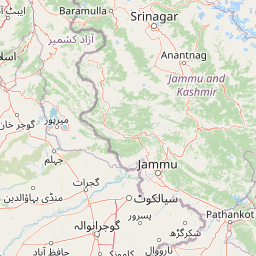
Map view of Pabbi and Rasul Reserve Forest

Use this park location map to pinpoint Pabbi and Rasul Reserve Forest in Pakistan, understand its exact geographic position, and read its mapped placement within the surrounding landscape more clearly.

Pigeon | © OpenStreetMap contributors

Location context for Pabbi and Rasul Reserve Forest

Gujrat DistrictMandi Bahauddin DistrictPunjab
Park atlas

Expand your park discovery with a geographic view of protected landscapes across northern Punjab, Pakistan.

Compare National Parks and Protected Areas Surrounding Pabbi and Rasul Reserve Forest
Continue exploring the protected areas of Pakistan by browsing other national parks and wildlife reserves near Pabbi and Rasul Reserve Forest, located within the Pothohar Plateau region. Compare these conservation landscapes to understand the regional spread of protected ecosystems and their contributions to Punjab's diverse natural geography.
National parkPakistan

Deva Vatala National Park: Pakistan's Protected Tropical Thorn Forest Landscape

Explore mapped boundaries and regional geography within the Lower Himalayan foothills.

Deva Vatala National Park is a significant protected area located in Pakistan's Lower Himalayan Range, notable for its unique tropical thorn forest ecosystem. Occupying hilly terrain with elevations up to 1,101 meters, the park's landscape is defined by semiarid conditions and acacia-dominated vegetation, creating an unusual ecological interface. Its mapped boundaries encompass lake systems and diverse habitats, making it a critical conservation site within South Asia, distinct from typical Himalayan protected areas.

Area
70 km²
Established
1998
IUCN
II
National parkAzad Jammu and Kashmir

Pir Lasura National Park: Pakistan National Park with Subtropical Pine Forest Landscape

Explore the mapped boundaries and geography of this unique Azad Jammu and Kashmir protected area.

Pir Lasura National Park in Azad Jammu and Kashmir, Pakistan, is a critical national park encompassing approximately 15.8 square kilometers of subtropical chir pine forest and scrub vegetation. Located in the Pir Lasura mountain range, it features a varied terrain with elevations ranging from 1,000 to 2,000 meters, contributing to its unique ecosystem at the transitional zone between major geographic regions. This page offers a detailed atlas-style exploration of the park's mapped features, its importance as a protected landscape, and its role in supporting diverse wildlife including significant vulture roosting sites and common leopard habitats.

Area
15.8 km²
Established
2005
IUCN
II
National parkJhelum District

Tilla Reserve National Park: Mapped Protected Landscape and Dry Forest Ecosystem

Explore the geography and ancient heritage of this Salt Range national park.

Tilla Reserve National Park is a protected area recognized for its significant dry subtropical forest ecosystems and rich cultural history within Pakistan's Salt Range. Situated in Jhelum District, the park's landscape is characterized by steep, rocky ridges and ancient geological formations. Discover its unique mapped terrain, the distribution of its remnant forest habitats, and its importance as a protected natural and spiritual site.

Area
40.6 km²
Established
2021
IUCN
II
National parkAzad Jammu and Kashmir

Poonch River Mahaseer National Park: Pakistan's First Riverine Conservation Area

Mapped aquatic landscape and freshwater biodiversity in Azad Jammu and Kashmir.

Poonch River Mahaseer National Park is a significant aquatic protected area established in 2010, renowned for being Pakistan's first dedicated riverine conservation zone. Situated along the Poonch River in Azad Jammu and Kashmir, it spans approximately 22.5 square kilometers, encompassing the main river channel and key tributary nullahs crucial for breeding. The park's primary objective is to protect the endangered golden mahseer and the broader freshwater ecosystem, serving as a vital model for river-based conservation and mapped biodiversity stewardship in the region.

Area
22.5 km²
Established
2010
IUCN
II
National parkPunjab

Kheri Murat National Park: Protected Scrub Forest and Wildlife Conservation in Punjab

Explore the mapped terrain and protected landscape context.

Discover Kheri Murat National Park, a recent national park designation located in Punjab, Pakistan, situated on the rolling hills of the Kala Chitta Range. This protected area features a distinct subtropical thorn scrub forest ecosystem, providing essential habitat for wildlife, including the Punjab urial, and serving as a critical site for bird conservation. Its unique landscape offers valuable insights into regional geography and the preservation of natural wilderness within a predominantly agricultural province, making it a noteworthy entity for atlas exploration.

Area
35.37 km²
Established
2020
IUCN
II
National parkPunjab

Chinji National Park: National Park Atlas, Salt Range Geography, and Protected Landscape

Discover the unique eroded terrain and semi-arid ecosystems of Punjab, Pakistan.

Chinji National Park is a protected national park located in the Punjab province of Pakistan, specifically within the historic Salt Range. This park is characterized by its deeply eroded terrain, composed of sandstone and igneous rock formations, shaped by seasonal streams that lead towards the Soan River. As a key example of a semi-arid mountain ecosystem within the Baluchistan xeric woodlands ecoregion, Chinji National Park offers significant insights into the geological heritage and unique biodiversity of central Pakistan.

Area
60.95 km²
Established
1987
IUCN
II
National parkIslamabad Capital Territory

Margalla Hills National Park: Pakistan's Gateway to Himalayan Foothills Geography

Mapped protected landscape with rich Sino-Himalayan biodiversity.

Margalla Hills National Park, situated in the Islamabad Capital Territory, serves as Pakistan's most accessible national park and a vital entry point to the Himalayan foothills. This protected landscape is defined by its rugged mountain terrain, ranging from lower scrublands to higher pine and oak woodlands, with elevations up to 1,604 meters. The park's geological significance, with ancient marine fossil formations, adds a unique dimension to its natural identity. Discover the mapped boundaries and ecological richness that characterize this important protected area, offering insights into regional geography and diverse habitats.

Area
173.86 km²
Established
1980
IUCN
V
National parkKhyber Pakhtunkhwa

Ayubia National Park: Protected Area Identity and Mountainous Terrain

Discover its mapped geography within Khyber Pakhtunkhwa

Ayubia National Park stands as a key protected landscape within the Himalayan foothills of Khyber Pakhtunkhwa, Pakistan. Its designation as a national park signifies its role in conserving unique temperate coniferous and mixed forests across steep mountainous terrain. This page details the park's geographic setting, its mapped boundaries, and the natural features that define its protected status, offering a structured view for atlas-driven exploration of Pakistan's natural heritage.

Area
33.12 km²
Established
1984
IUCN
V

Common questions about visiting, size, designation, and location context for Pabbi and Rasul Reserve Forest

Pabbi and Rasul Reserve Forest FAQs for park facts, access, geography, and protected area context
Find quick answers about Pabbi and Rasul Reserve Forest, including protected-area facts, park geography, trail and visitor context, and how the park fits into its surrounding country and regional landscape.
MoriAtlas Explorer

Continue Your Protected Areas Search Across the Global Atlas

Deepen your exploration by continuing the structured search for national parks and protected areas worldwide. Utilize the comprehensive filtering capabilities to compare different conservation landscapes and refine your understanding of global park geography. Discover more about the distribution and characteristics of protected natural areas.

Global natural geography