Why Lawachara National Park stands out
Lawachara National Park is best known for its population of western hoolock gibbons, one of the world's 25 most endangered primates. The park supports the largest surviving gibbon population in Bangladesh, with approximately 62 individuals in 17 groups recorded in a 2007 census. This population is considered critically important as it may represent the last viable group of western hoolocks likely to survive into the next century. The park is also notable for its diverse birdlife with 246 recorded species and several other endangered primates including Phayre's leaf monkey, Bengal slow loris, and capped langur.
Lawachara National Park history and protected-area timeline
Lawachara National Park was officially declared a national park by the Bangladesh government on July 7, 1996, under the provisions of the Wildlife Act of 1974. The protected area was established within the larger West Bhanugach Reserved Forest, which encompasses 2,740 hectares total. Prior to formal protection, the region's original indigenous mixed tropical evergreen vegetation had been significantly altered during the 1920s when much of the forest was removed or replaced. The establishment of the park marked a critical step in preserving what remained of the semi-evergreen and mixed deciduous forest ecosystem in this part of Bangladesh. In 2008, the park became the center of controversy when the Bangladesh government permitted US-based Chevron Corporation to conduct 3D seismic exploration within the park boundaries. This decision drew criticism from environmental groups who argued it violated municipal conservation laws. The exploration involved explosions that allegedly frightened wildlife and caused a hoolock gibbon to die while attempting to flee. The incident followed an earlier 1997 gas field explosion at Magurchara that destroyed 2.8 square kilometers of the West Bhanugach Reserved Forest. The park has been managed primarily through the Nishorgo project, funded by USAID, though this project has faced criticism for its relationship with corporate interests.
Lawachara National Park landscape and geographic character
The physical landscape of Lawachara National Park is characterized by undulating terrain dotted with scattered hillocks locally called tila, which rise 10 to 50 meters above the surrounding terrain. These hillocks are composed primarily of Upper Tertiary soft sandstone, giving the landscape a distinctive geological character. The park is crossed by numerous sandy-bedded streams known locally as nallah, one of which, the Lawachara tributary, provides the park's name. The soil composition consists of alluvial brown sandy clay loam to clay loam, geological deposits dating from the Pliocene epoch. The region also features shallow depressions that fill with water to form haor wetlands, which are characteristic of this area of northeastern Bangladesh. The low-lying areas of the park are subject to seasonal flooding, contributing to the ecological diversity of the protected area.
Lawachara National Park ecosystems, habitats, and plant life
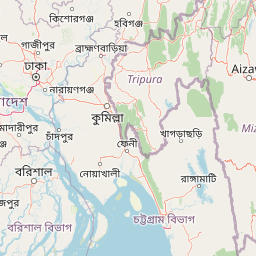
The forest ecosystem of Lawachara National Park represents a semi-evergreen forest biome combined with mixed deciduous forest elements. The vegetation structure is complex, with an understory of evergreen species including Quercus, Syzygium, Gmelina, Dillenia, Grewia, and Ficus, while the upper canopy is dominated by tall deciduous trees such as Tectona, Artocarpus chama, Tetrameles, Hopea odorata, Toona ciliata, and Pygenum. The undergrowth features dense bamboo groves of jai bansh (Bambusa burmanica) and muli bansh (Melocanna baccifera), along with numerous fern species and epiphytes. A 2010 botanical study documented 159 plant species belonging to 123 genera and 60 families, including 78 tree species, 14 shrub species, 42 herb species, and 25 climber species. The forest is predominantly secondary growth, having regenerated after significant clearing in the 1920s, though small remnant areas of rich primary forest persist. The park's location in northeastern Bangladesh places it within a region of significant ecological importance for the country, supporting species assemblages more typical of tropical forest ecosystems than the more commonly associated deltaic landscapes of Bangladesh.
Lawachara National Park wildlife and species highlights
Lawachara National Park supports an impressive array of wildlife, with 460 documented species across multiple taxonomic groups. The park is particularly significant for its primate population, hosting six non-human primate species including the western hoolock gibbon, one of the world's 25 most endangered primates. A 2007 census recorded only 62 individuals in 17 groups within Lawachara and the greater West Bhanugach Reserved Forest, representing the largest surviving gibbon population in Bangladesh. Other primates include Phayre's leaf monkey, Bengal slow loris, and capped langur. The mammal population also includes barking deer, wild boar, leopard cat, and Chinese pangolin. The park's 246 bird species make it a significant ornithological destination, while reptiles include the Burmese python. The amphibian and insect diversity adds to the overall biodiversity significance of this protected area.
Lawachara National Park conservation status and protection priorities
Lawachara National Park holds significant conservation importance for Bangladesh and globally. The park protects the largest remaining population of western hoolock gibbons in Bangladesh, a species listed among the world's 25 most endangered primates. This population is considered critical as it likely represents the last viable group that will survive into the next century. The protected area preserves remnants of semi-evergreen and mixed deciduous forest in a country where such ecosystems have been heavily degraded. The park also protects threatened plant species including Bridelia retusa, Zanthoxylum rhetsa, Alstonia scholaris, Phyllanthus emblica, Cassia fistula, Oroxylum indicum, Semecarpus anacardium, and Garuga pinnata. However, the park has faced significant conservation challenges, including the 2008 Chevron seismic exploration controversy that drew criticism for its potential impacts on wildlife. The incident followed earlier gas field explosions that destroyed substantial forest area in 1997. Management is primarily conducted through the Nishorgo project, funded by USAID, though questions have been raised about the compatibility of conservation goals with industrial activities within the protected area.
Lawachara National Park cultural meaning and human context
The area surrounding Lawachara National Park is home to approximately eighteen villages, with two, Punji and Lawachara Punji, located within the park boundaries. Indigenous peoples in the region include the Khasi, Tripuri, and Monipori communities. The remaining population consists largely of Muslim migrants from Noakhali District, Comilla District, and Assam. Registered forest villagers hold certain rights within the reserve, including wood collection for fuel and building materials, hunting, betel leaf production, livestock grazing, harvesting of forest products, and limited agriculture in allocated land. A mosque called Lawachara Jame Mosque located off the Srimangal-Bhanugach Road serves the local community.
Top sights and standout views in Lawachara National Park
Lawachara National Park offers visitors the opportunity to encounter one of Bangladesh's most significant primate populations in a semi-evergreen forest setting. The park's network of trails allows exploration through varied terrain featuring hillocks, streams, and wetland depressions. The western hoolock gibbon population, representing the largest remaining group in Bangladesh, remains the park's most notable conservation asset. The diverse birdlife with over 240 species provides excellent birdwatching opportunities, while the mixed forest ecosystem supports other endangered primates including Phayre's leaf monkey and Bengal slow loris. The proximity to Sreemangal, known as the tea capital of Bangladesh, makes the park accessible to visitors exploring the northeastern region.
Best time to visit Lawachara National Park
The best time to visit Lawachara National Park is during the cooler winter months from November through February, when temperatures are more comfortable for outdoor exploration. The climate in this region remains warm and humid throughout the year, with February averaging around 26.8°C and the hottest period in June reaching 36.1°C. The park experiences high humidity year-round and frequent rains, with the monsoon season bringing increased precipitation that may affect trail accessibility. Visitors should be prepared for humid conditions regardless of when they visit, and those seeking to observe wildlife may find the dry season offers better opportunities for sightings as animals congregate around remaining water sources.