
Mori Atlas logo
National parkMedhakachhapia National Park

Discover the mapped boundaries and geographic context of this vital Bangladesh National Park.

Medhakachhapia National Park: Protected Coastal Mangrove Landscape in Cox's Bazar District

Medhakachhapia National Park represents a significant protected coastal forest located in the Cox's Bazar District of Bangladesh. Established to preserve mature Rhizophora apiculata mangrove trees, some over a century old, this park offers a unique glimpse into a vital mangrove ecosystem. As a national park and an IUCN Category IV protected area, it showcases a specific type of tropical evergreen forest landscape unique to Bangladesh's coastal geography. Understanding its mapped boundaries and ecological role is key for anyone exploring the nation's protected areas.

mangrove forestcoastal protected areaBangladesh national parksevergreen forestIUCN Category IVtropical forest

Medhakachhapia National Park

National park

Park overview

Structured park overview, official facts, and landscape profile for Medhakachhapia National Park

Medhakachhapia National Park park facts, protected area profile, and essential visitor context
Review the core facts for Medhakachhapia National Park, including designation, size, terrain, visitor scale, habitats, and operating context in one park-focused overview.

About Medhakachhapia National Park

Medhakachhapia National Park is located in the Chakaria Upazila of Cox's Bazar District, Bangladesh's southeastern coastal region. The park covers 395.92 hectares of tropical evergreen forest, with the vegetation dominated by Rhizophora apiculata, a species of mangrove commonly known by various local names. The area falls under the jurisdiction of the Cox's Bazar North Forest Department, which manages the protected area. Unlike Bangladesh's larger national parks that often encompass diverse ecosystems from the Sundarbans mangrove forest to hill forests in the northeast, Medhakachhapia represents a specialized conservation target: preserving specific old-growth mangrove specimens. The park's establishment reflects Bangladesh's approach to protected area designation that includes smaller, targeted reserves focused on particular ecological features or species rather than vast wilderness areas. The coastal location places this park within the dynamic environment of the Bay of Bengal coastline, where mangrove ecosystems serve important functions in shoreline stabilization, sediment trapping, and coastal protection.

Quick facts and research context for Medhakachhapia National Park

Medhakachhapia National Park covers 395.92 hectares along Bangladesh's southeastern coast in the Cox's Bazar District. The protected area was officially declared on 8 August 2008 under the management of the Cox's Bazar North Forest Department. It is classified as an IUCN Category IV protected area, designation that indicates a habitat and species management area rather than a strict nature reserve. The park consists primarily of tropical evergreen mangrove forest, with the century-old Rhizophora apiculata trees serving as the central conservation target. The area is located near the Teknaf Peninsula region, an area known for its complex coastal ecosystems and proximity to the Bay of Bengal.

Park context

Deeper park guide and search-rich context for Medhakachhapia National Park

Medhakachhapia National Park history, landscape, wildlife, and travel context
Explore Medhakachhapia National Park through its history, landscape character, ecosystems, wildlife, conservation priorities, cultural context, and seasonal travel timing in a structured park guide built for atlas discovery and search intent.

Why Medhakachhapia National Park stands out

Medhakachhapia National Park is best known for its protection of mature Rhizophora apiculata mangrove trees, some of which have reached over a century in age. This represents the park's primary conservation justification, as these specific mangrove specimens form the core ecological asset that prompted protected area designation. The park also represents one of the relatively few protected mangrove areas in Bangladesh's coastal zone, where mangrove ecosystems face pressure from development and land-use change. The combination of age, species concentration, and coastal location distinguishes this relatively small park within Bangladesh's national park system.

Medhakachhapia National Park history and protected-area timeline

The formal establishment of Medhakachhapia National Park occurred on 8 August 2008 when the Government of Bangladesh officially declared the protected area. However, the park's origins trace to earlier conservation efforts, with source material indicating initial establishment in 2004 as a precursor to full national park designation. The creation of this protected area responded to the presence of century-old Rhizophora apiculata trees that warranted protection from potential land-use pressures. The park was established under the legal framework governing Bangladesh's national parks and protected areas, receiving IUCN Category IV classification reflecting its management approach focused on habitat and species management rather than strict wilderness preservation. The Cox's Bazar North Forest Department assumed administrative control, continuing the forest department's broader role in managing Bangladesh's coastal and plainland forest resources.

Medhakachhapia National Park landscape and geographic character

The landscape of Medhakachhapia National Park consists of tropical coastal forest dominated by mangrove vegetation. The terrain is low-lying and typical of Bangladesh's coastal plain, where elevation remains minimal and the landscape transitions between land and water in complex patterns. The Rhizophora apiculata trees form the visual and ecological backbone of the area, creating a distinctive mangrove forest character. Unlike the extensive Sundarbans mangrove complex to the west, this represents a smaller, more contained mangrove area within the broader coastal zone. The coastal setting means the park exists within the intertidal zone where tidal influences shape the environment, creating conditions suitable for mangrove growth and the specialized adaptations that Rhizophora species demonstrate. The landscape reflects the broader coastal geography of the Cox's Bazar area, which extends along the Bay of Bengal and includes both sandy beaches to the south and the mangrove-studded coastal margins where this park is located.

Medhakachhapia National Park ecosystems, habitats, and plant life

The ecological character of Medhakachhapia National Park centers on its mangrove forest ecosystem. Rhizophora apiculata dominates the vegetation, a species adapted to coastal saline environments with its distinctive prop root system that anchors the trees in soft sediments while providing stability against tidal flows. The park represents a relatively contained area of mangrove forest rather than extensive mangrove complexes, but it maintains ecological functions proportional to its size. Mangrove ecosystems globally provide important ecological services including carbon storage, nutrient cycling, and habitat provision for various species. In the context of Bangladesh, where mangrove coverage has diminished over decades due to conversion for aquaculture and agriculture, protected areas like Medhakachhapia serve to retain existing mangrove cover and the ecological functions it supports. The tropical evergreen nature of the forest means the park maintains foliage year-round, providing continuous habitat structure rather than seasonal deciduous vegetation patterns.

Medhakachhapia National Park conservation status and protection priorities

Medhakachhapia National Park represents a focused conservation effort targeting specific mangrove resources rather than broad ecosystem protection. The park's establishment specifically aimed to protect century-old Rhizophora apiculata trees, indicating that the conservation priority centered on particular specimens of significance rather than comprehensive biodiversity preservation. This approach reflects the reality that Bangladesh, despite its small territory, hosts significant population pressure on land resources, making large protected area establishment challenging. The IUCN Category IV classification indicates management specifically oriented toward maintaining habitats and managing species populations, rather than prohibiting human interference entirely. The Cox's Bazar North Forest Department manages the area, continuing the institutional framework for forest protection in Bangladesh's coastal regions. The conservation significance also relates to the broader context of coastal ecosystem protection in Bangladesh, where mangrove forests have been extensively cleared and where remaining patches hold disproportionate ecological and protective value.

Medhakachhapia National Park cultural meaning and human context

Medhakachhapia National Park exists within the broader coastal region of Cox's Bazar District, an area with distinct cultural patterns shaped by its geography along the Bay of Bengal. The Chakaria Upazila where the park is located has historically contained various natural resources that local communities have utilized, though the protected area status now limits certain activities within its boundaries. Bangladesh's coastal regions have developed cultural connections to marine and mangrove environments, with fishing,航运, and coastal agriculture forming traditional livelihoods. The park's establishment represents a policy intervention that modified the relationship between local communities and this particular forest area, restricting access and use to serve conservation objectives. While the source material does not provide specific details about indigenous or heritage dimensions unique to the Medhakachhapia area, the general regional context includes the presence of various ethnic communities in the hill tract areas to the north and the long-established Bengali-speaking coastal populations.

Top sights and standout views in Medhakachhapia National Park

The defining highlight of Medhakachhapia National Park remains its concentration of century-old Rhizophora apiculata mangrove trees, which served as the primary justification for protected area designation. This makes the park a specific conservation target rather than a generalized wilderness area. The park provides a protected example of coastal mangrove forest within Bangladesh's limited protected area network, complementing the larger Sundarbans while representing a distinct coastal forest type. The park's location in the Cox's Bazar area places it within one of Bangladesh's most well-known coastal regions, adjacent to areas of significant tourism development. The relatively modest size of 396 hectares makes this a contained protected area that can be relatively understood and managed as a discrete unit. The IUCN Category IV designation indicates ongoing active management rather than minimal intervention, reflecting the park's role in maintaining specific ecological conditions for the protected mangrove species.

Best time to visit Medhakachhapia National Park

The best time to consider visiting Medhakachhapia National Park falls within the dry winter months from November through February, when Bangladesh experiences cooler temperatures and reduced rainfall. This period offers more comfortable conditions for outdoor exploration and minimizes the disruption that monsoon rains bring to the coastal region. The winter season provides clearer visibility through the forest and more stable access conditions compared to the wet summer months when heavy rainfall characterizes the monsoon season from June to September. However, visitors should note that the park's primary value lies in its ecological conservation rather than developed tourism infrastructure, and the experience focuses on the mangrove environment itself rather than extensive visitor facilities. The park can be visited year-round for those interested in experiencing the mangrove ecosystem, but the dry season offers more predictable conditions.

Park location guide

Geography guide, regional context, and park location map for Medhakachhapia National Park

Medhakachhapia National Park park geography, regions, and map view in Bangladesh
Understand where Medhakachhapia National Park sits in Bangladesh through a broader geographic reading of the surrounding landscape, nearby location context, and its mapped position within the national park landscape.

How Medhakachhapia National Park fits into Bangladesh

Bangladesh, officially the People's Republic of Bangladesh, is a South Asian country known for its high population density and deltaic geography formed by the Ganges-Brahmaputra river system. It gained independence from Pakistan in 1971 following a liberation war. The country operates as a unitary parliamentary republic with Dhaka as its capital and largest city, while Chittagong serves as the second-largest city and main port.

Wider geography shaping Medhakachhapia National Park in Bangladesh

Bangladesh occupies the delta region at the confluence of the Ganges, Brahmaputra, and Meghna rivers in South Asia. The country shares land borders with India to the north, west, and east, and Myanmar to the southeast, while its southern boundary is along the Bay of Bengal. The terrain is predominantly low-lying deltaic plain, making it susceptible to flooding. The country is separated from Bhutan and Nepal by the Siliguri Corridor and from China by the Indian state of Sikkim.

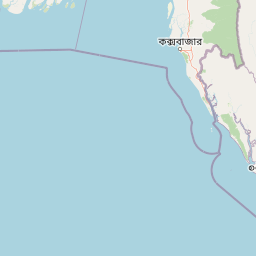
Map view of Medhakachhapia National Park

Use this park location map to pinpoint Medhakachhapia National Park in Bangladesh, understand its exact geographic position, and read its mapped placement within the surrounding landscape more clearly.

Pigeon | © OpenStreetMap contributors

Location context for Medhakachhapia National Park

ChattogramCox's Bazar District
Park atlas

Trace the regional spread of national parks and protected landscapes adjacent to Medhakachhapia National Park in Bangladesh's Chattogram Division.

Discover Other National Parks and Protected Areas near Medhakachhapia National Park, Bangladesh, in the Coastal Region
Users can explore other national parks and protected areas geographically relevant to Medhakachhapia National Park, focusing on Bangladesh's southeastern coastal region and its distinct mangrove ecosystems. Compare varied conservation landscapes, trace the distribution of coastal protected areas, and deepen understanding of regional park geography beyond a single location.
National parkRangamati District

Kaptai National Park: Protected Landscape and Geographic Context in Rangamati District

Explore its mixed evergreen forest and lakeside terrain.

Kaptai National Park is a crucial protected area located in Bangladesh's Rangamati District, renowned for its mixed evergreen forests and unique position adjacent to Kaptai Lake. This detail page provides an atlas-oriented perspective on the park's geographic identity, mapped boundaries, and its role within the diverse Chittagong Hill Tracts region. Understand the terrain, from rolling hills to lakeside environments, and appreciate its conservation significance as a national park.

Area
54.64 km²
Established
1999
IUCN
II
Climate
Subtropical
National parkChittagong District

Baroiyadhala National Park: A Vital Wildlife Corridor and Protected Forest Landscape in Bangladesh

Discover its terrain, mapped boundaries, and regional significance.

Baroiyadhala National Park, situated in Bangladesh's Chittagong District, stands as a critical national park dedicated to preserving forest ecosystems and functioning as an essential wildlife corridor. The park's undulating terrain and dense vegetation are vital for supporting threatened species and maintaining habitat connectivity. This page offers an atlas-style exploration of Baroiyadhala National Park, detailing its protected area status, geographic context within the Chittagong region, and its significance for conservation in South Asia, providing a rich understanding of its natural landscape.

Area
29.34 km²
Established
2010
IUCN
II
National parkChin State

Natmataung National Park: Protected Mountain Landscape and Biodiversity Atlas in Chin State

Explore the mapped terrain and elevational gradients of Mount Victoria.

Natmataung National Park, located in Chin State, Myanmar, offers a profound encounter with dramatic mountainous terrain and exceptional biodiversity. As a protected national park, it safeguards Mount Victoria, the highest peak in the region, and a remarkable ecological gradient spanning diverse forest types. This page provides an atlas-focused view of its geography, highlighting the steep ridgelines, deep valleys, and unique habitats that define this significant protected landscape and its role in watershed protection.

Area
723 km²
Established
2010
IUCN
II
National parkTripura

Clouded Leopard National Park: National Park Protected Area in Tripura's Forested Landscape

Mapped primate habitat and regional geography in Northeast India.

Clouded Leopard National Park serves as a critical protected area within Tripura, India, focusing on the conservation of its forest ecosystems and primate populations, including the Phayre's langur. As part of the larger Sepahijala Wildlife Sanctuary, its mapped boundaries contribute to the regional protected landscape. This national park offers valuable insight into the natural terrain and biodiversity specific to Northeast India, providing a unique geographic focus for atlas exploration.

Area
5.08 km²
Established
2007
IUCN
II
National parkMoulvibazar District

Lawachara National Park: Protected National Park Landscape in Moulvibazar District

Mapped Terrain and Endangered Primate Habitat Exploration

Delve into the protected landscape of Lawachara National Park, a key national park located in the distinct undulating terrain of Moulvibazar District, Bangladesh. This area is recognized for its ecological significance, particularly as a sanctuary for endangered primates, including the critically important western hoolock gibbon population. Users can explore the park's mapped boundaries, understand its semi-evergreen forest ecosystem, and appreciate its geological features like sandstone hillocks and sandy-bedded streams, making it a valuable point of discovery for regional geography and conservation landscapes.

Area
12.5 km²
Established
1996
IUCN
II
National parkWest Bengal

Sundarbans National Park: UNESCO World Heritage Mangrove National Park in West Bengal

Explore its tidal geography and mapped protected boundaries.

Sundarbans National Park is a vital protected area on the Ganges Delta, recognized globally as the world's largest mangrove forest and a UNESCO World Heritage Site. Located in West Bengal, this national park features a unique estuarine geography characterized by intricate tidal channels and distributaries that define its landscape. Its protected boundaries safeguard a complex ecosystem, offering rich opportunities for atlas-driven exploration of its distinctive natural terrain and coastal wetland significance.

Area
1,330.1 km²
Established
1984
IUCN
II
National parkWest Garo Hills district

Nokrek National Park: Protected Mountain Landscape and Regional Geography

Explore its mapped boundaries and diverse natural terrain.

Nokrek National Park is a vital protected mountain wilderness situated in the West Garo Hills district, Meghalaya, India. Its rugged terrain, characterized by ancient geological formations and dense evergreen forests, supports remarkable biodiversity. As a key component of the Nokrek Biosphere Reserve, it offers a unique glimpse into the region's ecological significance, serving as an important source for major rivers and a sanctuary for diverse flora and fauna.

Area
47.48 km²
Established
1986
IUCN
II
Relief
Mountain
National parkAssam

Orang National Park: Assam's Key Floodplain Protected Landscape

Explore mapped boundaries and terrain context of this national park.

Orang National Park, located in Assam, India, is a significant protected area celebrated for its unique alluvial floodplain terrain and critical role in conservation. This national park provides a focused atlas-style view of grassland and wetland ecosystems, essential habitats for iconic species like the great Indian one-horned rhinoceros and Bengal tiger. Its geographical setting along the Brahmaputra River contributes to a dynamic landscape, offering rich context for understanding protected area distribution and regional natural features. Discover the mapped boundaries and ecological significance of this important protected land.

Area
78.81 km²
Established
1985
IUCN
II
Relief
Lowland

Common questions about visiting, size, designation, and location context for Medhakachhapia National Park

Medhakachhapia National Park FAQs for park facts, access, geography, and protected area context
Find quick answers about Medhakachhapia National Park, including protected-area facts, park geography, trail and visitor context, and how the park fits into its surrounding country and regional landscape.
MoriAtlas Explorer

Continue Your Protected Areas Search Across the Global Atlas

Deepen your exploration by continuing the structured search for national parks and protected areas worldwide. Utilize the comprehensive filtering capabilities to compare different conservation landscapes and refine your understanding of global park geography. Discover more about the distribution and characteristics of protected natural areas.

Global natural geography