
Why Sundarbans National Park stands out
Sundarbans National Park is best known as the home of the Bengal tiger in one of the world's most unique ecological settings, where tigers have adapted to survive in a tidal mangrove environment. The park contains the world's largest contiguous mangrove forest, a UNESCO World Heritage Site since 1987, protecting a complex ecosystem shaped by the twice-daily tidal cycles of the Bay of Bengal. It is famous for its population of royal Bengal tigers, which are known for their swimming abilities and have developed unique behavioral adaptations to navigate the labyrinthine water channels and island forests. Beyond tigers, the park protects significant populations of saltwater crocodiles, rare river terrapins, and serves as critical habitat for marine mammals including Irrawaddy dolphins, Ganges river dolphins, and Bryde's whales. The Sundari tree, from which the Sundarbans derives its name, dominates the mangrove canopy with its distinctive pneumatophore root systems that emerge from the waterlogged soil to facilitate respiration.

Sundarbans National Park history and protected-area timeline
The conservation history of Sundarbans dates back to 1869 when the first forest management division was established to have jurisdiction over the region. In 1875, a large portion of the mangrove forests was declared as reserved forests under the Forest Act of 1865, with the remaining portions following the next year. The forest, previously administered by civil district authorities, was placed under the control of the Forest Department in 1876. A forest division was created in 1879 with headquarters in Khulna, Bangladesh, serving as the basic administrative unit for forest management. The first formal management plan was written for the period 1893 to 1898. The present protected area was designated as the core area of Sundarban Tiger Reserve in 1973 and received wildlife sanctuary status in 1977. On May 4, 1984, it was officially declared a national park. The Sundarbans was recognized as a Biosphere Reserve under the Man and the Biosphere Programme on November 10, 2001, and was inscribed as a Ramsar wetland on January 30, 2019. The area has faced significant challenges from natural disasters, including Cyclone Aila in 2009 and Cyclone Amphan in 2020, both of which caused substantial damage to infrastructure and management facilities.
Sundarbans National Park landscape and geographic character
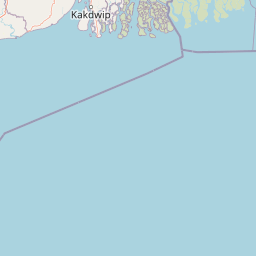
The landscape of Sundarbans National Park is characterized by its distinctive mangrove forest ecosystem on a vast estuarine delta. The terrain is extremely flat, with an average altitude of just 7.5 meters above sea level, making it one of the lowest-lying protected areas in the world. The park is composed of 54 small islands that are separated by a complex network of distributaries and tidal channels radiating from the Ganges River. Seven main rivers and countless smaller watercourses create an intricate maze of waterways that dominate the physical geography. The landscape features extensive mudflats at the estuary and on deltaic islands, which are exposed during low tides and submerged during high tides, changing morphology even within a single tidal cycle. A remarkable geological feature called the Swatch of No Ground exists in the Bay of Bengal between 21°00' and 21°22' latitude, where water depths change dramatically from 20 meters to 500 meters, influencing sediment deposition patterns and island formation. The mangrove vegetation creates a distinctive landscape where the Sundari tree dominates the canopy, with specialized pneumatophore roots rising above the waterlogged ground to enable gas exchange during the monsoon season when the entire forest is submerged.
Sundarbans National Park ecosystems, habitats, and plant life
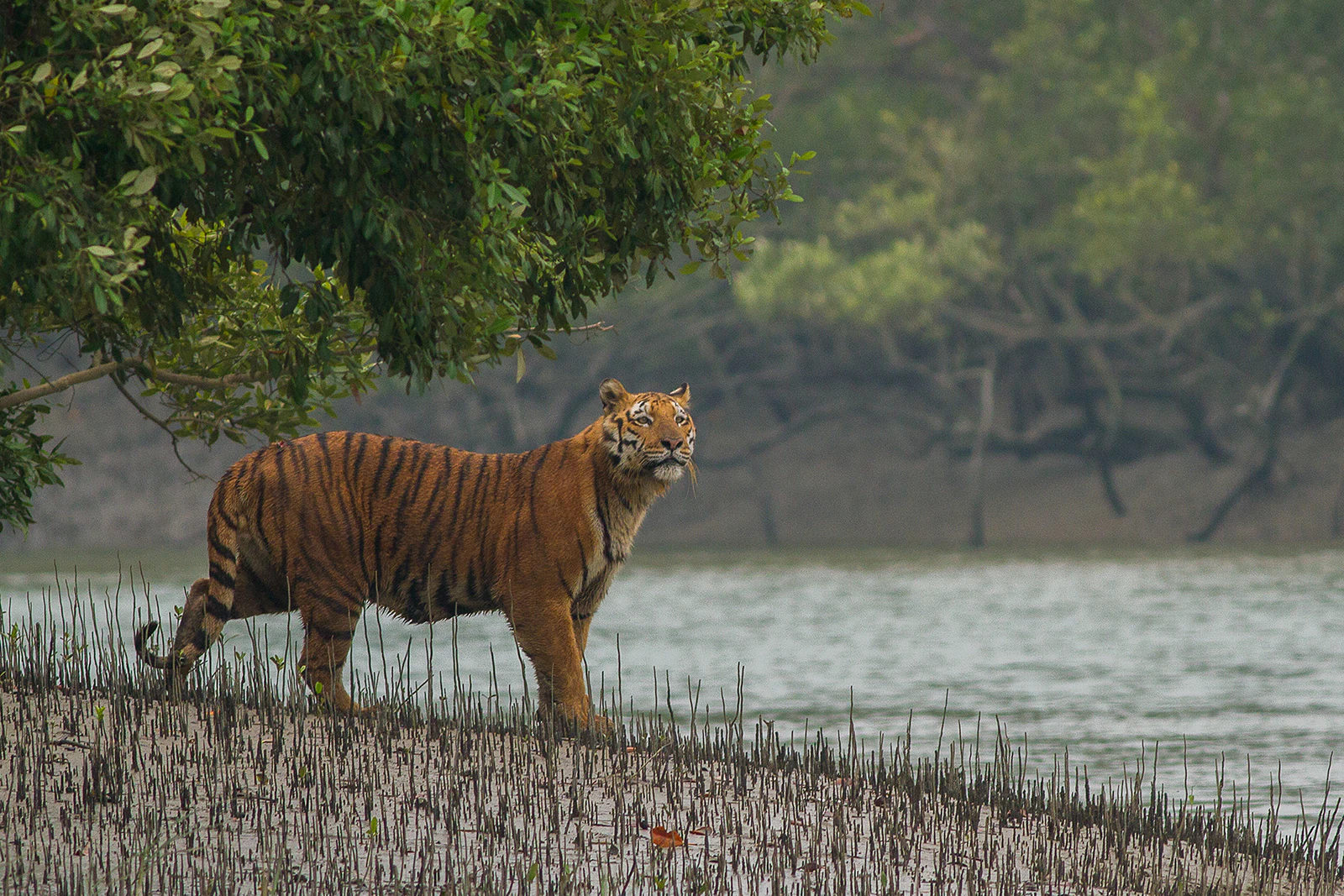
Sundarbans National Park harbors a unique estuarine ecosystem of exceptional ecological significance. The mangrove forests represent the largest contiguous mangrove system on the Indian subcontinent, supporting a complex web of specialized flora and fauna adapted to the brackish water environment. The vegetation is dominated by the Sundari tree, from which the region derives its name, along with other mangrove species including the mangrove date palm. These trees have evolved specialized aerial roots called pneumatophores that emerge above the waterlogged ground to facilitate respiration during the rainy season when the forest floor is completely inundated. The ecosystem is shaped by the twice-daily tidal cycles that bring nutrient-rich sediments and saline water, creating constantly changing conditions that support high biodiversity despite the challenging environment. The mangrove forests provide critical ecosystem services including coastal protection, carbon sequestration, nursery functions for fish and crustaceans, and flood moderation. A 2015 economic assessment valued the national park's annual ecosystem services at approximately ₹12.8 billion, with significant contributions from nursery function, gene-pool protection, fish provisioning, and waste assimilation services.

Sundarbans National Park wildlife and species highlights
The wildlife of Sundarbans National Park is renowned for its exceptional adaptation to the tidal mangrove environment. The Bengal tiger is the flagship species, with the Sundarbans supporting one of the largest populations of this iconic predator in the world. These tigers have developed unique adaptations including swimming prowess and the ability to tolerate brackish water, making them distinct from tiger populations elsewhere. The park is home to several endangered species including the saltwater crocodile, river terrapin, olive ridley turtle, hawksbill turtle, Ganges river dolphin, and the mangrove horseshoe crab. The marine mammal diversity is remarkable, with the proposed Sundarbans Cetacean Diversity Protected Area hosting endangered cetaceans including resident groups of Bryde's whales, Irrawaddy dolphins, spinner dolphins, Ganges river dolphins, and Chinese white dolphins. Indo-Pacific finless porpoises, bottlenose dolphins, and pantropical spotted dolphins are regularly found in the area. Other notable species include the fishing cat, spotted deer or chital, rhesus monkey, and wild pig. The birdlife includes numerous species adapted to the mangrove and wetland habitats, making the park significant for avian biodiversity.

Sundarbans National Park conservation status and protection priorities
Sundarbans National Park holds exceptional conservation significance as a UNESCO World Heritage Site, Ramsar wetland, and biosphere reserve. The park forms the core of the Sundarbans Tiger Reserve, which is crucial for the survival of the Bengal tiger in the wild. Conservation efforts focus on anti-poaching activities, habitat management, and community engagement through Forest Protection Committees and Eco-development Committees formed in the fringe villages. The management addresses the unique challenge of human-tiger conflict, with measures including nylon fencing, solar illumination of villages, human mask barriers, and alternative income generation programs that have reduced casualties from approximately 40 to 10 per year. The park faces significant challenges from its geography, with a hostile terrain criss-crossed by numerous rivers, a long international border with Bangladesh, and pressure from fishing activities. Climate change and cyclonic storms pose ongoing threats, with Cyclone Amphan in 2020 causing extensive damage to infrastructure including protective fencing. Conservation priorities include managing the delicate balance between protection and the needs of approximately 1,000 villages surrounding the park that depend on forest resources.
Sundarbans National Park cultural meaning and human context
The Sundarbans region has a long history of human interaction with the mangrove ecosystem. Local communities have traditionally collected honey and wax from the forest under license from the Indian Forest Service, with approximately 50 metric tonnes of honey and 3 metric tonnes of wax collected annually. The region is home to approximately 1,000 villages in the fringe areas of the tiger reserve, whose residents have developed unique relationships with the forest and its resources. The Sundarbans has been described historically as a tract of unexamined waste country, stretching roughly 266 kilometers from the mouth of the Hooghly River to the mouth of the Meghna river. Traditional livelihoods include fishing, wood collection, and honey gathering, activities that continue in the buffer zones while the core area remains protected from such disturbances. Cultural practices and local knowledge related to the mangrove environment have developed over generations, though the relationship between local communities and the tiger population has historically been marked by conflict due to the tigers' occasional predation on humans.
Top sights and standout views in Sundarbans National Park
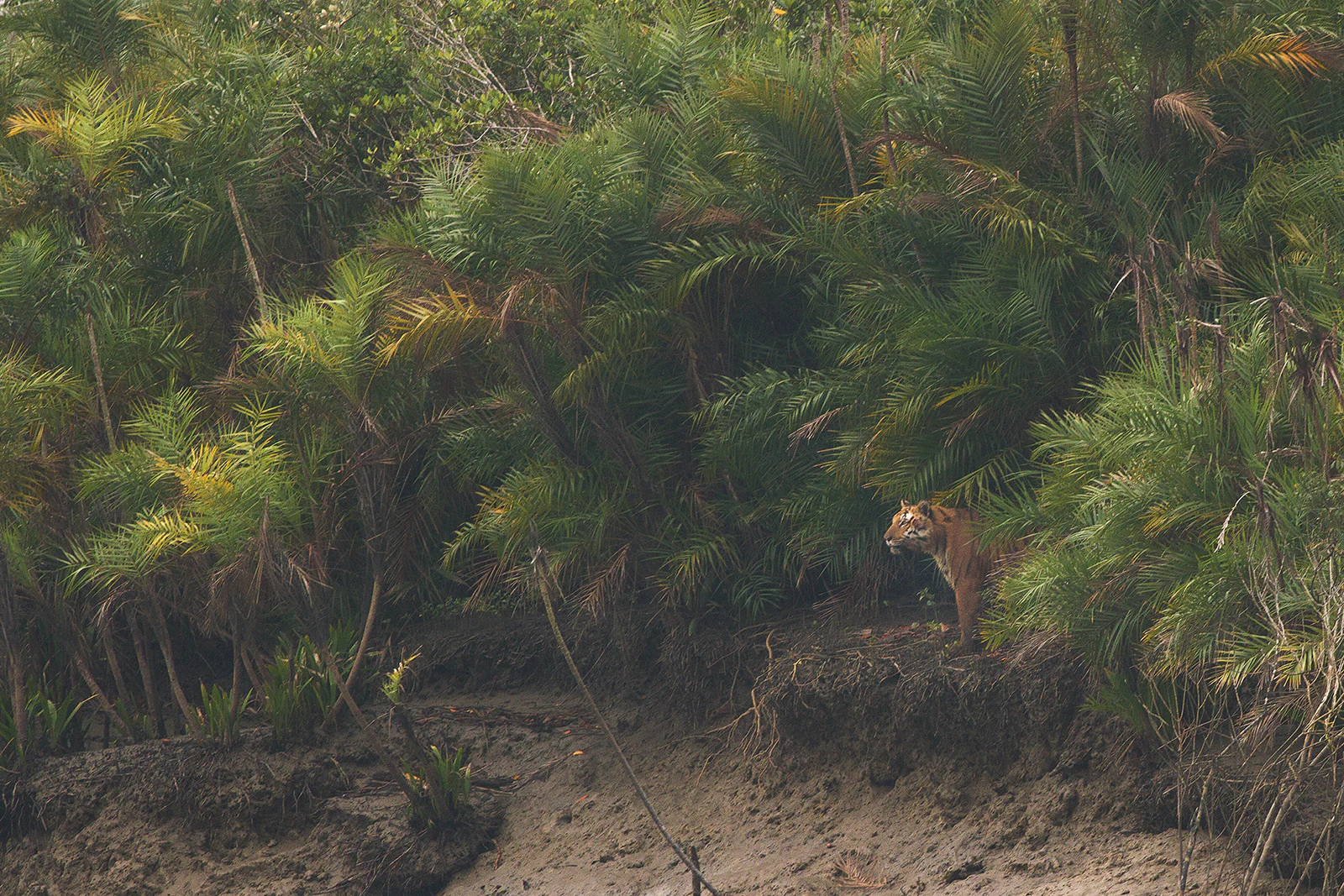
Sundarbans National Park offers visitors a unique opportunity to experience one of the world's most distinctive ecosystems. The primary attraction is the chance to observe Bengal tigers in their natural mangrove habitat, a rare wildlife experience available nowhere else on Earth. The park is best explored by boat along the labyrinthine tidal channels, with local boats and vessels operated by the West Bengal Tourism Development Corporation providing access to this water-bound wilderness. Notable visitor attractions include watch towers at Sudhanyakali, Dobanki, Burirdabri, and Netidhopani, which provide elevated viewpoints for wildlife observation. The Sajnekhali Bird Sanctuary, Bhagabatpur Crocodile Project crocodile breeding farm, and the Mangrove Interpretation Centre at Sajnekhali offer additional educational opportunities. The park's significance extends beyond wildlife to include its role as a critical coastal buffer against cyclones and storms, with the mangrove forests providing essential protection to surrounding communities. The ecosystem services provided by the Sundarbans, valued at billions of rupees annually, underscore its importance to both ecological and human welfare.
Best time to visit Sundarbans National Park
The best time to visit Sundarbans National Park is during the winter months from October to March when the weather is relatively comfortable with cooler temperatures and lower humidity. This period corresponds with the prevailing north and north-easterly winds and offers more stable conditions for boat-based exploration of the park. The monsoon season from mid-June to mid-September brings heavy rainfall and the park experiences significant flooding, which can restrict access and make wildlife viewing more challenging. The period from May to October is also characterized by the possibility of cyclonic storms, which can develop into severe weather events as evidenced by past cyclones like Aila in 2009 and Amphan in 2020. Visitors planning trips during the summer months should be prepared for extremely high temperatures that can reach up to 48°C along with high humidity. The post-monsoon period offers the advantage of seeing the forest in its full green glory, though the tidal dynamics remain a defining feature of the park year-round.