Mori Atlas logo
National parkBaroiyadhala National Park

Mapping the unique terrain and wildlife corridors of this vital Bangladeshi national park.

Baroiyadhala National Park: Chittagong District's Protected Forest Landscape

Baroiyadhala National Park represents a crucial protected landscape within Bangladesh's southeastern geography, safeguarding vital forest ecosystems and wildlife corridors. Established to conserve the rolling hills and dense vegetation of the Chittagong region, this national park serves as a key area for species movement and habitat connectivity in a country facing significant natural habitat reduction. Users can explore the park's mapped boundaries, understand its role in regional conservation efforts, and discover the unique natural terrain that defines this important protected area.

national parkwildlife corridorforest reserveChittagong regionwaterfallhillside forest

Baroiyadhala National Park

National park

Park overview

Structured park overview, official facts, and landscape profile for Baroiyadhala National Park

Baroiyadhala National Park park facts, protected area profile, and essential visitor context
Review the core facts for Baroiyadhala National Park, including designation, size, terrain, visitor scale, habitats, and operating context in one park-focused overview.

About Baroiyadhala National Park

Baroiyadhala National Park represents a significant conservation achievement in Bangladesh, a country where natural forests have been substantially reduced due to agricultural expansion, human settlement, and economic development. Established in April 2010, the park protects approximately 2,934 hectares of primarily forested land in the Chittagong Hill Tracts region, one of the most ecologically diverse areas of the country. The park's location in Sitakunda Upazila places it within a landscape that has experienced significant deforestation and habitat fragmentation, making the protected area's role as a wildlife corridor particularly crucial. The combination of forested hills, valleys, and the presence of Khoiyachora Waterfall creates a varied landscape that supports multiple habitat types within the park's boundaries. As Bangladesh works to expand its protected area network, Baroiyadhala serves as an example of efforts to preserve remaining natural ecosystems and the species that depend on them.

Quick facts and research context for Baroiyadhala National Park

Baroiyadhala National Park is located in Sitakunda Upazila, Chittagong District, in southeastern Bangladesh. The park was officially designated on April 6, 2010, covering 2,933.61 hectares of forested terrain. It is classified as an IUCN Category II protected area, serving both as a national park and nature reserve. The park lies along the eastern side of the N1 highway connecting Dhaka and Chittagong. It functions as an important wildlife corridor linking forest fragments across the region, supporting biodiversity conservation in a densely populated country with limited natural forest remaining.

Park context

Deeper park guide and search-rich context for Baroiyadhala National Park

Baroiyadhala National Park history, landscape, wildlife, and travel context
Explore Baroiyadhala National Park through its history, landscape character, ecosystems, wildlife, conservation priorities, cultural context, and seasonal travel timing in a structured park guide built for atlas discovery and search intent.

Why Baroiyadhala National Park stands out

Baroiyadhala National Park is best known for its role as a critical wildlife corridor in Bangladesh's increasingly fragmented landscape, connecting forest habitats to enable species movement and genetic exchange. The park protects populations of threatened mammals including the mainland serow, Chinese pangolin, and marbled cat. Its forested hillsides support the Khoiyachora Waterfall, a notable scenic feature within the protected area. The park also provides habitat for the barking deer, Assamese macaque, and kalij pheasant, making it significant for both conservation and ecological education in Bangladesh.

Baroiyadhala National Park history and protected-area timeline

Baroiyadhala National Park was officially declared as a national park by the Government of Bangladesh on April 6, 2010. Its establishment represented part of Bangladesh's broader efforts to expand and strengthen its protected area network during the late 2000s and early 2010s. The park was created to address the conservation needs of the Chittagong region's remaining forest habitats, which had faced mounting pressure from development, agriculture, and logging. The designation as both a national park and nature reserve under IUCN Category II provided formal legal protection to the area's forests and wildlife. The creation of Baroiyadhala also reflected growing recognition of the importance of wildlife corridors in maintaining ecological connectivity across fragmented landscapes, a concern that became increasingly prominent in Bangladeshi conservation planning.

Baroiyadhala National Park landscape and geographic character

The landscape of Baroiyadhala National Park is characterized by forested hills and undulating terrain typical of the southeastern Bangladesh hill region. The park sits within the broader Chittagong Hill Tracts area, featuring elevation changes that create diverse microhabitats within its boundaries. The area is traversed by streams and drainage lines that contribute to the local watershed and support the park's vegetation. The Khoiyachora Waterfall, located within the park, represents a notable hydrological feature that adds to the scenic and ecological diversity of the area. The forest cover consists of both natural and semi-natural vegetation that has been influenced by the region's subtropical climate. The terrain's topography creates a visually distinctive landscape that differs from the predominantly flat agricultural plains found elsewhere in Bangladesh.

Baroiyadhala National Park ecosystems, habitats, and plant life

Baroiyadhala National Park supports forest ecosystems that represent some of the remaining natural vegetation in Bangladesh. The park's forested habitats provide critical ecological functions in a region where forest cover has been significantly depleted. The vegetation includes species adapted to the subtropical environmental conditions of the Chittagong area. Beyond the forest itself, the park's water features, including streams feeding into waterfall systems, support additional ecological diversity. The corridor function of the park connects isolated forest patches, allowing species to move between habitats and maintain viable populations, which is particularly important for wildlife in a densely populated country where natural habitats are highly fragmented.

Baroiyadhala National Park wildlife and species highlights

The wildlife of Baroiyadhala National Park includes several species of conservation significance in Bangladesh. The park provides habitat for the mainland serow, a threatened ungulate species found in forested hill habitats across South and Southeast Asia. The barking deer, also known as muntjac, is present alongside the marbled cat, a small felid species that inhabits forest environments. The Assamese macaque represents the park's primate community, while the Chinese pangolin, a critically endangered species due to poaching and habitat loss, has been recorded within the park boundaries. The kalij pheasant, a ground-dwelling bird species, adds to the avifauna present in the area. Together, these species illustrate the park's role in protecting forest-dependent wildlife in a region where such habitats have become increasingly scarce.

Baroiyadhala National Park conservation status and protection priorities

Baroiyadhala National Park serves important conservation functions in the context of Bangladesh's limited protected area network. The park provides critical habitat for species that have experienced significant population declines across their ranges, particularly in the case of the Chinese pangolin, which faces severe threats from illegal trade. As a wildlife corridor, the park connects fragmented forest habitats, enabling species movement and helping maintain genetic diversity among wildlife populations. The establishment of the park in 2010 reflected Bangladesh's commitment to meeting international conservation commitments, including targets under the Convention on Biological Diversity. The protected area status provides legal protection against logging, agricultural conversion, and other activities that could degrade the forest ecosystem. However, like many protected areas in Bangladesh, the park faces ongoing challenges from surrounding human populations and development pressure.

Baroiyadhala National Park cultural meaning and human context

Baroiyadhala National Park is situated within the Chittagong region, which has a distinct cultural character compared to other parts of Bangladesh. The broader Chittagong Hill Tracts area is home to various indigenous communities with their own traditions and relationships with the landscape. While the park itself was established under national legislation, the surrounding region has a history of human interaction with forest environments. The park's location along the Dhaka-Chittagong Highway places it within one of Bangladesh's major transportation corridors, making it accessible to visitors from across the country. The relationship between the park's conservation objectives and the traditional land use practices of local communities represents an ongoing consideration for park management.

Top sights and standout views in Baroiyadhala National Park

The defining features of Baroiyadhala National Park include its role as a critical wildlife corridor connecting fragmented forest habitats in southeastern Bangladesh. The park protects significant species including the mainland serow, Chinese pangolin, and marbled cat, all of which face conservation pressures across their ranges. The Khoiyachora Waterfall provides a notable scenic attraction within the park's boundaries. The trail network, including the Napittachora and Komoldoho trails, offers opportunities for visitors to experience the park's forest environment. As one of Bangladesh's newer national parks, established in 2010, Baroiyadhala represents the country's ongoing efforts to preserve remaining natural ecosystems in a densely populated nation where forest cover is extremely limited.

Best time to visit Baroiyadhala National Park

The best time to visit Baroiyadhala National Park would typically be during the cooler, drier months from October through March, when weather conditions are more comfortable for outdoor exploration and the risk of heavy rainfall is reduced. The park's forest environment is most accessible during this period when trails are less likely to be affected by monsoon conditions. However, visitors should be aware that the monsoon season in Bangladesh runs from June to September and can bring significant rainfall to the Chittagong region, potentially affecting access to some areas of the park. The dry season preceding the monsoon may offer clearer visibility for wildlife viewing, though animal activity patterns vary throughout the year. As with any protected area visit, checking current conditions and local guidance before traveling is advisable.

Park location guide

Geography guide, regional context, and park location map for Baroiyadhala National Park

Baroiyadhala National Park park geography, regions, and map view in Bangladesh
Understand where Baroiyadhala National Park sits in Bangladesh through a broader geographic reading of the surrounding landscape, nearby location context, and its mapped position within the national park landscape.

How Baroiyadhala National Park fits into Bangladesh

Bangladesh, officially the People's Republic of Bangladesh, is a South Asian country known for its high population density and deltaic geography formed by the Ganges-Brahmaputra river system. It gained independence from Pakistan in 1971 following a liberation war. The country operates as a unitary parliamentary republic with Dhaka as its capital and largest city, while Chittagong serves as the second-largest city and main port.

Wider geography shaping Baroiyadhala National Park in Bangladesh

Bangladesh occupies the delta region at the confluence of the Ganges, Brahmaputra, and Meghna rivers in South Asia. The country shares land borders with India to the north, west, and east, and Myanmar to the southeast, while its southern boundary is along the Bay of Bengal. The terrain is predominantly low-lying deltaic plain, making it susceptible to flooding. The country is separated from Bhutan and Nepal by the Siliguri Corridor and from China by the Indian state of Sikkim.

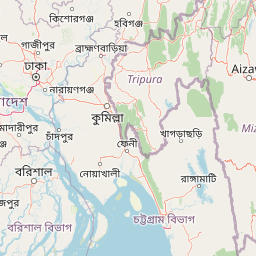
Map view of Baroiyadhala National Park

Use this park location map to pinpoint Baroiyadhala National Park in Bangladesh, understand its exact geographic position, and read its mapped placement within the surrounding landscape more clearly.

Pigeon | © OpenStreetMap contributors

Location context for Baroiyadhala National Park

Chittagong DistrictSitakunda Upazila
Park atlas

Trace the spread of protected landscapes and compare forest ecosystems across the Chittagong region of Bangladesh.

Discover Other National Parks and Protected Areas Near Baroiyadhala National Park
After exploring Baroiyadhala National Park, continue your discovery by browsing a curated list of other national parks and protected areas in the surrounding Chittagong region and broader Bangladesh. This allows for geographical comparison of different forest reserves, wildlife corridors, and hillside ecosystems, deepening your understanding of the country's conservation efforts.
National parkRangamati District

Kaptai National Park: Protected Landscape and Geographic Context in Rangamati District

Explore its mixed evergreen forest and lakeside terrain.

Kaptai National Park is a crucial protected area located in Bangladesh's Rangamati District, renowned for its mixed evergreen forests and unique position adjacent to Kaptai Lake. This detail page provides an atlas-oriented perspective on the park's geographic identity, mapped boundaries, and its role within the diverse Chittagong Hill Tracts region. Understand the terrain, from rolling hills to lakeside environments, and appreciate its conservation significance as a national park.

Area
54.64 km²
Established
1999
IUCN
II
Climate
Subtropical
National parkTripura

Clouded Leopard National Park: National Park Protected Area in Tripura's Forested Landscape

Mapped primate habitat and regional geography in Northeast India.

Clouded Leopard National Park serves as a critical protected area within Tripura, India, focusing on the conservation of its forest ecosystems and primate populations, including the Phayre's langur. As part of the larger Sepahijala Wildlife Sanctuary, its mapped boundaries contribute to the regional protected landscape. This national park offers valuable insight into the natural terrain and biodiversity specific to Northeast India, providing a unique geographic focus for atlas exploration.

Area
5.08 km²
Established
2007
IUCN
II
National parkCox's Bazar District

Medhakachhapia National Park: Protected Mangrove Landscape and Geography in Cox's Bazar

Mapping the boundaries of a unique coastal Bangladesh National Park.

Medhakachhapia National Park is a distinct protected area in Cox's Bazar District, Bangladesh, renowned for its old-growth Rhizophora apiculata mangrove forest. Spanning approximately 396 hectares, it serves as a crucial habitat and represents a specific type of tropical coastal landscape. This park's designation as a national park highlights its conservation importance, particularly its role in protecting some of Bangladesh's most mature mangrove stands. Explore its geographic context and protected status for a deeper understanding of its natural landscape.

Area
3.959 km²
Established
2008
IUCN
IV
National parkMoulvibazar District

Lawachara National Park: Protected National Park Landscape in Moulvibazar District

Mapped Terrain and Endangered Primate Habitat Exploration

Delve into the protected landscape of Lawachara National Park, a key national park located in the distinct undulating terrain of Moulvibazar District, Bangladesh. This area is recognized for its ecological significance, particularly as a sanctuary for endangered primates, including the critically important western hoolock gibbon population. Users can explore the park's mapped boundaries, understand its semi-evergreen forest ecosystem, and appreciate its geological features like sandstone hillocks and sandy-bedded streams, making it a valuable point of discovery for regional geography and conservation landscapes.

Area
12.5 km²
Established
1996
IUCN
II
National parkChin State

Natmataung National Park: Protected Mountain Landscape and Biodiversity Atlas in Chin State

Explore the mapped terrain and elevational gradients of Mount Victoria.

Natmataung National Park, located in Chin State, Myanmar, offers a profound encounter with dramatic mountainous terrain and exceptional biodiversity. As a protected national park, it safeguards Mount Victoria, the highest peak in the region, and a remarkable ecological gradient spanning diverse forest types. This page provides an atlas-focused view of its geography, highlighting the steep ridgelines, deep valleys, and unique habitats that define this significant protected landscape and its role in watershed protection.

Area
723 km²
Established
2010
IUCN
II
National parkWest Bengal

Sundarbans National Park: UNESCO World Heritage Mangrove National Park in West Bengal

Explore its tidal geography and mapped protected boundaries.

Sundarbans National Park is a vital protected area on the Ganges Delta, recognized globally as the world's largest mangrove forest and a UNESCO World Heritage Site. Located in West Bengal, this national park features a unique estuarine geography characterized by intricate tidal channels and distributaries that define its landscape. Its protected boundaries safeguard a complex ecosystem, offering rich opportunities for atlas-driven exploration of its distinctive natural terrain and coastal wetland significance.

Area
1,330.1 km²
Established
1984
IUCN
II
National parkWest Garo Hills district

Nokrek National Park: Protected Mountain Landscape and Regional Geography

Explore its mapped boundaries and diverse natural terrain.

Nokrek National Park is a vital protected mountain wilderness situated in the West Garo Hills district, Meghalaya, India. Its rugged terrain, characterized by ancient geological formations and dense evergreen forests, supports remarkable biodiversity. As a key component of the Nokrek Biosphere Reserve, it offers a unique glimpse into the region's ecological significance, serving as an important source for major rivers and a sanctuary for diverse flora and fauna.

Area
47.48 km²
Established
1986
IUCN
II
Relief
Mountain
National parkAssam

Orang National Park: Assam's Key Floodplain Protected Landscape

Explore mapped boundaries and terrain context of this national park.

Orang National Park, located in Assam, India, is a significant protected area celebrated for its unique alluvial floodplain terrain and critical role in conservation. This national park provides a focused atlas-style view of grassland and wetland ecosystems, essential habitats for iconic species like the great Indian one-horned rhinoceros and Bengal tiger. Its geographical setting along the Brahmaputra River contributes to a dynamic landscape, offering rich context for understanding protected area distribution and regional natural features. Discover the mapped boundaries and ecological significance of this important protected land.

Area
78.81 km²
Established
1985
IUCN
II
Relief
Lowland

Common questions about visiting, size, designation, and location context for Baroiyadhala National Park

Baroiyadhala National Park FAQs for park facts, access, geography, and protected area context
Find quick answers about Baroiyadhala National Park, including protected-area facts, park geography, trail and visitor context, and how the park fits into its surrounding country and regional landscape.
MoriAtlas Explorer

Continue Your Protected Areas Search Across the Global Atlas

Deepen your exploration by continuing the structured search for national parks and protected areas worldwide. Utilize the comprehensive filtering capabilities to compare different conservation landscapes and refine your understanding of global park geography. Discover more about the distribution and characteristics of protected natural areas.

Global natural geography