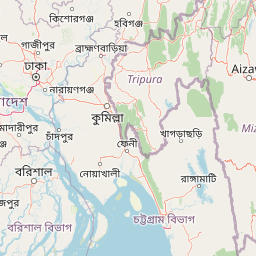
Why Kaptai National Park stands out
Kaptai National Park is best known for its population of wild Asian elephants, which remain a flagship species for the protected area despite significant human pressure on the landscape. The park also gained scientific prominence in 2014 when the large blue flycatcher, a bird species previously unrecorded in Bangladesh, was sighted within its boundaries, highlighting the park's role as a refuge for rare and localized species. The park's mixed evergreen forest harbors commercially valuable teak trees, while its position on the edge of Kaptai Lake creates a scenic backdrop of forested hills rising from the water's edge that has become emblematic of the Chittagong Hill Tracts. The interplay between terrestrial forest and the lake environment gives the park a dual character as both a mountain forest preserve and a lakeside landscape.
Kaptai National Park history and protected-area timeline
Kaptai National Park was formally established in 1999 through designation by the Bangladesh Forest Department, reflecting the government's commitment to preserving remaining areas of natural forest in the Chittagong Hill Tracts. The park's creation came during a period of significant environmental change in Bangladesh, as the country recognized the need to balance development pressures in its eastern hill regions with conservation imperatives. The protected area was carved from the broader forested landscape that historically covered much of the Chittagong Division, much of which had already been converted to agriculture or degraded by logging and shifting cultivation. Kaptai Lake, which lies adjacent to and partially within the park's boundaries, was created in the early 1960s with the construction of the Kaptai Dam, an engineering project that flooded extensive areas of forest and displaced local communities while creating the largest inland water body in Bangladesh. The establishment of the national park provided formal legal protection for portions of the remaining forest, though enforcement has remained challenging due to the park's location near population centers and the economic pressures facing local communities.
Kaptai National Park landscape and geographic character
The landscape of Kaptai National Park is defined by its position within the Chittagong Hill Tracts, a region of isolated hills and narrow valleys that rises sharply from the surrounding lowlands. The terrain consists of rounded, steep-sided hills with elevations typically ranging from 50 to 300 meters above sea level, composed of ancient crystalline rocks that form the foothills of the Burmese-Arakan mountain system. Between the hills, narrow valleys contain seasonal streams and drainage channels that feed into Kaptai Lake, creating a dendritic drainage pattern across the park. The lake itself, spanning approximately 68,000 hectares at full pool level, dominates the western boundary of the park, its dark waters contrasting with the dense green forest covering the hillslopes. The forest canopy is dominated by tall evergreen species that form a relatively continuous cover across the hills, with gaps created by natural tree falls or human clearing. Along the lake margins, the forest transitions into riparian vegetation and areas of floating aquatic vegetation, while exposed rocky outcrops occur on some hill crests where soil cover is thin.
Kaptai National Park ecosystems, habitats, and plant life
The ecological character of Kaptai National Park is defined by its mixed evergreen forest ecosystem, which represents a transition between tropical and subtropical forest types. The forest contains a diverse assemblage of tree species, including the commercially significant teak (Tectona grandis) alongside numerous native hardwood species in the Dipterocarpaceae and other families. The canopy structure varies from dense and continuous in valley bottoms to more open and patchy on exposed ridges, creating microhabitat diversity that supports different plant communities. The forest supports a complex food web from canopy-dwelling primates and birds to ground-dwelling mammals and reptiles, though the overall species diversity is lower than in comparable forests in neighboring countries due to the park's relatively small size and isolation. The aquatic interface with Kaptai Lake adds a significant dimension to the park's ecological value, providing foraging habitat for water birds and supporting fish populations that represent an important protein source for local communities. The park falls within a region that receives relatively high annual rainfall compared to much of Bangladesh, supporting the evergreen character of the forest even during the dry season.
Kaptai National Park wildlife and species highlights
Kaptai National Park supports a diverse community of wildlife, though comprehensive surveys of the park's fauna are limited. The park is notable for its population of wild Asian elephants (Elephas maximus), which represent a conservation priority given the species' endangered status and the pressure on its habitat across South and Southeast Asia. Elephant herds use the forest for foraging and movement, though their presence brings them into frequent conflict with local farmers whose crops are damaged during foraging raids. The bird fauna includes the jungle myna, a common species in the park's forest edge and open areas, while the 2014 sighting of the large blue flycatcher marked a significant range extension for this species within Bangladesh. The reptile community includes species such as the tawny cat snake, a nocturnal predator that hunts in the forest canopy and understory. Small mammals, including various species of primates, rodents, and carnivores, occupy different ecological niches within the forest, though the park's fauna remains under-documented relative to similar protected areas in the region.
Kaptai National Park conservation status and protection priorities
Kaptai National Park faces significant conservation challenges that threaten both its ecological integrity and its capacity to sustain wildlife populations. The primary threats include illicit felling of valuable timber species, particularly teak, which has been extracted from the area despite its protected status. Intensive collection of fuel wood, ranging from gathering dead wood to harvesting branches and even entire trees, places continuous pressure on the forest's carbon cycling and nutrient dynamics. Overgrazing by livestock belonging to communities living adjacent to the park degrades understory vegetation and compacts soil along trails, while also increasing the risk of disease transmission between domestic and wild animals. The expansion of human settlement along the park's boundaries over the past three decades, driven by drought and regional civil unrest, has increased the footprint of agriculture and reduced the effective buffer zone around the core protected area. Conservation efforts must balance the needs of local communities, particularly indigenous groups with traditional land use patterns, with the imperative to maintain forest cover and wildlife habitat.
Kaptai National Park cultural meaning and human context
Kaptai National Park is situated within the Rangamati Hill District, which is unique in Bangladesh for its predominantly tribal population and distinctive cultural landscape. The region has been home to various indigenous communities for centuries, whose traditional land use practices including shifting cultivation and forest resource gathering have shaped the landscape. The park's location adjacent to Kaptai Lake adds cultural significance, as the lake was created through displacement of local communities in the 1960s and now forms an important economic resource for fishing communities. Kaptai City, which lies within and adjacent to the national park boundary, represents a population center where approximately 60 local residents are employed as tourism service providers, creating a direct economic connection between the park and community livelihoods. The park receives visitors throughout the year who come to experience the scenic beauty of the forested hills rising from the lake and to observe wildlife, though the tourism infrastructure remains limited relative to more developed protected areas in the region.
Top sights and standout views in Kaptai National Park
Kaptai National Park offers visitors the opportunity to experience Bangladesh's only significant highland forest ecosystem in a dramatic lakeside setting. The park's wild elephant populations, while difficult to observe reliably, represent a remarkable conservation achievement in a country where natural forest is extremely limited. The sighting of the large blue flycatcher in 2014 demonstrated that the park continues to yield new discoveries for Bangladeshi ornithology, suggesting that further research may reveal additional species of conservation interest. The contrast between the dark waters of Kaptai Lake and the lush green forested hills creates one of the most photographed landscapes in southeastern Bangladesh. The park provides opportunities for boat-based lake exploration, wildlife observation along forest trails, and cultural engagement with local indigenous communities. For visitors seeking to understand Bangladesh's natural heritage beyond the famous Sundarbans mangrove forest, Kaptai offers a fundamentally different wilderness experience centered on evergreen forest and highland terrain.
Best time to visit Kaptai National Park
The optimal time to visit Kaptai National Park spans from October through March, when the region experiences its dry season and temperatures are moderate. During these months, the forest vegetation is relatively accessible and wildlife viewing conditions improve as animals congreg more readily around water sources. The post-monsoon period from October to November offers the advantage of fresh, green forest growth following the rainy season, though some trails may still be affected by residual moisture. December through February represents the coolest period, with comfortable temperatures for outdoor activities and relatively clear skies. The summer months from April through June bring higher temperatures and the beginning of the monsoon season, which can make forest walks uncomfortable and increase the risk of landslides on steeper trails. The monsoon season from July through September brings heavy rainfall to the Chittagong Hill Tracts, transforming the landscape but limiting visitor access and increasing safety concerns for lake-based activities.